How do I name my contractor business?
Learn how to name a contractor business using eight methods, a five-name scorecard, field tests, and a seven-step conflict-check tracker before committing.
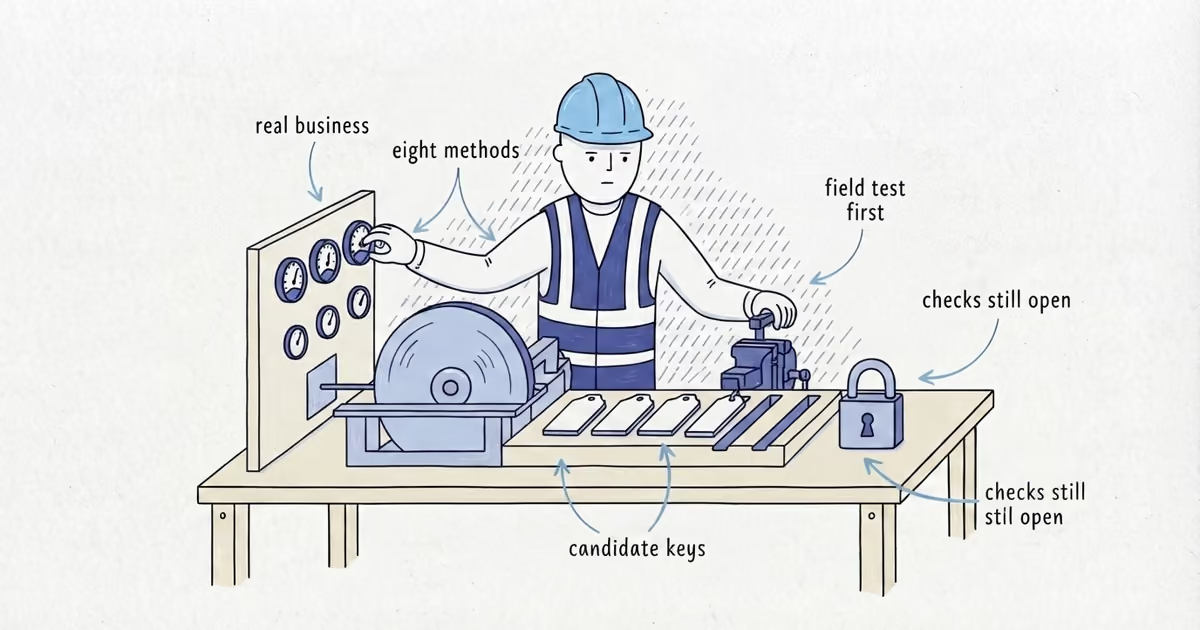
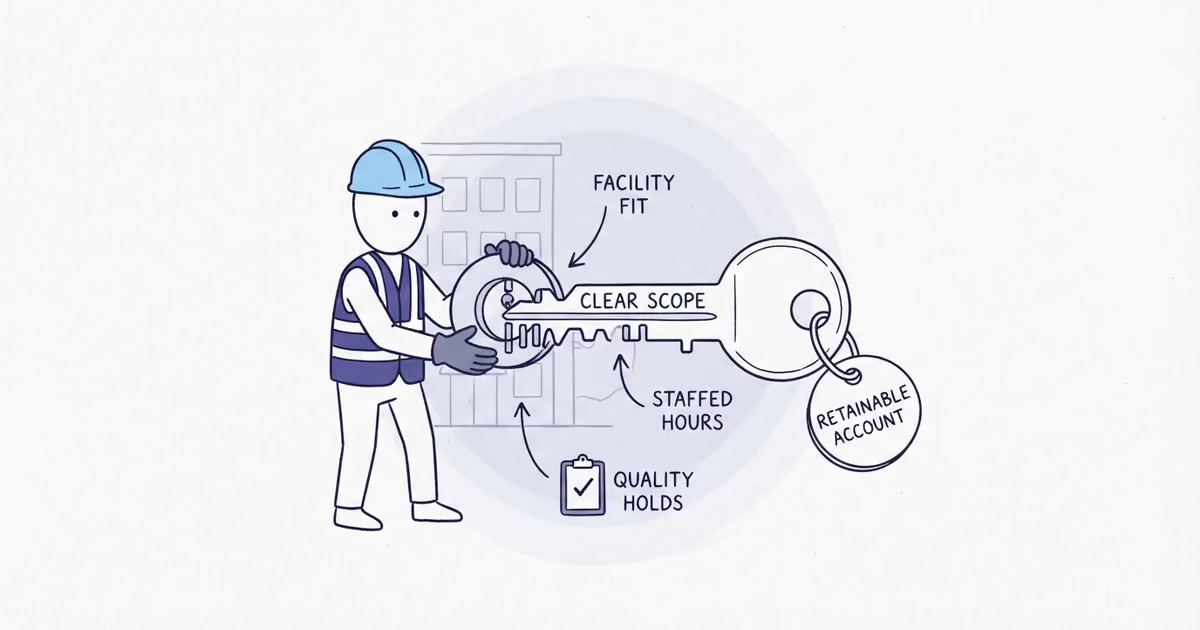
Choose a name that makes the work clear, is easy to hear and spell, tells the truth about the company, fits the business you can realistically build in three years, and survives every conflict check. Do not buy a logo, print a truck wrap, or file paperwork until the plain-text name passes those tests.
Last verified: August 27, 2026 (United States).
What to decide before naming a contractor business
Make names from the business you are building, not from random words. Write down these five facts on one page:
- Current services: List the work customers can hire you to do now. Separate core work from occasional jobs.
- Target customer: Name the main buyer, such as homeowners, property managers, builders, or another contractor.
- Real service area: Record the towns, counties, or region the crew can serve consistently. Do not use a place merely because it sounds established.
- Owner or family role: Decide whether a real person or family relationship should remain central to calls, jobs, leadership, and reputation.
- Three-year changes: Name the services, markets, crew structure, or ownership changes you are prepared to fund and operate within three years.
These inputs keep the name tied to real work. They also expose words that would overstate the service, territory, ownership, or size of the business.
Eight ways to name a contractor business
Inspiration only - availability not checked. None of the 32 examples below has been checked for current use, state or local registration, DBA conflicts, domain availability, local competitors, or trademark conflicts. None is presented as available, registrable, protectable, or safe to use.
Treat licensed, certified, bonded, insured, best, master, expert, guaranteed, emergency, 24/7, same-day, eco, green, family-owned, veteran-owned, woman-owned, commercial, restoration, design-build, and specialty wording as factual claims. Use such a word only when the real company can support it.
| Method | Formula | Fits | Main limitation | Complete examples |
|---|---|---|---|---|
| 1. Owner or family | Formula: [Real surname or family name] + [truthful trade descriptor] | An owner-led business whose existing reputation and phone recognition will remain central. Relationship wording must be true. | The name can make other crews less visible and tie leadership to one person. That can add friction during a partnership change, transfer, or future sale. | Example: Mendez Contracting Co. Example: Okafor Plumbing Co. Example: Tran Electrical Works Example: Delgado Family Landscaping |
| 2. Location or landmark | Formula: [Real service-area place or landmark] + [truthful trade descriptor] | A company committed to a recognizable local market where the place matches the actual service area. | A narrow place can become wrong after a move or entry into a second market. City or location wording does not guarantee better Search or Maps rankings. | Example: Sycamore Basin Roofing Example: East Wharf Plumbing Example: Silver Prairie Landscaping Example: Fox Creek Cleaning Co. |
| 3. Trust or reliability | Formula: [Grounded process or reliability word] + [service descriptor] | A straightforward service company that wants its name to suggest clear terms, organized work, and steady customer handling. | The estimate, schedule, work, and communication still have to earn that position. A process word is empty when daily service contradicts it. | Example: Scope & Schedule Remodeling Example: Plain Quote Painting Example: Workorder Electrical Co. Example: Open Ledger Cleaning |
| 4. Premium or craftsmanship | Formula: [Craft, measure, material, or finish word] + [trade descriptor] | A detail-led company whose pricing, finish, job control, and customer fit support higher expectations. | Craft wording sounds wrong for rushed or value-priced work. Empty luxury language and words such as master, elite, expert, or best do not prove quality. | Example: Measured Brush Painting Example: Plane & Plumb Carpentry Example: Mortar & Measure Masonry Example: Cut & Course Tile Co. |
| 5. Friendly or community | Formula: [Welcoming or neighborhood word] + [service descriptor] | An approachable residential service business that wants a name customers can say without explanation. | Casual wording can be a poor fit for technical specialties, property managers, commercial bids, or larger project work. | Example: Porchside Painting Example: Courtyard Cleaning Co. Example: Sideyard Landscaping Example: Housecall Plumbing Co. |
| 6. Specialty-led | Formula: [Real specialty or job type] + [trade descriptor] | A company where the named job already provides a meaningful share of the work the owner wants more of. | The specialty can hide general service. It becomes misleading when the crew cannot perform that work consistently or the demand later changes. | Example: Move-Out Cleaning Co. Example: Deck & Fence Painting Example: Mini-Split Heating & Air Example: Panel Upgrade Electrical |
| 7. Modern or brandable | Formula: [Short pronounceable brand word] + [clear trade descriptor] | A company that wants a distinct name without tying it to one owner, town, or narrow job type. | A coined word fails when customers cannot hear, spell, or repeat it. The trade descriptor must explain the work without help from a logo. | Example: Rovena Cleaning Example: Caldero Plumbing Example: Novari Electrical Example: Beldena Landscaping |
| 8. Scalable umbrella | Formula: [Distinct brand word] + Home Services, Property Services, or another truthful umbrella descriptor | A business with named adjacent services and a fundable, licensable, operational plan to add them under one company name. | Broad wording gives up immediate trade clarity. It should not be used merely to look larger, and a one-service company may have to explain its work on every call. | Example: Larkspur Home Services Example: Wrenfield Property Services Example: Pembrook Home Services Example: Hollis Gate Property Services |
Trade-specific vs umbrella contractor business names
Prefer a trade-specific name when one trade will remain the core offer for the next three years. It is easier for a customer to understand and does not make the company explain services it does not provide.
Consider an umbrella only when the adjacent services are named, the licensing path is known, money is budgeted, and the crew or hiring plan can support the work. The plan should also explain whether a second market or future sale benefits from keeping several services under one name. Broader wording is not automatically better.
Run every candidate through four real changes:
- Add the nearest realistic service. Check whether the name still fits the first service you are actually prepared to add.
- Hire a crew without the founder’s name. Check whether customers will accept work led by someone else.
- Enter a second town. Check whether a place name creates confusion or makes the new market feel outside the territory.
- Sell the company. Check whether a buyer could keep the name and the customer recognition attached to it.
A failure is a known cost, not an automatic order to choose the broadest option. An owner name may still be worth the transfer cost. A local name may still be right when expansion is unlikely.
How to shortlist contractor business names
Keep five names with materially different cores. Five versions of one word followed by Contracting, Construction, Builders, Home Services, or another generic ending are not five choices.
Remove any candidate that misstates the service, territory, ownership, credentials, response time, environmental practices, or specialty. Then score the five that remain. Use 0 when a name fails the criterion, 1 when it is workable, and 2 when it is strong.
| Criterion | Candidate A | Candidate B | Candidate C | Candidate D | Candidate E |
|---|---|---|---|---|---|
| Service clarity | |||||
| Easy to hear, spell, and pronounce | |||||
| Truthful position and claims | |||||
| Local differentiation | |||||
| Realistic three-year fit | |||||
| Works in the field | |||||
| Total out of 12 |
The total compares candidates. It does not establish availability or legal clearance. A state, DBA, trademark, local-confusion, Maps, or domain failure can eliminate a name that scores 12.
How to test a contractor business name
Show the full name in plain text without a logo or slogan. Run all six tests on each finalist:
- Phone: Say the full name once without spelling it. Ask another person to repeat it and type it, then ask what service they expect. Repeated correction or explanation is a failure.
- Truck: Put the name on one short line at a realistic viewing size. Reject it if the service disappears or important words become unreadable.
- Website: Place the name and its truthful descriptor in a plain header. A visitor should understand the current service without decorative design.
- Email: Create a likely address, say it aloud, and have someone type it. Watch for doubled letters, punctuation, and likely spelling errors.
- Estimate: Put the name on a plain estimate header. It should identify the business and the work without making an unsupported claim.
- Invoice: Put the same name on an invoice. The customer should be able to match it to the company that performed the job.
How to check a contractor business name
The Small Business Administration separates entity names, DBAs, trademarks, and domains because they serve different purposes. State and local requirements vary. An empty search in one system does not clear the name in the others.
Use one tracker for every surviving finalist. Record the search terms, date, links or screenshots, and a pass or fail for each row.
| Step | Source | What the check answers | Result and notes |
|---|---|---|---|
| 1 | State entity records | Are exact or similar names recorded in every state where the business will operate? This answers a records question, not full trademark clearance. | |
| 2 | DBA or fictitious-name records | Are exact or similar assumed names recorded where those filings apply? The relevant state, county, or city authority controls its own rules and filing process. | |
| 3 | USPTO | Do exact or similar federal applications or registrations cover related services? Check similarity in sound, appearance, meaning, and commercial impression, not just identical spelling. | |
| 4 | Google Search and Google Maps | Is the name already used by a business customers could confuse with yours? Compare services, locations, reviews, and visible operating names. | |
| 5 | Local competitors | Do nearby companies use a similar name, abbreviation, truck wording, phone greeting, service description, or territory? This catches practical confusion that a database may not show. | |
| 6 | Domains | Is a practical domain usable, and could a confusingly similar domain send customers elsewhere? Domain availability is useful but does not establish clearance. | |
| 7 | Final spoken spelling | After the searches reveal similar names, can another person still hear, repeat, type, and identify the finalist correctly? |
The USPTO recommends looking beyond exact federal results when evaluating similar marks. Earlier use in commerce and sources outside the federal database can matter. If a similar name or mark remains unresolved, take the findings to a qualified trademark attorney. This article and a self-search are not legal advice or a comprehensive clearance opinion.
Google’s official guidance says a Business Profile name should match the name consistently used with customers and shown on the website, stationery, and signage. Do not add a city, service, tagline, or keywords to the profile name only to influence Search or Maps.
Choose a high-scoring candidate only after every pass/fail verification row is complete. If two remain, choose the one customers can hear, spell, understand, and match to the real work with less explanation.
If you have adopted a verified new name but maps and directories still show old-name records, our local listings cleanup can update the main customer-facing listings so customers see consistent business information.
Frequently asked questions about contractor business names
Should a Contractor Business Name Be Short?
There is no fixed word count. Use the shortest wording that keeps the service clear, passes the say-it-once test, and remains readable on a truck, website, estimate, and invoice.
Can I Change My Contractor Business Name Later?
Yes, but changing it can mean updating records, customer-facing documents, domains, signage, and other operating materials. Treat that disruption as a real cost in the three-year test instead of choosing an overly broad name now.
Sources
- Choose your business name, U.S. Small Business Administration.
- Search our trademark database, United States Patent and Trademark Office.
- Likelihood of confusion, United States Patent and Trademark Office.
- Comprehensive clearance search for similar trademarks, United States Patent and Trademark Office.
- Guidelines for representing your business on Google, Google Business Profile Help.
- local-seo-foundations
- how-to-name-a-contractor-business
- how-to-choose-a-contractor-business-name
- contractor-business-naming-methods
- contractor-business-name-checklist