How to Handle Weather Closures as a California Employer
Reporting-time pay, Cal/OSHA heat rules, and wildfire smoke standards make California one of the trickiest states for weather closures.

Reporting-time pay, Cal/OSHA heat rules, and wildfire smoke standards make California one of the trickiest states for weather closures.

Cal-WARN, same-day final pay, and mandatory vacation payout make closing a business in California expensive if you miss the details.

Florida has almost no weather closure regulations, but hurricanes, flooding, and lightning mean you still need a solid policy.

Reporting-time pay, ODRISA rest-day limits, and weather that ranges from polar vortex to tornado season — Illinois employers need a policy for all of it.

Illinois adds its own WARN Act at 75 employees, mandatory vacation payout, and paid leave considerations on top of federal requirements.

4 hours of call-in pay, separate hospitality rules, and NYC Fair Workweek obligations — New York weather closures get expensive fast.

Mandatory severance, 90-day notice, and part-time workers counted — New Jersey has one of the toughest shutdown laws in the country.

90 days of notice, a 50-employee threshold, and the 33% rule — closing a business in New York starts three months before anyone leaves.

No reporting-time pay and no state OSHA, but extreme heat, hurricanes, and ice storms mean Texas employers still need a real weather policy.

No state WARN Act, no mandatory severance, and a 6-day final pay window — Texas makes closing straightforward, but there are still rules to follow.

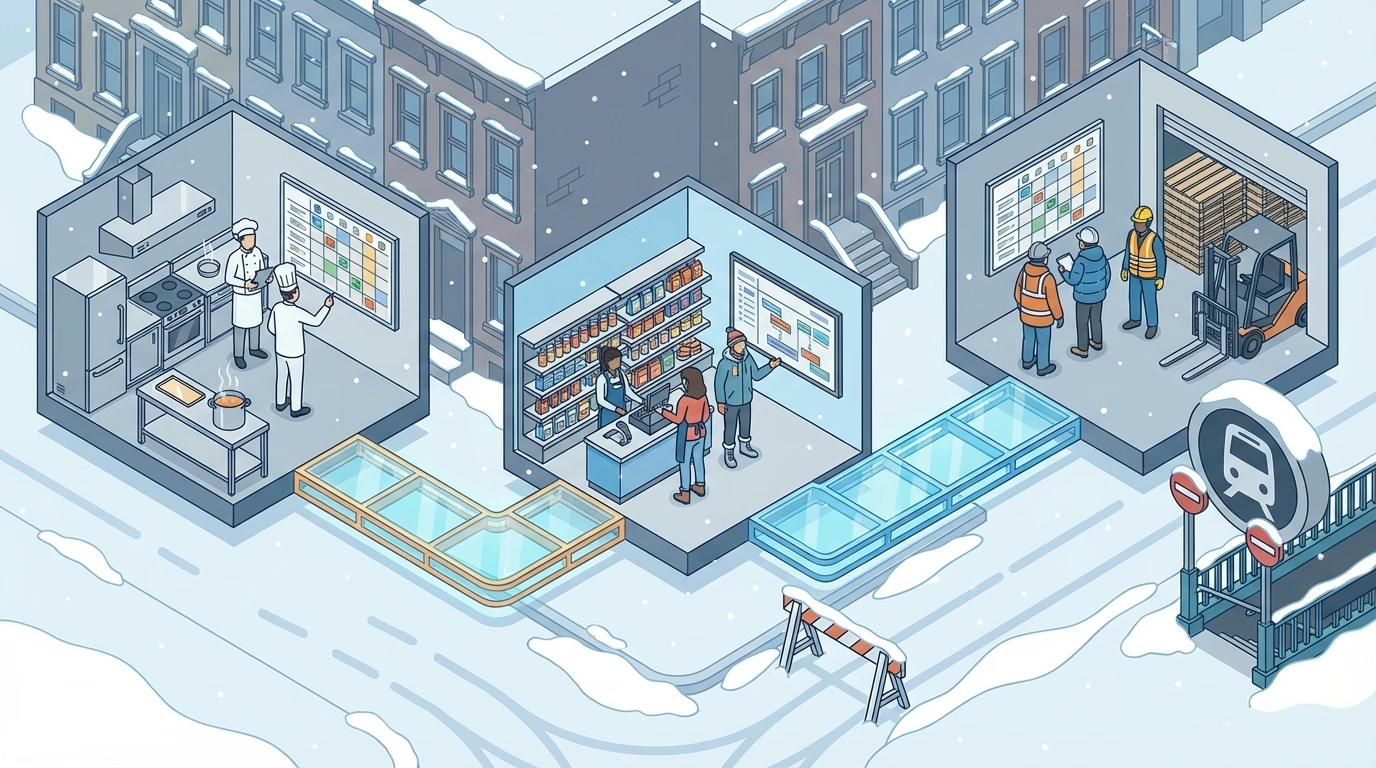
Most inclement weather policies assume employees can work from home. If your team works on-site shifts, you need a policy built for that reality. Here is how to handle pay, scheduling, and communication when weather shuts things down.

Offering time off instead of overtime pay sounds fair. In the US private sector, it is also illegal for hourly workers. Here is what TOIL actually means, how comp time works under the FLSA, and what shift-based businesses should do instead.

A restaurant closes for renovations. A cleaning company loses a major contract. A construction site shuts down for two weeks. What do you owe your team? Here is what employers need to know about temporary shutdowns, from WARN Act triggers to pay obligations.
![HIPAA Compliance Guide: Requirements, Training & Penalties [2026]](/_astro/macro-hipaa-privacy-workstation.DkyZar3o.avif)
Complete HIPAA compliance guide for healthcare teams. Learn who must comply, training requirements, common violations costing $145-$2.19M annually, and 4-step implementation plan to protect patient health information and avoid penalties.
![How Many Hours Can a Minor Work? Scheduling Guide [2026]](/_astro/minor-work-permit-verification.3khvvuMG.avif)
How many hours can a 15 year old work? What about 16 and 17 year olds? Federal and state child labor laws set strict limits on scheduling minors. Learn hour restrictions by age, work permit rules, hazardous job prohibitions, penalties, and how to build compliant schedules.

Employee GPS tracking laws govern when and how employers can monitor worker locations. Learn federal and state legal requirements, consent rules, privacy protections, when tracking is allowed, ECPA compliance, and what employers and employees need to know in 2026.

Small businesses face the same labor law requirements as large companies—wage and hour, harassment prevention, safety, recordkeeping—without dedicated compliance teams. Learn the essential compliance checklist, what to track, required training, and how to avoid costly violations.

At-will employment means you can be fired at any time—but not for illegal reasons. Learn what at-will means for shift workers, hourly employees, and their managers, including exceptions, wrongful termination protections, and how to document your work history.
![After-Hours Work Policy: Stop FLSA Violations & Reduce Burnout [2026]](/_astro/hero-after-hours-boundaries-frontline.yDKjnH8i.avif)
Texting employees after hours creates FLSA violations and burnout. Learn how to create an after-hours work policy that protects non-exempt workers, avoids $500K lawsuits, reduces turnover 30%, and includes a free policy template you can implement Monday.

Reduce overtime costs with better scheduling, AI-driven workforce planning, and real-time tracking. Learn 8 proven strategies that reduce overtime by 23% on average, including cross-training and predictive analytics transforming 2026 scheduling.