How to Handle Snow Day Pay Rules in New York
4 hours of call-in pay, separate hospitality rules, and NYC Fair Workweek obligations — New York weather closures get expensive fast.
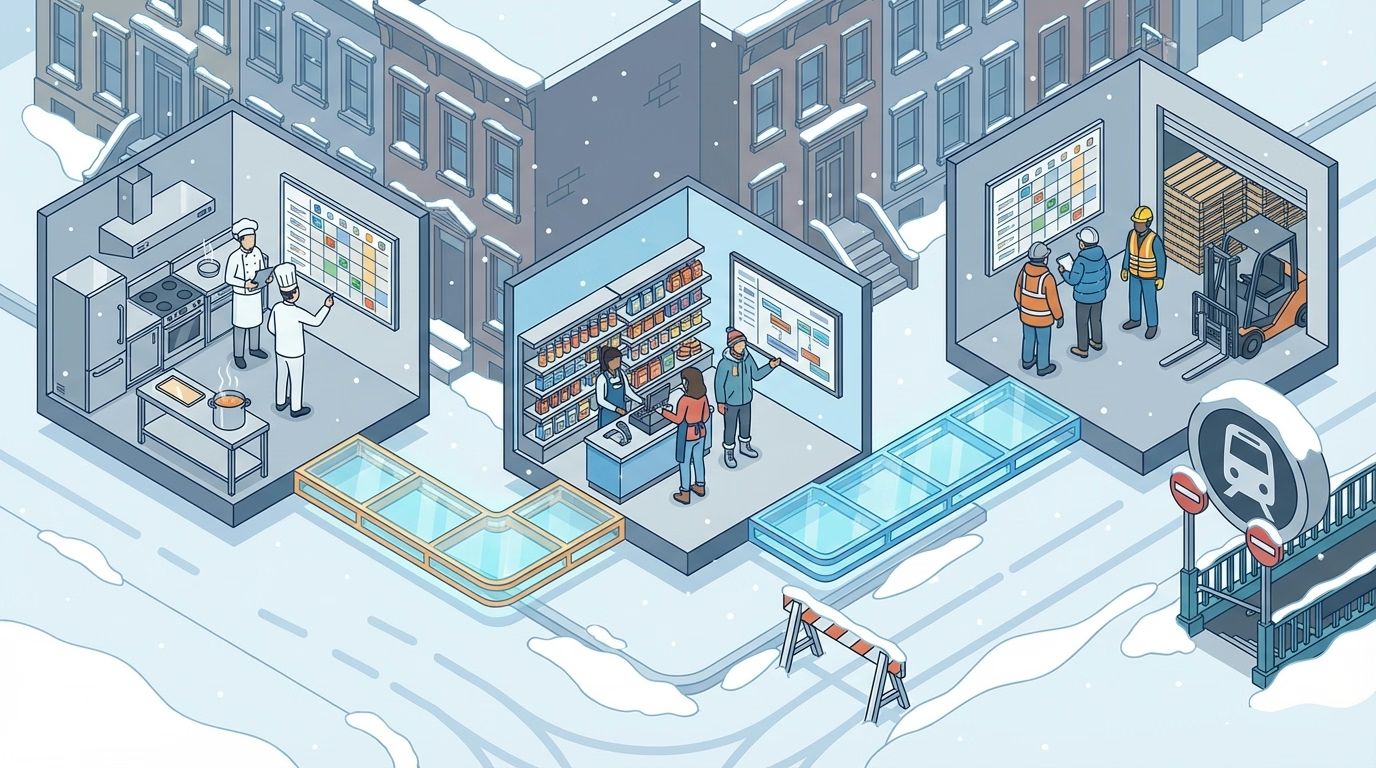
New York’s inclement weather policy obligations are shaped by two forces: some of the country’s most generous call-in pay requirements and winters that regularly shut down transit, close roads, and make commuting dangerous. Whether you’re running restaurant shifts in Manhattan or managing a warehouse crew upstate, you need a policy built for both the law and the lake-effect snow.
New York’s call-in pay rules are broader than most states, covering every industry — not just the ones you’d expect. And for hospitality employers, there’s a separate set of rules with lower thresholds but additional protections that add complexity.
How New York Inclement Weather Pay Laws Differ from Other States
New York stands out from other states in several ways that directly affect how you handle weather disruptions:
| Regulation | What it means for employers |
|---|---|
| 4 hours of call-in pay is the baseline | When a team member reports to work and you don’t provide at least 4 hours of work, you owe them 4 hours at minimum wage. This is among the highest reporting-time pay requirements in the country. |
| Hospitality has its own rules | Hotels and restaurants operate under 12 NYCRR 146-1.5 of the Hospitality Wage Order, with a 3-hour minimum instead of 4. Section 146-1.6 adds spread-of-hours pay when a shift span exceeds 10 hours. |
| NYC has additional scheduling laws | Fast food and retail employers in New York City face the Fair Workweek Law, which adds premium pay for last-minute schedule changes. A weather closure that triggers schedule modifications may have extra costs. |
| Winter is severe and unpredictable | From nor’easters on Long Island to lake-effect storms in Buffalo, weather events regularly make commuting impossible. Your policy needs to handle partial closures where some team members can get to work and others can’t. |
New York Call-In Pay: How Much Must You Pay Employees Sent Home for Weather?
New York’s call-in pay (also called “reporting pay” or “show-up pay”) is governed by 12 NYCRR Section 142-2.3 for non-hospitality employers and separate provisions for hospitality workers.
New York Call-In Pay for Non-Hospitality Employers (4-Hour Minimum)
| Scenario | What you owe |
|---|---|
| Team member reports, sent home with less than 4 hours of work | 4 hours at minimum wage |
| Team member reports, works 3 hours | 4 hours at minimum wage (or actual pay if higher) |
| Team member reports, works 5 hours | Actual hours worked at regular rate |
| Team member notified before leaving home that shift is cancelled | Nothing |
| Team member scheduled but doesn’t report | Nothing |
The key threshold: if you cannot provide at least 4 hours of work, you owe 4 hours at minimum wage. This is calculated at the applicable minimum wage rate, which in 2026 is $17.00/hour in New York City, Long Island, and Westchester County, and $16.00/hour in the rest of the state.
New York Hospitality Call-In Pay and Spread-of-Hours Rules
Hotels and restaurants operate under different minimums (12 NYCRR 146-1.5):
| Scenario | What you owe |
|---|---|
| Team member reports for 1 shift, sent home | 3 hours at minimum wage |
| Team member reports for 2 shifts totaling 6 hours or less, sent home | 6 hours at minimum wage |
| Team member reports for 3 shifts totaling 8 hours or less, sent home | 8 hours at minimum wage |
| Spread-of-hours: shift span exceeds 10 hours | 1 extra hour at minimum wage on top of regular pay |
The multi-shift tiers matter during weather disruptions. If a hospitality team member is called in for a morning shift, sent home, then called back for an evening shift and sent home again, the 6-hour minimum applies — not two separate 3-hour minimums.
When Is New York Call-In Pay NOT Required?
New York recognizes narrow exceptions:
| Exception | Details |
|---|---|
| Advance notification | The employer notified the employee not to report before the employee left home |
| Short shifts | The employee’s regular shift is less than 4 hours (non-hospitality) or 3 hours (hospitality) |
| Government emergency order | Government-declared state of emergency that specifically orders businesses to close — but check with counsel, as this exception is not broadly interpreted |
How to Plan for Snow Days and Winter Storms in New York
New York employers face weather disruptions that range from predictable (lake-effect snow in Western NY every winter) to catastrophic (nor’easters that shut down New York City transit).
New York Weather Risks by Region: NYC, Hudson Valley, and Western NY
New York City and Long Island: Transit dependency means that even moderate snowfall can prevent team members from reaching work. When the MTA reduces or suspends service, employees who rely on subways and buses can’t commute regardless of road conditions. Your policy should account for transit shutdowns separately from general weather closures.
Hudson Valley and Upstate: Road closures and icy conditions are the primary barriers. Team members who drive to work may face county-declared travel bans that make commuting illegal, not just difficult.
Western New York (Buffalo, Rochester): Lake-effect snow can dump feet of snow in narrow bands. One location may get 30 inches while a site 20 miles away gets nothing. Your policy needs to handle location-by-location decisions, not blanket closures.
How to Decide When to Close Your Business for a Winter Storm in New York
- Monitor the forecast starting 24 hours out. National Weather Service advisories and local emergency management alerts give lead time.
- Set your decision point at least 2 hours before the earliest shift. This gives team members time to adjust and avoids triggering call-in pay.
- Check transit status for NYC-area locations. MTA service alerts are your trigger for transit-dependent employees.
- Check county travel advisories for upstate locations. A county travel ban is a clear closure trigger.
- Communicate through a single channel that reaches everyone. Text messages or push notifications through your scheduling app are more reliable than phone trees.
Does the NYC Fair Workweek Law Apply to Weather-Related Schedule Changes?
If you operate fast food or retail locations in New York City, the Fair Workweek Law adds scheduling obligations:
| Employer type | Scheduling obligations |
|---|---|
| Fast food employers | Must provide schedules 14 days in advance. Changes within that window require premium pay — $10–$15 for added hours or time changes (depending on notice length), $20–$75 for cancelled or reduced shifts (scaling with shorter notice), and a $100 premium for clopening shifts (closing and opening with less than 11 hours between). |
| Retail employers | Must provide schedules 72 hours in advance and cannot require on-call scheduling. |
Here is the exact breakdown of premium pay tiers for fast food employers under the Fair Workweek Law:
| Notice given | Schedule change type | Premium pay owed |
|---|---|---|
| Less than 14 days | Added hours | $10 per change |
| Less than 7 days | Added hours | $15 per change |
| Less than 14 days | Cancelled or reduced shift | $20 per change |
| Less than 7 days | Cancelled or reduced shift | $45 per change |
| Less than 72 hours | Cancelled or reduced shift | $75 per change |
During a weather closure, cancelling a fast food employee’s shift with less than 72 hours notice costs $75 per employee ON TOP of the 4-hour call-in pay. For a location with 15 scheduled workers, that’s $1,125 in Fair Workweek premiums plus call-in pay.
Weather closures can trigger these premium pay requirements. If you cancel shifts with less than the required notice, you may owe premium pay on top of call-in pay. Build this into your cost calculations when deciding whether to close.
New York Inclement Weather Policy Checklist for Employers
- Decision deadline: at least 2 hours before earliest shift to avoid call-in pay triggers
- Call-in pay rules documented for both general and hospitality employees
- NYC Fair Workweek premium pay calculated into weather closure cost estimates (if applicable)
- Transit shutdown triggers defined for NYC-area locations
- County travel ban triggers defined for upstate locations
- PTO policy during closures clarified — cannot require NY Paid Sick Leave for employer-initiated closures
- Schedule adjustment procedures documented for different closure scenarios (full day, early release, delayed start)
- Time tracking configured with weather-related absence codes
Do You Have to Pay Employees During a Snow Day in New York?
| Employee type | Notified before reporting | Reported, sent home | Business open, can’t commute |
|---|---|---|---|
| Hourly (general) | No pay owed | 4 hrs at minimum wage (or actual if higher) | No pay owed |
| Hourly (hospitality, 1 shift) | No pay owed | 3 hrs at minimum wage | No pay owed |
| Hourly (hospitality, 2 shifts) | No pay owed | 6 hrs at minimum wage | No pay owed |
| Salaried (exempt) | Full salary if any work that week | Full salary if any work that week | Full salary if any work that week |
Weather closure rules vary by state. See our guides for California, Florida, Illinois, and Texas, or read the complete guide to inclement weather policies.
More New York employer guides: Hiring as a NY sole proprietor | Closing a business in New York
Frequently Asked Questions
Does the NYC Temporary Schedule Change Law affect weather closures?
The NYC Fair Workweek Law primarily affects fast food and retail employers. For fast food employers, cancelling a shift with less than 14 days’ notice requires premium pay. Weather-related cancellations are not automatically exempt. However, the law does include narrow exceptions for events outside the employer’s control, which may apply to severe weather — consult legal counsel for your specific situation before relying on this exception.
Do Employers Have to Pay If the MTA Shuts Down During a Storm?
When the MTA suspends service, many team members physically cannot reach work. Employers don’t owe call-in pay to employees who don’t report. But apply this consistently: if three team members can’t commute because the subway stopped running, treat all three the same way. Document transit shutdowns with time tracking exception codes so weather-related absences don’t count against attendance records.
How Should Buffalo and Upstate NY Employers Handle Lake-Effect Snow?
Lake-effect snow is localized — it can bury one location while leaving another clear. Make closure decisions per location, not company-wide. Monitor county travel advisories, as many upstate counties issue travel bans during heavy lake-effect events. If a county issues a travel ban, that’s a clear trigger to cancel shifts at affected locations. Notify team members immediately through your scheduling system and document the advisory for your records.
- inclement-weather-policy
- new-york-labor-law
- call-in-pay
- reporting-time-pay
- winter-weather
- hospitality-industry
- shift-scheduling
- hourly-employees