How to Create an Inclement Weather Policy for Your Business
Most inclement weather policies assume employees can work from home. If your team works on-site shifts, you need a policy built for that reality. Here is how to handle pay, scheduling, and communication when weather shuts things down.

A cleaning crew supervisor in Denver wakes up at 4:30 AM to six inches of fresh snow. Two team members already texted that they can’t make it. A third is halfway to the job site. The client still expects the building cleaned by 8 AM.
She needs three answers in the next 20 minutes. Who is working today? Who gets paid? And who covers the gap?
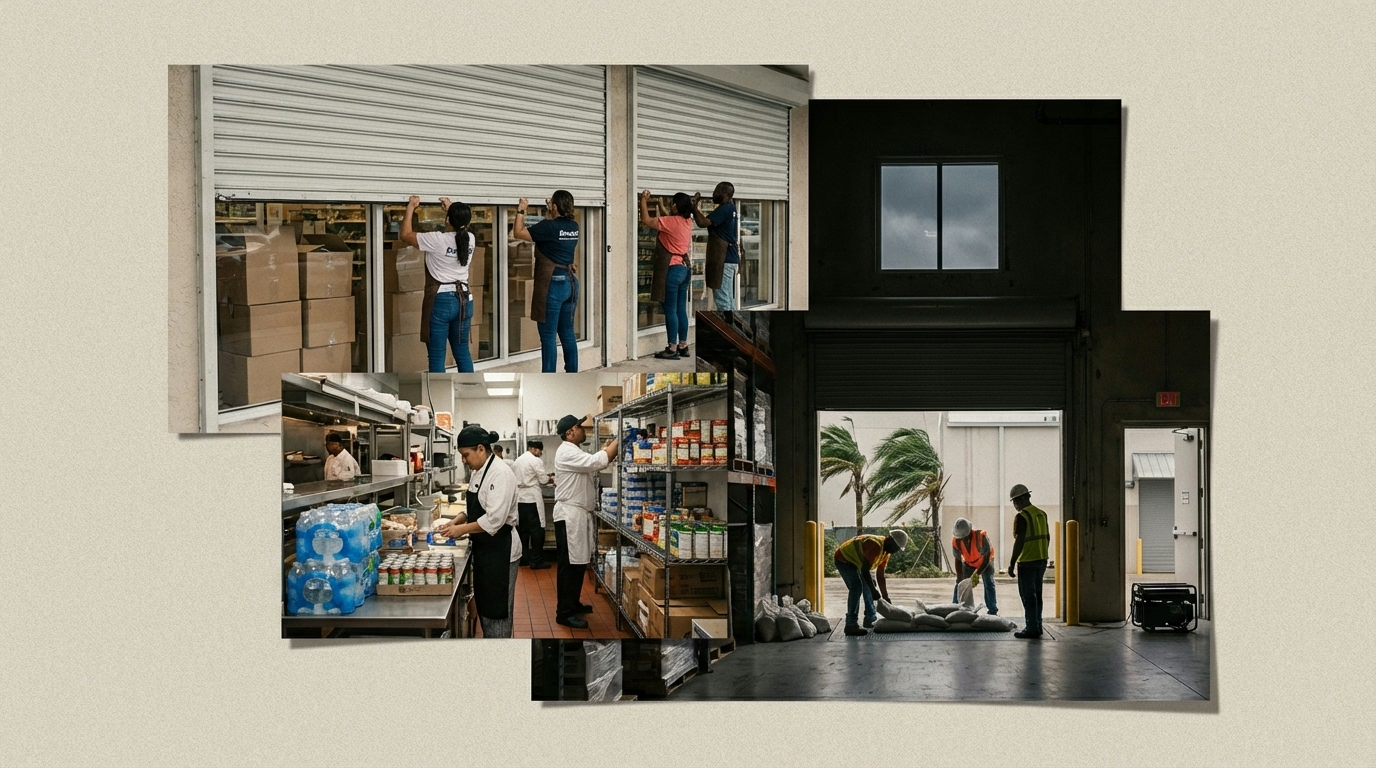
If you manage an office, this is a minor inconvenience. Send a Slack message, let everyone work from home, move on. But if you run a restaurant, a cleaning company, a construction crew, or a security team, bad weather is an operational crisis. Your people can’t do their jobs from a couch.
Most inclement weather policies you’ll find online were written for desk workers. They talk about “remote work alternatives” and “flexible arrangements.” That’s not helpful when you have a 6 AM shift at a job site under three inches of ice.
This guide is for businesses that can’t just go remote. We’ll cover what you actually owe team members when weather shuts things down, how to build a policy that works for hourly teams, and how to handle the 5 AM decision without panic.
Do You Have to Pay Employees When Weather Closes Your Business?
It depends on one thing: are they exempt or non-exempt?
Hourly (non-exempt) team members. If they don’t work, you generally don’t have to pay them. The Fair Labor Standards Act requires pay for hours actually worked. No work, no pay obligation.
But there are two traps.
Trap 1: Reporting-time pay. Several states require you to pay team members who show up for a scheduled shift, even if you send them home. California requires at least half the scheduled shift (minimum 2 hours, maximum 4). New York requires at least 4 hours at minimum wage for most industries (3 hours for hospitality workers). Connecticut, Massachusetts, and New Hampshire have similar rules. If someone drives through a snowstorm to your restaurant, and you send them home after 30 minutes, you may still owe them 2 to 4 hours of pay depending on your state.
Trap 2: Standby time. If you tell hourly team members to stay available in case conditions improve, some states consider that compensable waiting time. If they can’t freely use that time for personal purposes, you may owe them for it.
Salaried (exempt) team members. This is where it gets expensive. Under the FLSA, if an exempt employee performs any work during a workweek and you close for part of that week, you must pay their full weekly salary. Dock a salaried manager’s pay because the restaurant closed Monday and Tuesday for a storm? You risk reclassifying them as non-exempt, retroactively, which opens the door to back overtime and penalties.
The one exception: if the business closes for a full workweek and the exempt employee does zero work, you can skip that week’s salary. But zero means zero. One text message about next week’s schedule, and you owe the full amount.
The short version. Hourly team members are straightforward. No work, no pay, unless your state’s reporting-time law applies. Salaried team members are the expensive surprise most business owners don’t see coming.
Why Most Inclement Weather Policy Templates Fail Shift-Based Teams
Search “inclement weather policy template” and you’ll find dozens. They all share the same problem: they assume your team members have laptops.
A typical template says something like “when weather conditions make commuting unsafe, employees may work remotely with manager approval.” Useless for a kitchen crew, a janitorial team, or a roofing company.
Here’s what shift-based businesses actually need to answer, and what most templates skip.
Who makes the call, and by when? Your team needs a named decision-maker and a cutoff time. If the opening shift starts at 6 AM, someone has to decide by 4:30 AM whether it’s happening. “We’ll monitor conditions” is not a plan.
What counts as inclement weather? Snow is obvious. But what about heavy rain? Extreme heat? Wildfire smoke? A policy that only mentions winter storms leaves you making it up for half the year.
What happens to the schedule? Does the shift get cancelled? Rescheduled? Offered to whoever can make it? Shift-based businesses need to answer this operationally, not just legally.
Can team members choose to come in? Some people live close. Some need the hours. A rigid “nobody works” policy can frustrate people who are able and willing to show up.
How do you track what happened? After the storm, payroll still needs to know who worked, who didn’t, and who showed up but got sent home. If you’re using paper timesheets or an honor system, you’re reconstructing this from memory. That’s how pay disputes start.
How to Write an Inclement Weather Policy for Hourly Employees
A good inclement weather policy for a shift-based business answers five questions. Print these on a single page and put them where your managers can find them at 4 AM.
1. Who decides and when?
Name one person per location as the weather decision-maker. Set a decision deadline tied to your earliest shift. If the first shift starts at 6 AM, the call is made by 4:30 AM. No later.
The decision-maker checks conditions, makes one of three calls (open as normal, delayed opening, or closed), and triggers the notification. No group texts debating options. One person, one call.
2. How do you tell everyone?
A phone tree doesn’t work when you have 15 people on the opening shift. You need a channel that reaches everyone at once and confirms they saw it.
A group text works for very small teams. For larger operations, a scheduling app with push notifications is faster. Post the update once, everyone with a shift that day gets alerted. Whatever method you pick, set it up before storm season. Don’t figure out your communication plan during the emergency.
3. What are the pay rules?
Write them in plain language. Something like this:
- Hourly team members: Paid for hours worked only. If the business closes and you don’t report, no pay for that shift. If you report and get sent home, you’ll receive the state-required reporting-time minimum.
- Salaried managers: Paid full salary for any week in which you perform work, regardless of closures.
- PTO option: Team members may use available PTO to cover a missed shift, but it is not required.
That last point matters. Forcing PTO during a weather closure is legal in most states, but it breeds resentment. If your team already gets limited time off, losing a day to a blizzard feels like a punishment. Offer it as an option, don’t mandate it.
4. What happens to the schedule?
Decide this in advance and stay consistent:
- Cancelled shifts are removed from the schedule. No obligation either way.
- Rescheduled shifts get offered to the original team members first, then opened to anyone available.
- Skeleton crew operations go by proximity, seniority, or volunteer basis. Pick one rule and stick with it.
The worst thing you can do is wing it each time. Inconsistency creates the perception of favoritism, and that’s how you lose good people.
5. How do you document everything?
Your scheduling and attendance system should capture who clocked in, who didn’t, and why. If your system supports exception codes or manager notes, use them. Tag weather-related absences so they don’t get counted against attendance records.
After the event, run a quick report: shifts scheduled versus shifts worked. That data feeds payroll, protects you in disputes, and shows how many labor hours the weather cost you. Over time, the patterns help you plan better.
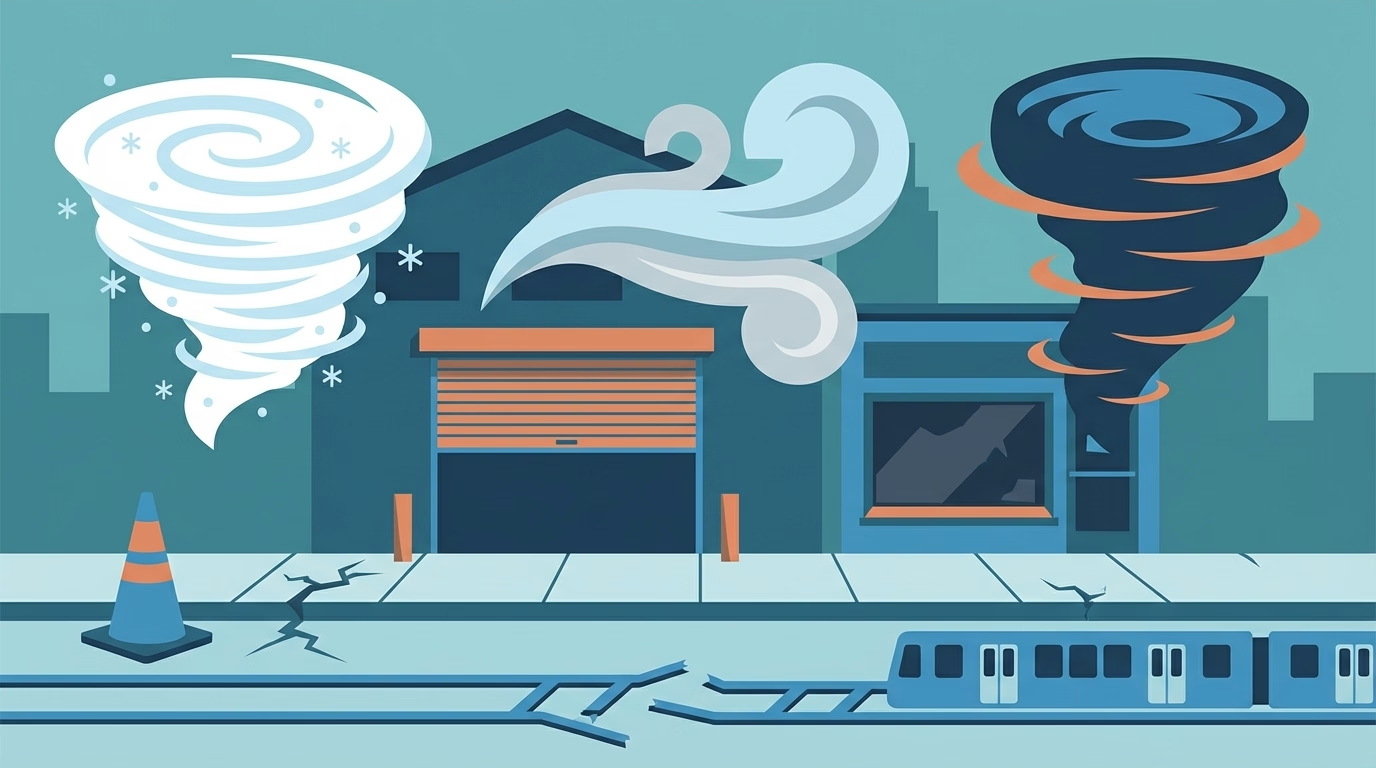
Inclement Weather Policy Beyond Snow: Heat, Smoke, Flooding, and Power Outages
Most weather policies are written with blizzards in mind. But the fastest-growing weather disruptions for shift-based businesses have nothing to do with snow.
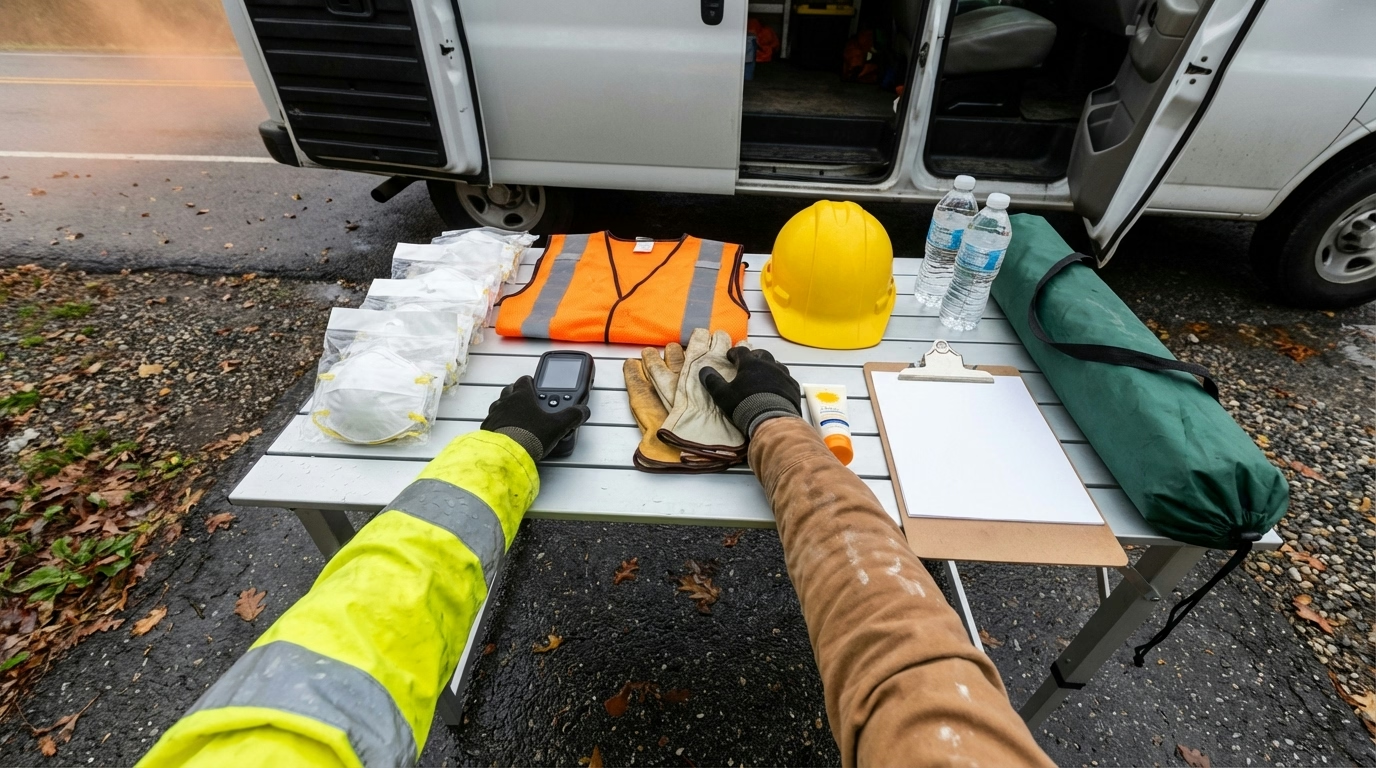
Extreme heat. OSHA has been expanding heat-related protections, and several states already mandate rest breaks, water access, and shade when temperatures exceed thresholds. If your team works outdoors, construction, landscaping, security, your weather policy needs a heat trigger.
Wildfire smoke. California, Oregon, and Washington have specific AQI thresholds that trigger employer obligations for outdoor workers, including providing respiratory protection and training. Even without state-specific rules, the General Duty Clause applies. If the air quality index hits 200, your team shouldn’t be outside without respiratory protection.
Flooding and road closures. Unlike snow, flash flooding can make roads impassable with almost no warning. Your policy should address what happens when a team member physically cannot get to work because their route is blocked. That’s different from choosing not to come in.
Power outages. If your location loses power and can’t operate, that’s a closure even if the sky is clear. A restaurant without electricity can’t serve food. A building without HVAC shouldn’t have a cleaning crew inside during a heat wave.
Build your trigger list around what actually disrupts your operations, not just what looks dramatic on the news.

Inclement Weather Policy Checklist for Employers
Before the next storm, confirm these are in place:
- Named decision-maker at each location
- Decision deadline tied to earliest shift time
- Communication channel tested with everyone enrolled
- Pay rules written plainly for both exempt and non-exempt
- State reporting-time pay rules identified and documented
- PTO policy during closures clarified (optional vs. mandatory)
- Schedule rules defined: cancel, reschedule, or skeleton crew
- Weather triggers beyond snow: heat, smoke, flooding, power outages
- Time tracking codes for weather-related absences configured
- Annual policy review scheduled before peak weather season
Building an Inclement Weather Policy That Protects Your Team and Your Business
An inclement weather policy for a shift-based business shouldn’t read like a legal brief. It should be a one-page answer to the question every manager asks at 4:30 AM: what do I do right now?
Name the decision-maker. Set the deadline. Pick the communication channel. Write the pay rules in plain language. Track what happens. Review it once a year.
The businesses that handle weather well aren’t the ones with the longest policy document. They’re the ones whose team members know exactly what to expect before the first flake falls.
Inclement Weather Policy Rules by State
Weather closure rules vary widely depending on where your business operates. These state-specific guides cover the pay rules, safety requirements, and compliance details that apply in each state:
- California — Reporting-time pay, Cal/OSHA heat and wildfire smoke standards, and strict paid sick leave restrictions.
- Florida — No reporting-time pay, but hurricane season demands a detailed closure and communication plan.
- Illinois — Reporting-time pay for call-ins, ODRISA rest-day limits on makeup shifts, and the Paid Leave for All Workers Act.
- New York — 4-hour call-in pay minimum, separate hospitality rules, and NYC Fair Workweek obligations.
- Texas — No state reporting-time pay or paid leave, but extreme heat, hurricanes, and rare winter storms require a policy built for all three.
Frequently Asked Questions
Do I have to pay hourly employees if I close for weather?
Generally, no. The FLSA only requires pay for hours actually worked. But if a team member reports to your location before you send them home, your state may require partial payment under reporting-time pay laws. California, New York, Connecticut, Massachusetts, and several other states have these requirements. Check your state’s specific rules before the next storm.
Can I dock a salaried employee’s pay for a snow day?
Not if they performed any work that week. Under the FLSA, exempt employees receive their full weekly salary for any week in which they work, regardless of weather closures. The only exception is a full workweek with absolutely zero work performed. No emails, no calls, no schedule adjustments.
Can I require employees to use PTO during a weather closure?
In most states, yes. But consider the effect on morale. Many shift workers have limited PTO balances. Forcing someone to spend a day off because of weather they didn’t choose creates resentment. A better approach is to offer PTO as an option but not require it.
What is reporting-time pay?
Some states require employers to pay a minimum number of hours if team members report to work as scheduled and are then sent home early. California requires at least half the scheduled shift, with a minimum of 2 hours and a maximum of 4. New York requires at least 4 hours at minimum wage. Rules vary by state, so check yours.
Does OSHA require me to close during bad weather?
OSHA doesn’t have a specific closure rule for storms. But the General Duty Clause requires employers to maintain a workplace free of recognized hazards. If conditions create a genuine safety risk, such as extreme heat, dangerous air quality, or icy walkways, you must address it. That might mean closing, modifying operations, or providing protective equipment.
How far in advance should I decide to close?
As early as possible. Aim for 90 minutes before the earliest affected shift. Team members need time to adjust plans and avoid dangerous commutes. For a 6 AM shift, the decision should be made by 4:30 AM at the latest. Late calls waste commute time and may trigger reporting-time pay when employees arrive before hearing the news.
Should my policy cover extreme heat and wildfire smoke?
Yes. Heat illness and poor air quality are growing workplace hazards, especially for outdoor teams. OSHA has expanded heat-exposure guidance, and states like California, Oregon, and Washington require respiratory protection and training when air quality drops below specific thresholds. A policy that only covers snow leaves gaps for months of the year.
What if a team member can’t get to work but we’re still open?
If roads are closed or transit is shut down, the absence is reasonable even when your business stays open. Decide ahead of time whether these situations are unpaid, eligible for PTO, or handled case by case. Whatever rule you set, apply it the same way for everyone. Inconsistency invites complaints.
Can I ask for volunteers instead of assigning shifts during bad weather?
Yes, and it often works well. Some team members live nearby or genuinely want the hours. A volunteer-first approach for skeleton-crew operations respects individual circumstances while keeping things running. Just make sure the opportunity goes out broadly, not just to a few people.
How often should I update my inclement weather policy?
Once a year, before your region’s peak weather season. Check for new or changed state labor laws, update decision-maker contacts, and verify your communication channel still reaches everyone. A five-minute annual review prevents a scramble during the first major storm of the season.
- inclement-weather-policy
- shift-scheduling
- hourly-employees
- reporting-time-pay
- flsa-compliance
- weather-closure
- workforce-management