How to Build a Hurricane Policy for Your Florida Business
Florida has almost no weather closure regulations, but hurricanes, flooding, and lightning mean you still need a solid policy.
Florida’s regulatory approach to inclement weather policy is minimal. No reporting-time pay. No state OSHA plan. No state paid leave mandate. In most respects, Florida defers to federal law and leaves the rest to employer discretion.
But Florida’s weather doesn’t defer to anyone. The state sits in the most active hurricane corridor in the continental United States, faces flooding risks that are increasing every year, and deals with summer heat and lightning that can disrupt outdoor operations daily from June through September. A hands-off regulatory environment doesn’t mean you don’t need a policy — it means the policy is entirely on you.
Florida Inclement Weather Laws: Why Employers Have More Flexibility and More Risk
Florida’s regulatory landscape for weather closures is simpler than most states, but the weather itself is more complex:
| Regulation | What it means for employers |
|---|---|
| No state reporting-time pay | There is no Florida law requiring minimum pay when an employee reports to work and is sent home. You owe only for hours actually worked under the FLSA. |
| No state OSHA plan | Federal OSHA has direct jurisdiction in Florida. There are no enhanced state workplace safety standards for heat, hurricanes, or other weather hazards. |
| No state paid leave law | Florida does not mandate paid sick leave or paid time off at the state level. (Some local ordinances have been attempted but lack enforcement or have been preempted.) |
| Hurricane exposure is the dominant risk | While other states worry about snow or extreme cold, Florida’s primary weather threat is tropical — hurricanes, tropical storms, and the flooding, power outages, and infrastructure damage they bring. |
| Tourism and hospitality dominate | A huge share of Florida’s shift-based workforce is in tourism, hospitality, restaurants, and retail. These industries face unique pressures during hurricanes — tourist-facing businesses may close days before a storm and not reopen for weeks after. |
Do You Have to Pay Employees During a Hurricane Closure in Florida?
With no state-level additions to the FLSA, Florida weather closure pay rules are straightforward:
Florida Pay Rules for Hourly Employees During a Hurricane Closure
| Scenario | What you owe |
|---|---|
| Business closes, team member doesn’t report | Nothing |
| Business closes, team member already clocked in | Hours actually worked only |
| Business stays open, team member can’t commute due to flooding | Nothing |
| Team member works partial shift before early closure | Hours actually worked only |
| Business closes for a full week | Nothing for hourly employees |
Do You Have to Pay Salaried Employees During a Hurricane Closure in Florida?
| Scenario | Pay rule |
|---|---|
| Partial-week closure | Full weekly salary is owed if the exempt employee performed any work during that workweek. |
| Full-week closure | If the exempt employee did no work whatsoever during an entire workweek (no emails, calls, or remote work), salary may be withheld for that week without affecting the salary basis exemption. |
| PTO deduction | You can require exempt employees to use PTO during closures and deduct from their balance, as long as they receive their full weekly salary. |
The Department of Labor has specifically addressed weather closures for exempt employees: an employer-directed closure does not allow partial-week salary deductions, period.
Florida Hurricane Preparedness for Employers: A Step-by-Step Timeline
For Florida employers, a weather policy is primarily a hurricane policy. The state averages a direct hurricane hit every three years, and tropical storm impacts are nearly annual along much of the coastline.
When Should Florida Employers Close Before a Hurricane? (72-Hour Timeline)
Season start (June 1): Review and update your weather policy. Confirm team member contact information. Test communication channels. Stock emergency supplies at each location.
72 hours before projected landfall: Begin monitoring the National Hurricane Center track projections closely. Identify which locations fall within the forecast cone. Alert team members that schedule changes are possible.
48 hours (Hurricane Watch issued): Activate your weather policy. Begin communicating with team members about potential closures. Secure outdoor equipment and signage. Review supply chain for perishable inventory. Make preliminary decisions about pre-storm closure timing.
36 hours (Hurricane Warning issued): Make final closure decisions. Communicate closure dates and expected return timeline to all team members. Allow team members time to prepare their homes and families.
Mandatory evacuation order: If local authorities issue a mandatory evacuation for your area, the business is closed. Do not ask team members to remain. Communicate the closure immediately through all channels.
During the storm: Maintain communication as infrastructure allows. Text messages are more reliable than voice calls during storms. Don’t expect responses during the event.
After the storm: Do not reopen until you’ve assessed structural safety, electrical systems, water contamination, and road access. Communicate reopening timeline as soon as you know it.
What Does a Hurricane Closure Actually Cost a Florida Business?
The direct costs go beyond lost revenue:
| Cost | Estimate |
|---|---|
| Lost revenue (per day, small business) | $500–$5,000+ depending on industry |
| Property damage deductible (hurricane) | Often 2–5% of insured value |
| Employee rehiring/retraining (if staff leaves during extended closure) | $3,000–$7,000 per replacement |
| Generator rental (if power is out) | $200–$500/day |
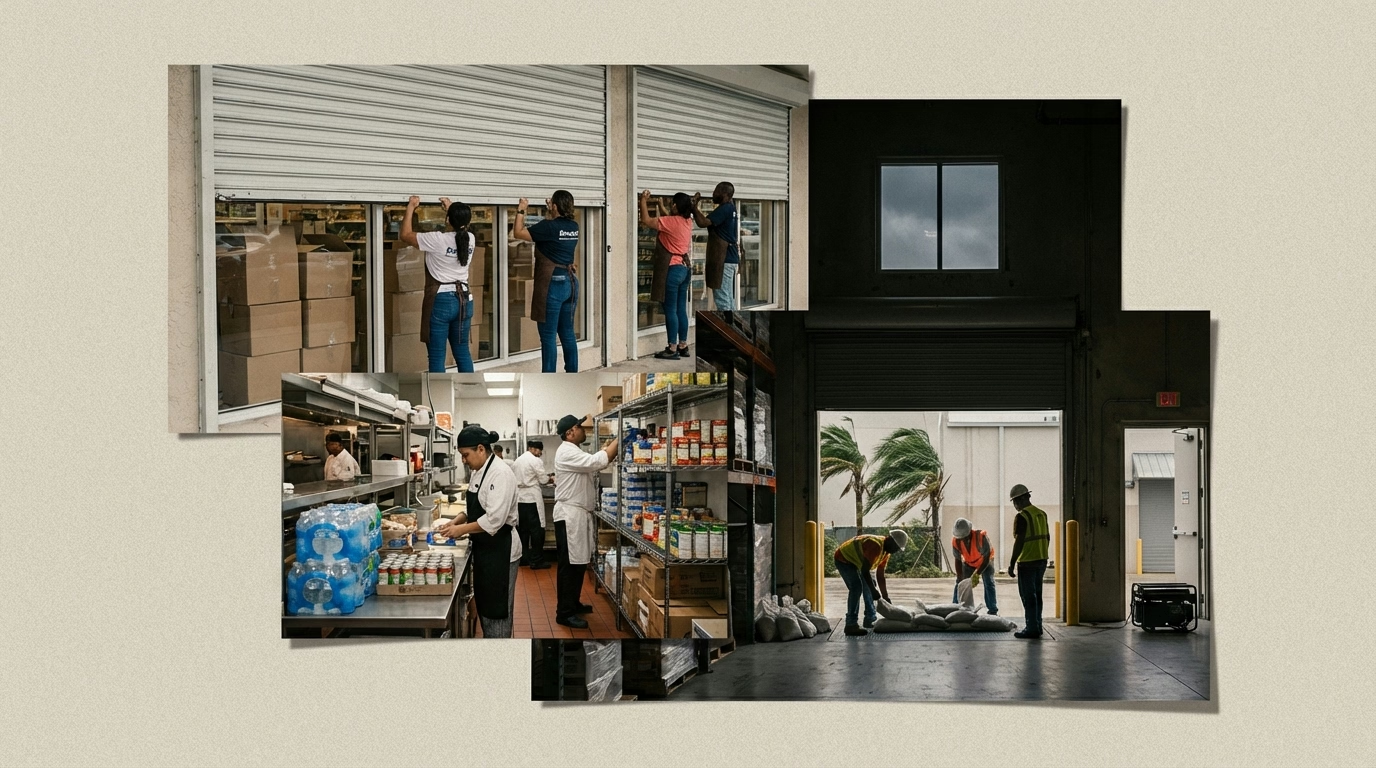
| Emergency supplies and boarding up | $500–$2,000 per location |
Many Florida businesses carry business interruption insurance specifically for hurricane closures — review your coverage before June 1 each year.
How to Handle Employee Pay and Scheduling After a Hurricane in Florida
The storm itself may close your business for a day or two. The aftermath can close it for weeks. Hurricane Ian in 2022 devastated Southwest Florida, and many businesses in Fort Myers, Cape Coral, and Sanibel couldn’t reopen for months.
Your policy should address:
| Consideration | What to do |
|---|---|
| Staggered returns | Some team members will be ready to work immediately. Others may be displaced, without power, dealing with home damage, or caring for family members. Build flexibility into your reopening schedule. |
| Essential workers | If some roles are needed for recovery operations (cleanup, security, critical services), identify them in advance. Offer premium pay or additional compensation for team members who can work during the recovery phase. |
| Extended closure pay | If your business is closed for more than a week, hourly employees receive no pay under Florida and federal law. Consider whether offering partial pay or emergency assistance during extended closures is worth the retention benefit. Losing your entire workforce because they found other employment during a three-week closure costs more than a week of voluntary pay. |
| FEMA and disaster assistance | Connect team members with FEMA individual assistance resources and unemployment benefits. Florida’s Reemployment Assistance program may provide temporary benefits to employees who lose work due to a declared disaster. |

How Should Florida Employers Handle Flooding and Lightning Safety?
Hurricanes get the attention, but flooding is a daily risk during Florida’s rainy season (June through October). Afternoon thunderstorms can dump inches of rain in under an hour, flooding roads and parking lots.
For shift-based businesses, this means:
| Risk | What it means for shift-based businesses |
|---|---|
| Team members may be unable to commute | Flooded roads in low-lying areas can make routes impassable for hours. Your policy should address whether weather-related commute failures are excused absences. |
| Your location may flood | Ground-level businesses in flood-prone areas may need to close on short notice. Having a flood trigger in your policy — water reaching the property, for example — gives managers clear authority to close. |
| Lightning is a workplace hazard | Florida is the lightning capital of the United States. Outdoor workers — landscapers, construction crews, pool maintenance, theme park staff — must stop outdoor work when lightning is within a dangerous range. The 30-30 rule (shelter if the time between flash and thunder is 30 seconds or less; wait 30 minutes after the last flash) is a practical baseline. |
Florida Heat Safety for Outdoor Workers: OSHA Requirements
Florida’s combination of high temperatures and high humidity pushes the heat index above 110°F regularly during summer. Federal OSHA’s Heat Hazard Alert guidance applies since Florida has no state OSHA plan. Acclimatization is the biggest risk factor — new employees and those returning from time off are most vulnerable in the first two weeks. Your time tracking system should flag outdoor shifts during high-heat-index days.
Florida Hurricane and Inclement Weather Policy Checklist for Employers
- Hurricane timeline triggers: 72-hour, 48-hour (watch), 36-hour (warning), evacuation order
- Pay rules documented for hourly and exempt employees during closures of varying length
- PTO policy during closures clarified
- Extended closure plan: pay, benefits continuation, FEMA referral, expected return communication
- Flood triggers defined for each location based on local flood risk
- Lightning safety protocol for outdoor operations (30-30 rule)
- Heat safety plan: water, rest, shade, acclimatization, heat index monitoring
- Post-storm safety assessment procedure before reopening
- Time tracking configured with weather-related exception codes
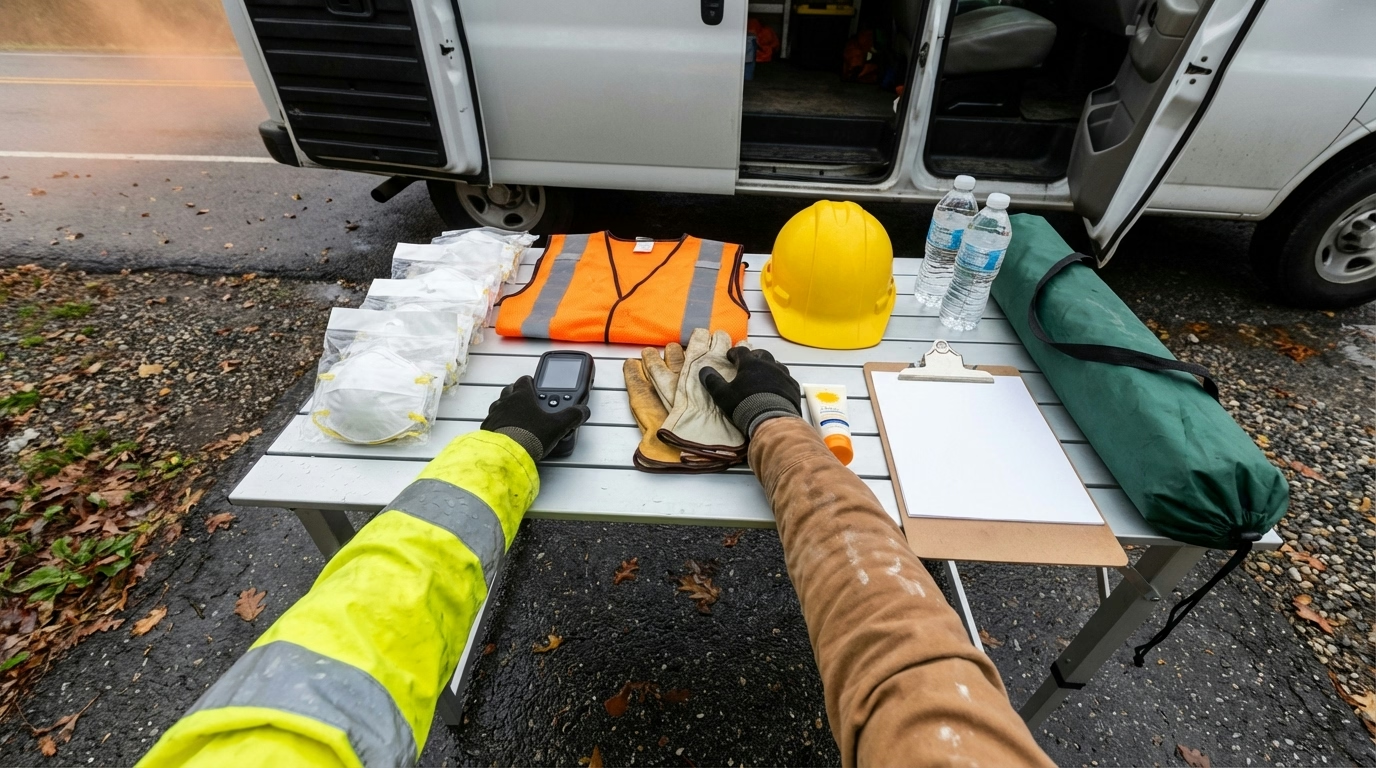
- Emergency supply inventory at each location (plywood, generators, water, first aid)
Weather closure rules vary by state. See our guides for California, Illinois, New York, and Texas, or read the complete guide to inclement weather policies.
More Florida employer guides: Hiring as a FL sole proprietor
Frequently Asked Questions
Can You Be Fired for Refusing to Work During a Hurricane in Florida?
Florida is an at-will state, so termination is legally possible for most reasons. However, firing someone who refuses to work during a mandatory evacuation order would likely violate the OSHA General Duty Clause, which prohibits requiring work under conditions that create a recognized hazard of death or serious injury. Beyond the legal risk, terminating team members during a hurricane creates a retention crisis. The employees you lose first are usually the ones with the most options.
Should You Pay Employees During a Multi-Week Hurricane Closure in Florida?
It depends on your workforce and market. In industries with high turnover — restaurants, retail, tourism — employees who go unpaid for weeks will find other jobs. The cost of rehiring and retraining an entire staff may exceed the cost of offering partial pay during the closure. Some Florida employers offer a flat daily stipend (e.g., $50–$75/day) during declared disasters to maintain the employment relationship. Others offer guaranteed hours for the first week and unpaid leave after that. The right answer depends on your retention economics.
How to Handle Employees Displaced by a Hurricane in Florida
Displacement is common after Florida hurricanes. Team members may be living in shelters, with relatives, or in temporary housing far from your location. Your policy should address how long you’ll hold their position, whether remote work is an option for any roles, and how you’ll communicate reopening schedules to people who may have lost their phones or internet. Connect displaced team members with FEMA disaster assistance and Florida’s Reemployment Assistance program for temporary unemployment benefits.
- inclement-weather-policy
- florida-labor-law
- hurricane-preparedness
- flood-risk
- shift-scheduling
- hourly-employees
- workforce-management
- flsa-compliance