How to Handle Weather Closures as a California Employer
Reporting-time pay, Cal/OSHA heat rules, and wildfire smoke standards make California one of the trickiest states for weather closures.
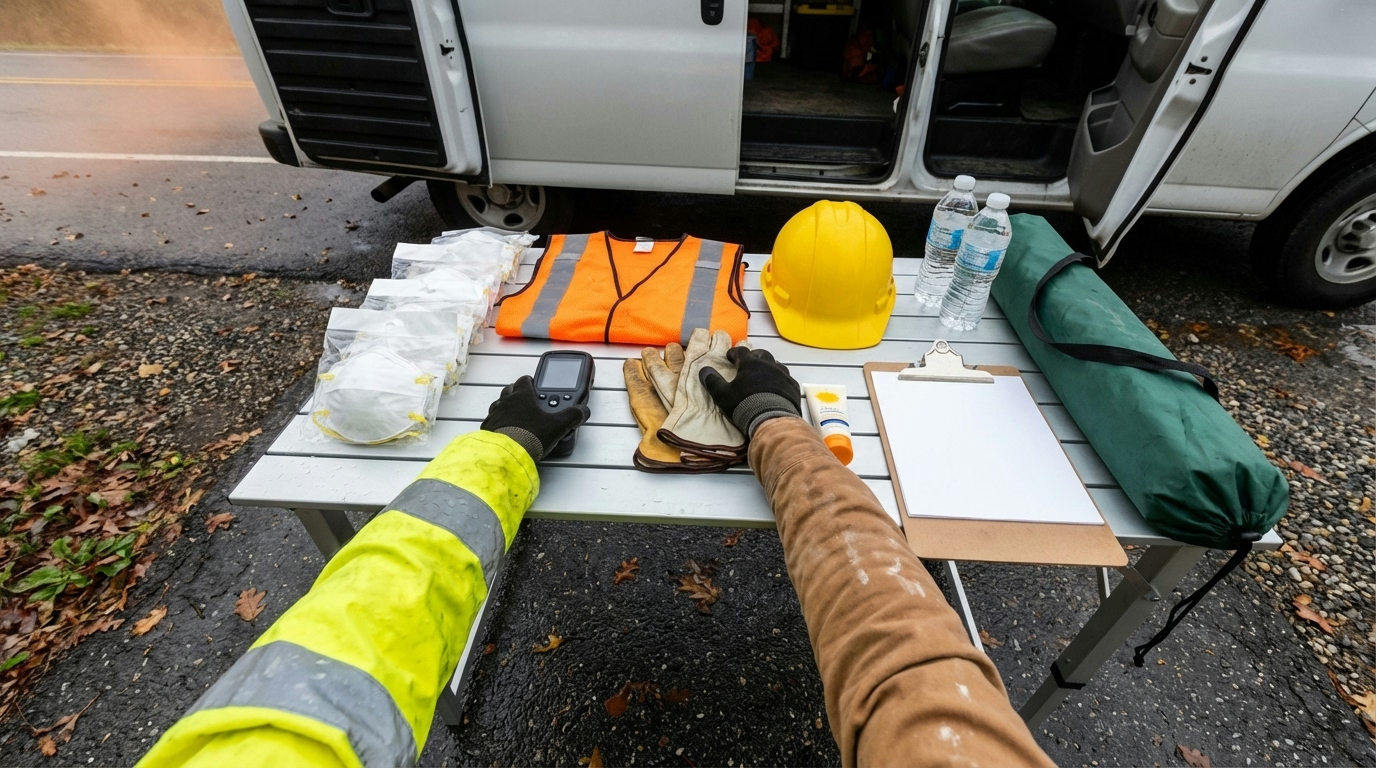
California’s inclement weather policy requirements go well beyond what most states demand. Between reporting-time pay obligations under the Industrial Welfare Commission wage orders, Cal/OSHA’s Heat Illness Prevention Standard, and wildfire smoke protections that are unique in the country, employers managing shift-based teams face a regulatory landscape that punishes improvisation.
This isn’t just about snow days. In California, the weather events most likely to disrupt your operations are heat waves, wildfire smoke, mudslides after heavy rain, and the occasional atmospheric river that floods roads. Your policy needs to cover all of them.
How California Inclement Weather Laws Differ from Other States
Three things set California apart from nearly every other state when it comes to weather and worker protections:
| Regulation | What it means for employers |
|---|---|
| Reporting-time pay is mandatory | If a team member shows up for a scheduled shift and you send them home, you owe them at least half the shift, with a floor of 2 hours and a ceiling of 4 hours. Most states have no such requirement. |
| Cal/OSHA has specific heat and smoke standards | While federal OSHA relies on the General Duty Clause for heat-related hazards, California has codified specific temperature thresholds, mandatory shade and water requirements, and detailed wildfire smoke protections with AQI triggers. |
| Paid sick leave restrictions | California’s Healthy Workplaces, Healthy Families Act limits when you can require employees to use paid sick leave, which affects how you handle pay during weather closures. |
California Reporting Time Pay: How Much Do You Owe Employees Sent Home for Weather?
California’s reporting-time pay rules are found in the IWC wage orders, and they apply to most industries. Here’s how the math works:
| Scenario | What you owe |
|---|---|
| Team member reports, sent home immediately | Half the scheduled shift (min 2 hrs, max 4 hrs) at regular rate |
| Team member reports, works 3 of 8 scheduled hours | 4 hours pay (half the 8-hour shift) |
| Team member reports, works 5 of 8 scheduled hours | 5 hours pay (actual hours exceed half) |
| Team member told not to come in before leaving home | Nothing — reporting-time pay not triggered |
| Second reporting in same day, sent home again | 2 hours pay for the second reporting |
The critical detail: you must notify employees before they leave home to avoid the obligation. If your decision timeline is “we’ll see how it looks at 6 AM” and the opening shift starts at 6:30 AM, you’re already too late. By the time someone drives through flooded roads to reach your location, you owe them reporting-time pay even if you close the moment they arrive.
When Is Reporting Time Pay NOT Required in California?
California recognizes limited exceptions:
| Exception | When it applies |
|---|---|
| Operations cannot begin due to threats to employees or property | Caused by natural disasters or utility failures. This can apply to earthquakes, severe flooding, or power outages — but the employer bears the burden of proving the threat was genuine and immediate. |
| Recommendation of civil authorities | If a government agency recommends closure or evacuation, the exception applies. |
Don’t rely on these exceptions casually. “It was raining hard” probably won’t qualify. A mandatory evacuation order will.
Cal/OSHA Heat Illness Prevention: Employer Requirements for Outdoor Workers
California’s Heat Illness Prevention Standard (Title 8, Section 3395) applies to all outdoor work when temperatures reach 80°F. For shift-based businesses with outdoor operations — construction, landscaping, agriculture, parking management, outdoor dining — this is not optional.
What Temperature Triggers Cal/OSHA Heat Rules? (80°F and 95°F Thresholds)
At 80°F and above:
| Requirement | Details |
|---|---|
| Drinking water | Fresh, cool drinking water available at all times — at least one quart per employee per hour |
| Shade access | Access to shade that can accommodate all employees on recovery or rest breaks |
| Written plan | Written Heat Illness Prevention Plan |
| Training | Employee and supervisor training on heat illness signs and emergency procedures |
| Acclimatization | Acclimatization procedures for new or returning employees |
At 95°F and above (High Heat Procedures):
| Requirement | Details |
|---|---|
| Mandatory cool-down rest | At least 10 minutes every 2 hours for agricultural employees; regular observation and monitoring for other covered industries (construction, landscaping, oil and gas, transportation) |
| Pre-shift meetings | Review heat procedures before every shift |
| Buddy system | Regular check-ins for all employees |
| Emergency contact | Designated person to call emergency services if needed |
| New employee monitoring | Close monitoring of new employees for the first 14 days |
California Wildfire Smoke Rules: When Must Employers Provide N95 Masks?
California’s Protection from Wildfire Smoke regulation (Section 5141.1) is one of the most specific air quality rules in the country. During wildfire season — which now stretches from May through November in many parts of the state — this regulation can affect your operations on short notice.
AQI Levels That Trigger California Employer Obligations
| AQI for PM2.5 | Required employer action |
|---|---|
| 0–150 | No specific obligation under Section 5141.1, but monitor conditions |
| 151–500 | Provide N95 respirators to all exposed employees and encourage voluntary use; implement engineering or administrative controls where feasible to reduce exposure |
| Above 500 | Respirator use is mandatory for all exposed employees; employers must ensure proper fit and provide medical evaluations if required; consider halting outdoor operations |
Check AirNow.gov or the California Air Resources Board for real-time AQI by zip code. Conditions can change within hours during wildfire season — assign someone to check before and during every outdoor shift.
How to Protect Outdoor Workers from Wildfire Smoke in California
- Monitor AQI before and during every shift. Use AirNow.gov or the California Air Resources Board site. Conditions can change within hours.
- Keep N95 respirators stocked. Not surgical masks — actual N95 or higher filtering facepieces. You need enough for every outdoor employee.
- Communicate conditions clearly. Team members need to know the current AQI and what protections are in place. Post it at the start of every shift.
- Relocate work indoors when possible. If indoor space is available and the work can be adapted, moving operations inside may be simpler and safer than managing respiratory protection outdoors.
- Modify your schedule. Smoke is often worst in the morning and evening. Shifting outdoor work to midday when conditions are better is a practical option.
Your scheduling system should flag shifts that overlap with high-AQI periods so managers can adjust before team members are exposed.

How to Handle Flooding, Mudslides, and Atmospheric Rivers in California
California doesn’t get traditional blizzards in most of the state, but it gets atmospheric rivers that can dump months’ worth of rain in days. The impacts on shift-based businesses include:
| Weather risk | Impact on operations |
|---|---|
| Road closures | Prevent team members from reaching work, especially in hillside or canyon areas |
| Mudslide evacuations | May trigger mandatory evacuation orders, activating the reporting-time pay exception |
| Power outages | Downed trees and flooding force closures even when the weather itself has passed |
| Flooding damage | Worksite requires assessment before anyone can safely return |
For these events, your policy should distinguish between:
| Scenario | How to handle |
|---|---|
| The business is closed | No one comes in. No reporting-time pay if you notify employees before they leave home. |
| The business is open, but some team members can’t get there | The ones who show up work; the ones who can’t aren’t owed reporting-time pay because they didn’t report. But apply this consistently — don’t penalize attendance records for weather-blocked absences. |
| The business is open, conditions worsen mid-shift | Send everyone home and pay actual hours worked (or reporting-time pay minimum if they worked less than half the shift). |
California Inclement Weather Policy Checklist for Employers
- Decision deadline: at least 90 minutes before earliest shift to avoid reporting-time pay triggers
- Reporting-time pay rules documented plainly, with examples, in your employee handbook
- IWC wage order number identified for your industry
- Heat Illness Prevention Plan written, posted, and reviewed annually
- Water, shade, and cooling supplies stocked for outdoor operations
- N95 respirators inventoried and accessible before wildfire season
- AQI monitoring protocol assigned to a specific person per shift
- Time tracking configured with exception codes for weather-related absences and early dismissals
Do You Have to Pay Employees During a Weather Closure in California?
| Employee type | Business closed, notified in advance | Business closed, employee reported | Business open, employee can’t commute |
|---|---|---|---|
| Hourly (non-exempt) | No pay owed | Reporting-time pay: half shift (2–4 hrs) | No pay owed |
| Salaried (exempt) | Full salary if any work performed that week | Full salary if any work performed that week | Full salary if any work performed that week |
| PTO option | Can offer, not require paid sick leave | Can offer, not require paid sick leave | Can offer, not require paid sick leave |
Weather closure rules vary by state. See our guides for Florida, Illinois, New York, and Texas, or read the complete guide to inclement weather policies.
More California employer guides: Hiring as a CA sole proprietor | Closing a business in California
Frequently Asked Questions
What are the Cal/OSHA penalties for heat illness violations?
Cal/OSHA can issue citations up to $25,000 for serious violations and over $160,000 for willful or repeat violations. If a worker suffers a heat-related illness or death and the employer lacked a compliant prevention plan, penalties escalate significantly. Cal/OSHA conducts proactive inspections during heat waves and has designated heat illness as a strategic enforcement priority. For context, Cal/OSHA conducted over 1,400 heat-related inspections in a recent year, and penalties for serious violations start at approximately $18,000 per citation — so enforcement is active, not theoretical.
Does California Have Indoor Heat Illness Prevention Standards?
Cal/OSHA adopted indoor heat illness prevention standards effective in 2024 that apply when indoor temperatures reach 87°F for most workplaces (or 82°F where employees wear clothing that restricts heat removal or work in high radiant heat areas). Indoor employers must provide cool-down areas, drinking water, and temperature monitoring. If your shift-based business operates in warehouses, kitchens, or manufacturing facilities, these rules apply to you.
Do You Have to Pay Employees During a Power Outage in California?
A power outage that prevents operations is effectively a weather closure, even if the sky is clear. If you notify team members before they report, no reporting-time pay is owed. If they’ve already reported, standard reporting-time pay rules apply. Document the outage time, track which shifts were affected, and apply pay rules consistently. Notify your workers’ compensation carrier if the outage creates any safety hazards that resulted in incidents.