
How Many Hours Can a Minor Work? Scheduling Guide [2026]
How many hours can a 15 year old work? What about 16 and 17 year olds? Federal and state child labor laws set strict limits on scheduling minors. Learn hour restrictions by age, work permit rules, hazardous job prohibitions, penalties, and how to build compliant schedules.
How many hours can a 15 year old work? Maximum 3 hours on a school day, 18 hours per week during the school year. Schedule them past 7 PM on a school night? Federal penalty: up to $16,035 per violation. Let a 16-year-old operate the cardboard baler? Another $16,035. Three violations = $48,000+ in fines.
If you manage schedules for a restaurant, retail store, or any business that hires minors, these rules directly affect how you build your weekly schedule. Getting it wrong is expensive—and getting it right is straightforward once you know the limits.
Federal FLSA baseline: minimum age 14, strict limits for ages 14–15 (3 hours/day during school, 18 hours/week). Hazardous work requires age 18. Many states add stricter rules—California mandates work permits under 18, New York caps 16-year-olds at 28 hours/week during school. Here’s your 2026 scheduling compliance guide.
What Is Minimum Working Age?
Minimum working age is the legally established youngest age at which a minor can be employed, as defined by federal Fair Labor Standards Act (FLSA) provisions and state child labor laws. These laws establish age thresholds, restrict working hours, prohibit hazardous occupations, and often require work permits to protect young workers’ health, safety, education, and well-being.
💡 Quick Answer
Under federal law, the minimum working age is generally 14 years old for most non-agricultural jobs. Ages 14–15 face strict hour and occupation restrictions. At 16, most non-hazardous jobs are permitted. Hazardous occupations require age 18. State laws often impose stricter rules, including higher minimum ages, tighter hour limits, and mandatory work permits. Employers must comply with the most restrictive applicable law.
⚖️ Child Labor Laws at a Glance
- Federal minimum age: 14 for most non-agricultural work; 16 for many jobs; 18 for hazardous occupations
- State variations: Many states set stricter age, hour, and permit requirements
- Penalties: $16,035 per violation (federal, 2025 rate); higher for repeat or willful violations; state penalties vary
- Key protections: Hour limits during school year, prohibited hazardous work, education priority
What Are the Federal Child Labor Laws Under FLSA? [🔒 Foundation]
Fair Labor Standards Act (FLSA) Child Labor Provisions
Enacted: 1938; updated periodically
Purpose: Protect minors from exploitation and hazardous work, ensure education remains the priority
Enforced by: U.S. Department of Labor, Wage and Hour Division
Minimum Age Requirements by Category
Age 18 and Older [No Restrictions]
What’s allowed:
- Any job, hazardous or non-hazardous
- Unlimited hours
- No work permit required (federally; states may differ)
Age 16–17 [Most Jobs Permitted]
What’s allowed:
- Any non-hazardous job
- Unlimited hours (though state laws may restrict)
Restrictions:
- Cannot work in hazardous occupations (see below)
- Some manufacturing, power-driven machinery, and construction jobs prohibited
Examples of permitted jobs:
- Retail sales, cashier, stocking
- Food service (cooking, serving)
- Office and clerical work
- Lifeguarding (if certified)
- Most hospitality and customer service roles
Age 14–15 [Strict Restrictions]
What’s allowed:
- Non-hazardous jobs in limited industries
- Office and clerical work
- Retail (sales, stocking, cashier—no power-driven equipment)
- Food service (limited—no cooking, baking, or operating equipment)
- Intellectual or creative work (tutoring, some computer work)
Hour restrictions:
During school year:
- Maximum 3 hours per day on school days
- Maximum 18 hours per week
- Work hours: 7 a.m.–7 p.m. only
During summer (June 1–Labor Day):
- Maximum 8 hours per day
- Maximum 40 hours per week
- Work hours: 7 a.m.–9 p.m. (extended evening hours)
Non-school days (school year):
- Maximum 8 hours per day
What’s prohibited:
- Manufacturing, mining, or processing
- Operating or tending power-driven machinery (including paper balers, trash compactors, dough mixers, slicers, etc.)
- Cooking or baking (except at soda fountains, lunch counters, or cafeteria serving counters)
- Construction, warehousing, or transportation
- Ladder or scaffold work
- Work in freezers or meat coolers
Under Age 14 [Very Limited]
Generally prohibited from employment in non-agricultural jobs
Exceptions:
- Newspaper delivery
- Babysitting (casual basis)
- Acting or performing
- Work for parents in non-hazardous jobs (excluding manufacturing or mining)
Hazardous Occupations Orders (HOs) [🔒 Age 18+ Only]
The Department of Labor has identified 17 Hazardous Occupations that minors under 18 cannot perform:
- Manufacturing or storing explosives
- Motor vehicle driving and outside helper (limited exceptions for 17-year-olds)
- Coal mining
- Logging and sawmilling
- Power-driven woodworking machines
- Exposure to radioactive substances
- Power-driven hoisting apparatus (forklifts, etc.)
- Power-driven metal forming, punching, and shearing machines
- Mining (other than coal)
- Slaughtering or meat packing, processing, or rendering
- Power-driven bakery machines
- Power-driven paper products machines (balers, compactors)
- Manufacturing brick, tile, and related products
- Power-driven circular saws, band saws, and guillotine shears
- Wrecking, demolition, and shipbreaking
- Roofing operations
- Excavation operations
Examples in practice:
- 16-year-olds cannot operate forklifts, trash compactors, dough mixers, or meat slicers
- 17-year-olds cannot drive for work (with limited exceptions)
- Minors cannot work on roofs, in construction zones, or with hazardous machinery
⚠️ Common Violation: Power-Driven Equipment
Many employers mistakenly allow 16–17 year olds to operate equipment like:
- Cardboard balers and trash compactors (HO 12)
- Meat slicers and grinders (HO 10)
- Dough mixers and commercial ovens (HO 11)
- Forklifts (HO 7)
All of these are prohibited. Violations result in significant penalties.
Agricultural Employment Exceptions
Agriculture has different child labor rules:
Age 16+: May perform any agricultural work, including hazardous tasks
Age 14–15: May perform non-hazardous agricultural work outside school hours
Age 12–13: May work on farms with parental consent or on parent’s farm
Under 12: May work on parent’s farm or small farms with parental consent (non-hazardous)
Hazardous agricultural work: Requires age 16+ (unless working on parent’s farm)
Why different? Historical exemptions for family farming; ongoing policy debates about whether these are still appropriate
What Are the 5 Most Common Violations Employers Make?
1. Letting 16-year-olds operate “safe” equipment that’s actually prohibited
What employers think: “It’s just a cardboard baler” or “The dough mixer is small”
Reality: Any power-driven paper products machine (balers, compactors) and bakery equipment is Hazardous Occupation 11 and 12. Prohibited under 18.
Penalty: $16,035 per violation. If the minor gets hurt? Up to $72,876.
2. Scheduling 14–15 year olds past 7 PM during school year
What employers think: “They asked for the closing shift” or “We’re short-staffed”
Reality: Federal law caps 14–15 year olds at 7 PM (9 PM summer). States may be stricter.
Penalty: $16,035 per violation. Each day counts separately.
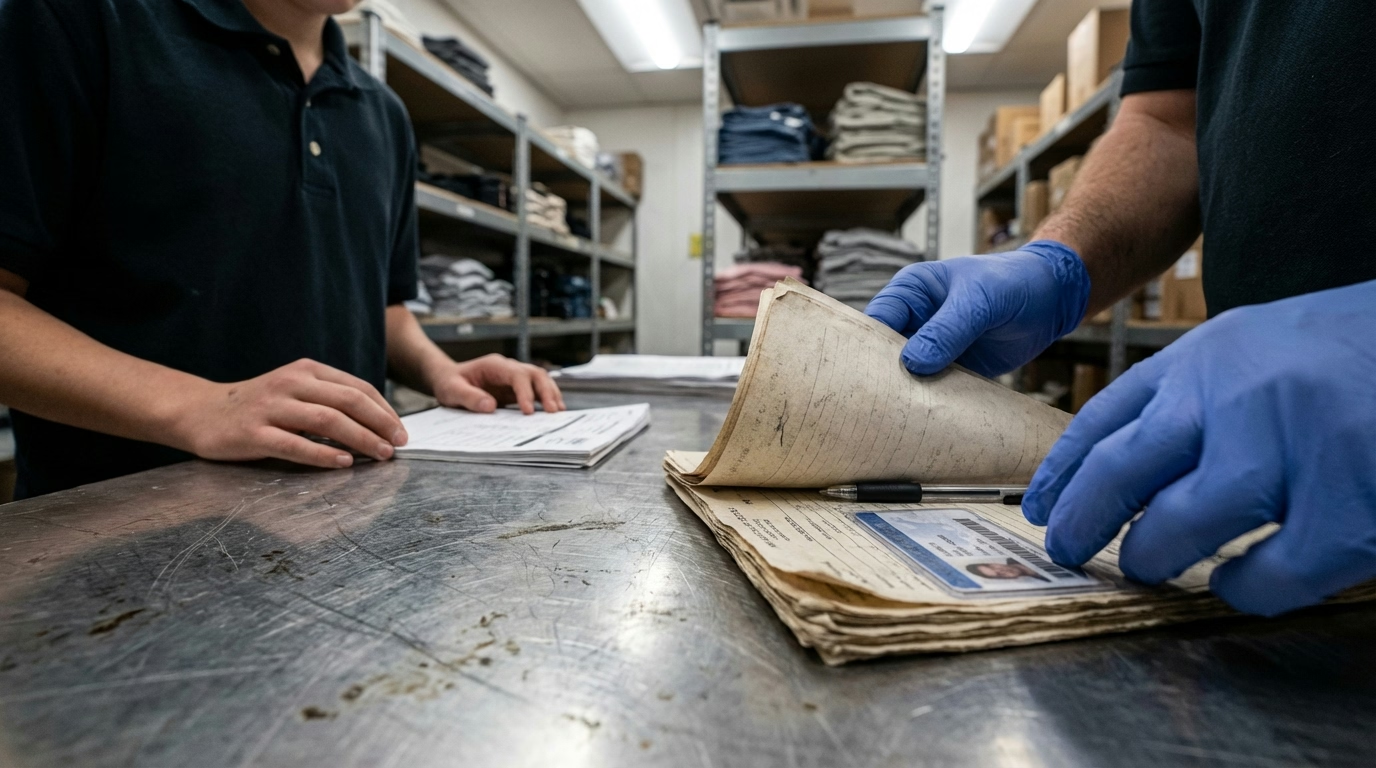
3. Not verifying age before hiring
What employers think: “They said they’re 16” or “They look old enough”
Reality: You must verify age with birth certificate, driver’s license, or work permit. “I didn’t know” is not a defense.
Penalty: Full liability for any child labor violations + fines.
4. Exceeding 18 hours/week for 14–15 year olds during school
What employers think: “They only work weekends” (but 5 hours Saturday + 8 Sunday + 3 hours Tuesday + 3 Thursday = 19 hours)
Reality: Federal max is 18 hours/week when school is in session. Violations are common when minors work multiple short shifts.
Penalty: $16,035 per week violated.
5. Allowing 17-year-olds to drive for work
What employers think: “They have a driver’s license” or “It’s just delivering food”
Reality: Driving is Hazardous Occupation #2. Very limited exceptions exist (licensed, daytime only, no more than 1/3 of workday, limited distance). Most delivery driving is prohibited.
Penalty: $16,035 per violation. Repeated violations up to $145,752.
💡 How to Avoid These
- Verify age before hiring (birth certificate, work permit)
- Post prohibited equipment lists in work areas
- Use time tracking software that flags minor hour violations
- Train managers on what minors can/cannot do
- Get work permits where required (protects you—school verifies age and hours)
What Are the State Child Labor Laws?
Key principle: When federal and state laws differ, the stricter law applies.
States Often Impose Stricter Requirements
Common state variations:
- Higher minimum working ages for certain industries
- More restrictive hour limits
- Earlier curfews (e.g., 8 p.m. instead of 9 p.m.)
- Mandatory work permits or employment certificates
- Shorter maximum daily or weekly hours
- Additional prohibited occupations
Work Permit Requirements by State [🔒 Compliance Critical]
Work permits (employment certificates) are issued by schools or state labor departments to verify minors meet age, education, and hour requirements.
Required for minors under 16: California, Connecticut, Illinois, Massachusetts, New York, Ohio, Pennsylvania, many others
Required under 18: Some states extend to age 18
No requirement: Some states (e.g., Mississippi, South Carolina)
Employer obligations: Verify permit is current and covers the job; keep on file during employment; ensure work complies with permit terms.
💡 Pro Tip
Even if your state doesn’t require work permits, requesting proof of age (birth certificate, driver’s license) protects you from inadvertent violations. Age verification is your first line of defense in child labor compliance.
State-by-State Examples
California: Min age 14. Work permits required under 18. Hours (14–15): 3 hrs/day school days, 18 hrs/week school year. Hours (16–17): 4 hrs/day school days, 48 hrs/week max. Penalties: $500–$10,000 per violation.
New York: Min age 14. Work permits required under 18. Hours (14–15): 3 hrs/day school days, 18 hrs/week school. Hours (16–17): 4 hrs/day school days until 10 PM, 28 hrs/week school year.
Texas: Min age 14. No permits required. Hours (14–15): FLSA rules apply. Hours (16–17): No state restrictions beyond FLSA.
Florida: Min age 14. Work permits required under 18. Generally follows FLSA.
Check your state labor department for specific requirements.

What Are Employer Compliance Obligations for Hiring Minors?
1. Verify Age [🔒 Critical First Step]
How to verify:
- Request work permit (if state requires)
- Request birth certificate or government-issued ID
- Keep verification documents on file
Why it matters: You cannot claim you “didn’t know” the worker’s age if you failed to verify
2. Obtain Required Work Permits
Where required:
- Apply for or assist minor in obtaining work permit
- Verify permit covers the specific job duties and hours
- Keep permit on file and accessible for inspections
3. Post Required Notices [⚡ Legal Requirement]
Federal requirement:
- Post FLSA child labor provisions poster in a conspicuous location
State requirements:
- Many states require additional child labor law posters
Where to get posters: DOL website, state labor agencies
4. Comply with Hour Restrictions [💰 High Violation Risk]
Track minor hours separately:
- Use time tracking systems that flag or prevent violations
- Train managers on hour limits for different age groups
- Monitor schedules to prevent exceeding daily or weekly limits
School vs. non-school days:
- Know your local school calendar
- Adjust limits during summer and school breaks
5. Restrict Job Duties [🔒 Hazardous Occupation Compliance]
Age 14–15:
- No power-driven equipment (balers, mixers, slicers, etc.)
- No cooking or baking
- No ladders, scaffolding, or warehousing
Age 16–17:
- No hazardous occupations (roofing, driving, forklifts, meat processing, etc.)
- Verify specific restrictions for your industry
Training:
- Train supervisors on what minors can and cannot do
- Post lists of prohibited duties in work areas
6. Maintain Records [⚡ Audit Protection]
Keep records for each minor employee:
- Name, address, date of birth
- Work permit (if applicable)
- Hours worked each day and week
- Job duties
- Wage information
Retention: At least 3 years (FLSA); some states require longer
7. Provide Safe Work Environment
Beyond hour and duty restrictions:
- Ensure adequate supervision
- Provide training on safety and equipment
- Prohibit harassment or unsafe conditions
8. Understand Parent-Owned Business Exception
Limited exception: Children can work for their parents in non-hazardous occupations in non-manufacturing, non-mining businesses
Does not exempt: Hazardous occupation restrictions still apply (e.g., parent-owned restaurant cannot have 16-year-old operate meat slicer)
What Are the Penalties for Child Labor Violations? [💰 Severe]
Federal Penalties (FLSA)
Civil penalties:
- Up to $16,035 per violation (2025 rate; adjusted annually for inflation)
- Each minor employed in violation = separate violation
- Each day of violation = separate violation
Example: Employing a 15-year-old to work 5 hours on a school day for 3 days = 3 violations = up to $47,814 in fines
Willful or repeated violations:
- Up to $145,752 per violation for willful or repeated child labor violations
Serious injury or death:
- Up to $72,876 per violation if child labor violation causes serious injury or death to a minor
Criminal penalties:
- Willful violations can result in criminal prosecution
- Fines and potential imprisonment
State Penalties
Vary by state but often include:
- Civil fines ($500–$10,000+ per violation)
- Criminal charges for willful or egregious violations
- Revocation of business licenses
- Injunctions prohibiting employment of minors
Other Consequences
Reputational damage: Public scrutiny and negative press
Lawsuits: Minors (or parents) can sue for damages
Increased scrutiny: DOL and state agencies prioritize repeat violators
Loss of contracts: Government contractors may lose eligibility
Which Industries Have High Child Labor Violation Rates?
Department of Labor enforcement targets:
Retail and food service: Fast food, restaurants, grocery stores (improper hours, hazardous equipment)
Agriculture: Migrant and seasonal child labor, hazardous tasks
Entertainment: Child actors and performers (different rules apply; state-specific regulations)
Manufacturing: Illegal employment of minors in hazardous environments
Construction: Minors performing roofing, excavation, or operating heavy equipment
Healthcare: Limited roles for minors; caution with patient-handling and medical equipment
What Are the Best Practices for Hiring Minors?
Do: Verify age before hiring; obtain work permits where required; train managers on child labor rules; use scheduling software that flags violations; create age-specific job descriptions; post notices; keep detailed records; conduct audits; consult counsel; prioritize safety and education.
Avoid: Assuming federal rules are enough; allowing prohibited equipment; scheduling 14–15 year olds for late hours; exceeding hour limits; hiring under 14 (except narrow exceptions); failing to verify age; ignoring work permits; treating minors as cheap labor.

Quick Reference: Minor Scheduling Limits
Use this table when building weekly schedules that include minors:
| Age 14–15 (School Year) | Age 14–15 (Summer) | Age 16–17 (Federal) | |
|---|---|---|---|
| Max hours/day | 3 (school days), 8 (non-school) | 8 | No federal limit |
| Max hours/week | 18 | 40 | No federal limit |
| Earliest start | 7:00 AM | 7:00 AM | No federal limit |
| Latest end | 7:00 PM | 9:00 PM | No federal limit |
| Hazardous work | Prohibited | Prohibited | Prohibited (18+) |
State laws may be stricter. New York caps 16-year-olds at 28 hours/week during school. California requires work permits under 18. Always check your state’s rules and apply whichever law is more restrictive.
Scheduling Checklist for Managers
Before publishing a schedule that includes minors:
- Verify each minor’s age — check work permits or birth certificates on file
- Check school calendar — school year vs. summer/break limits are different
- Count total weekly hours — include all shifts, not just single-day totals
- Confirm shift end times — 7 PM cutoff during school year for 14–15 year olds
- Review assigned duties — no prohibited equipment or hazardous tasks
- Check state-specific rules — your state may have stricter limits than federal law
What’s the Bottom Line?
Child labor laws directly affect how you schedule minors. Federal law sets the minimum working age at 14, with strict hour and occupation restrictions for ages 14–17. Hazardous work requires age 18. The most common violations—scheduling past curfew, exceeding weekly hours, assigning prohibited equipment—all happen at the scheduling and shift-management level.
Key points:
- 14–15 year olds: Max 3 hours on school days, 18 hours/week during school, no work past 7 PM (9 PM summer)
- 16–17 year olds: No federal hour limits, but many states restrict hours; hazardous occupations still prohibited
- State laws often impose stricter rules — work permits, earlier curfews, lower hour caps. Apply whichever law is more restrictive
- Penalties are severe: up to $16,035 per violation (2025 rate), with higher penalties for repeat or willful violations
- Most violations are scheduling errors — the right software catches them before they happen
Hiring minors benefits businesses and provides valuable work experience, but compliance starts with how you build the schedule.
Looking for tools to schedule minors compliantly? ShiftFlow’s time tracking monitors daily and weekly hours and flags when minors approach legal limits, digital timesheets maintain the records required for labor inspections, and workforce insights help you audit minor scheduling practices before violations occur.
Sources
- U.S. Department of Labor – Youth Employment and Child Labor
- U.S. Department of Labor – FLSA Child Labor Rules
- National Conference of State Legislatures – Labor and Employment Laws
- State Labor Agencies – Various state-specific child labor law resources
Further Reading
- HR Compliance Checklist – Building a youth employment compliance framework
- At-Will Employment – Understanding worker protections and employment status
Frequently Asked Questions
What is the minimum age to work in the United States?
Under federal law (FLSA), the minimum working age is generally 14 years old for most non-agricultural jobs. Children ages 14–15 can work limited hours in non-hazardous jobs. At age 16, more jobs and hours are permitted, though hazardous occupations remain restricted until age 18. State laws vary and may set higher minimum ages or stricter hour limits. Agricultural work has different rules, allowing younger workers in certain circumstances.
What jobs can 14 and 15 year olds do?
14 and 15 year olds can work in retail, food service, offices, and other non-hazardous environments. They cannot work in manufacturing, construction, warehousing, or operate machinery. Hours are restricted: maximum 3 hours on school days, 8 hours on non-school days, 18 hours per week during school, and 40 hours per week during summer. They cannot work before 7 a.m. or after 7 p.m. (9 p.m. summer).
Do minors need work permits?
It depends on the state. Many states require work permits (also called employment certificates) for minors under 16 or 18. Federal law does not require permits, but employers must comply with state requirements. Work permits are typically issued by schools and verify the minor meets age, hour, and education requirements. Check your state labor agency for specific rules.
Can a 16 year old operate a cash register or use a ladder?
Yes to cash register. Ladder depends on height and purpose. Minors under 18 cannot use ladders for construction, roofing, or warehouse tasks covered by Hazardous Occupations. Retail stocking with step stools is typically permitted.
What are the penalties for violating child labor laws?
Federal penalties can reach $16,035 per violation (2025 rate), with much higher penalties (up to $145,752) for willful or repeated violations. If a violation causes serious injury or death, penalties reach $72,876 per violation. Each minor and each day can be a separate violation. State penalties vary but often include fines of $500–$10,000+ per violation, criminal charges for egregious cases, and reputational damage.
Can my 15 year old work past 7 p.m. during the summer?
Yes, during summer (June 1–Labor Day), federal law allows 14–15 year olds to work until 9 p.m. However, state laws may impose earlier curfews. During school year, generally cannot work past 7 p.m.
Can a 17 year old drive for work deliveries?
Generally no. Driving for work is a Hazardous Occupation prohibited for minors under 18, with very limited exceptions. Some 17 year olds may drive occasionally if specific conditions are met (licensed, no more than 1/3 of workday, daylight only, limited distance), but most delivery driving is prohibited.
Do child labor laws apply to family businesses?
Partially. Children working in parent-owned businesses (non-manufacturing, non-mining) are exempt from some FLSA restrictions. However, hazardous occupation prohibitions still apply. Hour restrictions may be relaxed. Always comply with hazardous occupation rules.
- child-labor-laws
- minimum-working-age
- flsa
- youth-employment
- work-permits
- compliance