What Is Skeleton Staff?
Learn what skeleton staff means in workforce management, how to calculate minimum staffing levels for holidays and low-volume periods, typical reduction rates (30–70% of normal), cost vs service tradeoffs, and safety considerations for skeleton crews.
What Is Skeleton Staff?
Skeleton staff (also called skeleton crew) is the minimum number of employees required to maintain essential operations during low-demand periods such as holidays, weekends, overnight hours, or seasonal slowdowns. This reduced staffing approach typically operates with 30–70% fewer workers than normal levels while preserving critical safety, security, and customer service functions.
Organizations use skeleton staffing to reduce labor costs during predictable low-traffic periods without completely shutting down operations. The term comes from the idea of maintaining just the “bones” or essential structure of normal operations.
Quick Answer
Skeleton staff is the bare minimum workforce needed to keep operations running during low-demand periods like holidays or weekends. Typical reductions are 40–60% below normal staffing while maintaining essential functions.
According to workforce planning research, businesses using strategic skeleton staffing during appropriate periods reduce labor costs by 15–25% annually while maintaining customer service standards for the reduced demand levels during those periods.
When Should You Use Skeleton Staffing?
Major Holidays
The most common skeleton staffing scenarios occur during major holidays when customer demand drops significantly:
- Christmas Day: Retail, restaurants, hotels operate with minimal staff
- Thanksgiving: Most businesses except hospitality run skeleton crews
- New Year’s Day: Reduced operations across most industries
- Easter Sunday: Retail and food service reduce staffing
- Independence Day: Manufacturing, offices, some retail scale back
Low-Traffic Periods
Beyond holidays, skeleton staffing makes sense during:
- Weekend overnight hours: Hotels, hospitals, security services
- Off-season months: Tourism, seasonal retail, landscaping
- Between business cycles: Manufacturing during changeovers
- Severe weather events: When customer traffic drops due to storms
- Facility maintenance periods: When certain areas are offline
Budget Constraint Periods
Some organizations implement temporary skeleton staffing during cash-flow challenges or between seasonal revenue peaks to preserve profitability.
What Are Typical Skeleton Staffing Levels by Industry?

| Industry | Normal Staff | Skeleton Staff | Reduction % | Essential Functions Maintained |
|---|---|---|---|---|
| Retail | 12 | 6 | 50% | Cash registers, security, basic stocking |
| Hotel | 25 | 15 | 40% | Front desk, housekeeping, maintenance, security |
| Restaurant | 18 | 5–9 | 50–70% | Kitchen basics, servers, manager |
| Hospital | 150 | 110–120 | 20–27% | Patient care (reduced non-emergency services) |
| Manufacturing | 80 | 30–40 | 50–63% | Maintenance, security, essential production |
| Call Center | 100 | 30–40 | 60–70% | Emergency support, basic customer service |
| Office | 50 | 10–15 | 70–80% | Security, facilities, emergency IT |
| Gym/Fitness | 8 | 2–3 | 63–75% | Front desk, basic supervision, cleaning |
| Gas Station | 6 | 2 | 67% | Cashier, basic service |
Healthcare maintains the highest skeleton staff ratios due to patient safety requirements and regulatory minimum staffing levels. Offices and administrative functions can operate with the deepest cuts since most work can wait until normal staffing resumes.
How Do You Calculate Skeleton Staff Requirements?
Step 1: Identify Essential Functions
List critical functions that must continue regardless of demand levels:
- Safety and security: Monitoring, emergency response
- Legal/regulatory compliance: Minimum nurse ratios, fire watch requirements
- Customer emergencies: Help desk, basic service recovery
- Asset protection: Building security, equipment monitoring
- Core revenue activities: Cash handling, reservation processing
Step 2: Determine Minimum Workers Per Function
Calculate the absolute minimum workers needed for each essential function:
Example (Hotel):
- Front desk: 1 (instead of 3)
- Housekeeping: 2 (instead of 8, for checkouts only)
- Maintenance: 1 on-call (instead of 2 on-site)
- Security: 1 (instead of 2)
- Management: 1 (instead of 3)
- Total skeleton staff: 5 on-site + 1 on-call = 6 (vs 18 normal)
Step 3: Consider Regulatory Minimums
Verify that proposed skeleton levels meet legal requirements:
- Healthcare: Nurse-to-patient ratios vary by state (California requires 1:5 for med-surg)
- Security: Some facilities require minimum security presence 24/7
- Food service: Health codes may require minimum management presence
- Childcare: Strict staff-to-child ratios always apply
Step 4: Add Buffer for Unexpected Situations
Add 10–20% buffer to handle unexpected demand spikes or emergency situations without complete service failure.
Step 5: Test and Refine
Implement proposed skeleton staffing during a low-risk period and gather feedback on adequacy before making it standard practice.
What Are the Benefits of Skeleton Staffing?
Cost Savings
The primary benefit is reduced labor costs during low-revenue periods. If normal daily labor costs $3,200 and skeleton staff costs $1,400, the organization saves $1,800 per skeleton staff day.
Annual savings example: Operating skeleton staff 20 days/year saves $36,000 in labor costs.
Improved Profitability During Slow Periods
Matching staff levels to actual demand prevents situations where labor costs exceed revenue during known slow periods.
Reduced Employee Burnout
By not requiring full teams to work slow holidays and weekends, organizations can give more workers time off, improving work-life balance and reducing turnover.
Competitive Pay for Skeleton Crew
With savings from reduced staffing, organizations can offer premium pay (shift differential or double time) to workers willing to cover skeleton shifts, making these otherwise undesirable shifts more attractive.
What Are the Risks of Skeleton Staffing?
Service Quality Degradation
With minimal staff, service speed and quality decline. Customers may experience longer wait times, reduced amenities, or basic-only service that could damage reputation.
Employee Stress
Skeleton crew members handle broader responsibilities with no backup support. This creates stress, increases error risk, and can lead to burnout if skeleton staffing is overused.
Safety Concerns
Inadequate staffing for emergencies creates risk. A single worker handling a medical emergency or security incident without immediate backup poses safety hazards.
Missed Revenue Opportunities
If demand is higher than anticipated, skeleton staff cannot capture potential sales, leading to turned-away customers or lost revenue.
Regulatory Violations
Cutting too deep may violate minimum staffing requirements in regulated industries (healthcare, childcare, food service), creating legal liability.
Organizations must balance cost savings against these risks when determining appropriate skeleton staffing levels.
How Do You Schedule Skeleton Staff Fairly?
Rotate Holiday Coverage
Don’t assign the same workers to all holiday skeleton shifts. Rotate so everyone shares some holiday work and some holiday time off over the year.
Example rotation:
- Thanksgiving skeleton crew: Team A
- Christmas skeleton crew: Team B
- New Year’s skeleton crew: Team C
- Next Thanksgiving: Team B (rotation continues)
Offer Premium Pay
Compensate skeleton crew workers with premium pay (time-and-a-half or double time) for holiday and weekend skeleton shifts to make these assignments more attractive.
Allow Voluntary Sign-Ups First
Offer skeleton shifts to volunteers before mandating assignments. Some workers prefer working quiet holidays for premium pay and appreciate the reduced supervision.
Provide Clear Expectations
Explain exactly what responsibilities skeleton crew will handle and what can wait until normal staffing resumes. Prevent overwhelming workers with unrealistic expectations.
Ensure Management Coverage
Don’t leave skeleton crews without management support. Either include a manager in skeleton staffing or ensure on-call management availability for escalations.
Many organizations apply similar fairness principles used in mandatory overtime scheduling when assigning skeleton crew shifts.
What Are Alternatives to Skeleton Staffing?
| Alternative | Description | Pros | Cons |
|---|---|---|---|
| Complete closure | Shut down entirely during slow periods | Zero labor costs | No revenue, customer inconvenience |
| Reduced hours | Operate fewer hours with normal staffing | Maintain service quality | Limited savings, some staff idle |
| On-call staffing | Call in workers only if demand exceeds threshold | Pay only when needed | Unpredictable for workers |
| Cross-training | Few workers cover multiple roles | Flexibility without extra hiring | Training costs, complexity |
| Outsourced coverage | Third-party provides holiday/weekend coverage | No internal staff required | Higher hourly costs, less control |
| Technology solutions | Automation, self-service options reduce need | Long-term cost reduction | High initial investment |
Many retail operations use self-checkout and mobile apps to reduce skeleton staff requirements during slow periods. Hotels use mobile check-in and keyless entry to operate with smaller front desk coverage.
What Are Real-World Skeleton Staffing Examples?
Regional Hospital
Normal weekday staffing: 180 employees across all departments Holiday skeleton staff: 125 employees
Reductions:
- Administration: 25 → 3 (on-call only)
- Elective surgery: 20 → 0 (no scheduled procedures)
- Imaging: 12 → 4 (emergency only)
- Physical therapy: 8 → 1
- Cafeteria: 10 → 4
- Emergency, ICU, patient floors: Minimal reduction (regulatory requirements)
Result: $18,000 labor savings per holiday while maintaining patient care standards
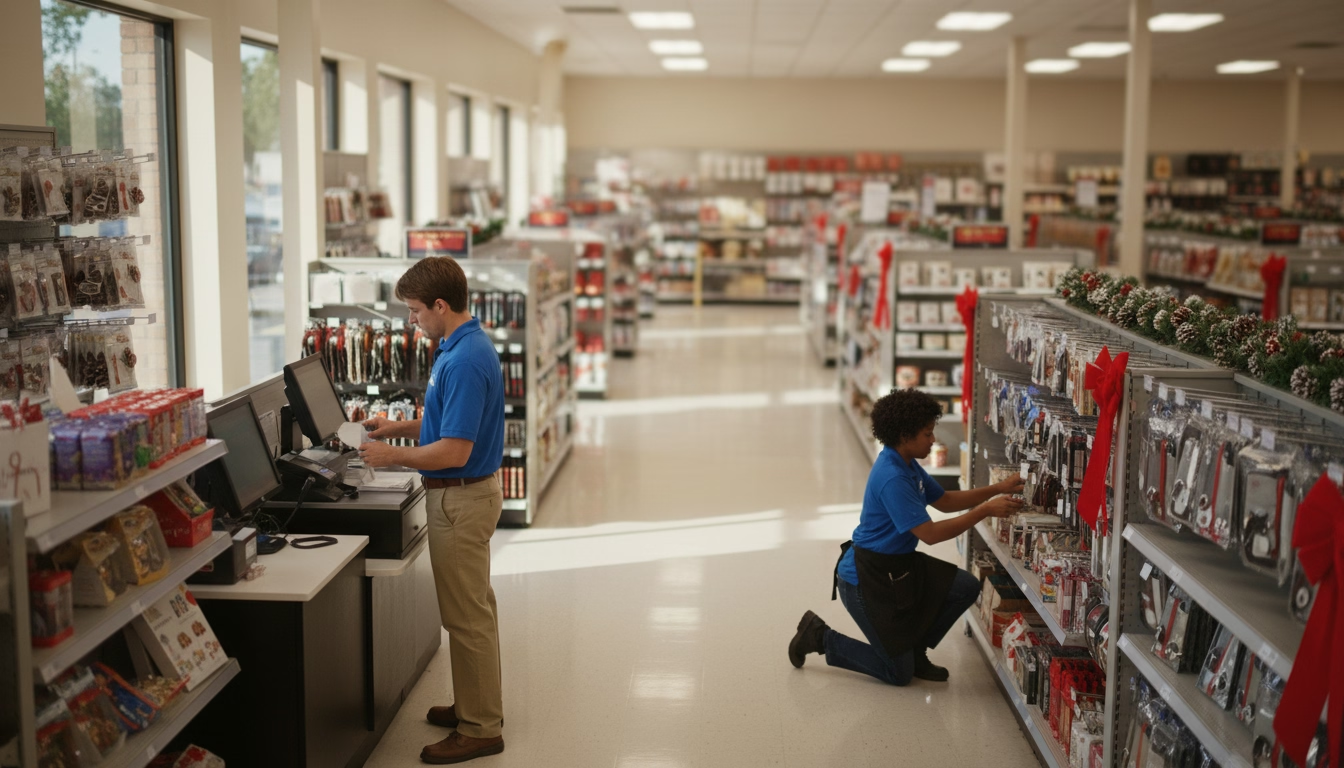
Retail Chain Store
Normal Saturday staffing: 14 employees Holiday skeleton staff: 7 employees
Coverage:
- Store manager: 1
- Cashiers: 3 (vs 6 normal)
- Sales floor: 2 (vs 5 normal)
- Stockroom: 1 (vs 2 normal)
- Loss prevention: 0 (manager monitors)
Result: 50% labor cost reduction while maintaining basic retail operations
Manufacturing Facility
Normal production shift: 65 workers Holiday skeleton crew: 22 workers
Functions:
- Production: Paused
- Maintenance: 12 (preventive maintenance, repairs)
- Security: 4
- Facilities: 3
- Management: 3
Result: Production downtime used for maintenance that would otherwise require overtime or production interruption
The Bottom Line
Skeleton staff is the minimum workforce needed to maintain essential operations during predictable low-demand periods like holidays, weekends, or off-season slowdowns. Typical reductions of 40–60% below normal staffing provide significant cost savings while preserving safety, security, and core customer service.
Effective skeleton staffing requires careful calculation of essential functions, compliance with regulatory minimums, fair rotation among workers, and often premium pay to compensate those working the skeleton shifts. Organizations must balance cost savings against service quality and safety risks.
Try ShiftFlow’s scheduling tools to plan and track skeleton staffing coverage with automated minimum staffing alerts and fair rotation scheduling.
Sources
- U.S. Bureau of Labor Statistics – Employer Costs for Employee Compensation
- U.S. Department of Labor – Work Schedules
- California Department of Public Health – Licensed Facility Staffing Requirements
Further Reading
- Mandatory Overtime Guide – Managing required extra hours
- Shift Differential Explained – Premium pay for undesirable shifts
- Double Time Pay Rules – Holiday premium pay requirements
Frequently Asked Questions
What is skeleton staff?
Skeleton staff is the minimum number of workers needed to maintain essential operations during low-demand periods like holidays or weekends. Typical reductions are 30–70% below normal staffing levels.
How do you determine skeleton staff levels?
Identify essential functions (safety, security, customer emergencies), calculate minimum workers per function, verify regulatory requirements, analyze historical demand during target periods, and add 10–20% buffer.
What are typical skeleton staffing reductions?
Most businesses reduce by 40–60%: retail 50%, hotels 40%, manufacturing 60%, restaurants 50–70%, offices 70–80%. Healthcare maintains higher levels (20–30% reduction) due to safety requirements.
When should you use skeleton staffing?
Use skeleton staffing during major holidays (Christmas, Thanksgiving, New Year’s), low-traffic weekends, off-season periods, severe weather, and facility maintenance when full services aren’t needed.
What is the difference between skeleton staff and understaffing?
Skeleton staff is intentional, planned minimum coverage for known low-demand periods. Understaffing is inadequate coverage for expected demand levels, causing service failures and safety risks.
How do you compensate skeleton crew workers?
Offer premium pay (time-and-a-half or double time) for holiday skeleton shifts, rotate assignments fairly so all workers share burden, allow voluntary sign-ups first, and ensure management support.
What are the risks of skeleton staffing?
Risks include service quality decline, employee stress from broader responsibilities, safety concerns with minimal backup, missed revenue if demand exceeds expectations, and potential regulatory violations if too lean.
Can you require employees to work skeleton shifts?
Yes, employers can mandate skeleton shift work unless restricted by union contract or employment agreement. However, fair rotation and premium pay improve morale and reduce resistance.