How to Build Effective Teamwork
Teamwork is coordinated effort to achieve shared goals. Learn benefits, core behaviors, frameworks, and practical steps to strengthen collaboration across shifts.

What Is Teamwork?
Teamwork is the collaborative process where individuals work together toward common goals, combining diverse skills, knowledge, and perspectives to achieve outcomes exceeding individual capabilities. Effective teamwork requires clear communication, mutual support, shared accountability, and coordinated effort. True teamwork involves interdependence—team members rely on each other’s contributions, actively support one another, and share both responsibility and credit.
Key takeaways
- Set clear goals, roles, and norms; clarify decision rights.
- Choose async/sync channels to reduce handoff friction across shifts.
- Build trust with feedback, recognition, and supportive leadership.
- Related: Employee empowerment and group chat.
Teams with high collaboration scores are 21% more profitable and experience 41% lower absenteeism than teams with poor teamwork.
Why Teamwork Matters
Teams deliver 20–25% higher productivity by distributing work based on strengths and eliminating duplication. Diverse perspectives generate 3.5 times more innovative ideas. Engaged team members are 59% less likely to leave. Collaborative quality control catches mistakes early, and shared accountability motivates thoroughness. Teams also handle absences and challenges better, reducing single points of failure.
Essential Elements of Effective Teamwork
- Clear Shared Goals: Specific objectives aligned with priorities and communicated consistently.
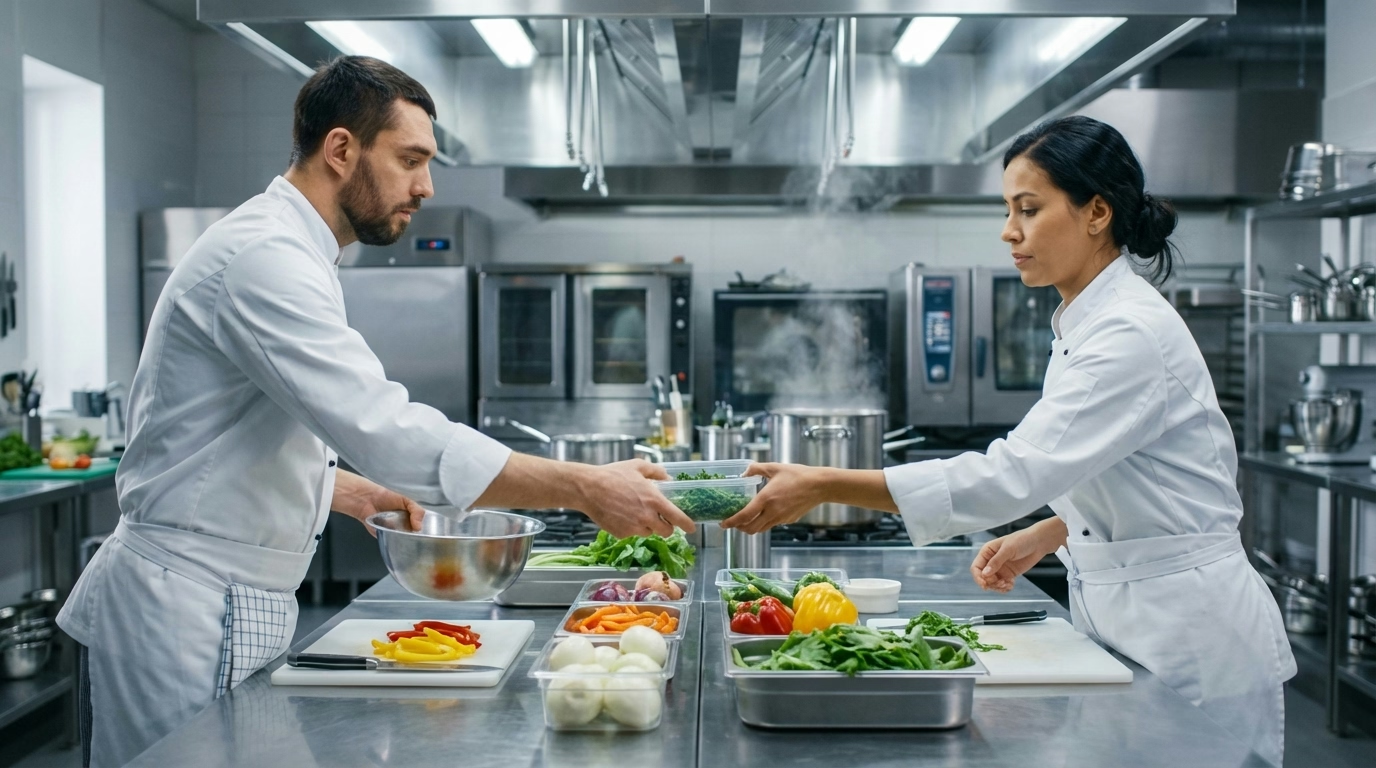
- Open Communication: Transparent dialogue for sharing information, asking questions, and providing constructive criticism. Poor communication causes 86% of failures.
- Defined Roles: Each member knows responsibilities and accountability, reducing duplication.
- Mutual Trust: Commitments fulfilled, positive intent assumed, diverse perspectives respected. Psychological safety enables honest discussion.
- Complementary Skills: Diverse technical and interpersonal abilities.
- Collaborative Problem-Solving: Collective challenges, all input invited, evidence-based decisions.
- Shared Accountability: Ownership of quality, deadlines, successes, and setbacks.
- Constructive Conflict Resolution: Address conflicts promptly, focus on issues not personalities.
Common Barriers to Teamwork
- Poor Communication: Information silos, unclear expectations. Use regular check-ins and collaborative tools.
- Unclear Goals: Conflicting priorities. Set clear, measurable goals aligned with team targets.
- Lack of Trust: Members withhold information. Build trust through team activities and consistent follow-through.
- Dominating or Disengaged Members: Some dominate, others withdraw. Facilitate inclusive participation and hold non-contributors accountable.
- Role Ambiguity: Confusion causes duplication. Create clear definitions and use employee rosters.
- Personality Conflicts: Interpersonal friction. Provide conflict training, mediate early, focus on workplace behavior standards.
- Lack of Leadership Support: Teams feel undervalued. Provide direction, remove obstacles, champion efforts.
- Recognition Imbalances: Unnoticed contributions breed resentment. Recognize achievements fairly.
How to Build Strong Teamwork
- Establish Norms: Collaborate on ground rules for communication, decision-making, conflict resolution, accountability.
- Facilitate Communication: Schedule meetings, use collaborative platforms like ShiftFlow, conduct one-on-ones, create informal spaces.
- Build Trust: Organize collaborative activities, celebrate milestones, create support opportunities.
- Provide Feedback: Normalize constructive criticism focused on behaviors and outcomes.
- Address Conflicts Early: Intervene, facilitate conversations, focus on interests, seek win-win solutions.
- Define Clear Roles: Use RACI matrices to clarify responsibilities.
- Set Collaborative Goals: Establish team objectives with individual accountability. Balance team and individual metrics.
- Recognize Achievements: Acknowledge successes, share credit, tie discretionary bonuses to collaboration.
- Provide Development: Invest in collaboration training and cross-training. Create mentorship pairings.
- Model from Leadership: Managers set the tone through transparent collaboration and sharing credit.

Teamwork in Different Work Environments

- Shift-Based: Limited overlap requires detailed handoff protocols, shared platforms, cross-shift recognition.
- Remote: Intentional communication, regular video check-ins, asynchronous tools, virtual social spaces.
- Project-Based: Quickly establish trust and norms. Clear charters defining scope, roles, duration.
- Cross-Functional: Strong facilitation and shared success metrics bridge diverse perspectives.
Measuring Teamwork Effectiveness
Track productivity, quality, project completion, innovation, and efficiency. Use engagement surveys to measure collaboration, communication, trust, and role clarity. Incorporate peer feedback in 360 reviews. Monitor turnover rates and absenteeism—high levels signal teamwork problems.
Conclusion
Teamwork requires intentional design and consistent reinforcement. Organizations investing in collaborative cultures through clear goals, communication, trust, and supportive leadership achieve substantial gains in productivity, innovation, and quality.
Principles remain consistent across environments: clarify objectives, establish norms, facilitate communication, build trust, address conflicts promptly, and recognize achievements. For shift-based businesses, ShiftFlow integrates scheduling with communication tools, ensuring seamless collaboration despite physical separation.
Try ShiftFlow’s collaboration tools to coordinate schedules and keep cross-shift teams in sync.
Sources
- Gallup — State of the Global Workplace (engagement and productivity): https://www.gallup.com/workplace/349484/state-of-the-global-workplace.aspx
- teamwork
- collaboration
- team-building
- workplace-culture
- employee-engagement
- productivity
- communication