How to Handle Time-Off Requests
A time-off request is a formal ask for approved leave. Learn policies, workflows, required details, manager tips, and templates for transparent decisions.
What Is a Time-Off Request?
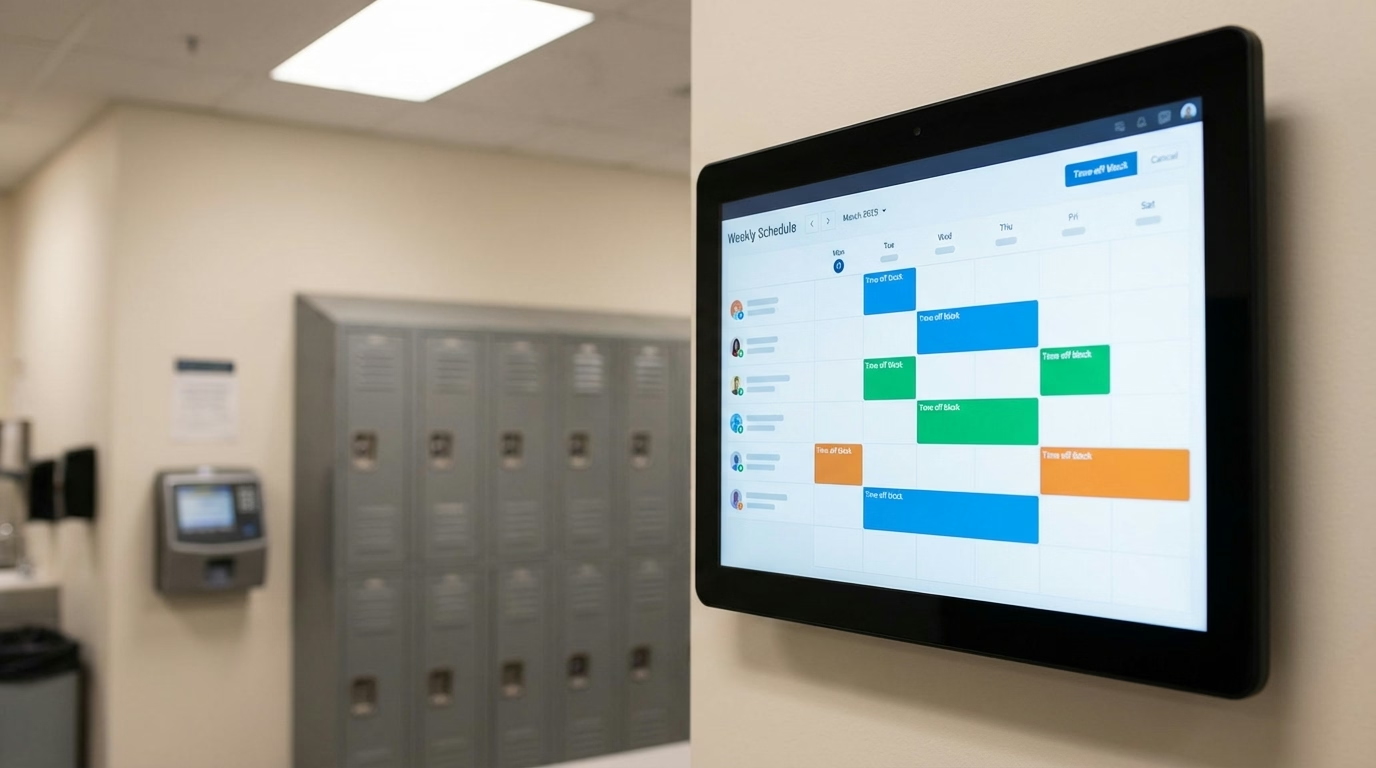
A time-off request is a formal or informal petition submitted by an employee to their manager or HR department requesting approval to be absent from work for a specific period. The request typically includes the dates of absence, type of leave (vacation, personal leave, sick leave, unpaid time off), and sometimes a brief reason for the absence. Time-off requests ensure adequate staffing coverage, allow for equitable distribution of time off across teams, create documentation for payroll and attendance tracking, and formalize the approval process to prevent misunderstandings.
Key takeaways
- Specify lead times, blackout dates, and required information on each request.
- Decide approvals based on coverage, policy, and fairness; document reasons for denials.
- Integrate with scheduling to prevent conflicts and ensure coverage.
- Related: US holidays guide.

Research from the Society for Human Resource Management indicates that 67% of organizations use automated time-off request systems integrated with HRMS platforms, while 33% still rely on manual processes (email, paper forms). Organizations with automated systems report 40% faster approval times and 50% fewer scheduling conflicts compared to manual processes.
What Types of Leave Require Time-Off Requests?

- Vacation: 2–4 weeks notice for planned time off, rest, travel
- Personal days: Personal leave for appointments, emergencies; 24–48 hours notice
- Sick leave: Sick leave for illness, medical appointments; same-day notification typical
- Unpaid time off: Unpaid leave when PTO exhausted; 1–2 weeks notice
- FMLA and protected leave: 30 days when foreseeable; cannot be denied if eligible
- Bereavement: Compassionate leave for family death or emergency; ASAP notice
- Sabbaticals: 2–6 months notice for extended absences; formal application may be required
What Are Typical Notice Requirements?
- Vacation: 2–4 weeks minimum; 6–8 weeks for peak season
- Personal days: 24–48 hours when possible; same-day for emergencies
- Sick leave: Before shift start same day; 1–2 weeks for planned appointments
- Extended leave (FMLA): 30 days when foreseeable; ASAP for emergencies
- Unpaid time off: 1–2 weeks minimum; longer for extended absences

How Does the Time-Off Request Approval Process Work?
- Submission: Employee submits via HRMS/email with dates, leave type, hours; automated balance check
- Manager review: Considers coverage, business needs, PTO balance; 48–72 hour response typical
- Decision: Approval (confirmed, calendared, systems updated) or denial (with explanation, alternatives)
- Calendar update: Approved absences populate team calendars for visibility
- Documentation: Logged for attendance tracking, PTO deduction, compliance
What Are Valid Reasons for Denying Time-Off Requests?
- Inadequate staffing: Team short-staffed; offer alternative dates or coverage assistance
- Multiple team members off: Several approved same dates; first-come-first-served or rotate priority
- Blackout periods: Retail holidays, year-end, peak seasons; communicate clearly in advance
- Insufficient notice: Less than required advance notice; make exceptions for emergencies
- Exhausted PTO balance: Insufficient accrued time; consider unpaid leave alternative
- Recent extended absence: Too soon after prior leave; balance fairness with legitimate needs
- Performance issues: Active improvement plans or excessive absenteeism; never deny protected leave
When CANNOT Employers Deny Time-Off Requests?
- FMLA leave: Serious health condition, family care, new child; denial violates federal law
- State-mandated sick leave: Cannot deny qualifying usage when employee has accrued balance
- Protected leave: Jury duty, military leave, voting time cannot be denied
- Discrimination/retaliation: Cannot deny based on protected characteristics or retaliation
- Contractual obligations: Must honor union agreements and vacation scheduling procedures
What Are Best Practices for Employers?
- Clear policies: Document notice requirements, approval timelines, blackout periods, PTO rules, unauthorized absence consequences
- Automated systems: Self-service submission, balance checking, mobile approval, calendar integration; reduces processing time 40%
- Prompt responses: 48–72 hour manager response policy; prevents employee anxiety
- Fair priority: First-come-first-served; rotate priority for high-demand periods
- Advance blackout communication: Publish calendars 6–12 months ahead; consider incentive pay
- Manager training: Approval criteria, legal restrictions, discrimination concerns, consistent application
- Encourage usage: Model healthy vacation use; improves productivity and employee loyalty
- Emergency flexibility: Allow exceptions for true emergencies outside employee control

How Do Automated Time-Off Request Systems Work?
- Employee portal: View PTO balances, select dates/leave type, submit electronically; real-time balance checking
- Automated routing: Routes to approver, sends notifications, displays in manager dashboard; multi-level approval available
- Manager dashboard: View pending requests, team calendar, PTO history; one-click approval with mobile access
- Calendar integration: Auto-populates team calendars, company calendars, employee roster tools
- Notifications: Instant email/app notifications to employee, manager, HR
- Reporting: PTO usage, upcoming absences, low usage (burnout risk), absenteeism patterns
- Payroll integration: Auto-syncs for PTO deduction and pay calculation; eliminates manual entry errors
The Bottom Line
A time-off request is an employee petition for approved absence, covering vacation (2–4 weeks notice), personal days (24–48 hours), sick leave (same-day), or unpaid time off (1–2 weeks). The process involves submission, manager review of coverage and business needs, and approval or denial based on staffing, blackout periods, PTO balance, and notice provided. Automated systems report 40% faster approvals and 50% fewer conflicts than manual processes.
Employers may deny requests for inadequate staffing, multiple team members off, blackout periods, insufficient notice, exhausted PTO, or recent extended absence. However, legally protected leave (FMLA, state-mandated sick leave, jury duty, military leave) cannot be denied, and denials cannot be discriminatory or retaliatory.
Best practices include clear policies by leave type, automated systems for self-service submission, 48–72 hour response times, fair first-come-first-served application, advance blackout communication, manager training on consistent application, and emergency flexibility.
Try ShiftFlow’s time-off management system to automate requests, track PTO balances, integrate with employee roster planning, and ensure fair time-off administration.
Sources
- Society for Human Resource Management – Leave Management Best Practices
- U.S. Department of Labor – Family and Medical Leave Act
- Workplace Flexibility Research – Impact of Time Off on Productivity
- National Conference of State Legislatures — Paid Sick Leave Overview: https://www.ncsl.org/labor-and-employment/paid-sick-leave
- U.S. Department of Labor — State Labor Offices (official directory): https://www.dol.gov/agencies/whd/state
Further Reading
- Personal Leave Policies – Managing personal days
- Sick Leave Management – Illness-related absences
- Compassionate Leave Guide – Bereavement policies
- Unpaid Time Off – When PTO is exhausted
- Employee Roster Planning – Scheduling around absences
Frequently Asked Questions
What is a time-off request?
A time-off request is a formal or informal petition submitted by an employee requesting approval to be absent from work for a specific period. It typically covers vacation, personal days, sick leave, or unpaid time off and requires manager approval before the absence is confirmed.
How much notice is required for time-off requests?
Typical requirements: Vacation: 2–4 weeks minimum. Personal days: 24–48 hours when possible. Sick leave: Same-day notification acceptable. Extended leave (FMLA): 30 days when foreseeable. Requirements vary by employer policy and leave type.
Can employers deny time-off requests?
Yes, for legitimate business reasons like inadequate staffing, multiple team members already off, critical deadlines, blackout periods, or exhausted PTO balance. Denials must be applied consistently and cannot discriminate, retaliate, or deny legally protected leave (FMLA, paid sick leave).
What should be included in a time-off request?
Essential elements: Employee name and department, dates of absence (start and end), type of leave (vacation, personal, sick, unpaid), total days/hours requested, reason (if required), employee signature or electronic confirmation, and submission date.
How long does it take to get time-off approved?
Most policies require manager response within 48–72 hours of submission. Automated systems typically enable faster approval. Complex requests (extended leave, FMLA) may take longer for HR review and documentation.
Can I take time off without submitting a request?
No. Taking time off without approved request is considered an unauthorized absence and may result in disciplinary action, including unpaid time and potential termination for repeated violations. Always submit requests and receive approval before planned absences.
- time-off-request
- pto-management
- vacation-policy
- leave-management
- absence-management
- workforce-scheduling
- employee-benefits