

What Is a Travel Allowance?
Learn what travel allowance means (compensation for business travel expenses), 2024 IRS mileage rate ($0.67/mile), per diem rates ($59-$107 daily), types including mileage reimbursement and lodging allowances, tax treatment, documentation requirements, and policy best practices.

What Is Travel Allowance?
Travel Allowance is compensation provided to employees for business-related travel expenses incurred while performing job duties away from their regular workplace. This includes mileage reimbursement for personal vehicle use (calculate with our mileage reimbursement calculator), per diem allowances for meals and lodging, transportation costs (airfare, rental cars, rideshares), parking and tolls, and incidental expenses like tips or baggage fees.
Travel allowances ensure employees aren’t financially burdened by business travel requirements. Organizations typically reimburse actual documented expenses or provide fixed per diem rates that don’t require itemized receipts. When structured properly according to IRS guidelines, travel allowances are tax-free to employees and tax-deductible for employers.
Quick Answer
Travel allowances compensate employees for business travel expenses like mileage ($0.67/mile in 2024), meals and lodging (per diem $59–$107 daily), transportation, and incidentals. Reimbursements at or below IRS standard rates are tax-free when properly documented within 60 days with business purpose and expense details.
According to the IRS, the standard mileage rate for business use of a personal vehicle is $0.67 per mile for 2024, up from $0.655 in 2023. This rate is designed to cover all vehicle operating costs including gas, maintenance, depreciation, insurance, and registration.
What Are the Types of Travel Allowances?
Mileage Reimbursement
Purpose: Compensate employees for business use of personal vehicles.
2024 IRS standard rate: $0.67 per mile covering gas, oil, maintenance, tire wear, depreciation, insurance, registration.
Calculation: Business miles driven × $0.67
Example: Employee drives 150 business miles → 150 × $0.67 = $100.50 reimbursement
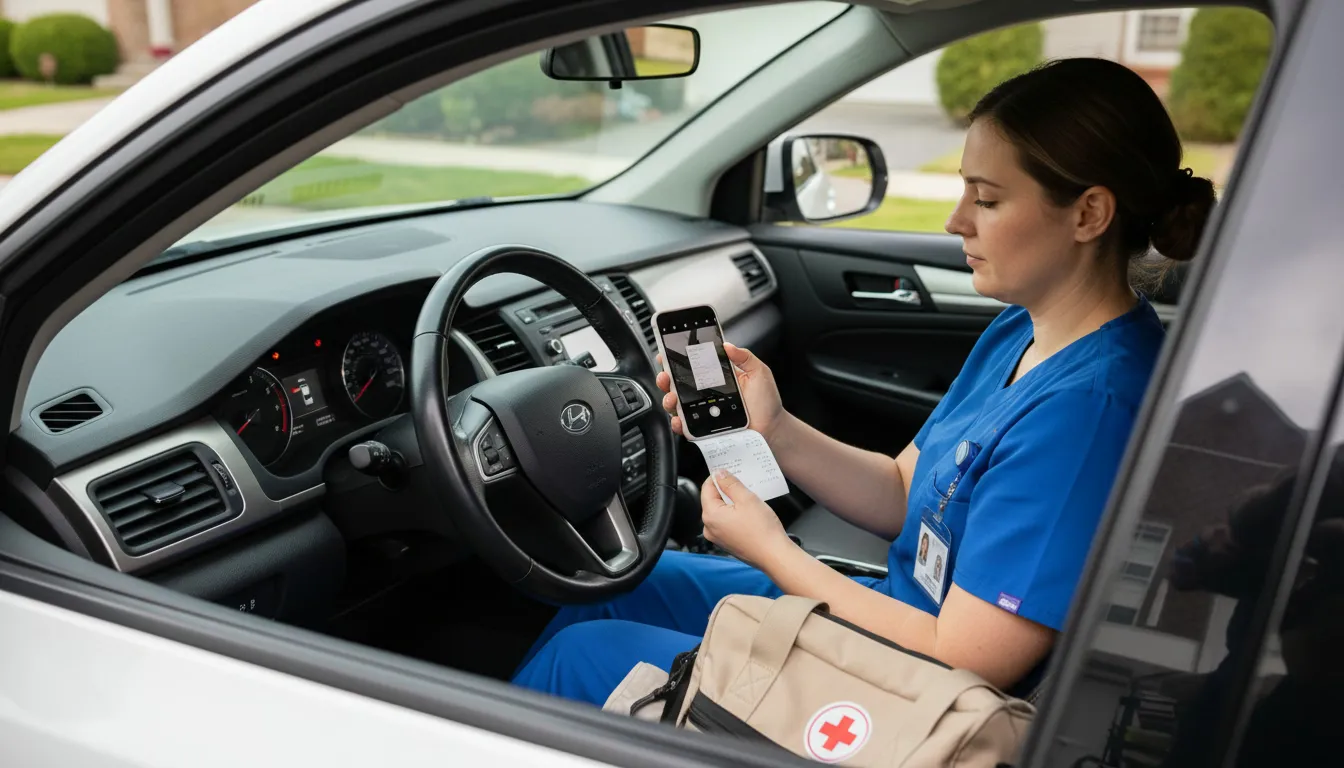
Documentation required: Date of travel, starting point and destination, odometer readings or total miles, business purpose.
Per Diem Allowances
Purpose: Cover meals, lodging, and incidental expenses during overnight business travel without requiring itemized receipts.
Federal FY2024 rates (varies by location):
- Meals and incidentals: $59–$107 daily depending on city
- Lodging: $98–$312 nightly for standard locations
- Incidentals only: $5 daily (tips, baggage fees, minor necessities)
Standard CONUS rate: $107 meals/incidentals + $107 lodging = $214 daily
High-cost cities: New York City $388 daily, San Francisco $391 daily, Washington DC $330 daily, Boston $342 daily.
Advantages: Simplified administration, no receipt requirement (except lodging), predictable costs.
Transportation Allowances
Covered expenses: Airfare (economy class), rental cars (standard vehicles), rideshares/taxis, public transportation, parking fees, tolls.
Policy considerations: Employers typically set thresholds—book flights in advance, economy not business class, standard rental cars, rideshare instead of premium services.

Meal Allowances
Per diem method: Fixed daily rate (e.g., $59–$79) covering breakfast, lunch, dinner without receipts.
Partial day rates: Departure/return day 75% of daily rate, full days 100% of daily rate.
Business meals with clients: Fully reimbursed with receipts and business purpose documented (attendees, topics discussed).
What Are IRS Requirements for Tax-Free Travel Allowances?
Accountable Plan Requirements
For travel reimbursements to be tax-free, they must follow an accountable plan:
- Business connection: Expenses must be ordinary and necessary business expenses
- Adequate substantiation: Employee must document expenses within reasonable time (60 days recommended)
- Return excess: Employee must return reimbursements exceeding actual expenses
Failure consequences: Non-compliant reimbursements become taxable wages subject to income tax withholding and payroll taxes.
Documentation Requirements
For all reimbursements: Business purpose, date(s) of expense, location, amount spent or miles driven.
For mileage: Starting point and destination, odometer readings or total miles, route (if unusual).
For expenses over $75: Itemized receipts showing vendor, date, amount.
For meals: Restaurant name and location, attendees (if business meal), business topics discussed.
Submission deadline: 60 days after expense incurred (IRS safe harbor).
What Is Not Reimbursable?
Commuting expenses: Regular travel between home and primary workplace never reimbursable.
Personal time: Side trips, vacation days added to business travel, non-business meals.
Luxury upgrades: First-class flights, luxury car rentals, premium hotels beyond policy limits (unless pre-approved).
Family expenses: Spouse/children travel, meals, lodging unless legitimate business participants.

How Do You Calculate Travel Reimbursements?
Mileage Reimbursement Calculation
Example 1: Local client visits
- Miles driven: 45 (office to Client A to Client B to office)
- Reimbursement: 45 × $0.67 = $30.15
Example 2: Multi-day trip personal vehicle miles
- Day 1: Home to airport 12 miles
- Day 3: Airport to home 12 miles
- Personal vehicle: 24 miles × $0.67 = $16.08
Per Diem Calculation
Example: 3-day trip to Denver, CO (GSA rate: $59 meals/incidentals, $107 lodging)
- Day 1 (departure): 75% × $59 = $44.25 meals
- Day 2 (full day): $59 meals + $107 lodging = $166
- Day 3 (full day): $59 meals + $107 lodging = $166
- Day 4 (return): 75% × $59 = $44.25 meals
- Total per diem: $420.50
How Do You Implement a Travel Allowance Policy?
Establish Clear Policy Guidelines
Define eligible travel: Travel to temporary work locations (under 1 year assignment), client meetings outside regular workplace, conferences, training, multi-location daily coverage.
Set reimbursement methods: Mileage at IRS standard rate or actual expense? Per diem or actual expense for meals and lodging? Maximum nightly lodging rates by city tier?
Establish approval requirements: Pre-approval for travel over certain cost? Manager approval for overnight travel?
Define booking expectations: Book flights 14–21 days in advance, use preferred travel agency, economy class unless flight exceeds 5 hours, standard rental car size.
Create Submission and Approval Process
Expense report requirements: Standard form or system, attach receipts for expenses over $75, submit within 30–60 days, manager review and approval.
Reimbursement timeline: Process payments within 14–30 days of approved submission.
Audit and compliance: Random audits ensuring documentation meets IRS requirements, policy adherence.
Select Reimbursement Technology
Manual systems: Excel templates or paper forms with email submission. Simple for small teams but time-consuming and error-prone.
Expense management software: Platforms like Expensify, Concur, Rydoo. Features include mobile receipt capture, mileage tracking via GPS, automated policy enforcement, integration with accounting systems.
Workforce management integration: Platforms like ShiftFlow connecting scheduling with mileage tracking. Ideal for field service, home healthcare, multi-site retail, delivery roles.
What Are Best Practices for Managing Travel Allowances?
Use IRS Standard Rates
Simplify administration and ensure tax compliance by using IRS standard mileage and per diem rates. Review IRS rate changes each January and update policies accordingly. Notify staff of rate changes and effective dates.
Track Mileage Accurately
Use GPS-based tracking apps or require manual logs with date, start/end locations, odometer readings, business purpose. Separate business from commuting or personal driving. Submit regularly (monthly or bi-weekly). Maintain logs for 3+ years for IRS audit support.
Set Clear Limits and Expectations
Establish lodging caps (per diem or maximum actual), meal limits if using actual expense, transportation hierarchy (cost-effective options), and pre-approval thresholds for trips exceeding certain costs or durations.
Support Remote and Field Workers
Provide mobile-friendly tools allowing expense submission from field, process payments quickly (weekly or bi-weekly), consider corporate fuel cards for high-mileage roles, and clarify that mileage from home to client sites is reimbursable for field workers whose home is primary workplace.

The Bottom Line
Travel allowance is compensation for business-related travel expenses including mileage reimbursement at IRS standard rate ($0.67/mile in 2024), per diem for meals and lodging ($59–$107 daily for meals, $98–$312 nightly for lodging varying by location), transportation costs (airfare, rental cars, rideshares, parking, tolls), and incidental expenses (tips, baggage fees, business calls).
For tax-free treatment, reimbursements must follow IRS accountable plan requirements with business connection, adequate substantiation within 60 days showing purpose, dates, locations, and amounts, and return of excess reimbursements.
Implementation requires establishing clear policy guidelines defining eligible travel and reimbursement methods, creating submission and approval processes with standard forms and timelines, selecting appropriate technology from manual systems to expense management software, and communicating policies through training and written documentation.
Best practices include using IRS standard rates for simplification and tax compliance, tracking mileage accurately with GPS-based apps or manual logs, setting clear limits for lodging and meals with pre-approval thresholds, conducting annual policy reviews aligned with IRS rate changes, and supporting remote and field workers with mobile-friendly tools and rapid reimbursement.
Try ShiftFlow’s workforce management tools to track business mileage, integrate scheduling with travel logging, streamline expense reimbursement for mobile teams, and complement salary sacrifice car programs with comprehensive travel expense tracking.
Sources
- Internal Revenue Service – Standard Mileage Rates
- U.S. General Services Administration – Per Diem Rates
- U.S. Department of Labor – Travel Time and Expenses
Further Reading
- Salary Sacrifice Car Schemes – Company vehicle alternatives
- Absenteeism Management – Workforce attendance tracking
- Employee Empowerment – Trust and autonomy in field roles
Frequently Asked Questions
What is a travel allowance?
Travel allowance is compensation for business-related travel expenses including mileage reimbursement for personal vehicle use at IRS rate ($0.67/mile in 2024), per diem for meals and lodging ($59–$107 daily), transportation costs (airfare, rental cars, rideshares), parking and tolls, and incidental expenses. Organizations reimburse actual expenses with receipts or provide fixed per diem rates.
What is the IRS mileage reimbursement rate for 2024?
The IRS standard mileage rate for 2024 is $0.67 per mile for business use of a personal vehicle. This rate covers gas, oil, maintenance, tire wear, depreciation, insurance, and registration costs. Reimbursements at or below this rate are tax-free to employees and tax-deductible for employers when properly documented.
What are per diem rates for business travel?
Federal per diem rates for FY2024 range from $59 to $107 daily for meals and incidentals depending on location. Lodging rates vary by city from $98 to $312 nightly for standard locations, with higher rates in expensive cities like New York ($299) and San Francisco ($312). Organizations can reimburse up to these amounts tax-free without requiring itemized receipts.
Is travel allowance taxable?
Travel allowances are tax-free when reimbursed at or below IRS standard rates (mileage $0.67/mile, location-specific per diem) with proper documentation submitted within 60 days showing business purpose, dates, locations, and amounts. Reimbursements exceeding IRS rates are taxable income subject to withholding and payroll taxes.
What documentation is required for travel expense reimbursement?
Required documentation includes business purpose and dates of travel, locations or destinations visited, mileage driven or expense amounts, itemized receipts for expenses over $75 showing vendor and date, and submission within 60 days of expense. Mileage logs must show starting point, destination, odometer readings, and business purpose for each trip.
What travel expenses can be reimbursed?
Reimbursable expenses include personal vehicle mileage at IRS standard rate, transportation (airfare, rental cars, rideshares, parking, tolls, public transit), lodging (hotels, short-term rentals during overnight business travel), meals during overnight trips or extended day trips, and incidentals (tips, baggage fees, business-related phone calls). Regular commuting between home and primary workplace is not reimbursable.
How do you calculate mileage reimbursement?
Multiply business miles driven by IRS standard rate. Example: 150 business miles × $0.67/mile = $100.50 reimbursement. Document each trip with date, starting point, destination, odometer readings, and business purpose. Only business miles qualify—exclude commuting from home to regular workplace, personal errands, or side trips.
What is the difference between per diem and actual expense reimbursement?
Per diem provides fixed daily rates for meals and lodging without requiring itemized receipts, simplifying administration and providing predictable costs. Actual expense reimbursement requires submitting receipts for all expenses, allowing flexibility but requiring more documentation. Many organizations use per diem for meals and actual expense for lodging, or set maximum limits combining both approaches.
- travel-allowance
- mileage-reimbursement
- per-diem
- business-travel
- expense-reimbursement
- IRS-rates
- travel-policy