Restaurant Break Compliance and Tracking Guide
Auto-deduct break policies have cost restaurant chains millions in class-action settlements. Learn how to track meal and rest breaks, avoid auto-deduct traps, and stay compliant with state break laws.
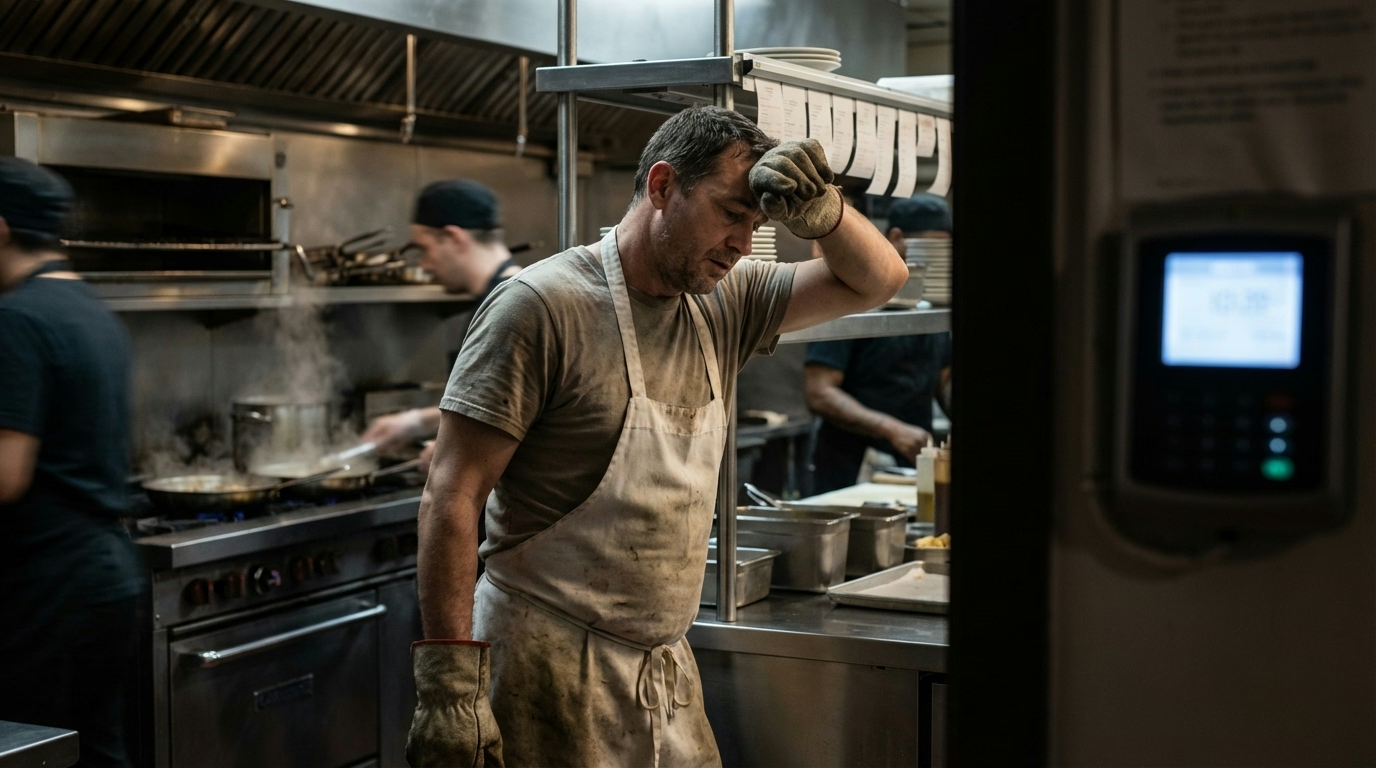
A line cook works through her lunch break because the kitchen is slammed during a Saturday rush. The time tracking system automatically deducts 30 minutes anyway. At the end of the pay period, she is paid for 30 fewer minutes than she actually worked—and the restaurant has no record showing whether the break was taken or missed.
This scenario plays out thousands of times daily in restaurants across the country. Auto-deduct break policies, once considered an efficient shortcut, have become one of the most expensive compliance liabilities in the food service industry. Class-action settlements over missed and auto-deducted breaks have reached eight and nine figures for major restaurant chains.
The problem is not that breaks are hard to manage. The problem is that restaurants rely on systems that assume breaks happen when the operational reality of a restaurant kitchen or dining floor makes missed breaks almost certain.
Why Break Compliance Is a Minefield for Restaurants
Restaurants face break compliance challenges that other industries simply do not encounter. Understanding why breaks get missed is the first step toward building a system that actually works.
Rush-Hour Pressure Makes Breaks Impractical
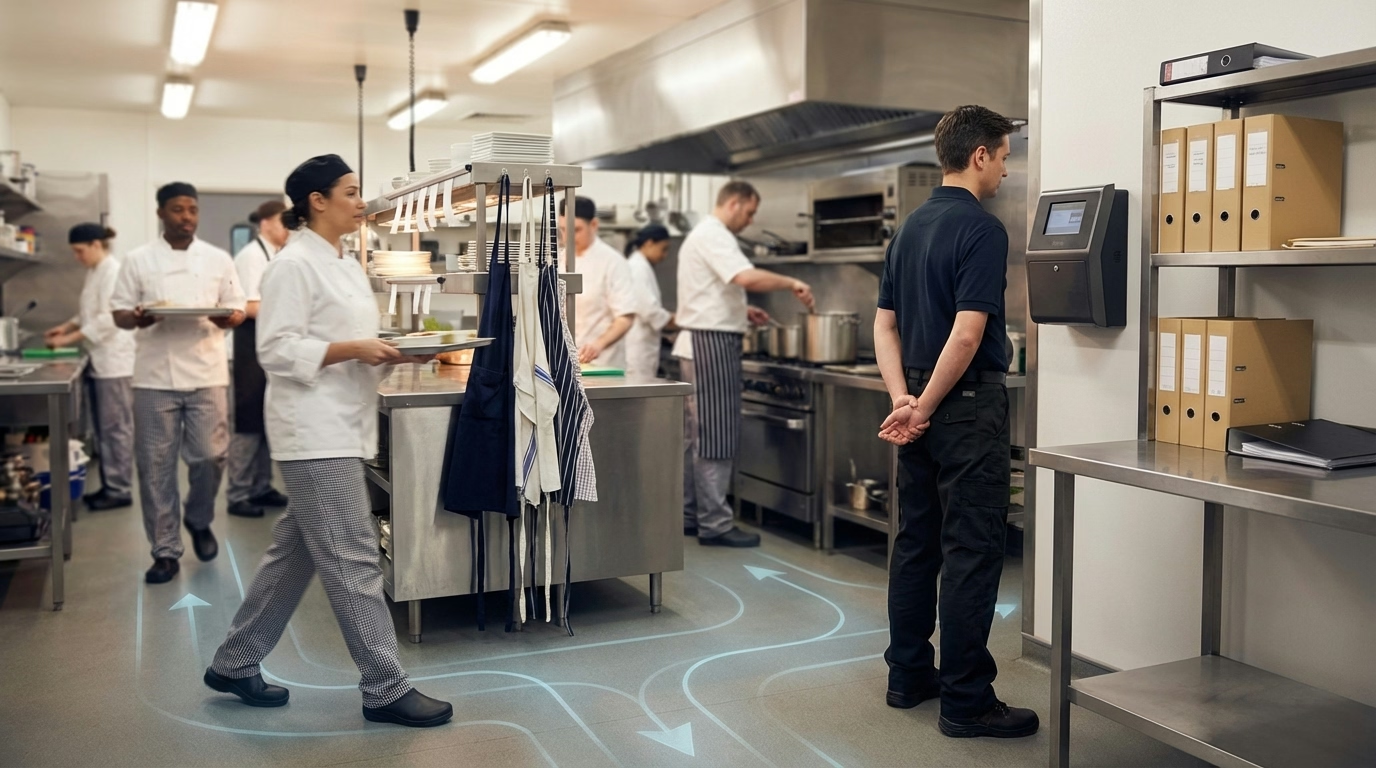
A server cannot walk off the floor at 12:15 p.m. during a packed lunch service. A grill cook cannot step away when tickets are stacking up. The nature of restaurant work creates predictable windows where taking a break is operationally impossible—and those windows often coincide with the exact times when breaks are legally required.
In a state like California, a team member who works more than five hours is entitled to a 30-minute meal break before the end of the fifth hour. A server whose shift starts at 11 a.m. must begin their meal break by 4 p.m. at the latest. But if dinner service prep starts at 3:30 p.m., the window for taking that break narrows to the point where it is routinely skipped.
Skeleton Crews Leave No Coverage
Many restaurants staff to demand, which means there is no surplus labor to cover for team members on break. If three servers are covering a dining room that needs three servers, one person taking a break means the remaining two are understaffed for 30 minutes. Managers face a choice between operational disruption and break compliance—and too often, compliance loses.
The “We’ll Take Care of It” Culture
Restaurant culture often treats breaks as flexible rather than mandatory. Team members may feel pressure—explicit or implied—to skip breaks during busy periods. “I’ll eat when it slows down” becomes “I never got a chance to eat.” When the time system auto-deducts the break regardless, the team member effectively works for free during that period.
Tipped Workers May Not Complain
Servers and bartenders who earn significant tip income may not push back on missed breaks because they do not want to lose floor time—or antagonize managers who control section assignments. This does not eliminate the employer’s obligation. The legal standard is whether the employer “provided” the break, not whether the team member demanded it.
Auto-Deduct Policies and Why They Backfire
Auto-deduct break policies automatically subtract a set amount of time—usually 30 minutes—from every shift that exceeds a certain length. The logic seems sound: if the law requires a 30-minute meal break, deducting it ensures the payroll math is correct.
The problem is that auto-deductions create a legal fiction. They assume the break was taken when the system has no evidence that it was. And when a team member can demonstrate they worked through an auto-deducted break, the employer faces liability for both unpaid wages and break premium penalties.
How Auto-Deduct Lawsuits Play Out
The typical auto-deduct lawsuit follows a predictable pattern:
- A current or former team member files a claim alleging they regularly worked through meal breaks that were automatically deducted from their time records.
- The restaurant produces time records showing the breaks were deducted—but cannot produce evidence the breaks were actually taken.
- The court or agency finds that the records are unreliable because the deductions were automatic, not based on actual break activity.
- The employer owes back wages for all auto-deducted time where breaks were not taken, plus applicable penalties.
In states with meal period premiums, the penalties compound quickly. A California restaurant that auto-deducts 30 minutes per shift for 50 team members, with a 15% missed-break rate, generates approximately 1,950 premium penalty hours per year. At an average rate of $18 per hour, that is over $35,000 in annual exposure—before back wages and legal fees.
Why “They Can Override It” Is Not a Defense
Some restaurants implement auto-deduct policies with an option for team members to override the deduction if they missed a break. Courts have consistently found this insufficient because it places the burden on the team member to correct the employer’s records, team members may not understand the override process, team members may fear retaliation for flagging missed breaks, and the override itself may require manager approval—creating a barrier.
The legal obligation to track breaks rests with the employer. A system that assumes compliance and requires the worker to prove otherwise is fundamentally inverted.
State-by-State Break Requirements That Affect Restaurants
Break laws vary significantly by state, and restaurants operating in multiple states must comply with the most protective standard in each location.
California
California imposes the most stringent break requirements in the country. Team members receive a 30-minute off-duty meal break before the end of the fifth hour and a second 30-minute meal break before the end of the tenth hour. A paid 10-minute rest break is required for every four hours worked. The penalty for a missed meal or rest break is one additional hour of pay at the regular rate per workday.
New York
New York requires a 30-minute meal break for shifts exceeding six hours that span the period from 11 a.m. to 2 p.m. (the “noon day meal” rule). For shifts starting before 11 a.m. and extending past 7 p.m., an additional 20-minute meal break must be provided between 5 p.m. and 7 p.m. Shifts of six or more hours between 1 p.m. and 6 a.m. require a 45-minute meal break at the midpoint of the shift—a rule that directly affects restaurant dinner and closing crews.
Washington
Washington requires a 30-minute meal break when a team member works more than five consecutive hours, plus a paid 10-minute rest break for every four hours worked. Meal breaks must be scheduled between the second and fifth hour of work. A second 30-minute meal break is required for shifts exceeding 10 hours. Healthcare and certain other workers have additional protections, and the Department of Labor & Industries actively enforces these requirements.
Oregon
Oregon requires a 30-minute meal break for shifts of six or more hours and a paid 10-minute rest break for every four-hour segment. For shifts of six to seven hours, the meal break must be taken after the second hour and before the fifth hour. For shifts longer than seven hours, the meal break must be taken after the third hour and before the sixth hour. Employers who fail to provide rest breaks must pay the team member for the rest period.
Illinois
Illinois requires a 20-minute meal break no later than five hours after the start of a shift for team members working 7.5 or more continuous hours. For shifts of 12 or more hours, an additional 20-minute meal break is required for every additional 4.5-hour period worked. The Chicago Fair Workweek Ordinance adds additional scheduling predictability requirements for restaurant workers.
Key takeaway: If you operate restaurants in multiple states, your break tracking system must be configurable by location. A single auto-deduct policy applied uniformly across states will violate at least one jurisdiction’s requirements.
Operational Safeguards That Actually Work
Replacing auto-deduct policies with positive break tracking requires operational changes, but those changes pay for themselves in reduced legal exposure and improved team member trust.
Positive Break Attestation
The most defensible approach requires team members to actively record their breaks—clock out when the break starts and clock back in when it ends. This creates a time-stamped record for every break.
At the end of each shift, the system prompts the team member to confirm whether they received all required breaks. If they indicate a break was missed, the system flags it for manager review and ensures the time is paid. This attestation creates a contemporaneous record that is far more credible than reconstructed timecards.
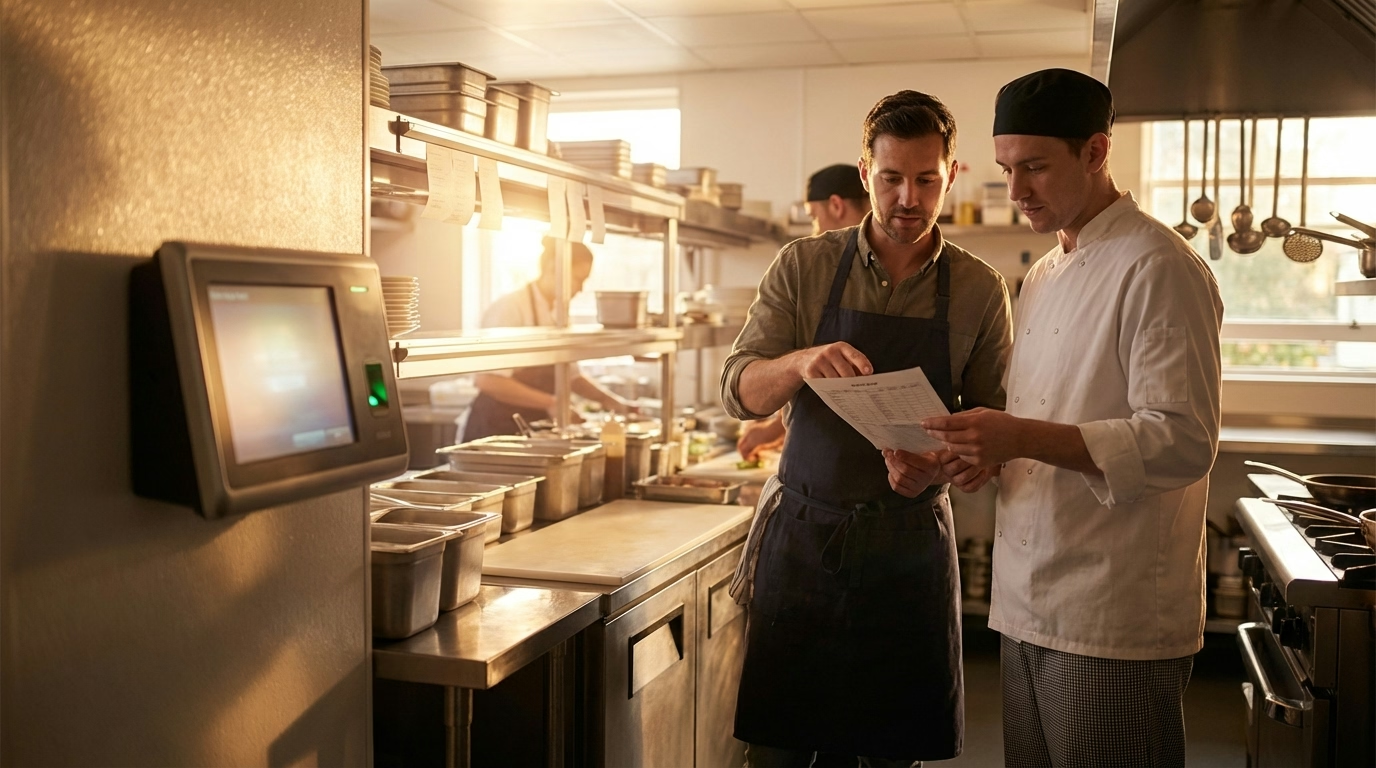
A restaurant time tracking system with built-in break attestation removes the guesswork and creates the documentation you need to defend against claims.
Real-Time Break Alerts
Configure your time tracking system to alert managers when a team member is approaching their break deadline. If a server started at 11 a.m., the manager receives an alert at 3:30 p.m. that the meal break must begin within 30 minutes.
This shifts break compliance from a payroll problem to an operational one. The manager can adjust coverage, move tables, or call in support before the deadline passes—rather than discovering the violation after the fact.
Staggered Break Scheduling
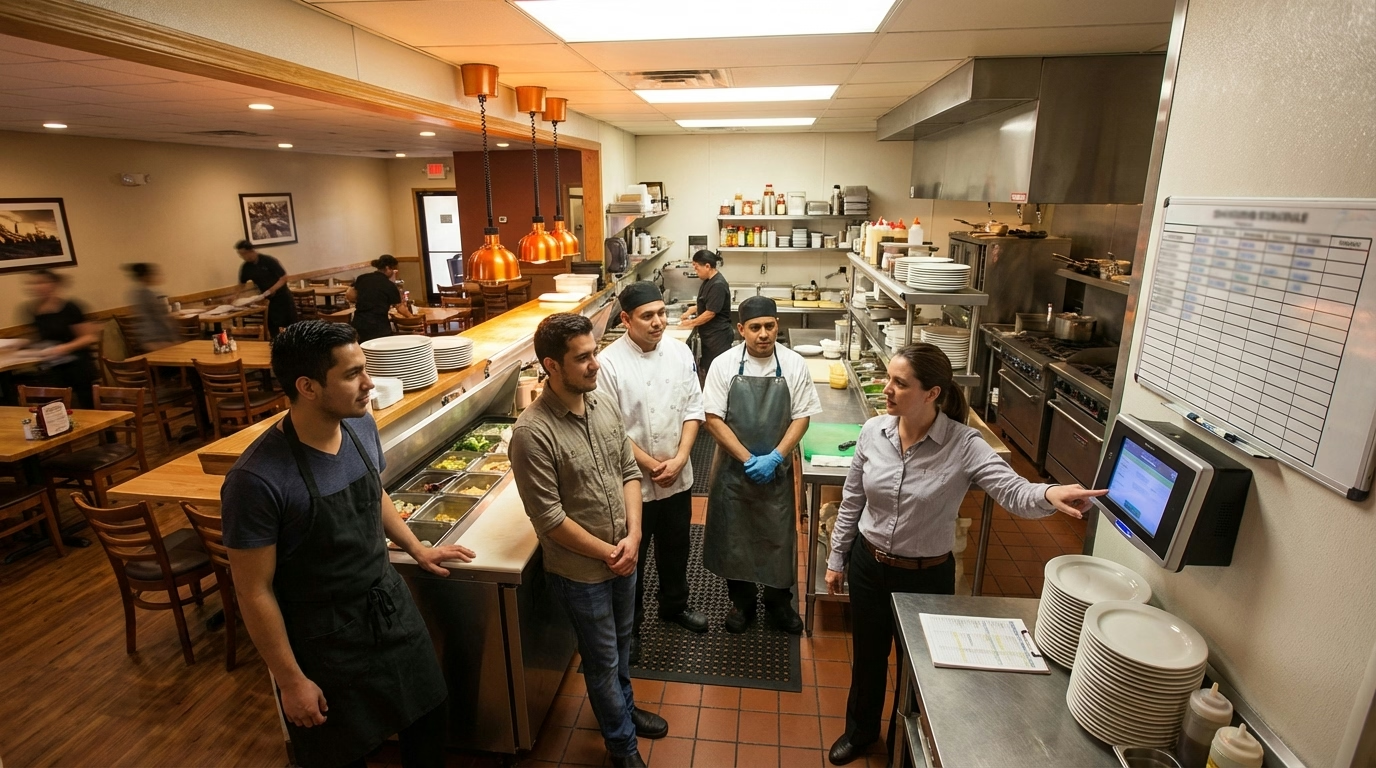
Instead of hoping breaks happen organically, build break times into the daily schedule. For a lunch service with six servers, schedule breaks in rotating 30-minute windows starting at 2:00 p.m., after the initial rush subsides. Assign specific coverage responsibilities so no section goes unattended.
This approach requires slightly more scheduling effort but eliminates the most common reason breaks get skipped: nobody planned for coverage.
Manager Sign-Off on Missed Breaks
When a break is missed—and in restaurants, some will be—create a documented workflow. The team member records the missed break, the manager acknowledges it, the time is paid, and the premium penalty (if applicable in your state) is applied. This documentation demonstrates good faith and limits exposure.
What you must avoid is a pattern of missed breaks without corrective action. A DOL investigator or plaintiff’s attorney will look for systemic failures, not isolated incidents. If the same team member misses breaks three times per week for six months, the question becomes why the employer did not address the operational cause.
Connect Break Records to Your Timecard Audit Trail
Break compliance and timecard integrity are two sides of the same coin. Every break edit, override, or missed-break entry should appear in the same audit log as clock-in and clock-out records. When break data lives in a separate system or spreadsheet, reconciliation gaps create the same exposure as untracked edits.
Break Compliance Checklist
Use this checklist to evaluate your current break practices and eliminate the most common compliance gaps.
- Eliminate auto-deductions. If your system auto-deducts break time, disable it immediately. Replace it with positive break tracking that requires team members to clock out and back in.
- Enable break attestation. At the end of each shift, require team members to confirm whether they received all required breaks. Log the response.
- Configure state-specific rules. Set up break requirements by location, including meal break timing, rest break intervals, and applicable premium penalties.
- Set up real-time alerts. Configure manager notifications when a team member is approaching a break deadline. Allow at least 30 minutes of lead time for coverage planning.
- Build break coverage into schedules. Assign staggered break windows with designated coverage during peak service periods.
- Document missed breaks. Create a workflow for recording missed breaks that includes team member reporting, manager acknowledgment, time payment, and applicable premiums.
- Audit break records weekly. Before payroll runs, review break data alongside overtime calculations to ensure all missed breaks are paid and premiums are applied.
- Train managers on break obligations. Ensure every manager and shift lead understands the state-specific break requirements for your locations, the premium penalties for violations, and the restaurant’s break scheduling procedures.
- Retain break records. Keep all break attestations, missed-break reports, and related audit trails for at least five years.
The Bottom Line
Auto-deduct break policies are a ticking liability for restaurants. They create the illusion of compliance while masking the operational reality that rush-hour pressure, skeleton crews, and restaurant culture routinely prevent breaks from happening.
The solution is not to accept missed breaks as inevitable. It is to build systems that make breaks operationally feasible, track them with time-stamped records, and document every exception. Restaurants that make this shift protect themselves from class-action exposure, improve team member satisfaction, and build the kind of records that hold up under legal scrutiny.
Start by turning off auto-deductions. Then implement positive break tracking, schedule coverage for break periods, and audit the data weekly. The operational cost is modest. The cost of getting break compliance wrong is not.
- restaurant-time-tracking
- break-compliance
- auto-deduct-breaks
- meal-break-penalty
- rest-break
- flsa-compliance
- restaurant-labor-law