How Do I Invoice a Handyman Job With Multiple Tasks?
Create a clear handyman invoice for multiple tasks. Group labor and parts by area, show shared fees once, and apply verified tax, payments, and amount due.
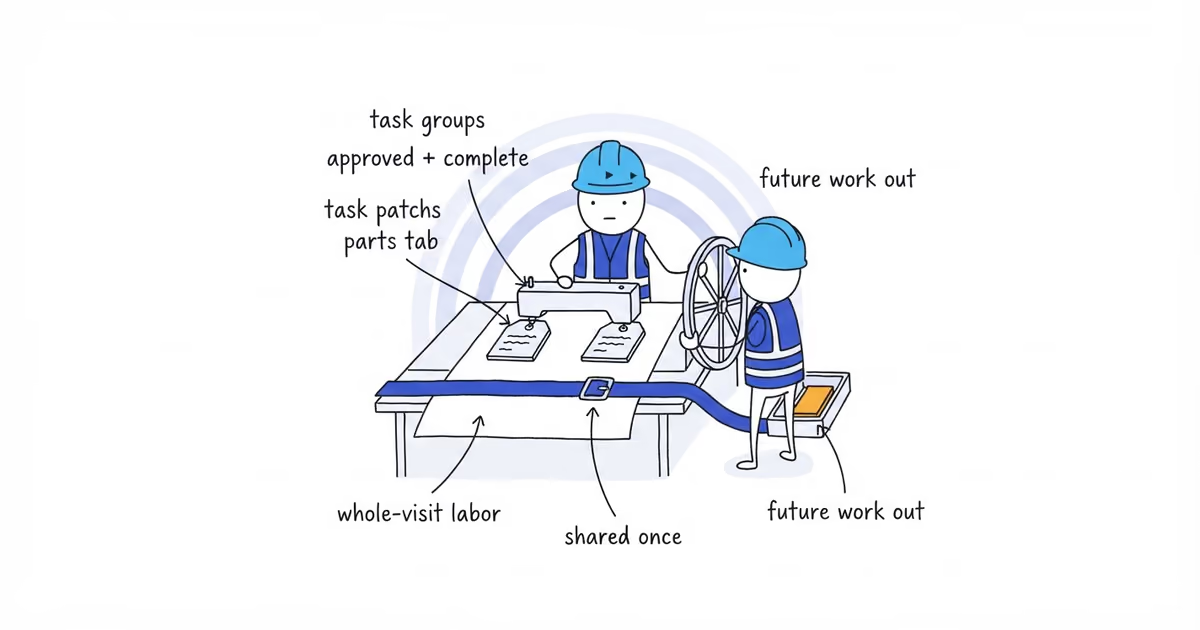
Use one handyman invoice for the visit, group completed work and parts by task or area, and keep whole-visit labor and shared charges separate. Preserve the flat-rate or hourly basis the customer approved, apply each adjustment and payment once, and leave recommended or unfinished work outside Amount due.
The invoice is a closeout of the sale, not a chance to reprice it. Start with the approved task list and the completed-work notes. If a task was not completed or approved for billing, it does not belong in the current subtotal.
How to itemize multiple handyman tasks
Give each task a label the customer will recognize, such as Bathroom, Bedroom, or Entry door. Under it, say what was completed and list any separately billable parts. This is clearer than one line that says Handyman services, but it does not require you to expose internal costs or rebuild the price.
For flat-rate work, keep the approved amount with the relevant task or area. Do not break that price into made-up labor hours, material cost, and markup after the job.
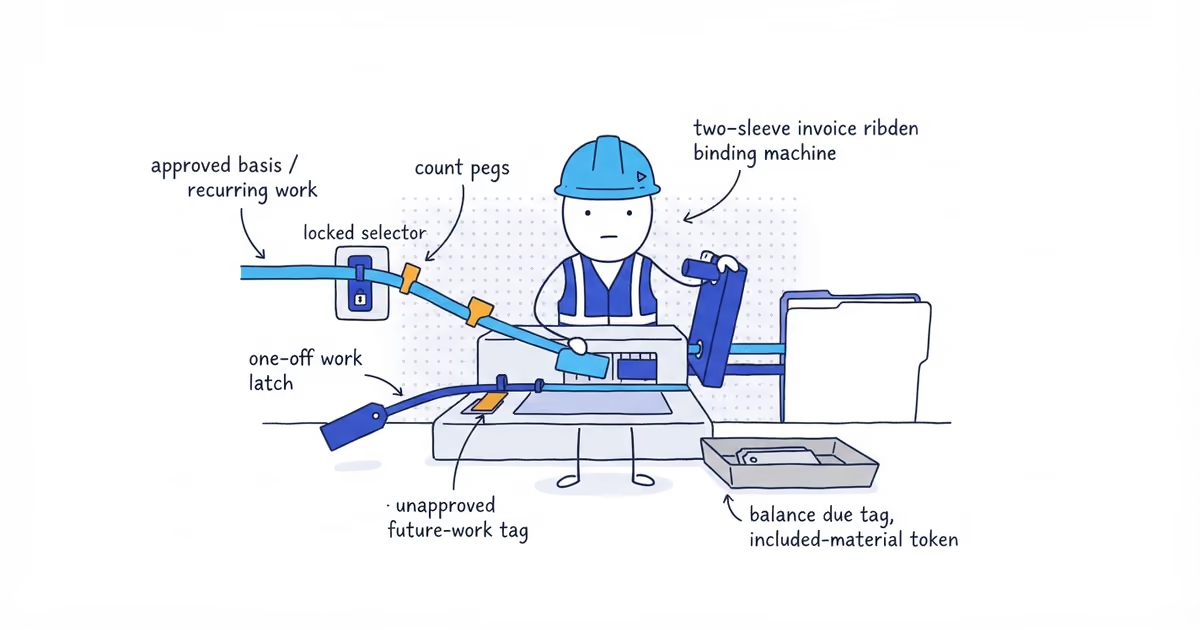
For hourly work, bill the actual customer-billable time at the approved rate. If you recorded only the total time for the visit, use one line such as Whole-visit labor: 3.0 hours. Describe the completed tasks by area, but do not invent a neat time split for each repair. False detail is worse than an honest visit-level record.
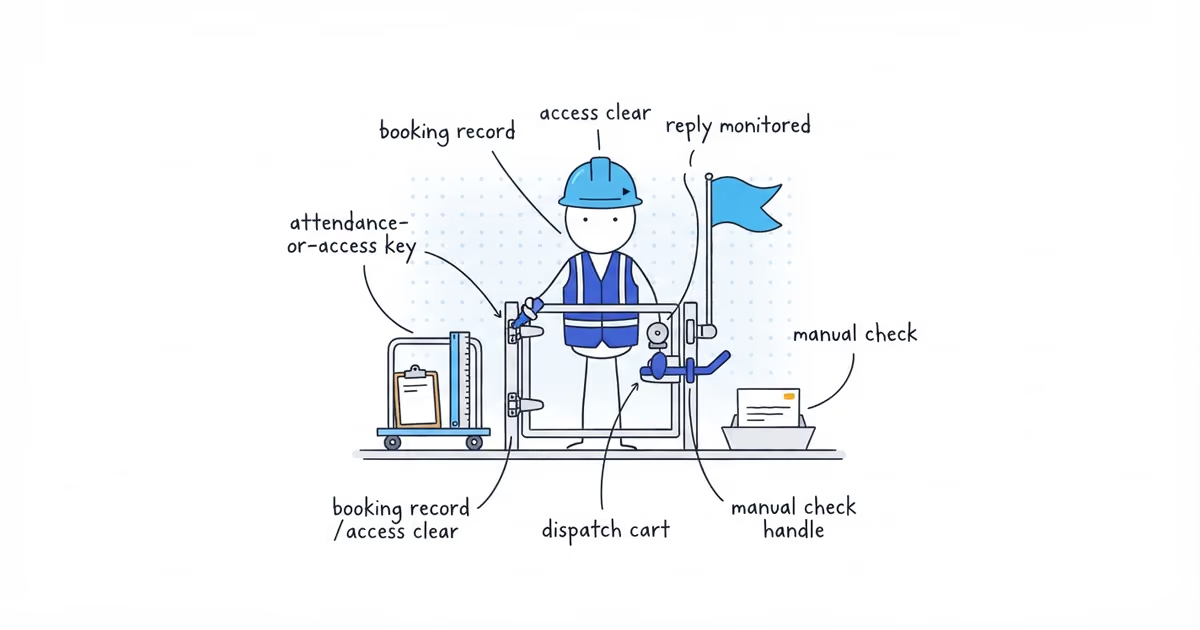
The invoice should also identify the visit. Include the customer, service address, invoice number, issue date, service date or range, and the estimate, work-order, request, or approval reference the customer will recognize. Use the due date and payment instructions already agreed for the job.
How to show service-call, travel, and disposal charges
A call-out or minimum belongs at visit level, not under every task. State what it includes. If the minimum includes the first hour, travel, or ordinary supplies, do not charge those inclusions again. If the customer approved a standalone service-call charge, show it separately from labor.
Treat travel and disposal the same way. One trip is one travel line. One shared dump run is one disposal line. Task-specific parts can sit with the task they served. A separately billable shared consumable belongs on one shared line. Materials included in a flat rate stay included.
This is where multi-task invoices often go wrong. The same visit fee appears under three repairs, or a deposit is subtracted from one task and then again from the final total. A longer invoice is not necessarily a clearer one.
Handyman invoice example for multiple tasks
The figures below are fictional approved invoice inputs. They are not suggested handyman prices, rates, minimums, discounts, tax treatment, or deposit terms.
In this example, the customer approved hourly billing and a standalone $80 service-call charge that does not include labor. The business recorded 3.0 hours for the whole visit, not separate time for the bathroom and bedroom.
| Group | Customer-facing description | Quantity or basis | Amount |
|---|---|---|---|
| Bathroom | Replaced shower-door guide and secured loose towel bar | Work description | - |
| Bathroom | Replacement guide and mounting parts | Approved parts | $40 |
| Bedroom | Mounted two approved shelves and checked fixings | Work description | - |
| Bedroom | Brackets and anchors | Approved hardware | $30 |
| Shared visit | Standalone service-call charge | Once per visit | $80 |
| Shared visit | Whole-visit labor | 3.0 hr x $90 | $270 |
| Shared visit | Travel | Once per visit | $18 |
| Shared visit | Disposal | Once per visit | $20 |
The labor descriptions sit under the two areas, but the hours stay on one visit-level line because that is what the record supports. The customer can still see what was done without being shown invented task times.
The balance then reconciles in one place:
| Reconciliation | Amount |
|---|---|
| Subtotal | $458 |
| Agreed discount | -$20 |
| Adjusted subtotal | $438 |
| Verified tax input for this job | $24 |
| Invoice total | $462 |
| Deposit received | -$100 |
| Prior payment received | -$50 |
| Amount due | $312 |
The arithmetic is $80 + $270 + $40 + $30 + $18 + $20 = $458, then $458 - $20 + $24 - $100 - $50 = $312. The $24 tax amount came from treatment already verified for this fictional job; the invoice does not decide the tax rate or which items are taxable.
Recommended work stays below the financial section:
Future work, not included in Amount due: Repair the damaged vanity base. Not completed or billed on this invoice.
That preserves the recommendation without presenting it as approved work or money owed today.
What to check before sending a handyman invoice
Before sending, read the invoice as the customer will. They should be able to match each charge to completed work, understand whether labor is flat rate or hourly, find each shared fee once, and follow the subtotal through the discount, tax, received payments, and Amount due. Future work should be unmistakably separate, and the due date and payment route should be usable.
Keep the invoice with the task approval, completion notes, parts receipts, and payment references. IRS Publication 583 identifies invoices, receipts, paid bills, deposit slips, and canceled checks as supporting documents for business records. It does not tell you how to tax a particular handyman job.
Once the task groups, billing basis, shared charges, adjustments, credits, and final balance agree, use ShiftFlow’s handyman invoice generator to place them in a customer preview and produce a printable or downloadable PDF.
Frequently asked questions
Can I mix flat-rate and hourly work on one handyman invoice?
Yes, if the customer already approved that mixed billing basis. Keep each task on its approved basis and label the quantity or flat amount clearly; do not use the invoice to change how the work was sold.
Should I attach parts receipts to a handyman invoice?
Attach them only when the agreement or customer requires it. The invoice should show the customer-facing parts charge, while purchase receipts stay with the business records that support the job.
What if the customer adds another handyman task during the visit?
Include it only if it was approved, completed, and ready to bill. Do not use the final invoice to obtain approval for extra work after the fact.
Sources
- Starting a Business and Keeping Records, IRS Publication 583.
- Handyman Invoice Generator, ShiftFlow.
- pricing
- how-to-invoice-handyman-job-with-multiple-tasks
- handyman-invoice
- handyman-invoice-multiple-tasks
- itemized-handyman-invoice
- handyman-invoice-example
- handyman-labor-and-materials-invoice