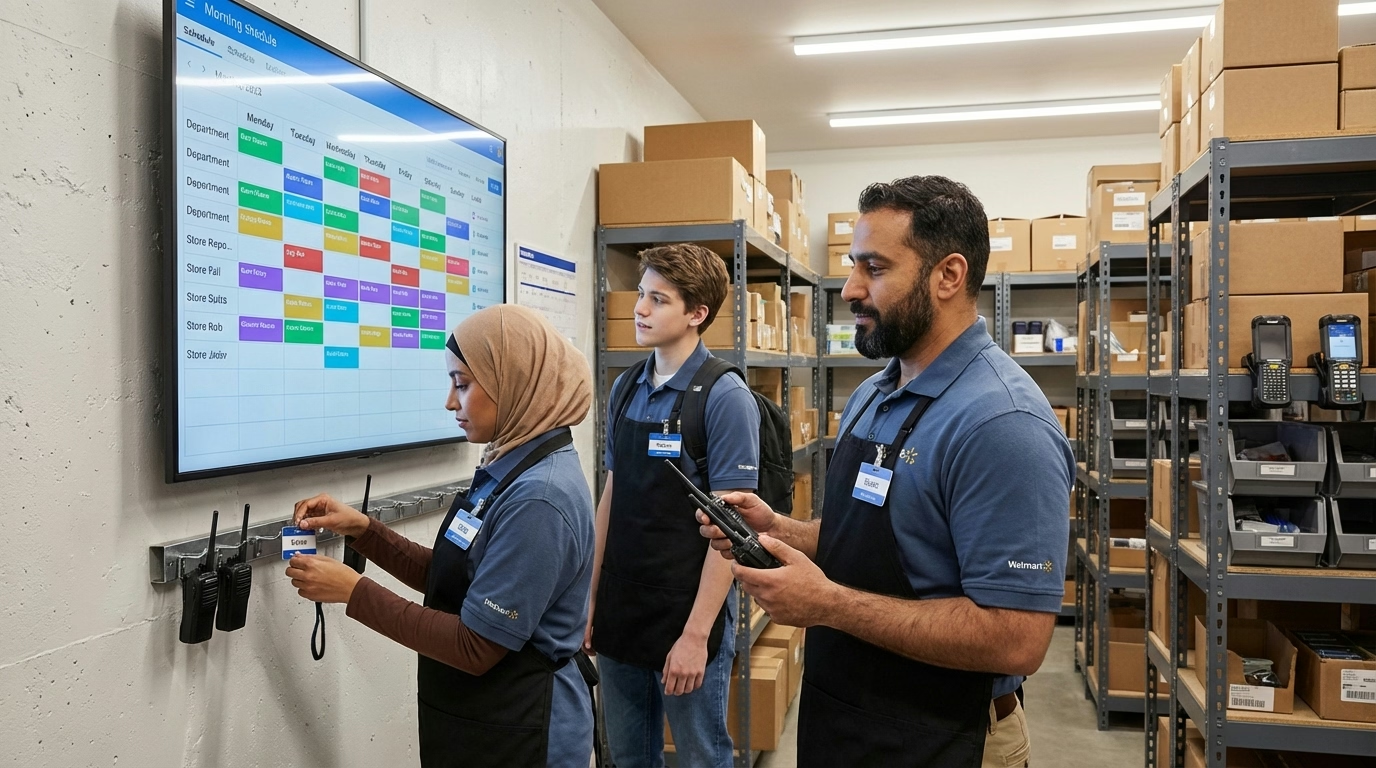

What Is On-the-Job Training (OJT)?
Learn what on-the-job training is, why it works, and practical strategies for designing effective OJT programs that build skills and boost performance.

Learn what on-the-job training is, why it works, and practical strategies for designing effective OJT programs that build skills and boost performance.

Need shift coverage fast? Decision tree for emergencies, message templates you can copy, and legal rules for last-minute call-outs.

Getting demoted feels like the end of your career. It doesn't have to be. Here's how to handle it—and whether to stay or go.

Direct hire explained—fees (15–25%), timelines, guarantee periods, and when to choose it vs temp‑to‑hire.

Duty roster explained—templates, notice rules, fairness rotation, and predictive scheduling compliance for shift teams.

Work four 12-hour shifts, then get a full week off. The DuPont schedule sounds great—until you live it. Here's the reality.

Work two days, off two, work three, off two—then flip to nights. Here's what the 2-2-3 schedule actually feels like.

80‑hour weeks: legal/OT math, top health risks, a 2‑week survival plan, and manager strategies to prevent burnout.

Every other Friday off without using vacation days. Here's how the 9/80 schedule works and whether the longer days are worth it.

Get paid to learn a trade instead of paying for college. Here's how apprenticeship agreements work and what to expect.

BARS ties ratings to specific behaviors—making reviews objective. See how a "4" actually means the same thing across all your managers.

Four days on, three days off—every single week. Here's what 10-hour shifts and 156 days off per year actually feel like.

Seven straight days of 12-hour shifts, then an entire week off. Here's what that actually feels like—and whether your body can handle it.

Learn what catch-up meetings are, how regular one-on-one check-ins improve communication and performance, typical agendas and frequency, best practices for managers and team members, and how to make catch-up meetings productive.

Job orientation vs onboarding explained. Includes first-day checklist, 4-hour schedule template, and retention tips. Free printable guide for 2026.

Payment in lieu of notice (PILON) lets you leave immediately while getting paid for your notice period. See how it's calculated and taxed.

2nd shift hours are typically 3 PM–11 PM with 5–15% higher pay. Compare pros, cons, and lifestyle trade-offs vs 1st and 3rd shift.

Learn what career progression means, how it differs from career advancement, typical progression paths in shift-based industries, strategies to accelerate growth, and how to create development plans for your team.

Full‑time explained—hours by law, typical benefits, who qualifies, and how status affects healthcare and overtime.

That unexpected bonus from your boss? Here\u2019s what qualifies as a goodwill gesture, whether it\u2019s taxable, and how to handle it properly.