
What Is Time Card Fraud in 2026?
Time card fraud costs businesses up to 5% of gross payroll annually. Learn what time card fraud is, the most common types including buddy punching and timesheet padding, how it costs companies thousands per employee, and 2026 detection technologies.
What Is Time Card Fraud in 2026?
Time card fraud happens when employees deliberately falsify their work hours to get paid for time they didn’t actually work. Think buddy punching (clocking in for absent coworkers), padding timesheets with extra hours, or going back to edit old entries and inflate the numbers.
It’s more common than you might think. Research cited by Legion shows time card fraud can cost businesses up to 5% of gross annual payroll—and 75% of U.S. businesses deal with some form of time theft. That makes it one of the most widespread and expensive problems employers face.
Quick Answer
Time card fraud is deliberate falsification of work hours through buddy punching, timesheet padding, or recording inaccurate times. It costs businesses up to 5% of gross payroll annually. The average employee steals 4.5 hours per week. Modern prevention uses biometric time clocks, GPS verification, and automated time tracking to eliminate manual manipulation.
What Are the Types of Time Card Fraud?
Let’s break down the most common ways employees game the system:
Buddy punching is when one employee clocks in or out for another who isn’t actually there. It’s surprisingly common—ePaySystems found that 23% of employees admit to doing it, making it the most widespread form of time card fraud affecting 75% of U.S. businesses.
Here’s how it plays out: Sarah texts Mike at 8:55am saying she’s stuck in traffic. Mike uses Sarah’s PIN code to clock her in at 9am so she doesn’t get marked late. Sarah actually arrives at 9:45am but gets paid from 9am.
Timesheet padding means recording longer shifts than you actually worked. Maybe you clock out at 5:00pm but leave at 4:45pm after finishing closing tasks. Doesn’t seem like much, right? But those 15 minutes a day add up to 65 hours over a year—worth over $900 at $15/hour. ADP reports that 43% of hourly workers admit to exaggerating their hours like this.
Recording inaccurate times is similar but happens on manual timesheets. A warehouse worker arrives at 7:10am but writes down 7:00am, then leaves at 3:50pm but writes 4:00pm. That’s 20 minutes of theft per day—over 80 hours per year. Nearly 45% of employees admit to recording times that don’t match when they actually started or stopped working.
Unauthorized overtime happens when employees clock in early or stay late without approval to rack up overtime pay at 1.5x their rate. For instance, someone scheduled 7am-3pm starts clocking in at 6:30am every day without permission. By Friday, that’s 2.5 hours of unauthorized overtime costing an extra $56.25 per week at a $15/hour base rate.
Editing past entries is exactly what it sounds like—going back into old time logs and inflating hours worked. If you’re using spreadsheets or poorly secured systems, it’s easy for employees to change Monday’s 8-hour shift to 9 hours, Tuesday’s to 8.5 hours, quietly adding 2.5 hours per week they never worked.
Ghost employees are fake workers created in the payroll system who submit fraudulent timesheets. This is usually an inside job—someone in payroll or HR creates nonexistent employees and pockets their paychecks.
How Much Does Time Card Fraud Cost?
The numbers are eye-opening. Time card fraud can cost businesses up to 5% of gross annual payroll, according to the American Payroll Association. For a company with $10 million in annual payroll, that’s $500,000 walking out the door every year.
Buddy punching alone accounts for 2.2% of gross payroll on average, according to Nucleus Research cited by Legion. And this isn’t happening at just a few businesses—74% of employers experience payroll losses from buddy punching.
Here’s another way to think about it: the average employee steals 4.5 hours per week through various time theft methods. That’s nearly six weeks of wages paid every year for work that never actually happened. At $20/hour, you’re losing $4,680 per employee annually.
If you’re running a retail store or restaurant on already-thin margins, even a 2-3% payroll loss can make the difference between profit and loss. And industries with lots of hourly workers—healthcare, construction, hospitality—have even more exposure because the problem scales with workforce size.

How Can You Detect Time Card Fraud?
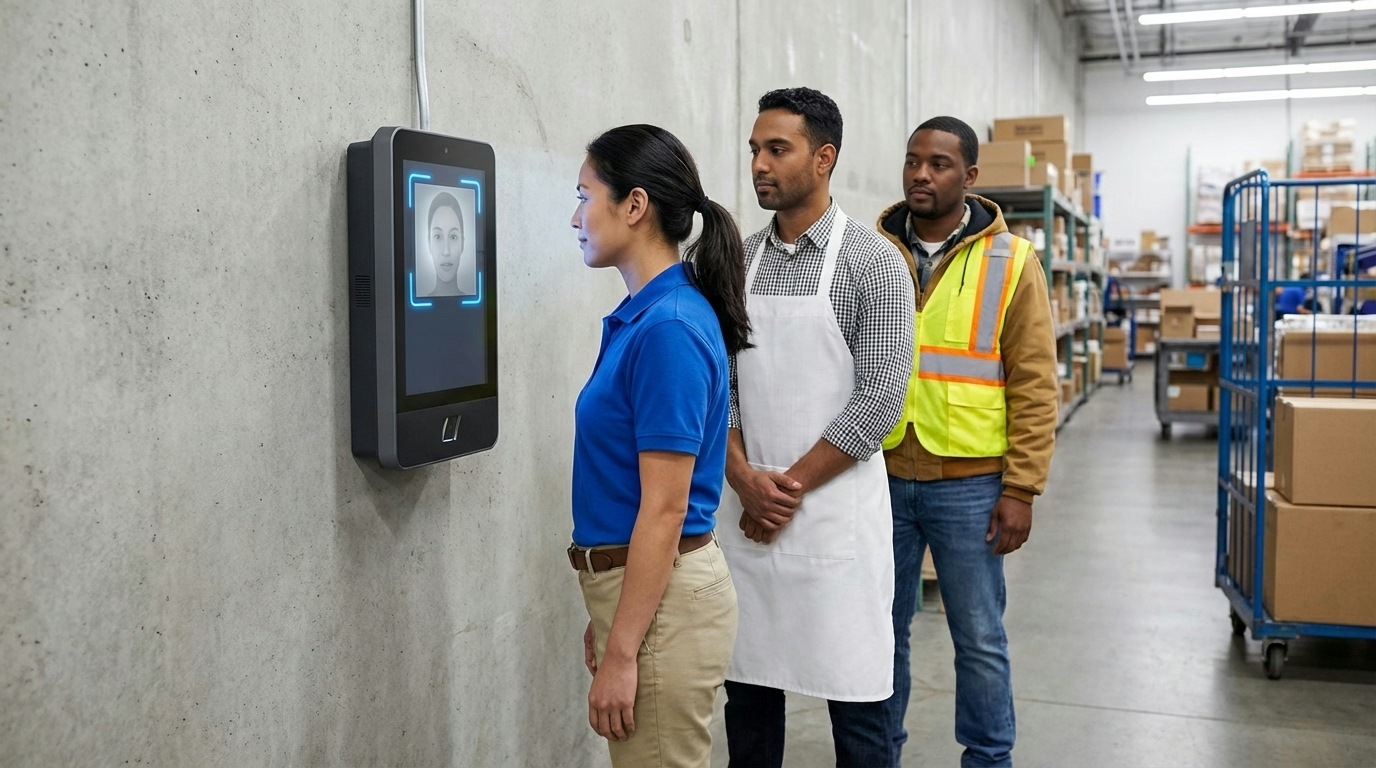
Biometric time clocks: Facial recognition or fingerprint scanning systems eliminate buddy punching entirely. According to TimeRex, biometric systems make it impossible for one employee to clock in for another since the system verifies unique biological identifiers.
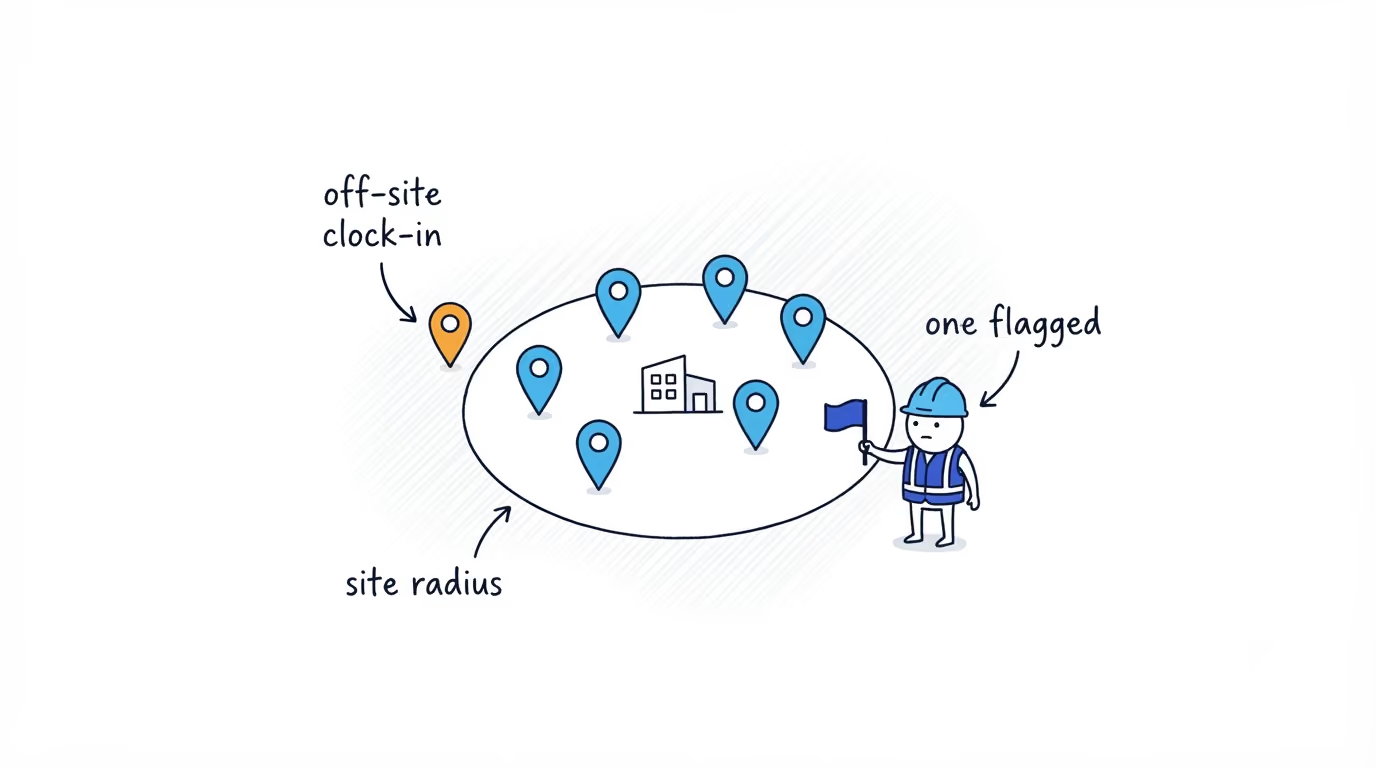
GPS and geofencing: For field workers or employees at multiple locations, GPS-enabled time tracking ensures employees can only clock in when physically present at designated work locations. Geofencing creates virtual boundaries that trigger clock-in/out capabilities.
Automated time tracking software: Prevents fraudulent early clock-ins and manual errors by enforcing shift start times, flagging deviations, and blocking edits to past entries without manager approval. Real-time tracking shows who’s clocked in at any moment.
Timesheet exception reporting: Automated systems identify shifts that deviate from expected schedules—someone who always clocks in exactly on time but suddenly shows arriving 30 minutes early every day, or patterns of overtime that don’t match workload.
Real-time monitoring dashboards: Enable managers to spot irregularities immediately rather than discovering them weeks later during payroll processing. Alerts notify supervisors when unusual patterns occur.
Activity tracking: For remote or office workers, monitoring computer usage and application time provides objective evidence of actual work performed versus hours claimed.
What’s New for Time Card Fraud in 2026?
Liveness detection becomes the standard: After years of older facial recognition systems being fooled by photos, 2026 marks the shift to liveness detection as the baseline for workplace biometric systems. If your time clock can’t tell the difference between a real person and someone holding up a photo, you’re behind the curve. According to IMARC Group, the biometrics market hit $45.09 billion in 2025 and continues growing as companies upgrade to anti-spoofing technology.
GPS verification shifts from optional to mandatory: Fair Workweek laws expanded to more jurisdictions in 2026, and many now explicitly require proof of location for clock-in events. If you’ve got field workers, GPS-enabled time tracking isn’t a nice-to-have anymore—it’s compliance.
New W-2 overtime reporting creates accountability: The 2026 tax year introduces the requirement to separately report qualified overtime on Form W-2 Box 12 Code TT. This means time card fraud that inflates overtime doesn’t just cost you payroll dollars—it creates tax reporting headaches and audit risk.
How Can You Prevent Time Card Fraud?
The good news? You can shut down most time card fraud with the right systems and policies.
Go biometric. Install facial recognition or fingerprint scanning systems at all your clock-in locations. You literally can’t clock in for someone else if the system needs to scan your face or fingerprint. SmartBarrel found that companies using biometric clocks see 27% fewer payroll disputes and completely eliminate buddy punching.
Use GPS for field workers. If you’ve got remote or field employees, make them clock in through mobile apps with GPS verification. Geofencing means they can only clock in when they’re physically at the correct location—no more clocking in from home when they should be at a job site.
Automate everything. Ditch the manual punch cards and spreadsheets. Good time tracking software won’t let employees backdate entries, requires manager approval for any edits, and automatically flags unusual patterns.
Get your policies in writing. Create a clear timekeeping policy that spells out what time card fraud is, what happens if you do it (up to termination), and how employees should request corrections if they make a legitimate mistake.
Watch in real-time. Don’t wait until payroll processing to figure out something’s wrong. Use dashboards that show you who’s clocked in right now and send alerts when something looks off.
Require manager sign-off. Any overtime, shift swaps, or time corrections should need manager approval. Don’t let employees just change their own hours unilaterally.
Audit monthly. Review time records every month looking for patterns—employees who always clock in at exactly the same minute, unexpected overtime spikes, gaps between scheduled hours and actual hours.
Train your supervisors. Make sure your managers know what to look for, understand how to review timesheets before payroll runs, and know they need to address violations consistently across all employees.

What’s the Bottom Line?
Time card fraud costs businesses up to 5% of gross annual payroll, with 75% of U.S. businesses affected by buddy punching alone. The average employee steals 4.5 hours per week—six weeks of wages per year paid for work never performed.
Here’s what you need to know:
- Time card fraud includes buddy punching, timesheet padding, and recording inaccurate times
- It costs businesses 2-5% of gross payroll annually
- 43% of hourly workers admit to exaggerating their hours
- Biometric time clocks eliminate buddy punching entirely
- GPS verification ensures employees are physically present when clocking in
- 2026 brings enhanced DOL scrutiny and new W-2 overtime reporting requirements
- Automated time tracking prevents manual manipulation and flags unusual patterns
Ready to eliminate time card fraud? ShiftFlow’s time tracking tools use GPS verification, automated validation, and real-time monitoring to prevent buddy punching and timesheet fraud. Explore our solutions or view pricing.
Sources
- Legion – Minimizing Time Card Fraud: Strategies for Retail
- ADP – Time Theft: How it Happens & How to Prevent it
- ePaySystems – Employee Time Theft Facts & Statistics
- Legion UK – The Dangers of Time Sheet Fraud: How to Protect Your Business
- PayPro – Time Theft by the Numbers: Data & Laws You Must Know
- TimeTrex – Solutions to Buddy Punching in 2025
- Payroll Partners – Buddy Punching and Time Theft: Hidden Risks That Cost Employers Millions
- Mera Monitor – What Is Timesheet Fraud? Types, Examples & Prevention Guide
- SmartBarrel – How To Eliminate Time Theft Using Modern Technologies
Further Reading
- How to Prevent Buddy Punching – Stop employees from clocking in for each other
- Time Clock Explained – How time clocks track employee hours
- Timekeeping Policy Guide – Creating clear time tracking rules
Frequently Asked Questions
What is time card fraud?
Time card fraud is when employees deliberately falsify their work hours to get paid for time they did not actually work. Common types include buddy punching (clocking in for absent coworkers), timesheet padding (recording longer hours than worked), and editing past entries to inflate hours. It costs businesses up to 5% of gross annual payroll.
How much does time card fraud cost businesses?
Time card fraud costs businesses up to 5% of gross annual payroll according to the American Payroll Association. Buddy punching alone averages 2.2% of gross payroll. The average employee steals 4.5 hours per week through time theft, equating to six weeks of wages paid for work that never happened per worker per year.
What is buddy punching?
Buddy punching is when one employee clocks in or clocks out for another employee who isn’t actually present at work. It’s the most common form of time card fraud, affecting 75% of U.S. businesses. About 23% of employees admit to buddy punching.
How can you prevent time card fraud?
Prevent time card fraud with biometric time clocks (facial recognition or fingerprint scanning), GPS and geofencing for location verification, automated time tracking software that prevents manual manipulation, real-time monitoring dashboards, timesheet exception reporting, and clear policies with consequences for fraud. Biometric systems eliminate buddy punching entirely.
Is time card fraud illegal?
Yes, time card fraud is illegal. It constitutes theft—employees are stealing money by claiming payment for hours they didn’t work. Employers can terminate employees for time card fraud, and in cases involving ghost employees or organized schemes, criminal charges for theft and fraud can be filed.
How do biometric time clocks prevent fraud?
Biometric time clocks use facial recognition or fingerprint scanning to verify the identity of the person clocking in. Since each person’s biometric data is unique, it’s impossible for one employee to clock in for another. This completely eliminates buddy punching and significantly reduces other forms of time card fraud.
What are the consequences of time card fraud?
For businesses, time card fraud increases labor costs by 2-5% of gross payroll, distorts workforce data, and creates legal liability. For employees caught committing fraud, consequences include written warnings, suspension, termination, and in serious cases, criminal charges for theft. Employers must enforce policies consistently to avoid discrimination claims.
How common is timesheet padding?
According to ADP, 43% of hourly workers admit to exaggerating their work hours during shifts. This makes timesheet padding one of the most widespread forms of time card fraud, second only to buddy punching in prevalence.
- time-card-fraud
- buddy-punching
- time-theft
- timesheet-fraud
- payroll-fraud
- biometric-time-clock
- employee-theft