What Is a Timekeeping Policy?
A timekeeping policy sets the rules for how employees record hours worked. Learn what to include in your policy, FLSA requirements, and how clear policies prevent payroll disputes.

What Is a Timekeeping Policy?
A timekeeping policy is a written set of rules explaining how your employees record their work hours. It covers when to clock in and out, how to handle breaks, who approves overtime, how to fix mistakes, and what happens if someone breaks the rules.
Think of it as your instruction manual for time tracking. It sets expectations, keeps everyone consistent, and protects both you and your employees.
Quick Answer
A timekeeping policy documents your rules for recording work hours. In 2026, it should cover clock-in/out procedures, break requirements, overtime approval, time corrections, and consequences for violations. A clear policy prevents disputes and ensures FLSA compliance.
Why Do You Need a Timekeeping Policy?
The Fair Labor Standards Act requires accurate time records but doesn’t require a written policy. That said, having one protects you by proving compliance intent, giving you grounds to discipline violations, and showing you treat everyone consistently.
A written policy makes sure everyone follows the same procedures, managers know when to approve overtime, and employees understand how to report time correctly. It prevents disputes about whether someone was on the clock, how to track breaks, and how to fix errors.
As of 2026, penalties for non-compliance can hit $1,000 per violation, plus backpay and attorney fees, according to Clockify.
What Must Be Included in a Timekeeping Policy?
1. Who must track time: Say the policy applies to all non-exempt (hourly) employees. FLSA only requires time tracking for non-exempt employees.
2. How to record time: Spell out the method (physical time clock, mobile app, web-based system) and rules like “clock in when you’re ready to work, not when you walk in the building” and “never clock in for someone else.”
3. Rounding practices: Explain if and how you round time (to the nearest 5, 10, or 15 minutes). FLSA requires rounding to be neutral—you can’t systematically favor yourself, according to Patriot Software.
4. Break and meal periods: Lay out requirements for meal breaks (typically 30+ minutes, unpaid) and rest breaks (10-15 minutes, paid). Include state-specific rules—some states require breaks. Use an hours and minutes calculator to get break time calculations right.
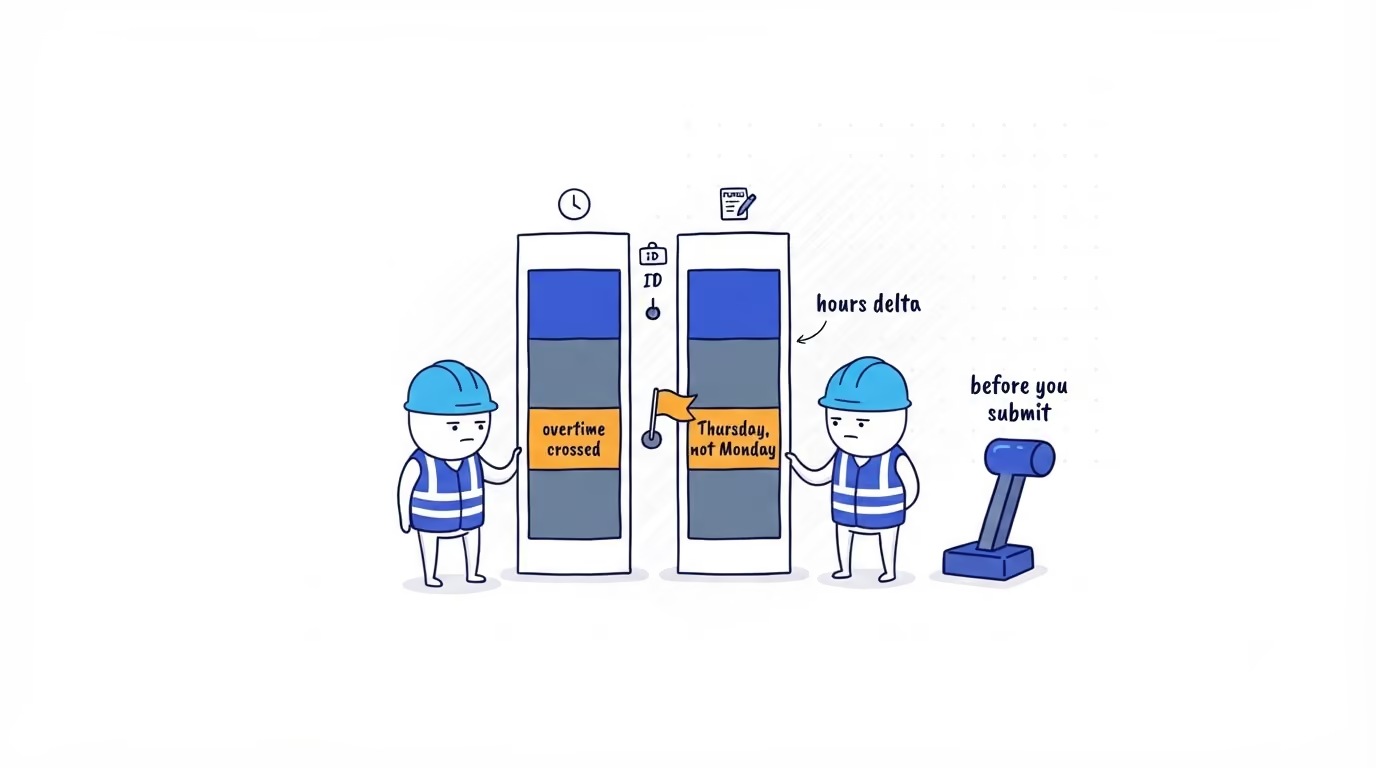
5. Overtime rules: Define overtime (typically 40+ hours per week), who can work it (pre-approval required), how it’s calculated (1.5x regular rate), and consequences for unauthorized overtime. Note: Starting tax year 2026, you must report qualified overtime compensation separately on Form W-2 using Box 12 Code TT, so accurate overtime tracking matters.
6. Time correction procedures: Explain how employees report missed punches, request corrections, and get manager approval.
7. Prohibited behaviors: Explicitly forbid buddy punching, working off the clock, falsifying records, and unauthorized time edits.
8. Manager responsibilities: Managers must review and approve time records, make sure breaks get taken, approve overtime, and investigate discrepancies.
9. Recordkeeping: Note that you’ll keep time records for at least 3 years (FLSA requirement) and where they’re stored.
10. Consequences for violations: Outline progressive discipline—verbal warning, written warning, suspension, and possible termination for serious stuff like time theft.

What Are Common Timekeeping Policy Mistakes?
Common mistakes: vague clock-in rules that cause disputes, no overtime approval process (hello, budget blowouts), missing state-specific break requirements, no procedure for fixing errors, inconsistent enforcement (which can lead to discrimination claims), and not updating the policy when you adopt new technology or add remote work.
How Do You Write a Timekeeping Policy?
1. Review legal requirements: Research federal FLSA requirements, state wage and hour laws (especially break requirements), and any collective bargaining agreements you’ve got.
2. Choose your tracking method: Decide what system your employees will use, how you’ll prevent time theft, and whether you’ll round time.
3. Draft policy sections: Use the elements above and write in clear, simple language. Skip the legal jargon.
4. Address specific situations: Add sections for remote workers, field workers with GPS tracking, multiple locations, and different shift types. Industries like construction, plumbing and heating, and electrical services often need special provisions for mobile workers.
5. Get legal review: Have an employment attorney make sure you’re FLSA-compliant and the language is clear and enforceable.
6. Train employees and managers: Hand out the policy, have employees acknowledge they got it, train managers on enforcement, and include it in new hire onboarding.
7. Update regularly: Review when laws change, you adopt new technology, or audits show gaps.
What Happens If You Don’t Have a Timekeeping Policy?
You still have to comply with FLSA—no policy doesn’t mean no rules. But without one:
- It’s harder to discipline violations
- More disputes about what the “rules” are
- Inconsistent decisions from managers
- Weaker defense if you get sued or audited
- Employees can claim they “didn’t know”
In other words: You’ve got all the compliance obligations but fewer tools to enforce them.

What’s the Bottom Line?
A timekeeping policy isn’t legally required, but it’s one of the easiest ways to prevent payroll headaches, protect your business, and make sure everyone’s on the same page.
In 2026, with new Form W-2 overtime reporting requirements and more enforcement, a clear, updated policy matters more than ever.
Here’s what you need to do:
- Put your timekeeping rules in writing
- Cover who tracks time, how, when, and what happens if they don’t follow the rules
- Include state-specific break requirements
- Require manager approval for overtime and time corrections
- Update when laws change or you adopt new technology
- Train employees and managers on the policy
Need help enforcing your timekeeping policy? ShiftFlow’s time tracking tools include automatic overtime alerts, break tracking, and manager approval workflows that make policy compliance automatic. Explore our solutions or view pricing to get started.
Sources
- SHRM – FLSA Timekeeping Requirements for Employers
- Clockify – FLSA Compliance Guide
- Patriot Software – FLSA Timekeeping Requirements
- Factorial – USA Legal Requirements of Employee Time Tracking
- Experian – IRS Finalizes 2026 Form W-2: What Employers Need to Know About Tip and Overtime Reporting
- HR Morning – TY 2026 W-2: IRS Proposes New Box 12 Codes
- VantagePoint – Overtime & Timekeeping: Aligning Policies Before Q1 2026
Further Reading
- Time Audit Guide – How to verify policy compliance
- Clock In Clock Out Explained – How employees should track time
- Employee Attendance – Related attendance policy considerations
Frequently Asked Questions
What is a timekeeping policy?
A timekeeping policy is a written set of rules explaining how employees must record their work hours, including when to clock in/out, how to request time off, overtime approval procedures, break requirements, and consequences for violations like time theft or missing punches.
What should be included in a timekeeping policy?
Include who must track time (non-exempt employees), clock-in/out procedures, rounding practices, break and meal period rules, overtime approval requirements, time correction procedures, prohibition of time theft, and consequences for policy violations. Also specify manager approval requirements and recordkeeping details.
Is a timekeeping policy required by law?
FLSA requires keeping accurate time records for non-exempt employees but doesn’t require a written policy. However, having a clear policy protects you legally by demonstrating compliance intent and gives you grounds for disciplinary action when employees violate timekeeping rules.
How often should I update my timekeeping policy?
Review your policy annually and update whenever laws change, you adopt new time tracking technology, add new shift patterns or roles, or audits reveal gaps. For 2026, employers must report qualified overtime compensation on Form W-2 using Box 12 Code TT, making accurate overtime tracking more important than ever.
Can I discipline employees for timekeeping violations?
Yes, if your policy clearly states the rules and consequences. You can implement progressive discipline (verbal warning, written warning, suspension, termination) for violations like time theft, buddy punching, or repeatedly failing to clock in/out. Ensure consistent enforcement across all employees.
What’s the difference between a timekeeping policy and an attendance policy?
A timekeeping policy focuses on how to record hours worked (clocking in/out, overtime, breaks). An attendance policy addresses showing up for scheduled shifts (tardiness, absences, calling out sick). Many companies combine both into one comprehensive policy.
Do remote workers need to follow the timekeeping policy?
Yes. Your policy should include provisions for remote work, specifying how remote employees track time (usually through web-based systems or mobile apps), whether you use activity monitoring, and how to verify hours worked off-site.
What if an employee works unauthorized overtime?
You must pay for all hours worked, even if not pre-approved. However, you can discipline the employee for violating the policy. Make this clear in your policy: “Unauthorized overtime will be compensated at the required rate but may result in disciplinary action.”
- timekeeping-policy
- attendance-policy
- time-tracking
- flsa-compliance
- hr-policy
- payroll
- wage-and-hour