What Are Payroll Hours in 2026?
Payroll hours are the total hours you worked that count toward your paycheck. Learn what counts as payroll hours, how overtime is calculated at 1.5x your rate, and new 2026 Form W-2 qualified overtime reporting requirements.
What Are Payroll Hours in 2026?
Payroll hours are the total hours you worked during a pay period that count toward your paycheck. It’s what your employer uses to calculate how much you get paid.
For hourly employees, payroll hours directly determine your pay: hours worked × hourly rate = your paycheck (before deductions). For salaried employees, payroll hours are tracked differently—you’re typically paid the same amount regardless of hours, but your employer still tracks them for compliance and overtime purposes.
Quick Answer
Payroll hours are the hours you worked that count toward your pay. This includes regular hours, overtime hours (paid at 1.5x), paid breaks, training time, and approved PTO. Your time card tracks these hours from when you clock in and out.
What Counts as Payroll Hours?
Regular hours worked: Time you’re clocked in and performing your job duties. This is your main work time.
Overtime hours: Hours worked over 40 in a workweek. Under FLSA, these are paid at 1.5 times your regular rate. Starting in 2026, employers must separately report qualified overtime on Form W-2 using Box 12 Code TT, according to QuickBooks.
Paid breaks: According to the Department of Labor, short breaks lasting 5-20 minutes must be paid. You stay on the clock during these rest breaks.
Meal breaks: According to FLSA guidelines, meal periods of 30+ minutes can be unpaid if you’re completely relieved of duties. But if you must stay at your desk or respond to customers, it counts as paid time.
Training and meetings: Mandatory training sessions, staff meetings, and safety meetings count as hours worked.
On-call time: If you’re required to stay on-site or can’t use the time freely, it counts. True on-call where you’re at home and just available usually doesn’t count unless you’re called in.
Travel time: Travel between job sites during your shift counts. Commuting from home to your first job site and back home doesn’t count.
Paid time off: Vacation days, sick days, and holidays you’re paid for show up as payroll hours even though you didn’t physically work.
What Doesn’t Count as Payroll Hours?
Unpaid meal breaks: If you’re completely off duty for 30+ minutes, it doesn’t count.
Commute time: Your drive from home to work and back home isn’t paid time.
Off-the-clock work: Time spent working when you’re not clocked in. This is illegal—employers must pay for all hours worked, even if you forgot to clock in.
Time in between shifts: If you work a split shift, the time between shifts where you’re free to leave doesn’t count.
Unpaid time off: Days you take off without pay, whether voluntary or for disciplinary reasons.
How Are Payroll Hours Calculated?
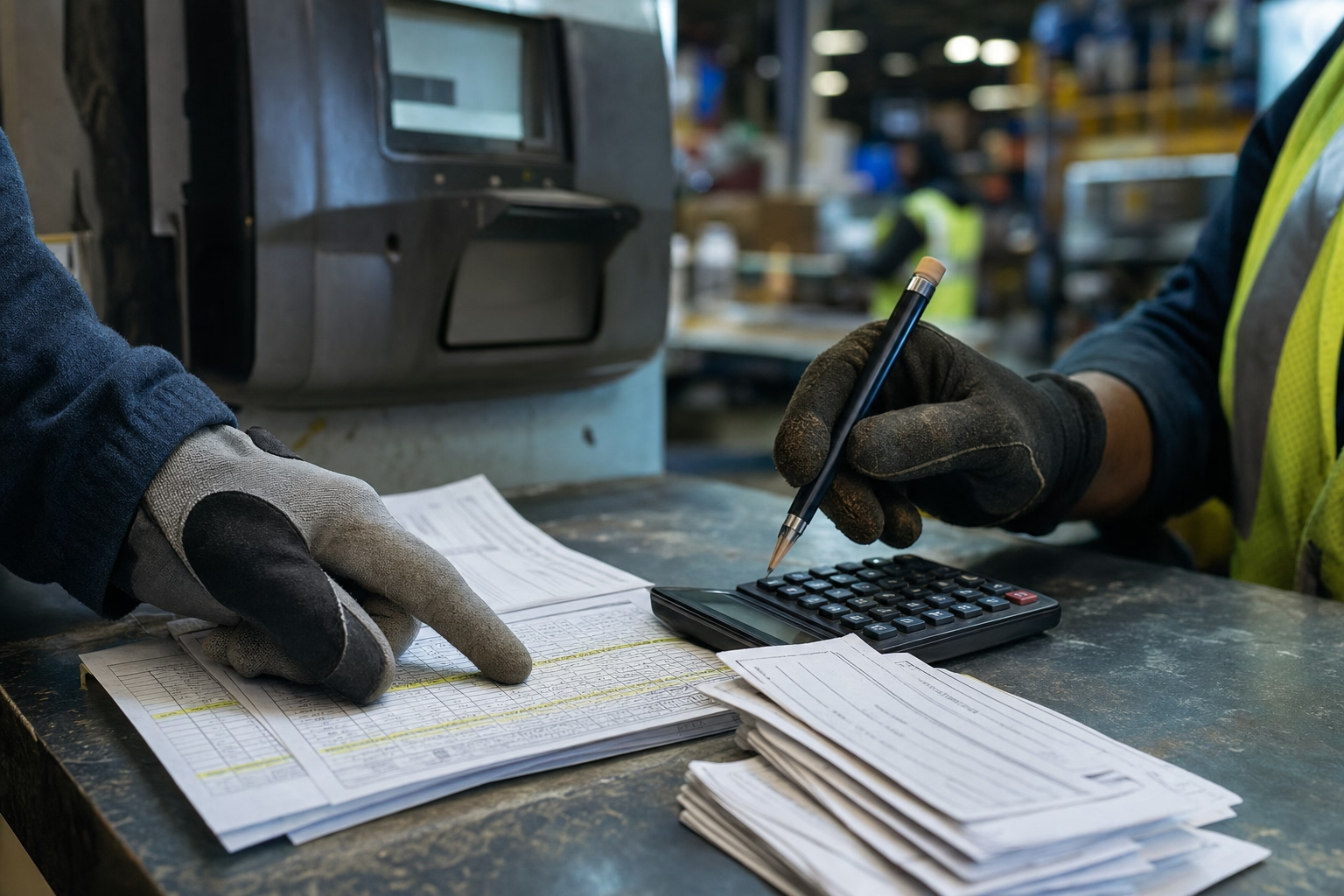
Your employer uses your time card or time tracking records to calculate payroll hours.
For hourly employees:
- Total all regular hours worked (up to 40 per week)
- Identify overtime hours (anything over 40)
- Add any paid breaks, training, or PTO
- Round time if your employer has a rounding policy (must be neutral per FLSA)
Example:
- Monday-Thursday: 8 hours each day = 32 hours
- Friday: 10 hours
- Total regular hours: 40
- Overtime hours: 2
- Total payroll hours: 42 (40 regular + 2 overtime)
Your paycheck would show 40 hours at your regular rate ($20/hour = $800) plus 2 overtime hours at 1.5x rate ($30/hour = $60) for total gross pay of $860.
For salaried employees: Most exempt salaried employees don’t track hours for pay purposes. But some salaried employees are non-exempt and still eligible for overtime. In that case, employers calculate an effective hourly rate and pay 1.5x for hours over 40.

How Is Overtime Calculated for Payroll Hours?
According to the FLSA, the formula for calculating overtime pay is:
Overtime pay = Regular rate × 1.5 × Overtime hours
The FLSA mandates premium pay of no less than 1.5 times the employee’s regular rate for all hours worked over 40 in a fixed, seven-day workweek.
Important note for 2026: Employers must now track and report “qualified overtime” separately. According to Barnes Dennig, qualified overtime is the FLSA-required half-time portion only. A rough calculation is taking 1/3 of the total overtime paid.
Example:
- Regular rate: $20/hour
- Overtime hours: 5
- Regular overtime pay calculation: $20 × 1.5 × 5 = $150
- Qualified portion (for 2026 W-2 reporting): roughly $50 (1/3 of total overtime)
What’s New for Payroll Hours in 2026?
Form W-2 qualified overtime reporting requirement: Starting in 2026, employers must separately report qualified overtime compensation on Form W-2 using Box 12 Code TT. According to QuickBooks, this is the FLSA-required half-time premium portion only—roughly 1/3 of total overtime paid. This means payroll systems must track regular overtime pay and the qualified portion separately.
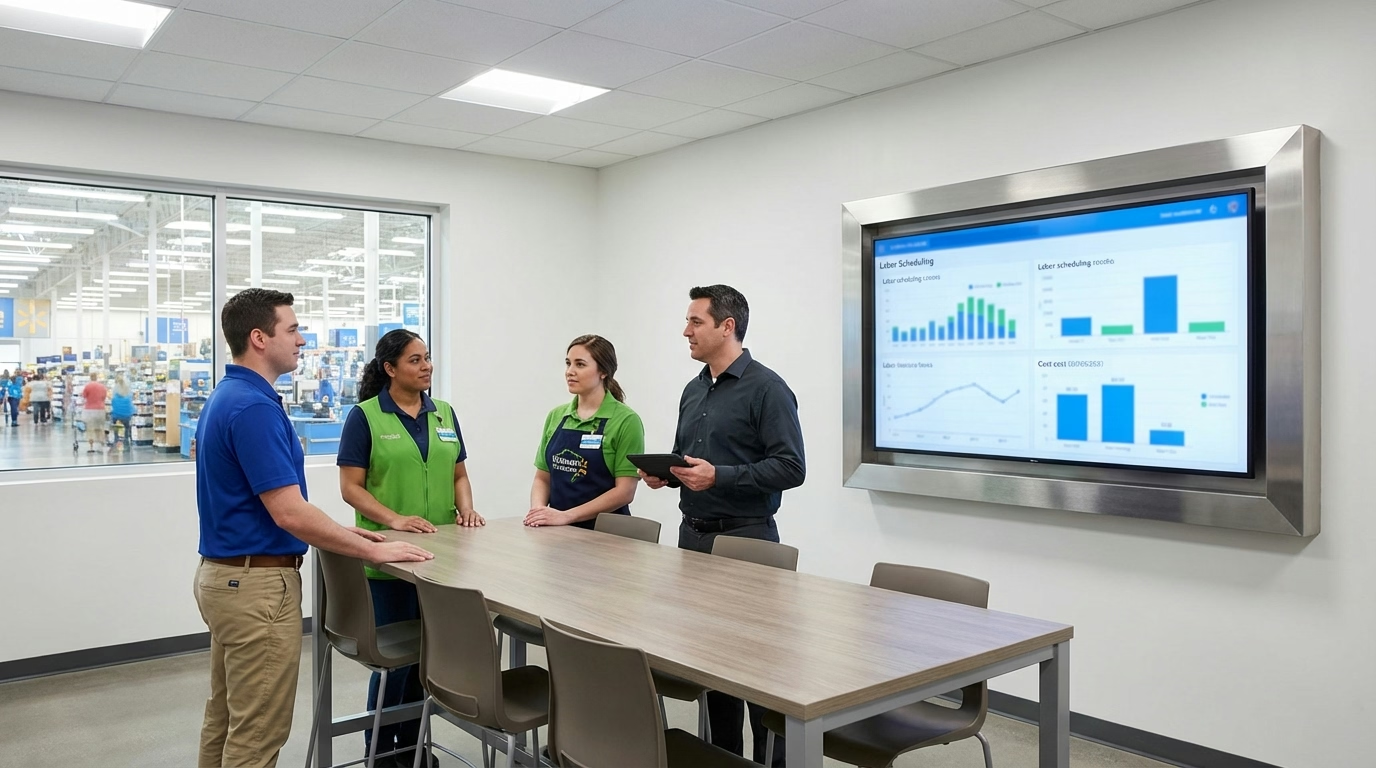
Increased accuracy requirements: According to Barnes Dennig, the new reporting requirement means employers need more accurate time tracking systems. Companies still using manual time cards or basic punch clocks face higher error risk and potential compliance issues. Automated time tracking systems that calculate qualified overtime automatically are becoming essential.
27 biweekly pay periods: For companies using biweekly payroll, 2026 has 27 pay periods instead of the usual 26. This affects how annual salaries are divided across paychecks and can impact benefit deductions. Salaried employees will see slightly smaller gross pay each period to account for the extra pay period.
Enhanced hour tracking compliance: With new W-2 reporting scrutinizing overtime calculations, employers face greater consequences for time tracking errors. Missing punches, incorrect overtime calculations, or improper break deductions can now affect both paychecks and year-end tax reporting, making real-time hour tracking more critical than ever.
What’s the Difference Between Payroll Hours and Scheduled Hours?
Scheduled hours: What your manager put on the schedule—your expected work time.
Payroll hours: The actual hours you worked, tracked by clocking in and out.
These should match, but don’t always:
- You arrive early or stay late (payroll hours are higher)
- You leave early or call out sick without PTO (payroll hours are lower)
- You take an unpaid meal break (scheduled 8 hours, payroll hours 7.5)
Your paycheck is based on payroll hours—what you actually worked—not what was scheduled.
How Can You Track Your Payroll Hours?
Keep your own record: Write down when you clock in and out each day. Use the hours and minutes calculator to verify totals. This is your backup if there’s a dispute.
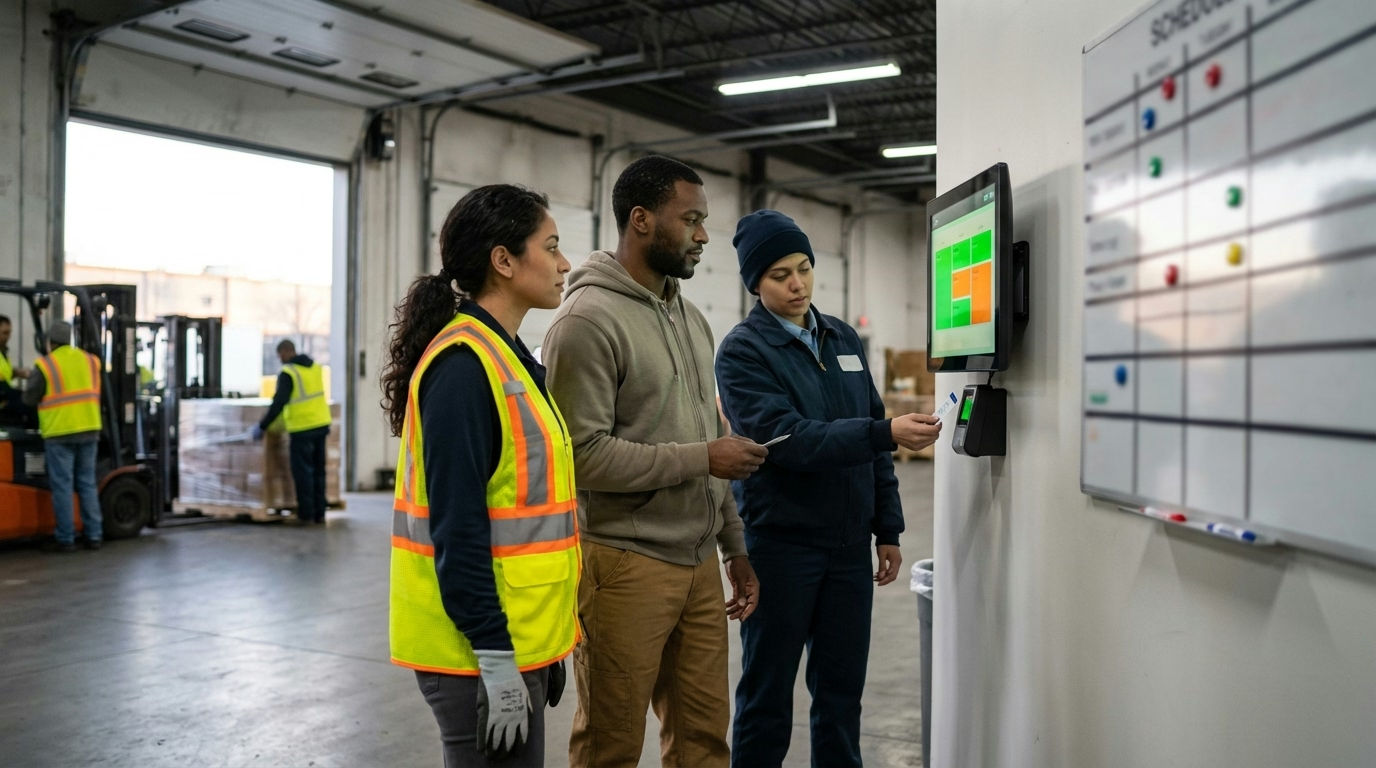
Check your time card: Review your time card before each pay period ends. Catch errors early—don’t wait until payday.
Use time tracking apps: Many employers provide access to mobile apps where you can see your hours in real-time. Check them regularly.
Review your paycheck stub: Compare the hours on your paycheck to your own records. Make sure regular hours, overtime hours, and rates are correct.
What If Your Payroll Hours Are Wrong?
If your paycheck shows the wrong hours:
Report it immediately: Tell your supervisor or HR right away. The sooner you catch it, the easier to fix.
Provide your records: Show your own notes of when you clocked in and out, including any screenshots or photos of time clocks.
Submit a correction: Follow your company’s process for requesting a time correction. Most companies have a form or system for this.
Follow up: If the correction doesn’t appear on your next check, escalate to HR or payroll department.
Know your rights: Under FLSA, employers must pay you for all hours worked, even if there was a time tracking error. You can’t be denied pay because of a missed punch.
What’s the Bottom Line?
Payroll hours determine your paycheck. Understanding what counts, how overtime is calculated, and how to track your hours ensures you get paid correctly.
Here’s what matters:
- Payroll hours include regular work time, overtime, paid breaks, training, and PTO
- Overtime is paid at 1.5x your rate for hours over 40 per week
- Starting in 2026, employers must separately report qualified overtime on W-2s
- Your actual hours worked matter more than your scheduled hours
- Keep your own record and check your time card regularly
- Report errors immediately—don’t wait until payday
Ready to track payroll hours accurately? ShiftFlow’s time tracking tools automatically calculate regular and overtime hours, flag discrepancies, and integrate with payroll systems. Try our free time clock or view pricing.
Sources
- QuickBooks – New 2026 Qualified Overtime Compensation Tracking
- Barnes Dennig – Preparing for 2026 Qualified Overtime Reporting
- U.S. Department of Labor – Breaks and Meal Periods
- QuickBooks – Understanding FLSA Lunch & Work Break Laws
- ADP – How to Calculate Overtime Pay
- QuickBooks – How to Calculate Overtime Pay in 7 Steps
- Paylocity – 2026 Overtime Pay Guide for Employers
Further Reading
- Payroll Explained – How paychecks are calculated
- Time Card Guide – Recording your work hours
- Reduce Overtime Costs – Managing overtime expenses
Frequently Asked Questions
What are payroll hours?
Payroll hours are the total hours you worked during a pay period that count toward your paycheck. This includes regular hours worked, overtime hours (over 40 per week), paid breaks, paid training time, and approved paid time off.
How is overtime calculated?
Overtime is calculated at 1.5 times your regular rate of pay for all hours worked over 40 in a workweek. Formula: (Regular rate × 1.5) × Overtime hours. For example, if you earn $20/hour and work 45 hours, you get $20 for the first 40 hours and $30/hour for the 5 overtime hours.
What counts as hours worked for payroll?
Hours worked include time you are clocked in and performing job duties, paid short breaks (10-15 minutes), training sessions, meetings, and travel time between work sites. Unpaid meal breaks (30+ minutes), commute time to/from work, and time off the clock do not count.
Do breaks count as payroll hours?
Short breaks (5-20 minutes) must be paid according to FLSA and are included in payroll hours. Meal breaks of 30+ minutes where you’re completely relieved of duties can be unpaid and don’t count. However, if you must work through your meal break, it counts as paid time.
What if my payroll hours are wrong?
Report errors immediately to your supervisor or HR. Provide your own records of when you clocked in and out. Submit a correction request through your company’s process and follow up to ensure it’s fixed on your next paycheck. Under FLSA, employers must pay you for all hours worked.
What’s the difference between scheduled hours and payroll hours?
Scheduled hours are what your manager put on the schedule—your expected work time. Payroll hours are the actual hours you worked and clocked. Your paycheck is based on payroll hours (actual), not scheduled hours (planned).
How do I track my payroll hours?
Keep your own record of clock-in and clock-out times each day. Check your time card regularly. Review your paycheck stub to verify hours match your records. Use your employer’s time tracking app if available to monitor hours in real-time.
What is qualified overtime for 2026?
Starting in 2026, employers must separately report “qualified overtime” on Form W-2 using Box 12 Code TT. Qualified overtime is roughly the FLSA-required half-time premium portion (about 1/3 of total overtime paid). This new requirement means employers need more accurate overtime tracking systems.
- payroll-hours
- work-hours
- overtime
- time-tracking
- flsa
- wage-calculation
- hours-worked