Pre-Employment Assessment: 15+ Test Types & Examples (2026)
Pre-employment assessment tests evaluate candidates before hiring. Learn 15+ assessment types, see test examples, compare top tools, and discover what tests predict job success.

You aced the interview. They loved your resume. Then they sent you a link: “Please complete these assessments before your final interview.”
Your heart sinks. Math tests? Personality questions? What if I fail?
Here’s the truth: Over half of U.S. employers now use pre-employment assessments—and 84% of small and mid-sized companies plan to add them. They’re not trying to trick you. They’re trying to predict if you’ll succeed in the role. The candidates who understand how assessments work (and prepare accordingly) land the jobs.
Whether you’re taking an assessment or designing one, here’s everything you need to know about the 15+ types of employee assessments, what they measure, and how to prepare.
What Is Employee Assessment?
Employee assessment is the systematic evaluation of an employee or job candidate using tests, interviews, simulations, or other tools to measure skills, competencies, personality traits, cognitive abilities, or job fit. Assessments help employers make informed decisions about hiring, placement, development, and performance management.
Employee assessment can happen at any stage—during hiring (pre-employment assessment), during onboarding, throughout employment for development or promotion decisions, or as part of performance reviews.
💡 Quick Answer
Employee assessment uses structured tools and methods to measure your skills, abilities, personality, or job fit. Assessments help employers make fair, objective decisions about hiring, development, and performance.
🎯 For Job Seekers: How to Prepare
- Skills tests: Practice the specific tools (Excel, coding, typing) listed in the job description
- Personality tests: Answer honestly—there are no “right” answers, they’re looking for fit
- Cognitive tests: Practice logic puzzles and math problems online (free prep available)
- Situational judgment: Think about the job requirements and how you’d handle real scenarios
Red flag: If an assessment asks illegal questions (age, religion, medical conditions), report it.
What Are the Types of Employee Assessments?
📊 Assessment Types at a Glance
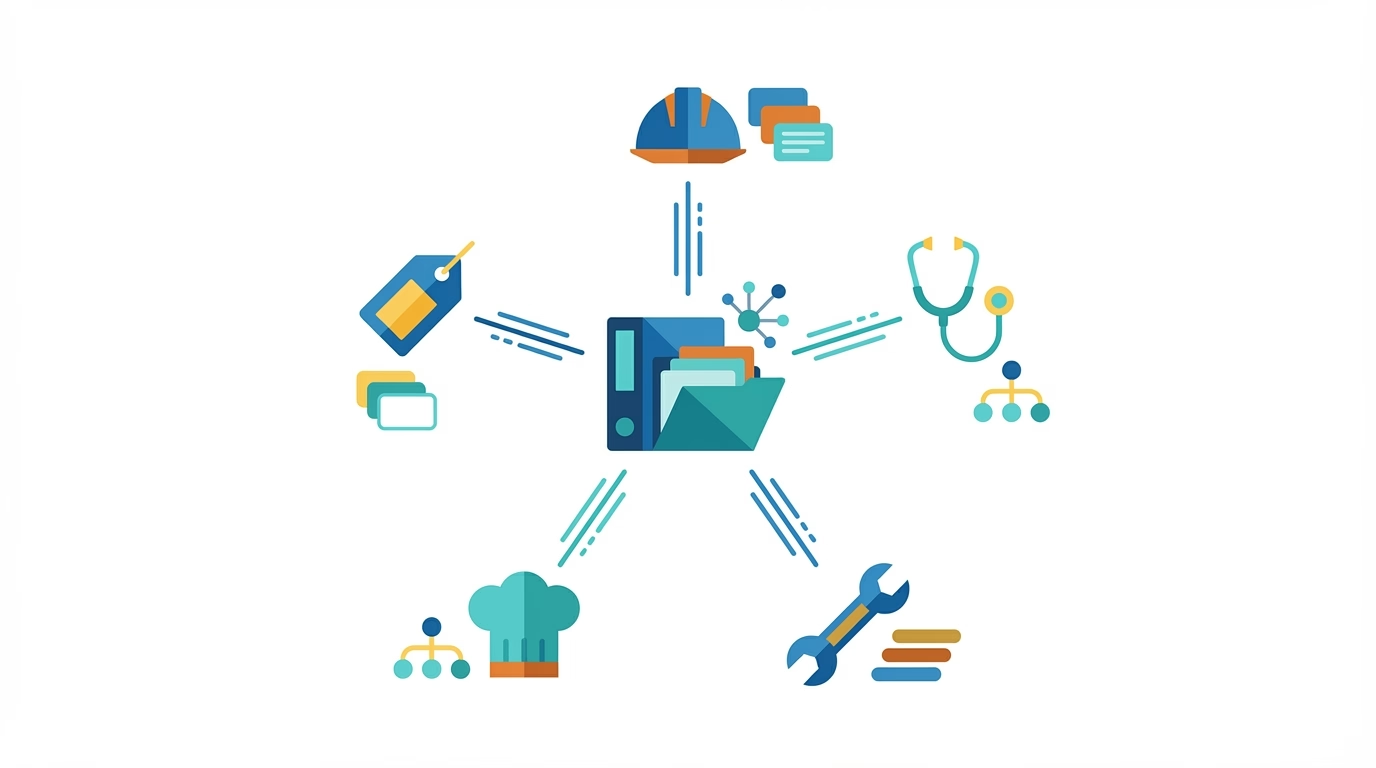
Assessment Type What It Measures When Used Can You Prepare? Skills Test Technical abilities (typing, coding, Excel) Hiring, promotions Yes—practice the tools Cognitive/IQ Test Problem-solving, logic, math Hiring Yes—practice online Personality Test Work style, traits, fit Hiring, team building No—answer honestly Situational Judgment Decision-making in scenarios Hiring, leadership Somewhat—understand role 360° Feedback Performance from all angles Performance review No—based on actual work Performance Review Job results vs. goals Annually, quarterly Yes—document achievements
Pre-Employment Assessment
What it is: Tests or evaluations given to job candidates before hiring
Purpose: Predict job performance and fit
Common types:
- Skills tests (technical, software, typing)
- Cognitive ability tests
- Personality assessments
- Situational judgment tests
- Job simulations or work samples
Timing: Usually after initial screening, before or during final interviews
Skills Assessment
What it is: Evaluation of specific technical or soft skills
Examples:
- Technical skills: Coding tests, software proficiency, equipment operation
- Soft skills: Communication, problem-solving, leadership, teamwork
Used for: Hiring, training needs analysis, role placement, promotion decisions
Personality Assessment
What it is: Tool that measures personality traits, work style, or behavioral tendencies
Common frameworks:
- Big Five (Openness, Conscientiousness, Extraversion, Agreeableness, Neuroticism)
- DISC (Dominance, Influence, Steadiness, Conscientiousness)
- Myers-Briggs Type Indicator (MBTI)
Purpose: Understand work style, team dynamics, cultural fit, leadership potential
Important note: Personality assessments should complement, not replace, other evaluation methods. No personality type is inherently “better.”
Cognitive Ability Test
What it is: Assessment of mental capabilities like reasoning, problem-solving, learning speed, and decision-making
Examples:
- Logical reasoning tests
- Numerical reasoning
- Verbal reasoning
- Pattern recognition
- Critical thinking assessments
Research backing: Cognitive ability tests are among the strongest predictors of job performance across many roles, according to research compiled by Schmidt and Hunter.
Performance Assessment
What it is: Evaluation of current job performance
Methods: Manager reviews, self-assessments, peer feedback, objective metrics
Learn more: Employee Evaluation
360-Degree Feedback
What it is: Multi-source assessment gathering input from managers, peers, direct reports, and sometimes customers
Best for: Leadership development, comprehensive performance view, identifying blind spots
Behavioral Assessment
What it is: Evaluation based on past behavior in specific situations
Method: Behavioral interview questions or simulations
Example question: “Tell me about a time you had to resolve a conflict with a coworker.”
Premise: Past behavior predicts future behavior
Situational Judgment Test
What it is: Scenarios presenting workplace challenges with multiple response options
Purpose: Assess judgment, decision-making, and alignment with company values
Example: “A customer is upset about a delayed order. What would you do?” followed by 4–5 possible responses ranked by appropriateness.
Common Employee Assessment Tools and Platforms
Skills Testing Platforms
- Codility, HackerRank: Technical coding assessments
- iMocha, TestGorilla: Multi-skill assessments (technical and soft skills)
- Indeed Assessments: Job-specific skill tests integrated with job postings
Personality and Behavioral Assessments
- Hogan Assessments: Personality, values, and judgment tools
- Predictive Index: Behavioral and cognitive assessments
- Criteria Corp: Pre-employment testing (cognitive, personality, skills)
Performance Management Tools
- 15Five, Lattice, Culture Amp: Continuous feedback and performance assessments
- BambooHR, Workday: HR platforms with integrated assessment modules
- ShiftFlow: Performance reporting and analytics for shift-based teams
Custom and Bespoke Tools
Some organizations develop proprietary assessments tailored to specific roles or company culture.
Employee Assessment Test Examples
Here are real-world examples of questions you might encounter:
Cognitive Ability Test Example
Numerical reasoning: “If 3 workers can complete a task in 6 hours, how long will it take 9 workers?”
- Answer: 2 hours (inverse relationship)
Logical reasoning: “All managers attend meetings. Sarah attends meetings. Is Sarah a manager?”
- Answer: Not necessarily (flawed logic)
Situational Judgment Test Example
Scenario: A customer is angry because their order arrived late. They’re demanding a full refund and threatening to leave a negative review. What do you do?
Options (ranked best to worst):
- Apologize sincerely, investigate the delay, offer a partial refund plus expedited replacement
- Apologize and offer a full refund immediately
- Explain the delay was due to shipping issues beyond your control
- Offer a discount on their next purchase
Skills Assessment Test Example
Customer service role: “Type a professional email response to a complaint about a defective product. Include an apology, solution, and next steps.”
Sales role: “You have 3 minutes to review this product spec sheet. Then explain the top 3 benefits to a potential customer.”
Data entry role: “Transcribe this audio clip accurately within 5 minutes with fewer than 3 errors.”
How Much Do Employee Assessments Cost?
Pricing varies widely based on tool type, volume, and provider. These are estimated ranges:
| Assessment Type | Typical Cost Range (per test) | Example Tools |
|---|---|---|
| Basic skills test | $5–$25 | TestGorilla, iMocha |
| Personality assessment | $15–$100 | Hogan, Predictive Index |
| Cognitive ability test | $10–$50 | Criteria Corp, Wonderlic |
| Comprehensive pre-hire | $30–$200 | Predictive Index, Hogan |
| Custom assessment | $500–$5,000+ | Bespoke solutions |
Volume discounts: Most platforms offer lower per-test pricing for bulk purchases or annual subscriptions.
Free options: Some basic skills tests are available free through Indeed Assessments or TestGorilla’s freemium tier.
How Should I Prepare for an Employee Assessment?
Understand What’s Being Assessed
Ask the employer:
- What type of assessment is it? (skills test, personality inventory, cognitive test)
- What is it measuring?
- How long will it take?
- Can I use references or tools during the test?
Review Job Requirements
Understand the role’s key responsibilities and required skills so you can see what the assessment is likely evaluating.
Practice When Appropriate
For skills tests: Brush up on relevant technical skills or tools
For cognitive tests: Practice similar reasoning or logic problems (many free practice tests exist online)
For personality assessments: No “practice” needed—answer honestly
Get Rest and Minimize Distractions
Take assessments when you’re alert and can focus without interruptions.
Be Honest
Especially for personality assessments: There are usually no “right” answers. Trying to game the test often backfires because:
- Many assessments include validity checks to detect inconsistent or dishonest responses
- You might get hired for a role that’s a poor fit for your actual work style
Ask for Feedback
If you don’t get the job, consider asking whether the employer can share assessment feedback to help you improve.

What’s the Bottom Line?
Employee assessment is the systematic evaluation of skills, abilities, personality, or job fit using structured tools and methods to support hiring, development, and performance decisions.
Key points:
- Assessments range from skills tests and cognitive ability tests to personality inventories and performance reviews
- Good assessments are valid, reliable, job-relevant, fair, and standardized
- Employers use assessments to make objective decisions, reduce bias, and predict performance
- Be honest when taking assessments, especially personality tests—there are no universally “right” answers
- Assessments must comply with employment law and cannot discriminate against protected groups
When used properly, assessments benefit both employers (better decisions) and employees (fairer evaluation and clearer development paths).
Looking for tools to support team performance and skill development? ShiftFlow’s workforce insights help track capabilities and analyze performance trends, while our time tracking ensures accurate data for fair assessments.
Sources
- Society for Human Resource Management – HR Resources
- Schmidt, F. L., & Hunter, J. E. – The Validity and Utility of Selection Methods in Personnel Psychology
- U.S. Equal Employment Opportunity Commission – Employment Tests and Selection Procedures
Further Reading
- Employee Evaluation – Understanding performance evaluations
- Employee Performance Review – What to expect during reviews
- Training Effectiveness – Measuring training impact
Frequently Asked Questions
What is employee assessment?
Employee assessment is the systematic evaluation of skills, competencies, personality, cognitive abilities, or job fit using tests, interviews, simulations, or other tools. Assessments support hiring decisions, development planning, and performance management.
What are the types of employee assessments?
Common types include pre-employment assessments (for hiring), skills assessments (technical or soft skills), personality assessments, cognitive ability tests, performance assessments, and 360-degree feedback. Each measures different aspects of capability or fit.
Are employee assessments legal?
Yes, when used properly. Assessments must be job-related, validated, and applied consistently to all candidates or employees. They cannot discriminate based on protected characteristics. Some tests (like medical exams) have specific legal restrictions.
How do I prepare for an employee assessment?
Understand what’s being assessed, review job requirements, practice relevant skills if it’s a skills test, get adequate rest, and answer honestly (especially for personality tests). Avoid trying to game the system—consistency checks often detect dishonesty.
Can I refuse to take an employee assessment?
As a candidate, you can decline, but the employer may choose not to continue your application. As a current employee, refusal could have consequences depending on company policy and the assessment’s purpose. Ask why it’s required if you have concerns.
What happens to my assessment results?
Results are typically reviewed by HR or hiring managers and should be kept confidential. They may be retained in your personnel file. Ask the employer about their data privacy practices and how long results are stored.
Can assessments be biased?
Yes. Even well-designed assessments can have unintended bias if they’re not validated properly or if they measure traits not actually required for job success. Employers should regularly audit assessments for adverse impact on protected groups.
Do personality tests determine if I get hired?
Rarely on their own. Most employers use personality assessments as one input among many (resume, interviews, skills tests, references). There’s no single “right” personality for most jobs.
- employee-assessment
- skills-assessment
- performance-assessment
- talent-assessment
- competency-assessment
- pre-employment-testing