What Is a Staff Rota in 2026?
A staff rota assigns specific employees to shift patterns for retail, hospitality, and healthcare coverage. Learn how staff rotas differ from work rotas, dynamic scheduling, and why 2-week advance notice improves retention.

What Is a Staff Rota in 2026?
A staff rota is a working schedule that assigns specific employees to shift patterns. While a work rota is the pattern template or blueprint, a staff rota includes actual personnel assignments—you’re putting names against shifts. ShiftFlow helps businesses assign staff to rotas efficiently while maintaining compliance.
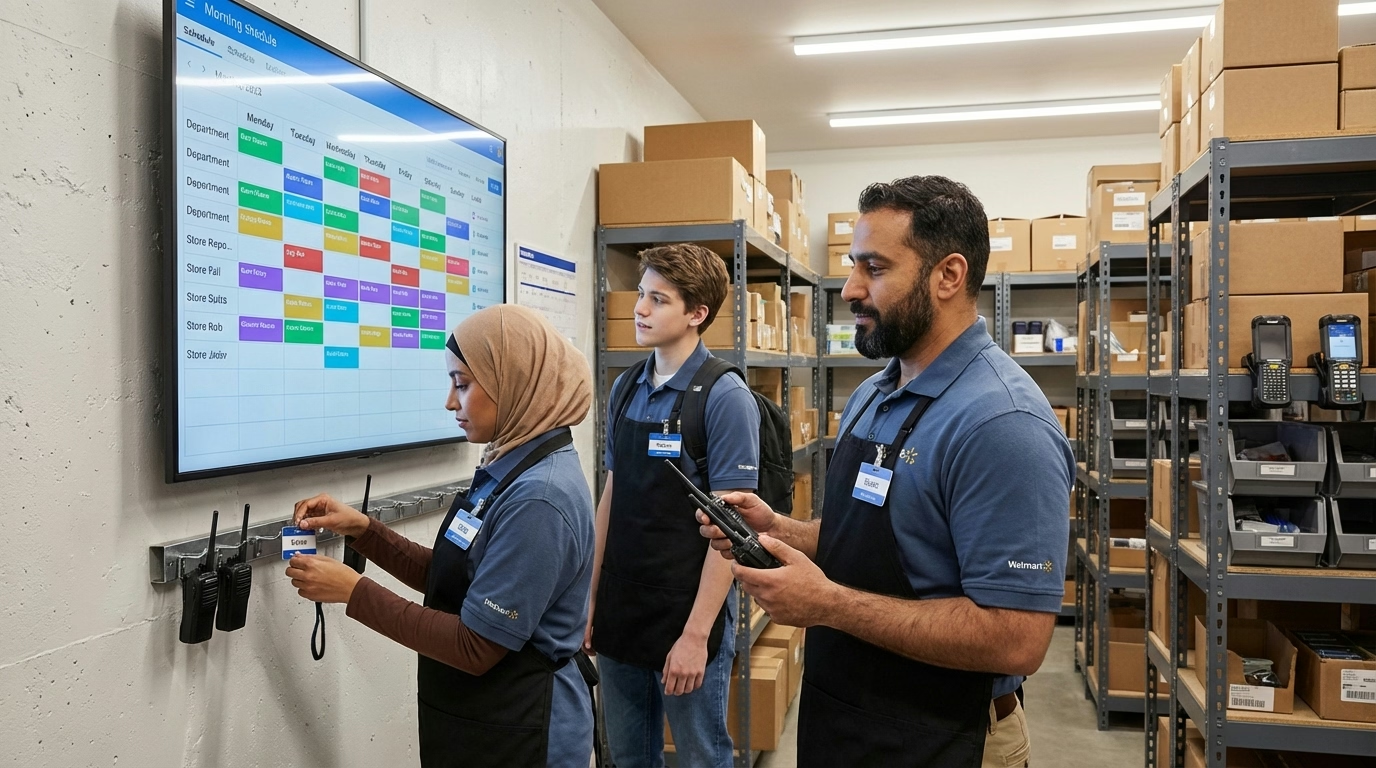
In UK businesses, particularly retail, hospitality, and healthcare, the staff rota is the document employees check to see when they’re working. “Can you cover my shift on the rota?” means swapping with someone on the actual staff schedule.
The staff rota is a dynamic document that adapts to real-time events—when someone calls in sick, you adjust the staff rota by reassigning shifts. When unexpected demand hits, you modify the staff rota to add coverage. It’s the operational reality of who’s actually working, not just the theoretical pattern.
Quick Answer
A staff rota assigns specific employees to shift patterns. It differs from a work rota (pattern template) by including actual personnel names and assignments. Staff rotas are dynamic, adapting to sickness, absence, and operational demands. Common in UK retail, hospitality, and healthcare. Best practice: publish 2-4 weeks in advance. Must comply with Working Time Regulations.
How Does a Staff Rota Differ from a Work Rota?
The distinction matters for workforce management:
Work Rota (The Template)
A work rota is the shift pattern blueprint designed without specific individuals in mind. It shows:
- What shifts exist (early, late, night)
- When those shifts occur (Monday 6 AM-2 PM, Tuesday 2 PM-10 PM, etc.)
- How shifts rotate through a cycle
- The compliance framework ensuring Working Time Regulations are met
Think of the work rota as the architectural plan for your staffing structure.
Staff Rota (The Reality)
A staff rota takes that template and fills it with actual people:
- Monday 6 AM-2 PM: Sarah, James, Li
- Monday 2 PM-10 PM: Marcus, Priya, Tom
- Tuesday 6 AM-2 PM: Li, Tom, Sarah
The staff rota shows who is working when. It’s the schedule employees actually check.
Why the Distinction Matters
When you design the work rota, you focus on operational coverage, fairness, and compliance. When you create the staff rota, you factor in individual availability, skills, preferences, and real-world constraints.
A well-designed work rota can still produce a terrible staff rota if you don’t assign the right people to the right shifts.
Where Are Staff Rotas Used?
Retail: High street shops, supermarkets, department stores. Staff rotas cover till operators, stock assistants, floor staff, and managers across opening hours (often 8 AM-10 PM, seven days per week).
Hospitality: Pubs, restaurants, hotels. Staff rotas assign front-of-house (servers, bar staff, hosts) and back-of-house (kitchen staff, cleaners) to cover service periods. See our restaurant schedule guide for specific hospitality patterns.
Healthcare: Hospitals, care homes, GP surgeries. Staff rotas ensure adequate nurse, doctor, and support staff coverage for 24/7 patient care. Healthcare rotas are particularly complex due to varying skill requirements and regulatory requirements.
Manufacturing: Factories running multiple shifts need staff rotas assigning production workers, quality control, and supervisors across day, evening, and night shifts.
Call Centers: Customer service operations assign agents to cover phone, chat, and email support across extended hours (often 7 AM-11 PM or 24/7).
Security: Guarding services assign officers to specific sites and shifts, ensuring each location has required coverage at all times.
What Information Does a Staff Rota Include?
A complete staff rota shows:
Employee names assigned to each shift. Sometimes includes employee ID numbers to avoid confusion with similar names.
Dates and days: Which specific dates are covered, clearly showing week structure.
Shift times: Start and end times for each shift (e.g., “Early: 6:00-14:00, Late: 14:00-22:00”).
Position or role: Particularly in hospitality and retail where one person might work different roles on different shifts.
Location: If managing multiple sites or departments, the rota shows where each person is assigned.
Total hours: Weekly or period totals for each employee to track compliance with maximum hours and ensure fair distribution.
Contact information: Phone numbers or email for each person, making it easier to contact staff about shift changes or emergencies.
Color coding: Many rotas use colors to distinguish shift types (blue for early, orange for late, red for night) making patterns easier to read at a glance.
How Do You Create a Staff Rota?
Step 1: Start with the Work Rota Template
Begin with your work rota pattern showing the shift structure that ensures coverage and compliance.
Step 2: Gather Staff Availability
Collect availability from all staff members. Modern systems let employees input availability directly through apps. Key questions:
- Which days can you work?
- Any unavailable dates (holidays, appointments)?
- Preferred shifts (if any flexibility exists)?
- Maximum/minimum hours desired?
Step 3: Account for Skills and Requirements
Not everyone can cover every shift. Consider:
- Certifications or qualifications required for certain shifts
- Experience level (don’t schedule all new starters on the same shift)
- Legal requirements (minimum supervision ratios, licensed positions)
Step 4: Assign Staff to Shifts
Use your business rules and constraints:
- Distribute unpopular shifts (nights, weekends) fairly
- Respect seniority where relevant
- Balance workload across the team
- Ensure adequate skill mix on each shift
Step 5: Check Compliance
Verify the completed staff rota meets:
- Working Time Regulations (48-hour weekly maximum, rest requirements)
- Minimum wage calculations (especially for young workers)
- Break entitlements
- Holiday accrual
Step 6: Publish and Communicate
Publish the staff rota at least 2 weeks in advance. Better yet, 3-4 weeks. Make it easily accessible—whether pinned in the break room or available via mobile app.
What Are Common Staff Rota Challenges?
Last-minute changes: Someone calls in sick at 7 AM for an 8 AM shift. You scramble to find coverage, often pulling someone from their day off or extending another shift. This disrupts the carefully balanced rota and frustrates staff.
Availability conflicts: Employees request the same popular days off. You can’t give everyone Saturday off or every holiday. Balancing fairness with operational needs creates tension.
Skill gaps: Your most experienced person is on holiday when you need them most. The staff rota shows coverage but not adequate skill level for the actual work.
Uneven hour distribution: Some employees consistently get more hours than others, creating income disparity and resentment. Tracking hour distribution across multiple weeks is administratively complex on paper rotas.
Communication failures: Staff claims they didn’t see a shift change. You say you posted it. Without digital tracking, there’s no proof of when the rota was published or who viewed it.
Compliance tracking: Ensuring every employee gets required rest periods, doesn’t exceed maximum hours, and receives entitled breaks is difficult to verify on manual rotas. Automated timesheet tracking helps monitor compliance in real-time.
Inflexibility: Traditional paper rotas are static. Making changes requires reprinting and reposting, leading to multiple versions in circulation and confusion about which is current.

What Are Staff Rota Best Practices?
Publish early: Post staff rotas 2-4 weeks in advance. This gives employees time to plan personal commitments and reduces schedule conflict requests.
Allow shift swaps: Enable employees to swap shifts among themselves within defined parameters (similar skill level, proper notice given). This flexibility improves satisfaction without adding manager workload.
Be consistent: Publish rotas the same day each week (e.g., always post new rotas on Friday for weeks starting two weeks ahead). Consistency helps staff plan.
Distribute fairly: Track which employees work unpopular shifts (nights, weekends, holidays) over time. Ensure the burden is distributed equitably, accounting for seniority and availability.
Consider preferences: Where operationally possible, account for employee shift preferences. Staff who get preferred shifts have higher satisfaction and lower turnover.
Use digital tools: Modern rota software automates compliance checking, enables mobile access, tracks changes, and facilitates shift swapping.
Build contingency: Don’t create rotas so tight that one absence causes crisis. Build in some buffer or identify backup coverage in advance.
Communicate changes clearly: When the staff rota changes, notify affected employees immediately through multiple channels (app notification, text, email). Document the change.
What’s the Bottom Line?
A staff rota assigns specific employees to shift patterns, differing from a work rota (the template) by including actual personnel assignments. Staff rotas are dynamic documents adapting to sickness, absence, and operational changes. Common in UK retail, hospitality, and healthcare. Best practice: publish 2-4 weeks in advance. Must comply with Working Time Regulations: 48-hour weekly max, 11-hour daily rest, 24-hour weekly rest.
Quick summary:
- Staff rota = working schedule with employee names assigned to shifts
- Work rota = shift pattern template without specific personnel
- Used in retail, hospitality, healthcare, manufacturing, call centers, security
- Include: names, dates, shift times, roles, locations, hours, contact info
- Publish 2-4 weeks in advance for better planning and satisfaction
- Allow shift swaps within defined parameters
- Compliance: 48hr weekly max, 11hr daily rest, 24hr weekly rest, breaks
- 2026 tools: mobile access, self-service swaps, AI generation, real-time updates
Ready to manage staff rotas effectively? ShiftFlow’s scheduling software handles personnel assignment, compliance checking, shift swaps, and mobile access. Track employee hours with our free time clock, explore industry solutions, or view pricing.
Sources
- Totalmobile – Rota vs Roster - What’s The Difference?
- Personio – How To Build A Workplace Rota
- Shiftbase – Employee Roster Management: Everything You Need to Know
- RotaCloud – Roster definition · RotaCloud glossary
- Factorial – Work Rota: UK Laws and Shift Management Practices
- Smart Workforce – Rota or Roster in UK - The Future of Staff Scheduling in 2025
- GOV.UK – Maximum weekly working hours
Further Reading
- Work Rota Explained – Understanding shift pattern templates
- Duty Roster – Shift assignment and scheduling practices
- Restaurant Schedule Management – Hospitality-specific staffing
Frequently Asked Questions
What is a staff rota?
A staff rota is a working schedule that assigns specific employees to shift patterns. It differs from a work rota (pattern template) by including actual personnel names and assignments. Staff rotas are dynamic documents that adapt to real-time events like sickness, absence, or changing operational demands.
What is the difference between staff rota and work rota?
A work rota is the shift pattern blueprint designed without specific individuals. A staff rota assigns actual employees to those patterns. Think of work rota as the template showing when shifts occur, and staff rota as the filled-in schedule showing who works those shifts.
How far in advance should staff rotas be published?
Best practice suggests publishing staff rotas 2-4 weeks in advance. While UK law doesn’t mandate specific notice periods, advance publication improves employee satisfaction, reduces schedule conflicts, and helps with retention. Some sectors have collective agreements requiring minimum notice.
Can employees swap shifts on the staff rota?
Yes, most organizations allow shift swaps within defined parameters. Employees must typically give proper notice, ensure the replacement has necessary skills/qualifications, and get manager approval. Modern rota software enables self-service swap requests with automatic approval for qualifying swaps.
What information should a staff rota include?
A complete staff rota includes: employee names assigned to shifts, specific dates and days, shift start/end times, position or role (if applicable), location (for multi-site operations), total hours per employee, contact information, and often color coding to distinguish shift types.
How do you handle last-minute staff rota changes?
Document all changes immediately, notify affected employees through multiple channels (app, text, email), track who was notified and when, identify backup coverage in advance, maintain history of changes for transparency, and consider premium pay for employees covering last-minute gaps.
What are UK legal requirements for staff rotas?
Staff rotas must comply with Working Time Regulations: 48-hour average weekly maximum (unless worker opts out), 11 consecutive hours daily rest, 24-hour weekly rest (or 48 hours per 14 days), 20-minute break if working over 6 hours, and 5.6 weeks (28 days) paid annual leave for full-time workers.
Should staff rotas be digital or paper?
Digital staff rotas offer significant advantages in 2026: instant updates, mobile access, automatic compliance checking, shift swap features, change tracking, notification systems, and integration with payroll. Paper rotas work for very small teams but become unmanageable as complexity grows.