Do You Have to Pay Cleaners for Travel Time Between Sites?
Yes — travel between job sites is paid time under the FLSA. But that is just one of the payroll rules cleaning businesses get wrong. Here is how travel time, overtime, overnight shifts, and break compliance actually work.
The Short Answer: Yes, Travel Between Sites Is Paid
Under the FLSA, your cleaners’ commute from home to the first job site isn’t compensable. Neither is the drive from the last site back home. But every drive between sites during a shift? That’s paid work time.
Here’s what that looks like in practice: a cleaner works Building A from 6–8 PM, drives twenty minutes, then works Building B from 8:20–10:30 PM. Total compensable time is 4 hours 30 minutes — not 4:10. That twenty-minute drive counts. Accurately tracking hours across multiple sites is the only way to separate billable time, travel time, and break time cleanly.
It gets trickier when there’s a gap. If someone cleans one building from 6–8 PM, goes home, then cleans another from 10 PM–midnight, the two-hour gap may not be compensable — but that depends on whether they’re truly relieved of all duties during that time. Worth getting right.
Other Payroll Rules Cleaning Businesses Get Wrong
Travel time is the most common mistake, but it’s not the only one. Here’s what else to watch for.
Overnight shifts that cross midnight
A 9 PM to 5 AM shift is eight hours of work — but it spans two calendar days. That matters for daily overtime calculations in states like California. Pick a consistent workweek start (say, Monday at 12:00 AM) and apply it uniformly. The problem with manual processing is that midnight-crossing hours get split incorrectly, triggering wrong overtime calculations.
Blended Overtime Rates
If you pay different rates for different work (regular cleaning vs. deep-clean vs. post-construction), overtime gets complicated fast.
Here’s the catch most people miss: federal law requires overtime to be calculated on the weighted average of all rates worked that week — not just the rate of the shift where they crossed 40 hours. This blended rate calculation is one of the most commonly botched aspects of cleaning payroll.
Piece-Rate and Per-Job Pay
Paying by the job ($150 per building, regardless of time) is legal. But you still need to track hours.
Why? Minimum wage compliance. A $150 job that takes four hours = $37.50/hour — no problem. That same job taking eight hours = $18.75/hour, which could fall below local minimums in cities like Seattle or Tukwila, WA (both above $21/hour). And piece-rate employees who work over 40 hours/week still get overtime premiums on top of their piece rate.
Federal Overtime Rules (FLSA)
Most cleaning employees are non-exempt, so the FLSA overtime rules apply. Three things to get right:
40 hours is per workweek, not per pay period. Biweekly payroll? You can’t average. A cleaner who works 50 hours one week and 30 the next owes 10 hours of overtime for week one. Period.
The workweek is fixed once you set it. You can pick any start day and time, but you can’t switch it around to dodge overtime. That’s not permitted.
All hours worked count. Travel between sites, mandatory meetings, training, picking up supplies — if the cleaner’s doing it for your benefit and you know about it, it’s paid time.
State Rules That Stack on Top
Federal is the floor. Many states add more.
Daily overtime: California and Alaska require OT after 8 hours in a single day. Colorado after 12. A 10-hour shift in California triggers 2 hours of daily OT even if the weekly total is under 40.
Seventh-day rules: California mandates 1.5x for the first 8 hours on a seventh consecutive workday, 2x after that.
Double time: California requires 2x for hours beyond 12 in a single day.
Local minimum wages: Many cities set minimums well above $7.25 federal. If you operate in multiple jurisdictions, you may need different wage floors for different team members depending on where they work.
Break and Meal Periods
Overnight cleaning shifts of 6–8 hours trigger meal and rest break requirements in many states:
- 30-minute unpaid meal break for shifts over 5–6 hours (varies by state)
- 10-minute paid rest break every 4 hours
- Premium pay if breaks are missed (California: one hour of extra pay per missed break)
Here’s the tricky part: your cleaners work alone. There’s no supervisor making sure breaks happen. But the legal obligation still applies. If a cleaner skips their meal break to finish faster, you could still be on the hook for the penalty.
Your time tracking system should log break start and end times — that’s your documentation that breaks were offered and taken.

What Records You Need to Keep
FLSA requires these for every non-exempt employee, retained for at least three years (some states require longer):
- Hours worked each workday and workweek
- Basis of pay (hourly, piece rate, etc.)
- Regular hourly rate for overtime weeks
- Straight-time and overtime earnings
- Total wages and deductions per pay period
Why this matters beyond compliance: in a wage and hour lawsuit, the burden of proof often shifts to you. If your records are incomplete, the employee’s estimate of hours owed may be accepted by default.
How Software Handles the Complexity
All of the above — travel time, midnight crossovers, blended OT rates, break tracking, state-specific rules — creates a lot of room for manual errors. Time tracking software built for cleaning crews captures the data automatically and applies the rules consistently.
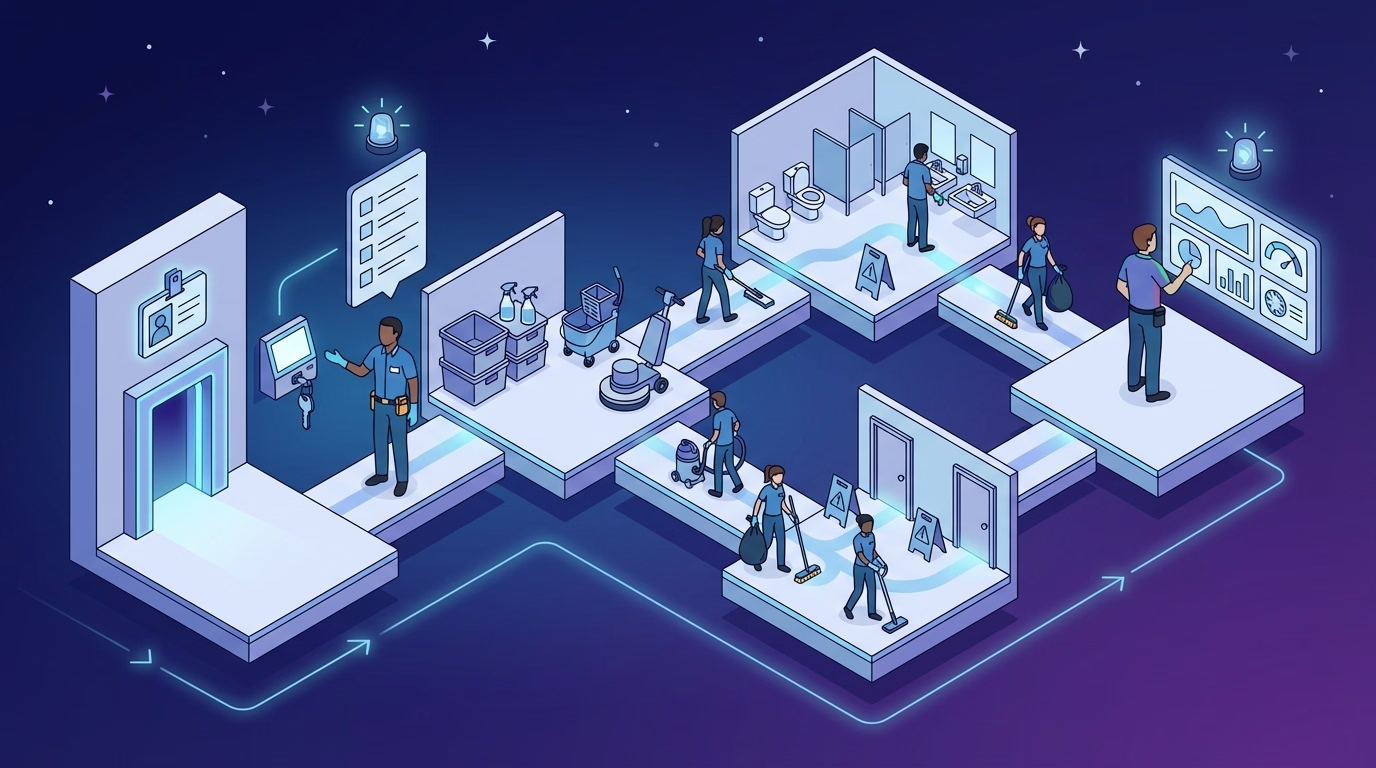
Cleaners clock in and out at each site → exact hours per location. The system tracks weekly and daily totals → flags overtime thresholds automatically. The gap between sites → captured as travel time. Breaks → logged through the app with missed-break alerts. Midnight splits → handled without manual intervention. End of pay period → export hours by employee, by location, overtime calculated, breaks documented, ready for your payroll provider.
Getting payroll wrong costs you in back-pay, penalties, and trust. Getting it right starts with accurate time data — which also helps you reduce overall labor costs by spotting overtime patterns, overstaffed sites, and unprofitable contracts. For an overview of how it all fits together, see the janitorial time tracking page.
Frequently Asked Questions
Do I have to pay cleaners for travel time between job sites?
Yes — under the FLSA, travel between job sites during a workday is generally compensable. If a cleaner drives from one client building to another as part of their shift, that drive time must be paid. The normal commute from home to the first site and from the last site back home is typically not compensable.
How does overtime work for cleaning businesses?
Non-exempt employees (which includes most cleaners) get 1.5x their regular rate for hours over 40 in a workweek. Some states add daily overtime on top of that — California requires OT after 8 hours in a single day. You need to comply with both federal and state rules, whichever is more favorable to the employee.
Do I need to pay for overnight shifts that cross midnight?
Yes. A 10 PM to 6 AM shift is 8 hours of paid work regardless of the date change. The key is which workweek those hours fall into for overtime calculation. Set a consistent workweek start and apply it uniformly — don’t split overnight shifts across two workweeks.
What payroll records do cleaning businesses need to keep?
The FLSA requires daily hours, weekly totals, pay rates, overtime compensation, and total wages per pay period — retained for at least three years. Many states require longer. If your records are incomplete and an employee files a wage claim, their estimate of hours owed may be accepted by default.
Sources
- cleaning-business
- payroll
- overtime
- travel-time
- compliance
- janitorial
- cleaning-crews
- time-tracking
- labor-law