AI SEO vs Local SEO for Contractors: What Is the Difference?
Local SEO helps contractors appear in Google Search and Maps. AI SEO helps AI search tools understand and cite the business. Learn what overlaps and which to do first.
Local SEO and AI SEO have the same business goal: help more nearby customers find, trust, and contact your business. The difference is where that discovery happens.
Local SEO helps your business appear when someone searches on Google or Google Maps for a contractor, trade, or service in their area.
AI SEO helps AI search tools understand what your business does and find public information they can use when answering questions about local providers.
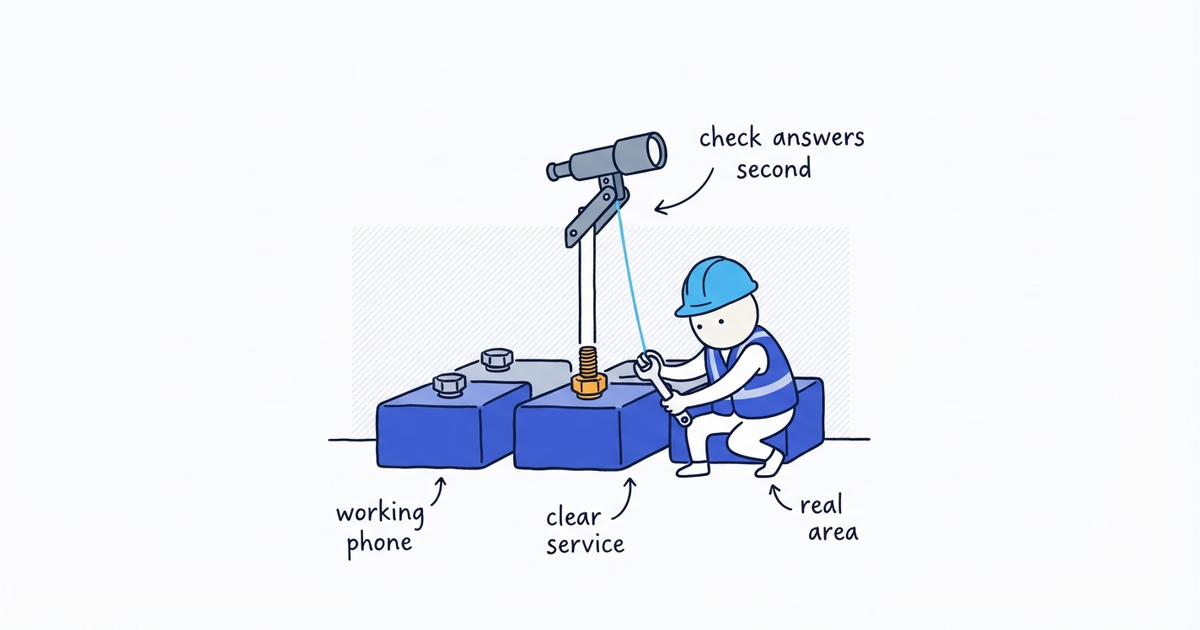
For most contractors, Local SEO comes first. AI SEO builds on many of the same things: an accurate Google Business Profile, a useful website, clear services and service areas, genuine reviews, and consistent public information. It is an additional search channel, not a replacement for Local SEO.
First, What Does SEO Mean for a Contractor?
SEO is the work of improving how a business appears in unpaid search results. It is different from buying Google Ads or Local Services Ads.
For a contractor, visibility is only the beginning. Customers still need to understand the services, locations, proof, and contact process. The real goal is not a ranking, mention, or citation by itself. It is more qualified calls, estimates, and booked jobs.
What Is Local SEO for Contractors?
Local SEO helps a business appear when someone searches for a nearby service, such as “roof repair near me” or “electrician open now.” The customer may compare map results, websites, reviews, photos, hours, and contact options.
For contractors, Local SEO usually includes:
- claiming and completing the correct Google Business Profile;
- choosing accurate business categories;
- keeping the name, address or service area, phone number, hours, and website current;
- publishing website pages that explain real services and locations;
- earning and responding to genuine customer reviews;
- maintaining accurate listings on important local and trade platforms;
- making it easy to call, request an estimate, or book service.
Google says local results are mainly based on relevance, distance, and prominence: how well the business matches the search, how far it is from the customer, and how well known it appears to be. Complete information, links, and reviews can help, but a contractor cannot change its real distance from every searcher.
Local SEO therefore covers the entire path from discovery to contact:
Google Search or Maps -> business profile or website -> customer checks proof -> call or estimate requestThe purpose is not merely to “rank on Google.” It is to make that path visible, accurate, trustworthy, and easy to complete.
What Is AI SEO for Contractors?
AI SEO is the common name for work that helps a business be found, understood, and accurately represented in AI-generated search answers. It is also called AEO or GEO, but there is no universal definition or official business-listing program.
The customer behavior is different from a short Google search. Someone may ask:
Which local electricians handle residential panel upgrades, have strong recent reviews, and offer online estimates?
An AI tool may answer the full question, explain why certain businesses appear relevant, and show public sources. OpenAI confirms that ChatGPT has web search and displays search results and citations when web search is used.
AI SEO focuses on whether the public information needed for that answer is available and understandable. For a contractor, the work can include:
- making important website pages accessible to search crawlers;
- stating services, locations, qualifications, and contact options plainly;
- correcting conflicts between the website and important public profiles;
- publishing useful proof such as project details, credentials, and real photos;
- checking AI answers and fixing gaps in the sources they cite.
OpenAI identifies OAI-SearchBot as the crawler used to surface websites in ChatGPT search results. Allowing it makes a page eligible, not guaranteed to appear. The website visibility guide explains the access and content checks.
There is no universal AI business directory to claim. The ChatGPT business listing guide explains what can be submitted directly.
AI SEO vs Local SEO: The Practical Difference
| What the contractor needs to know | Local SEO | AI SEO |
|---|---|---|
| Where customers look | Google Search and Google Maps | ChatGPT, Google AI, and other generated search experiences |
| What the customer does | Searches for a trade, service, or contractor near them | Asks a detailed question and receives a generated answer |
| Where the business may appear | Map results, the local pack, ordinary search results, and branded results | Business mentions, recommendations, supporting links, and cited sources |
| Distinctive work | Business Profile setup, categories, local ranking diagnosis, reviews, listings, and local pages | AI-search crawler checks, answer testing, source tracing, and correcting unsupported or inaccurate descriptions |
| Final business result | Qualified leads and booked work | Qualified leads and booked work |
The important point is that AI SEO changes the discovery surface, not the contractor’s business goal.
What Local SEO and AI SEO Have in Common
Both need a website that clearly states the services, locations, and contact process. Both benefit from accurate public facts, genuine reviews, and useful proof of completed work.
One improvement can help on both surfaces. A clear electrical panel upgrade page can help a Google searcher and give a search-enabled AI tool a useful source. Correcting an old phone number helps every customer, regardless of where the journey started.
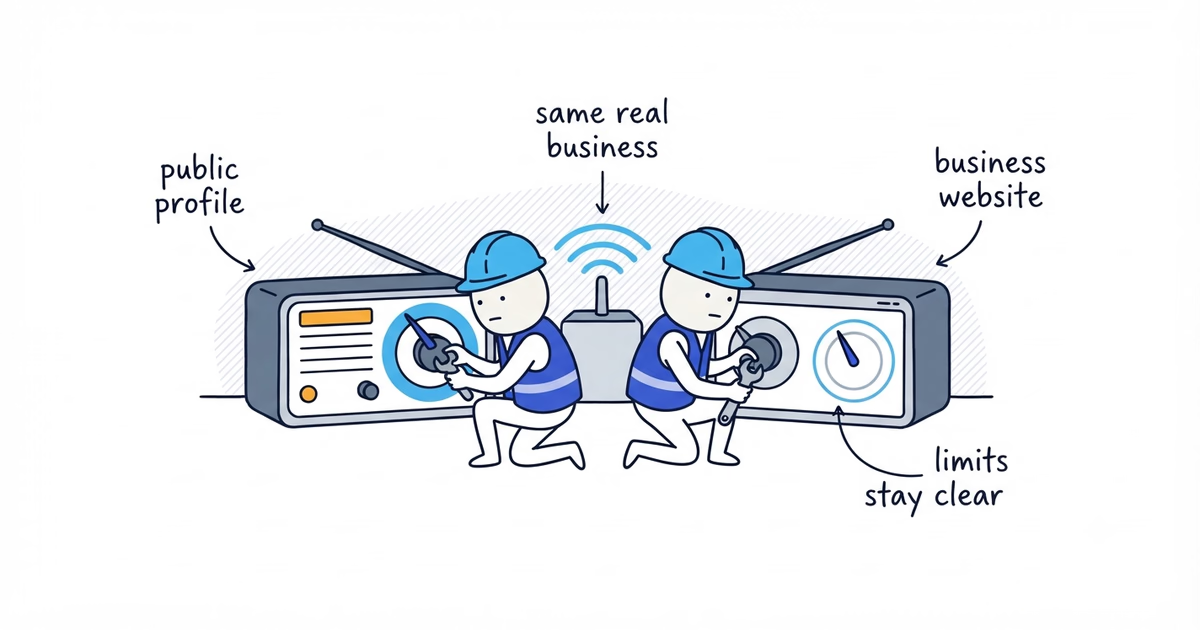
A Google Business Profile is especially important inside Google’s local ecosystem, but it is not a universal AI listing. Read how Google Business Profile helps with AI search for the full distinction.
Google’s own AI search features sit between these categories. Google says its normal SEO guidance still applies to AI Overviews and AI Mode, that Business Profile information should remain current, and that no special AI schema is required. A contractor does not need to rebuild the website around an invented AI format.
Should a Contractor Start With Local SEO or AI SEO?
Most contractors should start with Local SEO and the shared public foundation.
Start there if any of these are true:
- the Google Business Profile is missing, unclaimed, or inaccurate;
- the business rarely appears for its main services in Google Search or Maps;
- the website does not clearly explain the services and service area;
- the published contact details are wrong or the call path does not work;
- the business has very few recent reviews or little proof of completed work.
These problems can lose customers on every search surface. An AI visibility report cannot repair a disconnected phone or explain a service that the website never mentions.
Add AI SEO work when the local foundation is reliable and the remaining question is specifically about AI discovery. It becomes useful when:
- customers are asking ChatGPT or Google AI who to hire;
- competitors appear in relevant AI answers, or the business is described incorrectly;
- the website performs in ordinary search but is absent from useful AI citations;
- the owner wants to understand which public sources AI answers rely on.
This does not require two disconnected marketing programs. Keep the shared facts and proof accurate, continue the Local SEO work that produces demand, and add a small set of AI-specific checks on top.
How Should Contractors Measure AI SEO and Local SEO Results?
For Local SEO, watch map visibility, Business Profile actions, website visits, calls, and estimate requests. For AI SEO, check whether the business appears for relevant questions, is described accurately, earns useful citations, and receives AI referrals.
Then measure the business outcome: qualified leads, estimates, booked jobs, and collected revenue. Ask customers how they found the business, because someone may research with AI and later call from the website. A ranking that produces out-of-area calls or an AI mention that produces no qualified interest is not the final result.
What AI SEO Is Not
AI SEO is not building a chatbot, adding “AI” to every page, buying a special schema package, or generating dozens of thin city articles. It should not hide basic website or Local SEO problems behind a new visibility score.
If the Google profile, website, reviews, or contact information are incomplete, fix those shared foundations first. If they are already reliable and you want to see how AI search currently understands the business, ShiftFlow’s free AI visibility report checks the customer questions, businesses mentioned, sources cited, and first information gaps to correct.
Frequently Asked Questions
Does AI SEO replace Local SEO for contractors?
No. Local SEO helps nearby customers find the business in Google Search and Maps. AI SEO adds work aimed at generated answers, source visibility, and accurate business descriptions. Both depend on a clear website, accurate business facts, reviews, and public proof.
Should a contractor start with Local SEO or AI SEO?
Most contractors should start with Local SEO basics. Claim and complete the Google Business Profile, publish clear service information, fix contact problems, and build genuine reviews. Add AI SEO checks after that foundation works.
Can Local SEO help a contractor appear in ChatGPT?
It can build a stronger public foundation because the website, business details, reviews, and other pages are easier to find and verify. It does not automatically place the contractor in ChatGPT, and OpenAI does not publish a local recommendation formula.
Do contractors need special AI schema?
No special AI schema is required for Google AI Overviews or AI Mode. Use normal website SEO, keep Business Profile information current, make important pages accessible, and explain services and service areas clearly.