Do Google Reviews Help Your Business Get Recommended by AI?
Yes, Google reviews can help with AI recommendations, but Google is only one part of your online reputation. Learn what reviews can affect and what to improve.
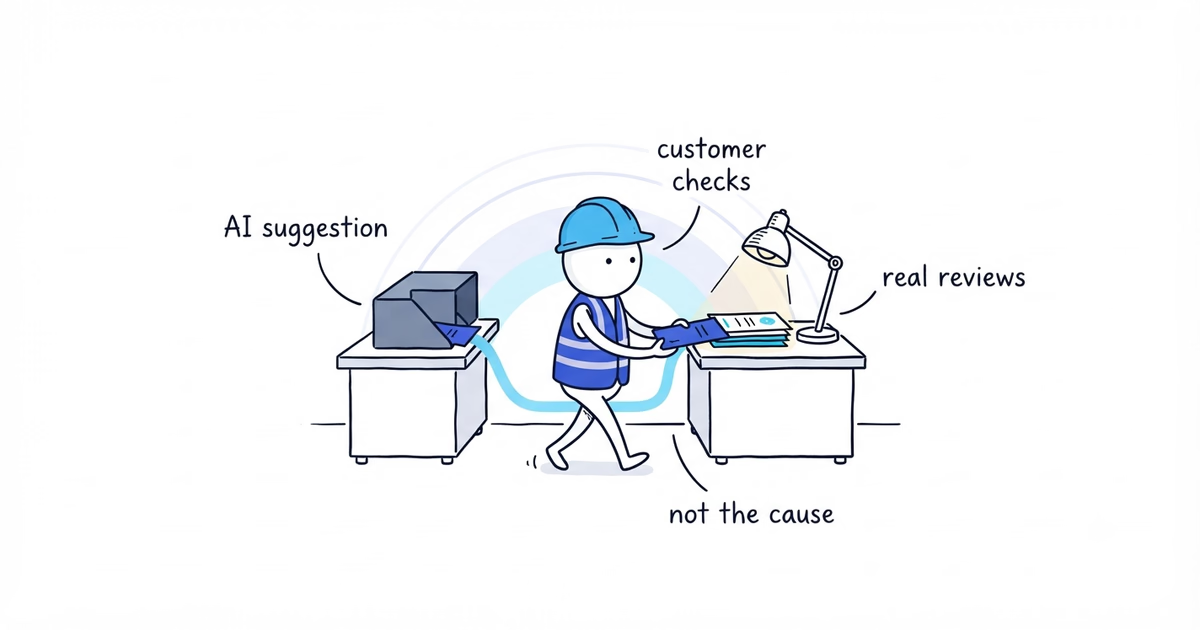
Yes. Google reviews can help your business get recommended by AI, but Google is only one part of your online reputation.
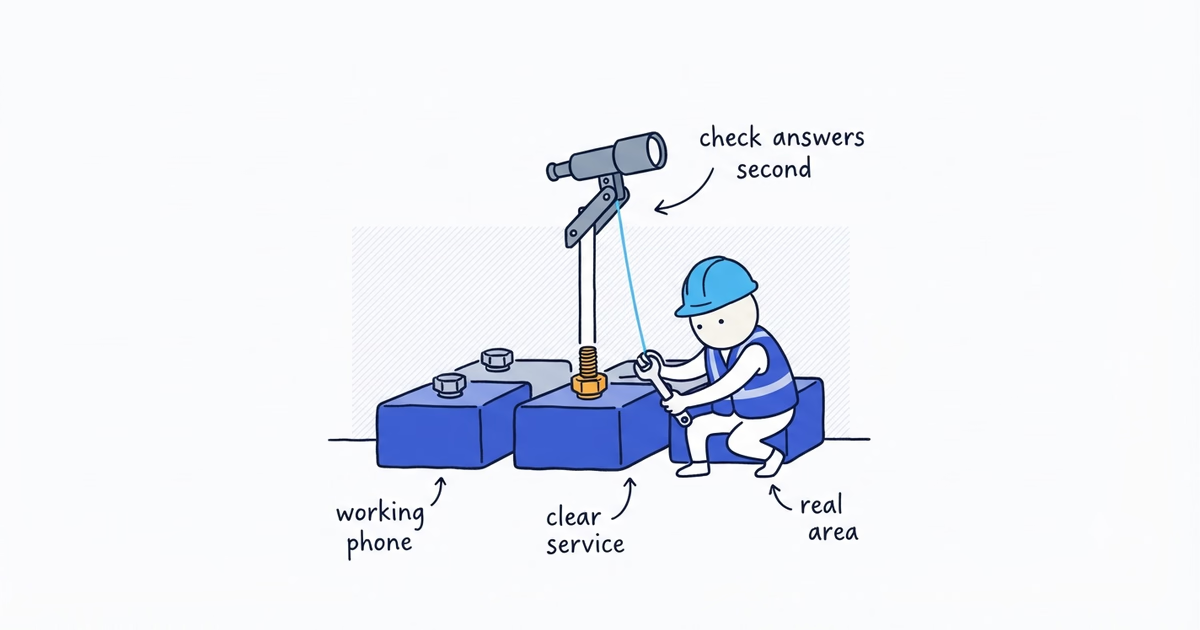
Reviews can improve your visibility in Google local results, provide public information that an AI search may find, and help a customer decide whether to trust a recommendation. If your public profiles contain repeated complaints about missed appointments, surprise charges, poor workmanship, or unanswered calls, that information may work against you.
There is no published formula that says a certain rating or number of reviews earns a ChatGPT recommendation. The practical point is simpler: a strong, current, and consistent reputation gives AI tools and potential customers more reasons to feel confident about your business.
Last verified: August 9, 2026 (United States).
Three Ways Reviews Can Affect an AI Recommendation
Reviews do not operate as one universal AI ranking score. They can matter at three different points between a customer asking a question and booking a job.
1. Google Reviews Can Improve Local Visibility
Google says more reviews and positive ratings can help a business’s local ranking. That applies to local results in Google Search and Maps. A business that appears more often in those results gives customers another public place to discover and assess it.
Reviews are not the only local ranking factor. Google also considers relevance, distance, and prominence, and it does not publish a magic review count or rating threshold. For a detailed explanation of that part, use the Google Maps review ranking guide.
2. AI Search Can Encounter Public Reputation Information
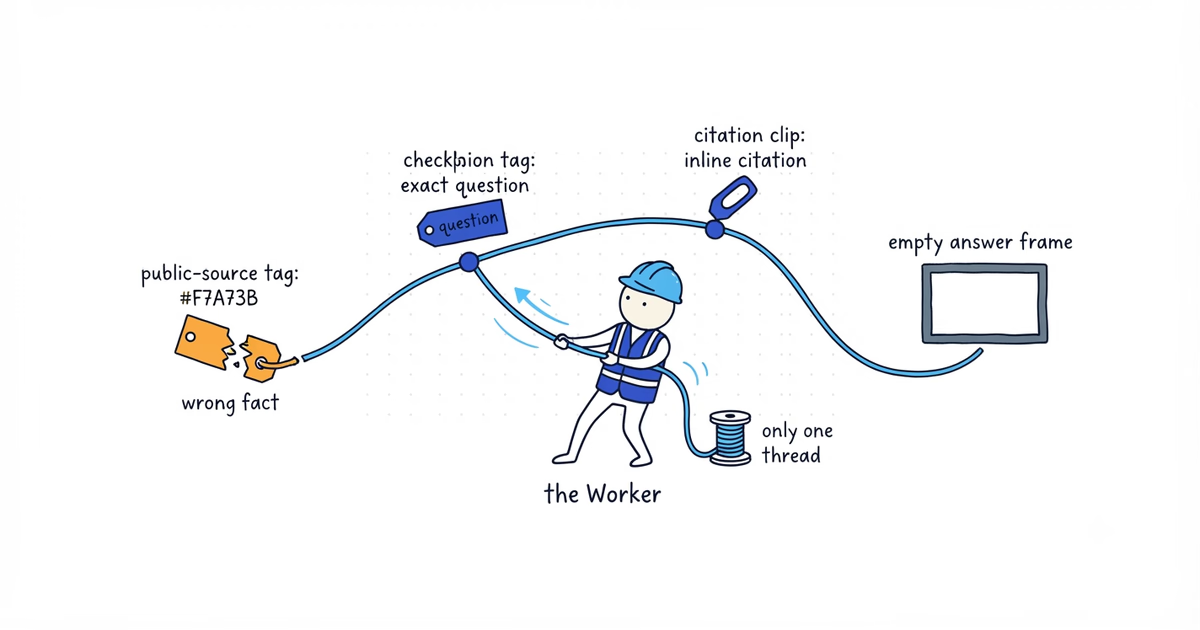
ChatGPT includes web search. When it searches, web results and citations can appear in the answer. That means a publicly accessible review page, directory profile, complaint page, or other source can become part of the information available for a particular question.
This does not mean ChatGPT reads every review on every platform. Some pages require a login, block automated access, or simply do not appear for the query. It also does not mean one negative review automatically removes a business. It means public reputation information can be relevant evidence, especially when the customer asks for a reliable, highly rated, or trusted local provider.
3. Customers Can Check the Recommendation Themselves
An AI answer may put a plumber, cleaner, roofer, or electrician on the customer’s shortlist. The customer can still open Google or another review platform before calling.
At that point, the reviews do not need to have caused the AI recommendation to matter. They help the customer answer basic questions: Is this business still active? Do team members arrive when promised? Are estimates clear? Does the owner respond when something goes wrong? A recommendation that looks reasonable in an AI answer can lose the job when the public reputation behind it does not hold up.
Google Is Not Your Whole Online Reputation
For many local service businesses, Google is the first review profile to prioritize because it is tied directly to the Business Profile customers see in Search and Maps. The Google Business Profile and AI search guide explains how that profile supports local visibility without becoming a universal AI listing. Google is still not the only place where your reputation exists.
Depending on the trade and location, customers and web searches may also encounter Yelp, Facebook, the Better Business Bureau, trade directories, marketplace profiles, local news, and community discussions. You do not need to collect reviews everywhere. You do need to know which public profiles already exist and what they say.
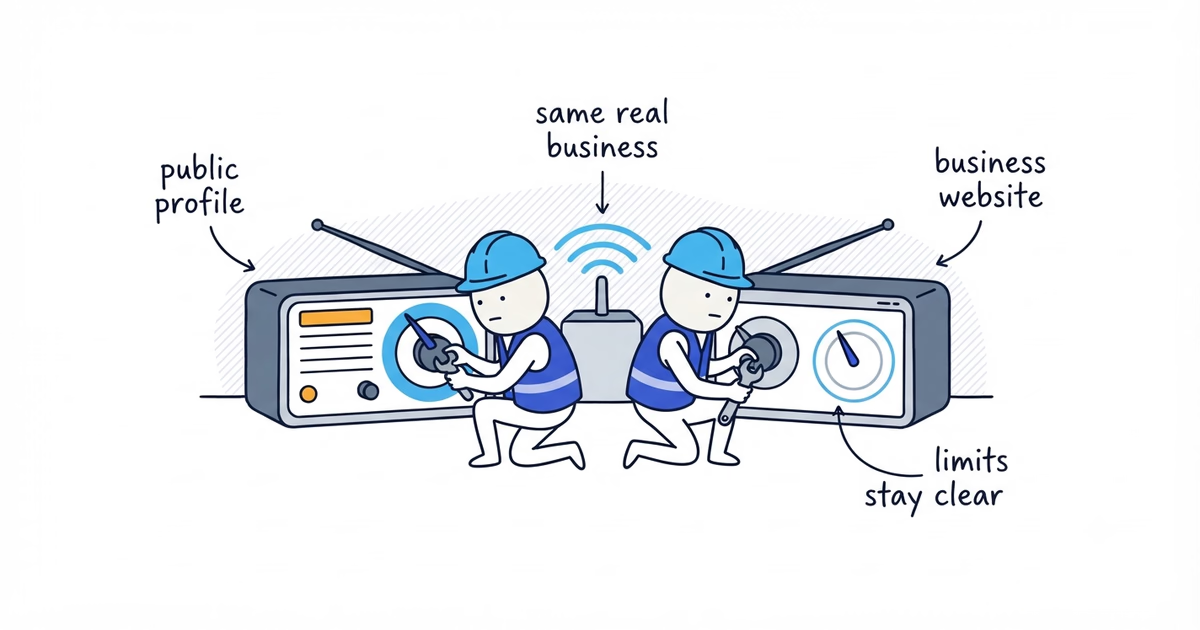
Check that your business name, phone number, website, service area, and current operating status agree across the important profiles. A closed location, old phone number, duplicate listing, or unresolved complaint can create doubt even when the Google profile looks healthy.
Can Bad Reviews Hurt AI Recommendations?
Yes, they can. The important difference is between an isolated complaint and a visible pattern.
One unhappy customer does not define a business. A calm, specific owner response may even show future customers how the business handles a problem. But several recent reviews describing the same issue deserve attention. Repeated complaints about no-shows, unfinished work, unexpected charges, poor communication, or rude behavior make it harder to support a claim that the business is reliable.
The first response should not be an SEO tactic. Find out whether the problem is real. Check the schedule, invoice, call log, job notes, and the team member’s account. Fix any recurring service or communication failure before sending more review requests. More positive reviews will not solve a problem that customers keep experiencing.
When you reply publicly, keep it short and professional. Acknowledge the concern, correct a factual error without attacking the reviewer, avoid sharing private customer information, and offer a direct way to continue the conversation offline. If a review violates the platform’s policy, report it through the proper process. A negative opinion is not automatically a policy violation.
How to Manage Online Reviews for AI Search and Local Customers
Reputation management is not the same as trying to manufacture a perfect five-star score. It is a repeatable operating process.
Ask After Every Genuine Completed Job
Choose a normal point in the workflow, such as job completion, invoice delivery, or payment, and send the request while the work is still easy to remember. Ask broadly rather than deciding in advance which customers are likely to leave a positive rating. Google prohibits selectively soliciting positive reviews.
A neutral request is enough:
Thanks for choosing [Business Name] for your service today. If you have a minute, would you leave an honest Google review about your experience? Your feedback helps other local customers know what to expect: [review link]
Make the Review Page Easy to Reach
Do not tell the customer to search for the business and find the review button. Send the direct Google review link by text or email, or use the QR code Google provides. The post-verification Google Business Profile checklist explains how to copy and test both.
Let the Customer Use Their Own Words
Do not ask for five stars. Do not give the customer a script containing the service, team member name, and city. Google prohibits merchants from requesting specific content in reviews. A genuine description of the experience is more useful than a paragraph written for the customer.
Reply So the Next Customer Can See How You Operate
A review reply is written for more than the original reviewer. Future customers can read it too. Thank positive reviewers without turning the reply into an advertisement. For a negative review, respond to the real concern and move account details or a complicated dispute to a private channel.
Watch for Patterns Across Platforms
Check the few profiles that matter in your market at least once a week. Record repeated issues instead of treating each review as an isolated message. If three customers mention late arrival windows, the useful response is not three apologies. It is a scheduling or communication change, followed by clear replies explaining what was improved.
Keep the Process Honest
Do not buy reviews, offer discounts or gifts for reviews, ask only happy customers, pressure someone to review while a team member is still in the home, or offer something in exchange for changing or removing a negative review. These shortcuts can violate Google policy and make the reputation less trustworthy.
Weekly Online Reputation Management Checklist
A small local service team does not need a full-time reputation manager to start. Give one Owner, Admin, or Manager responsibility for a short routine:
- After each completed job: Send one neutral review request with the direct link.
- Twice a week: Check new reviews on Google and the other public profiles customers actually use.
- Within a few working days: Reply where a response would help, and move private details offline.
- Once a week: Bring repeated service problems to the team instead of leaving them inside the review platform.
- Once a month: Check whether review requests are being sent consistently and whether old business information is still public anywhere important.
Start with Google because Google confirms that reviews can help local ranking and because the Business Profile is visible in Search and Maps. Then make sure the rest of the public reputation tells the same basic story: the business is active, the information is accurate, and real customers receive the service being promised.
If the team needs a review process that runs when jobs close, ShiftFlow’s Google review management service can help set up the requests, direct links, and reply guidance. The free Review Gap Report compares the Google review profile with nearby businesses and shows which gaps to address first.
Frequently Asked Questions About Reviews and AI Recommendations
Can ChatGPT Recommend a Business Without Google Reviews?
Yes. Google reviews are not the only public information available about a business. When ChatGPT uses web search, its answer may use sources such as the business website or a public directory instead.
Can Bad Reviews Stop a Business From Being Recommended by AI?
There is no published automatic cutoff. However, a pattern of recent public complaints can make a business less convincing for a query about reliable service and can make customers less willing to trust the recommendation.
Should a Local Business Focus Only on Google Reviews?
Start with Google because reviews appear with the Business Profile in Maps and Search, and Google confirms that more reviews and positive ratings can help local ranking. Then monitor the other public profiles that customers in your market actually use.
Should Customers Put Service and City Keywords in Reviews?
Do not script review wording. Google prohibits merchants from requesting specific content in a review. Ask for an honest review and let the customer describe the experience in their own words.
Sources
- ai-search
- google-reviews
- chatgpt
- local-business