Best Google Business Profile Categories for Handyman Businesses
Choose the best Google Business Profile category for a handyman, test whether another trade truly fits, and keep small repairs and punch-list work in Services.
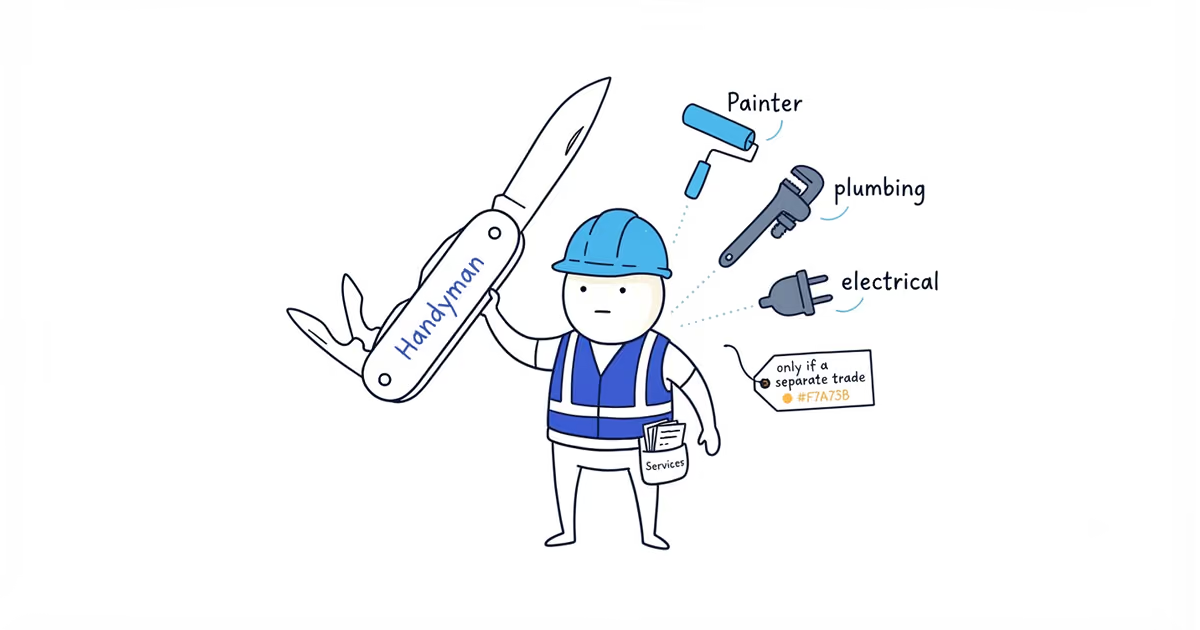
A business customers hire for varied small repairs, installations, and punch-list work should usually start with the handyman option. The current public US English list renders that name as Handyman/Handywoman/Handyperson; the wording in an individual account may differ, so confirm it in the live selector.
The variety is the business model. It is not a reason to add carpenter, painter, plumber, electrician, remodeler, and every other trade the owner occasionally touches.
Google guidance checked: July 21, 2026. Public US category-name cross-check: July 21, 2026. Confirm every final name in the live account selector.
Why varied repair work fits the handyman category
A normal handyman week might include hanging shelves, repairing trim, adjusting doors, patching drywall, replacing hardware, assembling fixtures, and touching up paint. These jobs share one customer promise: call one practical team to complete a list of smaller property repairs.
Put those jobs in Services. Do not convert the list into business identities.
| Primary starting point | Categories to test only for a genuinely separate trade | Keep in Services |
|---|---|---|
| The live selector’s handyman option for a varied repair and maintenance operation | An exact current category that truthfully describes an independently sold, deliverable trade | Shelving, door and trim repair, drywall patches, paint touch-ups, hardware replacement, assembly, punch lists, and other current tasks |
The test is not “Can we do this?” A capable handyman can do many things. Ask “Do we operate as this type of business?”
When a handyman should add another trade category
Google requires categories to be accurate and says to use only a few relevant additional categories. Google does not require a separate crew, webpage, or minimum percentage of jobs. The list below is ShiftFlow’s conservative way to test a second trade identity, not a Google-published qualification standard:
- A meaningful share of completed standalone jobs
- A clear offer customers can request without buying a general punch list
- Team members assigned and trained for the specialty
- The tools, estimating process, and project controls the work needs
- Required licenses, permits, or permissions where applicable
- A direct website and intake path
- A customer experience that genuinely matches the claimed trade
No one item decides the answer. Read the evidence together and ask whether the category describes a business customers actually hire, rather than a skill the team happens to have.
Carpentry and painting
Repairing a sticking door, replacing damaged trim, installing shelves, patching drywall, and touching up paint fit naturally inside handyman Services.
A carpentry identity becomes more credible when customers commission standalone carpentry projects, the company estimates and manages those projects separately, trained team members and shop or site equipment support them, and the completed-job mix is material. Painting needs the same kind of proof: paint-only customers, appropriate crews and equipment, project estimates, and a sustained body of work.
Do not add both categories because they appear often on punch lists.
Remodeling and general contracting
Replacing a vanity, repairing drywall after a leak, or updating several fixtures does not automatically turn a handyman into a remodeler or general contractor.
Larger projects involve a different sales, estimating, scheduling, subcontractor, permitting, and customer-management operation. Consider a related category only when that operation is real and the business holds the required authority where applicable. Category selection never grants permission to perform regulated work.
Plumbing and electrical tasks
Small tasks near plumbing or electrical systems require particular care because allowed scope differs by location. This article cannot decide what work a company may legally perform.
If the handyman refers licensed plumbing and electrical work out, those trades are not categories for its profile. If the company separately operates a properly licensed trade division, evaluate that division using the same job, team, equipment, website, and intake evidence. Do not infer a trade identity from replacing a fixture or device.
Hypothetical Google Business Profile category example for a handyman
Oak & Nail is a fictional business. Its invoice percentages are examples for comparing tasks with business identities, not universal category thresholds. It has an owner and two team members. Customers submit lists through one estimate form. Over the last 90 days, jobs included door and trim repair, shelf and curtain-hardware installation, drywall patches, furniture assembly, paint touch-ups, and minor exterior maintenance.
About 24% of invoices included carpentry tasks, but only four were carpentry-only jobs. The same team, van, tools, and estimate process handled them. Oak & Nail has no workshop, custom-build offer, or carpentry project pipeline.
Painting appeared on 19% of invoices, almost always as touch-up work after a repair. The company does not estimate full-room or exterior repaint projects.
The owner refers pipe repair, new circuits, panel work, and other licensed trade calls to partner companies. Oak & Nail does not sell remodel projects or coordinate subcontractors.
Oak & Nail is fictional, and its percentages are illustrative. Its category decision should remain restrained:
- Primary starting point: the live selector’s handyman option because it describes the varied-task customer promise, team, estimate form, and completed work.
- Carpentry candidate: reject for now. Carpentry is a recurring capability but not an independent operation.
- Painting candidate: reject. Touch-ups attached to repairs remain Services.
- Remodeling or general-contractor candidate: reject. Oak & Nail lacks that project and management model.
- Plumbing and electrical candidates: reject. Those calls are referred out, and handyman tasks near those systems do not establish licensed trade divisions.
- Services: the accurate repair, installation, assembly, patching, and maintenance jobs Oak & Nail currently accepts.
If the company later develops a real standalone carpentry operation, it can review an exact carpentry candidate in the live selector. There is no universal job-share threshold. The question is whether the new label has become an accurate description of the business.
How to change a handyman’s Google Business Profile category
Google may request reverification after a category change. Before editing:
- Record the current categories and recent completed-job mix.
- Confirm every proposed label in the live US selector.
- Separate punch-list tasks from independently sold trades.
- Use team capability, tools, estimates, completed work, website, intake, and licenses where applicable as judgment evidence.
- Exclude referred work and work the company is not permitted or prepared to deliver.
- Make only the justified correction and prepare for reverification.
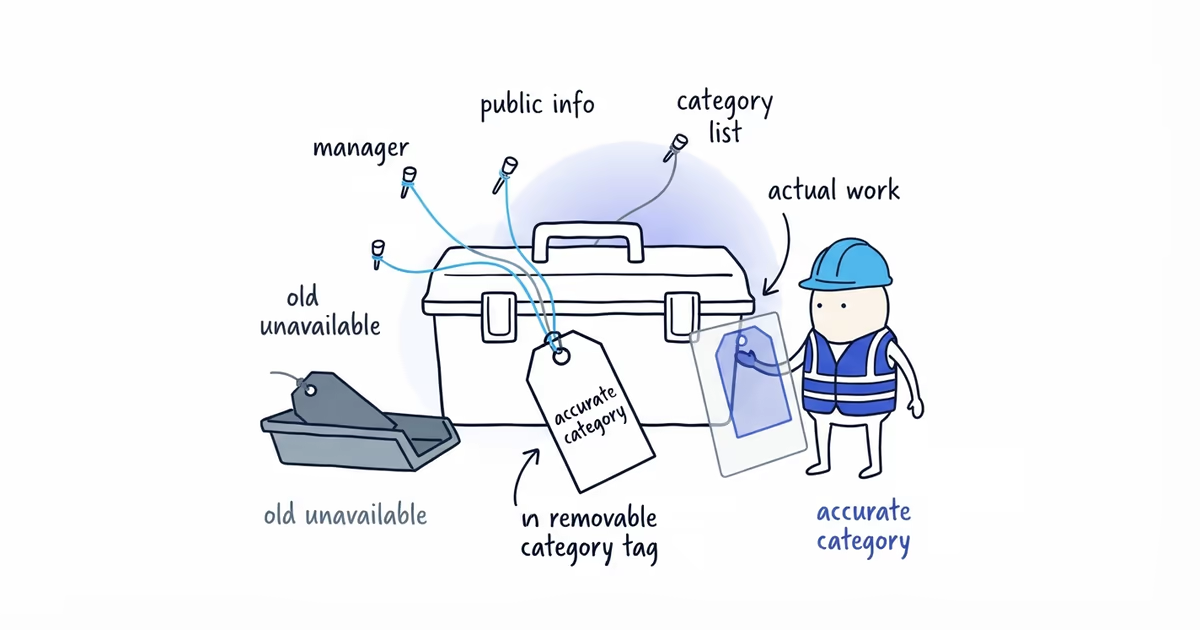
The final category set is accurate when the primary explains why customers call a handyman, each additional category describes a real separate operation, and the long task list remains in Services.
Google Business Profile category FAQs for handyman businesses
What is the Google Business Profile category for a handyman?
The public US English list reviewed for this article renders the option as Handyman/Handywoman/Handyperson. Because wording can vary by account or locale, confirm the exact label in the live account selector.
Can a handyman add plumbing or electrical categories?
Only when the business genuinely operates that trade and is permitted to deliver the work where required. Replacing a fixture or device during a punch-list visit does not establish a plumbing or electrical business identity.
Should a handyman add Painter or Dry wall contractor?
Not for paint touch-ups or small drywall patches attached to repair jobs. Consider another trade category only when it accurately describes a standalone operation customers can hire.
Sources
- best-google-business-profile-categories-for-handyman-businesses
- google-business-profile-category-for-handyman
- handyman-business-category
- handyman-services-vs-categories
- handyman-plumbing-electrical-categories