What is the difference between a contractor estimate, quote, bid, and proposal?
Compare a contractor estimate, quote, bid, and proposal, understand what each document does, and choose the right one for the customer's next decision.
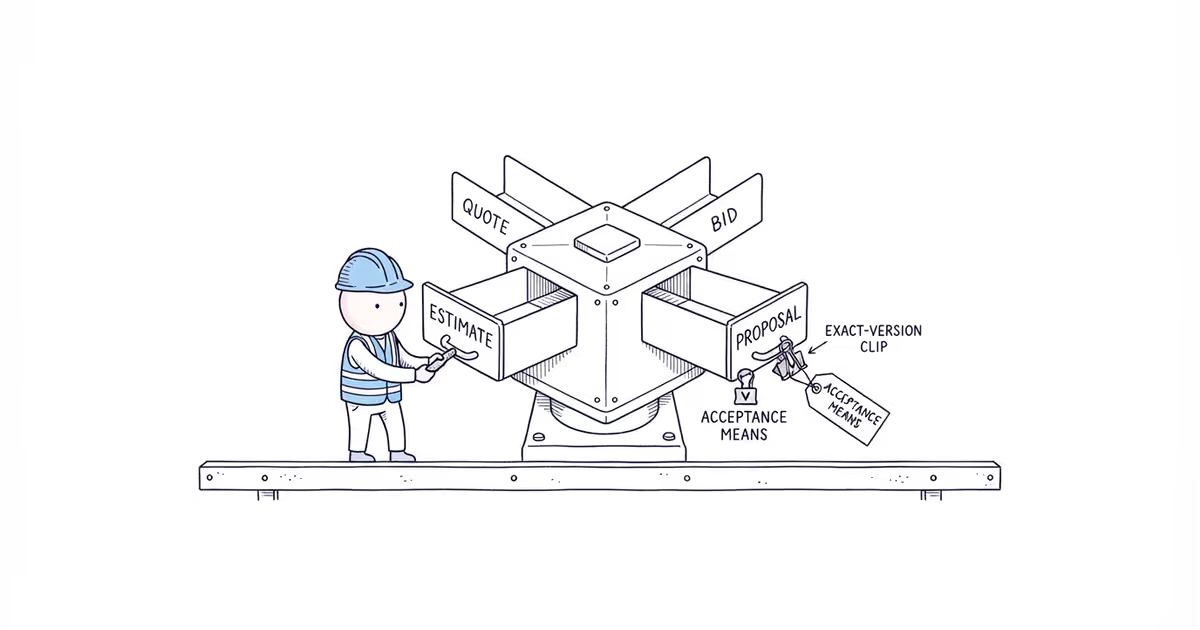
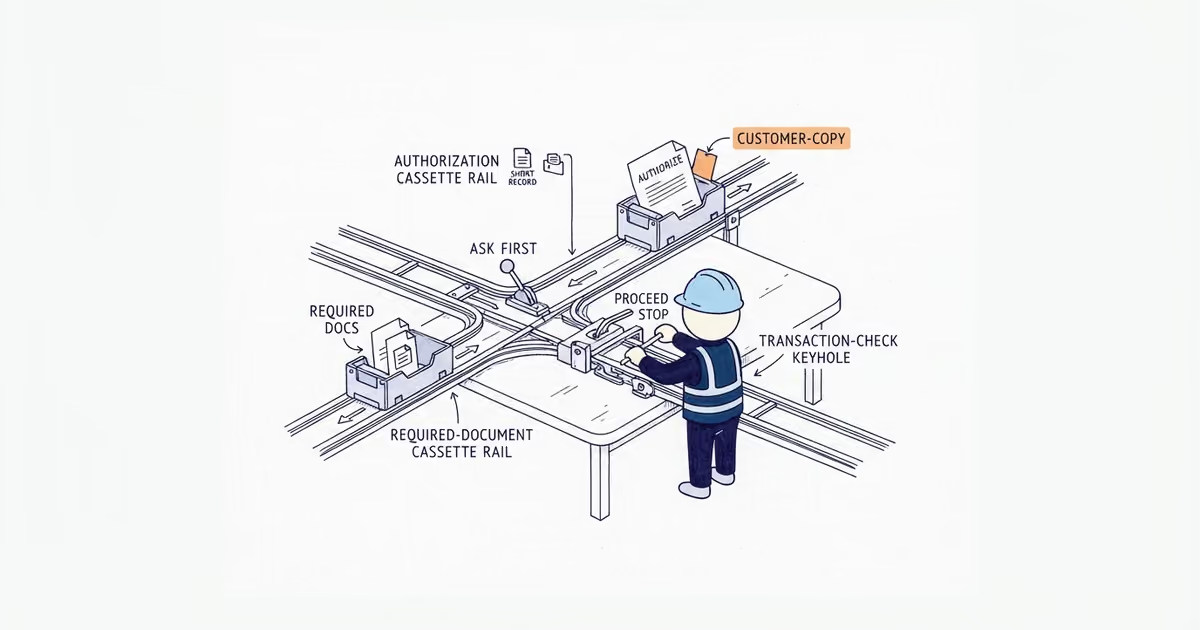
An estimate usually gives an expected price while some job inputs remain uncertain. A quote usually states a price for a defined scope and time window. A bid usually responds to buyer-supplied instructions or a competitive request. A proposal usually combines a recommended approach, scope, price or options, relevant support, and a next step.
Those are operating distinctions, not universal legal definitions. Usage changes across trades, customers, software, and jurisdictions. The heading sets an expectation; it does not decide whether the document is binding, whether the price can change, or whether required notices have been provided.
Last verified: August 31, 2026 (United States).
Contractor estimate vs. quote vs. bid vs. proposal
| Document | Main purpose | Usual content | When it is used | Customer decision | What you must make explicit |
|---|---|---|---|---|---|
| Estimate | Show the expected price from current information | Likely scope, expected price, assumptions, allowances, and unresolved inputs | Quantities, selections, or site conditions are not fully settled | Review it, supply missing information, request refinement, approve a next step, or accept it if the document supports acceptance | What remains uncertain, how it will be resolved, and what approval means |
| Quote | Offer a stated price for a defined scope | Scope, price, assumptions, exclusions, options if any, and a valid-through date | The work and pricing inputs are defined enough to make a direct offer | Accept, decline, or request a scope change | What the price covers, when it expires, what acceptance authorizes, and what happens after expiration |
| Bid | Respond to a buyer’s requested work and submission process | Requested scope, specifications, price, qualifications, due date, and required response fields | A homeowner, general contractor, property manager, or other buyer has issued instructions or comparison criteria | Award, reject, shortlist, or request clarification | Which instructions control, what is included, the submission status, and what happens after an award |
| Proposal | Help the customer choose a recommended solution or approach | Customer priority, recommendation, scope, price or options, relevant proof, commercial terms, and next step | The customer needs rationale and comparison, not only a number | Choose an option, authorize a next step, accept the offered work, or move to a separate agreement | The offered result, selected option, exact version, and consequence of acceptance |
What is a contractor estimate?
Use an estimate when quantities, selections, conditions, or allowances remain unresolved. Name each unknown, how it will be resolved, and the decision you need. The label is not blanket permission to change the price. A signed Estimate may also matter if its content and the parties’ actions show agreement.
If the unknowns make an estimate the right document, use our contractor estimate guide to turn the known scope, assumptions, allowances, exclusions, and price basis into a complete customer document.
What is a contractor quote?
Use a quote when you can state the offered scope, price, assumptions, exclusions, and expiration. The label is not a nationwide guarantee of a fixed price. Say what acceptance authorizes and whether the quote becomes part of a later agreement.
What is a contractor bid?
Use a bid when a homeowner, general contractor, property manager, or other buyer supplies instructions, specifications, a due date, or comparison criteria. Identify the request, version, clarifications, and exceptions. Home-service customers may also use bid to mean estimate or quote, so confirm the decision they need.
What is a contractor proposal?
Use a proposal when the customer needs a recommendation, included result, meaningful choices, relevant support, terms, and next step. It may contain an estimated or quoted price. Identify the price and scope status, version, requested action, and next document instead of inventing a hybrid label.
How to choose a contractor estimate, quote, bid, or proposal
- Identify what is still uncertain. Unresolved quantities, selections, or site conditions usually point to an estimate.
- Check for buyer-supplied instructions. A requested scope, response format, due date, or comparison process usually points to a bid.
- Decide whether the customer needs a price or a recommendation. A defined direct offer usually points to a quote. A decision that needs rationale, alternatives, or supporting information usually points to a proposal.
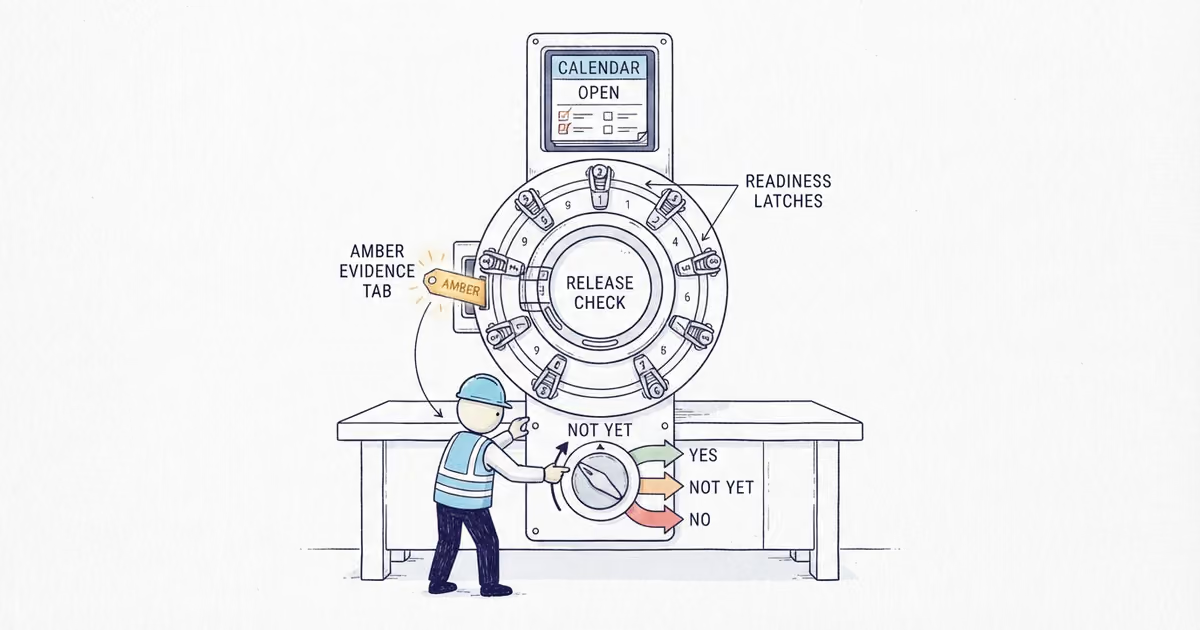
- State exactly what acceptance does. Say whether it authorizes investigation, selects an option, awards the job, accepts the offered work, or moves both sides to another agreement.
For one exterior painting job, unknown siding repairs and finish selections point to an estimate. A defined offer after inspection points to a quote. Property-manager specifications and a response deadline point to a bid. A choice between repair approaches, with reasons for each, points to a proposal.
Can a contractor estimate, quote, bid, or proposal be binding?
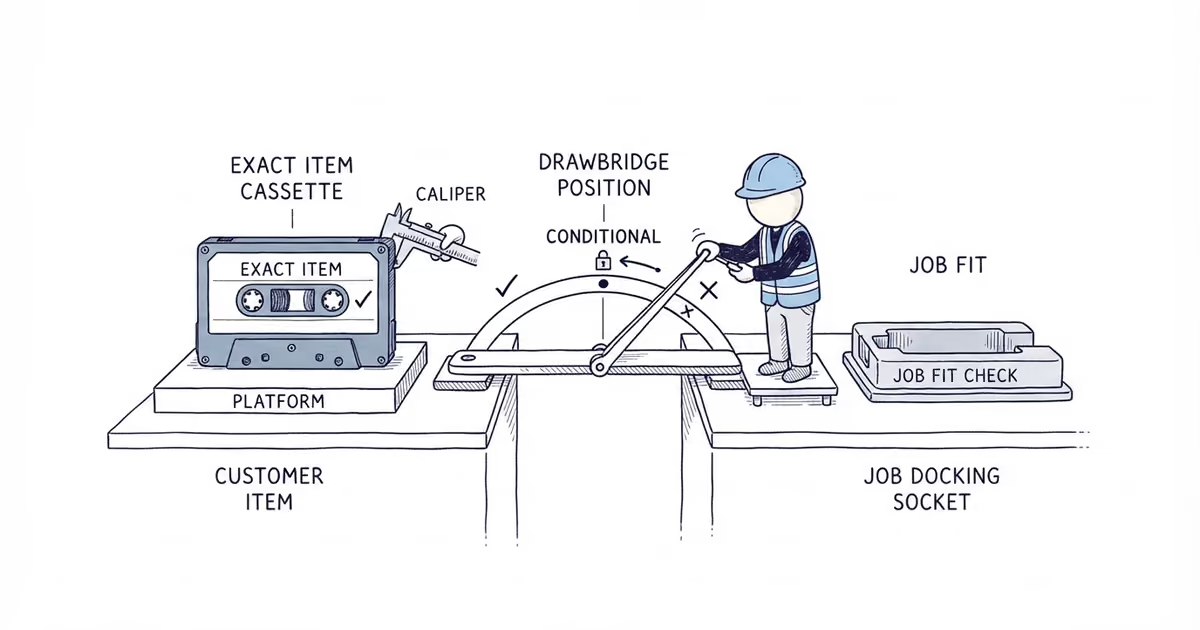
Read the transaction in this order:
- The document’s actual content and promises
- The parties’ words and conduct showing agreement
- The acceptance method and exact version accepted
- Any separate agreement or document incorporated into it
- The governing law
- Required disclosures and notices
A signature is one piece of the record, not the whole test.
The federal E-SIGN Act generally says a contract, record, or signature cannot be denied legal effect solely because it is electronic. It does not prove agreement, settle the accepted terms, or remove applicable consent, disclosure, access, and retention requirements.
Requirements also depend on the jurisdiction and transaction. California Contractors State License Board guidance is a state-specific example of detailed home-improvement contract content and notices. The federal rule in 16 CFR Part 429 is a transaction-specific example of cancellation disclosures for covered sales. A heading does not make either example apply, and neither belongs in a nationwide clause.
Contractor document pre-send checklist
- The label matches the document’s operating purpose.
- The scope and price basis are visible.
- Uncertainty, assumptions, exclusions, options, and expiration are identified where relevant.
- The document has an identifiable number, date, and version.
- The customer knows what action you are requesting.
- The document says what that action authorizes.
- It states whether another agreement follows or becomes part of the transaction.
- Required state, local, trade, job, and transaction-specific notices have been checked.
Frequently Asked Questions
Do I need both a contractor quote and a proposal?
Not always. Use a quote when the customer only needs a defined scope, price, and acceptance decision. Use a proposal when the customer also needs a recommendation, comparison, or supporting information; if the proposal contains a quoted price, label that price and its expiration clearly.
How should a customer accept a contractor proposal?
The document should identify the exact proposal version, selected option or scope, requested acceptance action, and what happens next. Do not assume a signature or click has the same effect everywhere; check the agreement and applicable state, local, trade, job, and transaction rules.
Sources
- 15 U.S.C. 7001 - General rule of validity
- Electronic Signatures in Global and National Commerce Act - official compiled text
- California Contractors State License Board - Contracts and Binding Agreements
- 16 CFR Part 429 - Rule Concerning Cooling-Off Period for Sales Made at Homes or at Certain Other Locations
- pricing
- contractor-estimate-vs-quote-vs-bid-vs-proposal
- contractor-estimate-vs-quote
- contractor-bid-vs-proposal
- contractor-proposal-vs-quote
- difference-between-estimate-and-quote