What should a contractor say when a customer wants no contract?
Use a calm no-contract response, keep a clear work authorization record, check required documents, and apply a firm contractor pre-start gate before work.
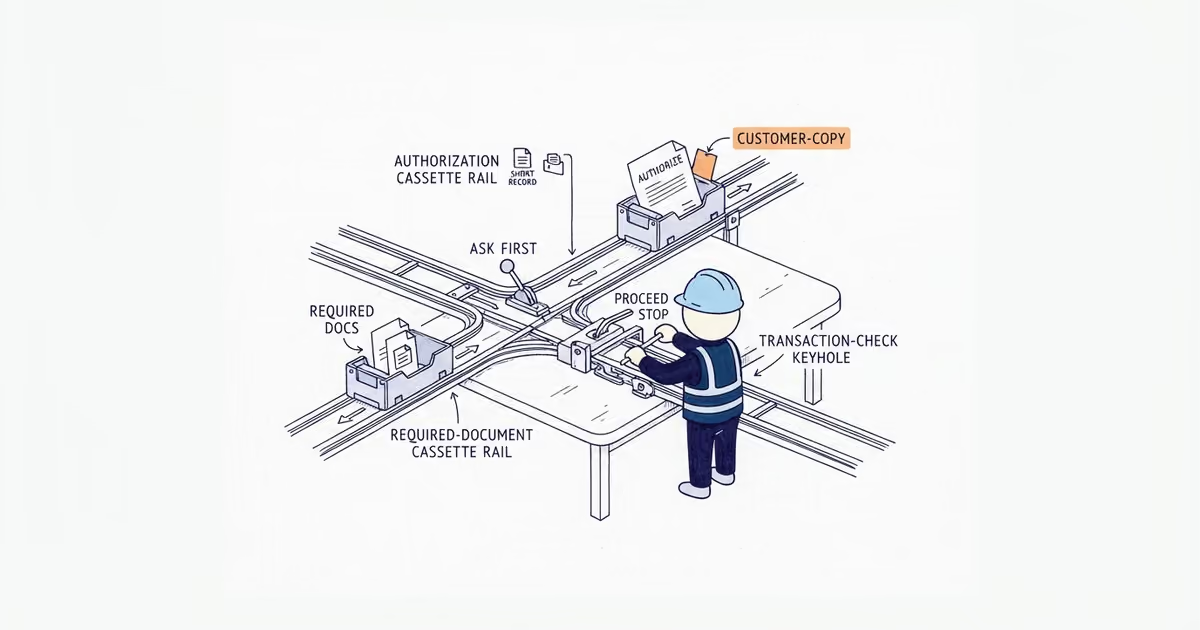
Say: “I can keep the paperwork proportional to the job, but I cannot schedule or start without a clear record of the work, price, and your authorization. Which part concerns you: the length, a specific term, the information requested, or the signing method?”
Ask what the customer refuses, then offer the shortest permitted record and format. If the required record remains incomplete, do not start.
How to respond when a customer refuses a contract
“No contract” can mean several things. Route each concern separately.
| Customer concern | Next step |
|---|---|
| The document is too long or confusing | Review it; simplify optional presentation, not required content. |
| One term or job fact is wrong | Correct the item in a new current version; allow no verbal override. |
| A requested field feels unnecessary | Explain its operational or legal purpose; omit it only if optional. |
| The customer refuses e-signing | Offer a permitted paper or alternative method. |
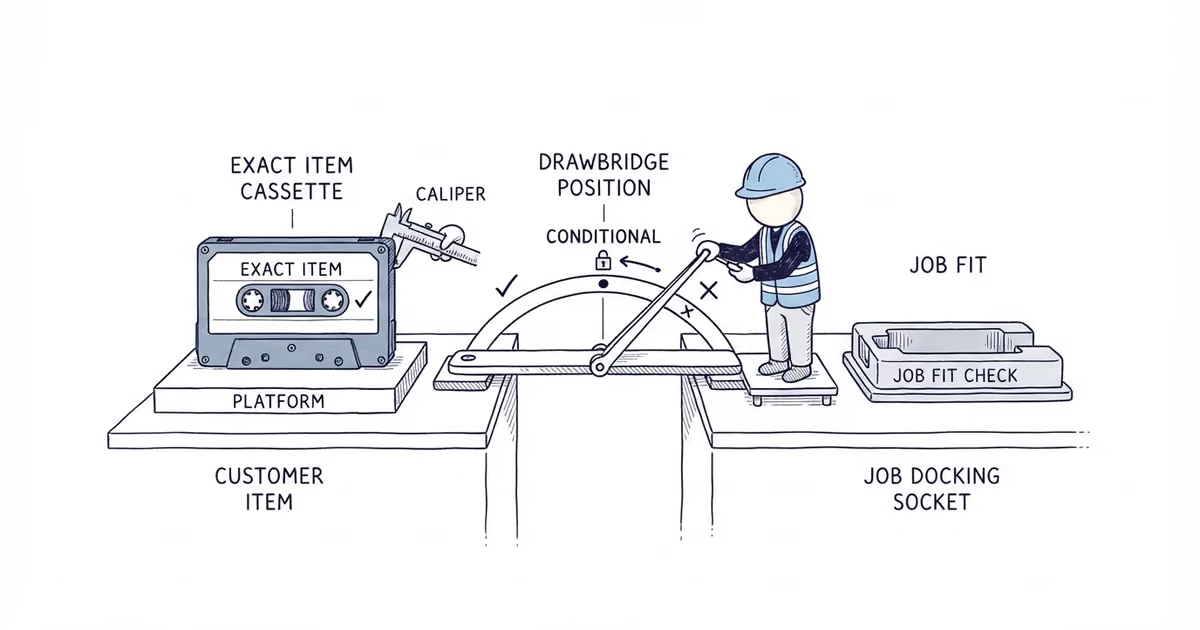
| The customer wants work before details are settled | Pause until scope, price, version, and authorization are clear. |
| The customer refuses every written record | State the minimum once, then decline or pause. |
If the customer refuses every record the job requires, the job walk-away guide helps turn that hard stop into a documented decline before you allocate crew, materials, or calendar space.
Minimum contractor work authorization record
Record the customer and site; contractor; authorized work; price, rate, or pricing method; any identifying selection; any material scope limit; date and visible version; customer authorization; and the next permitted action.
This operating floor is not universally sufficient. Add every required contract term, disclosure, notice, signature, delivery step, customer copy, or cancellation document.
Work order vs. contractor contract
| Document level | When it may fit | Boundary |
|---|---|---|
| Short work order or service authorization | A limited service job when no rule or agreement requires more | Retain the operating record; release one named action |
| Specified contract and related documents | A transaction covered by applicable transaction rules | Use all required content, notices, signatures, delivery, and copies |
The page title does not decide. Renaming a covered agreement as a work order, estimate, invoice, proposal, or service authorization removes no transaction requirement. An authorization may itself have contract consequences.
Before offering the shorter level, check the location, work type, residential or commercial setting, sales method, coverage triggers, licensing regime, and applicable consumer, home-improvement, financing, emergency, or doorstep-sale rules. Use the responsible authority and qualified advice.
What to say when a customer wants no contract
Adapt this after deciding which document level applies:
I understand that you want to keep the paperwork simple. Is the concern [length, specific term, requested information, signing method, unsettled job fact, or all written records]? For this job, after checking the applicable requirements, I need [short authorization or required documents] showing [scope, price or pricing method, current version and date, authorization, and any required notices or customer copy]. We can review it, correct the current version, or use [another permitted format], but I cannot schedule or start the work if the required record remains incomplete.
Use these short branches when they fit:
- “I trust you; we do not need paperwork.” “The record tells you and the crew what is authorized, how it is priced, which version controls, and what happens next. I need it before releasing the job.”
- “I do not want to e-sign.” “We can use another permitted method. The scope, price, authorization, required notices, and customer copy must still be complete.”
- “Just start, and we will sort it out later.” “I cannot release the job while scope, price, version, or authorization is unsettled. It remains unscheduled.”
Service authorization vs. home-improvement contract
- Limited service call: Where permitted, a concise authorization can record the site, service, pricing method, work limit, date, version, authorization, and permission to perform only that work. Verify that nothing more is required.
- Covered home-improvement transaction: Keep the contract, content, signatures, notices, delivery, and customer-copy steps required for that jurisdiction and transaction. Do not substitute the service-call record.
When contractor contract requirements vary
Last verified: August 31, 2026 (United States).
Federal 16 CFR Part 429 covers defined sales at homes or certain other locations. Covered sales can require a completed receipt or contract copy and cancellation materials and notices. Its definitions and exclusions control; an at-home estimate alone does not.
The federal E-SIGN Act says a record or signature generally cannot be denied effect solely because it is electronic. It preserves other requirements and does not force acceptance of electronic records; consumer-disclosure conditions may apply. Offer another permitted format when needed.
California’s Contractors State License Board describes covered home-improvement work requiring a written contract and specified information. Maryland’s commission describes covered contracts that must be written, signed by each party, and provided as a signed homeowner copy before work. These are state-specific examples, not nationwide rules.
Frequently Asked Questions
Can a customer accept a contractor proposal by email?
An email may provide evidence of approval when it identifies the current proposal and selection. Do not assume it replaces a required contract, signature, notice, customer copy, or permitted acceptance process for the transaction.
Should a contractor collect a deposit before the contract is complete?
Do not release payment collection while the required documentation gate is incomplete. Deposit amount, timing, cancellation treatment, and payment-schedule rules depend on the actual job and jurisdiction and need a separate check.
Sources
- 16 CFR Part 429
- 15 U.S.C. Section 7001
- California Contractors State License Board: Contracts and Binding Agreements
- Maryland Home Improvement Commission: Home Improvement Contracts
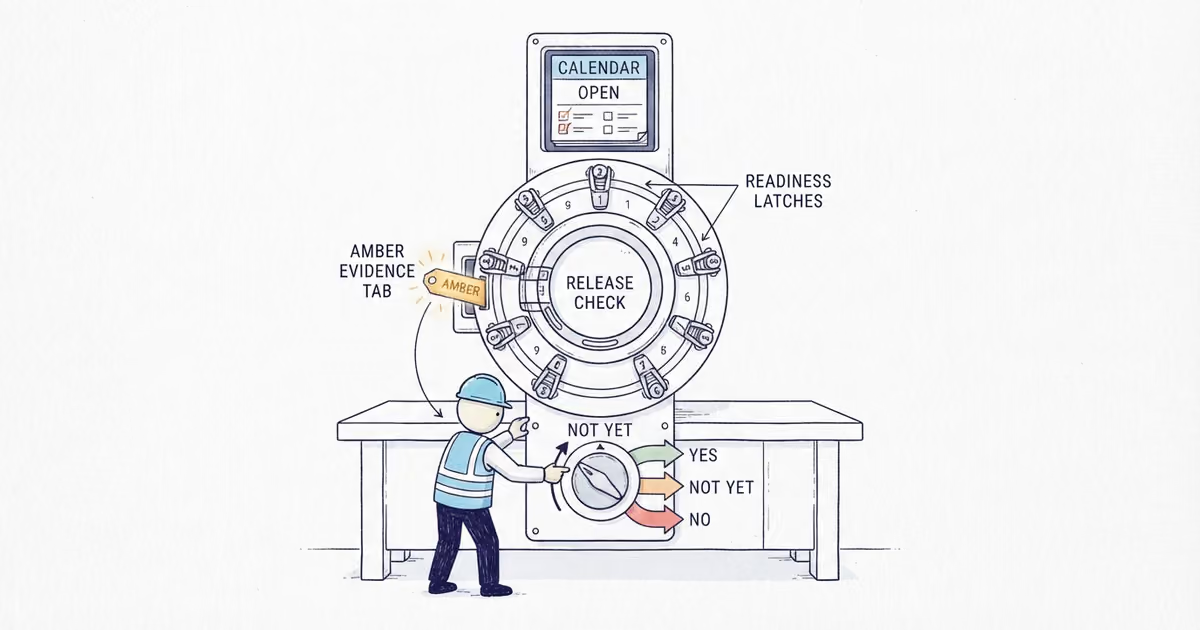
Contractor documentation Proceed / Stop gate
| Proceed only when every item passes | Stop or pause when any item fails |
|---|---|
| Document and notice requirements were checked | A required document, field, notice, signature, delivery step, or copy is missing |
| Current version and date are visible | An old or incomplete version was authorized |
| Scope and pricing are understood | Scope or price is ambiguous |
| Disputed terms and changes are in the current version | The deal relies on a side promise or uncontrolled edit |
| Authorization uses a permitted method | Authorization is absent or unverified |
| The customer received the required copy | Delivery cannot be shown |
| One next action is released | A verbal yes is treated as permission for everything |
Contractor pre-start record test
Another person must be able to identify who authorized which work, at what price or pricing method, on which version and date, which required documents or notices were delivered, what concern was resolved, and what action is permitted next.
If any required item is unresolved, stop. Do not schedule, order, collect payment, enter the site, or begin work based only on a verbal yes.
- pricing
- what-to-say-when-customer-wants-no-contract
- what-should-a-contractor-say-when-a-customer-wants-no-contract
- customer-refuses-contractor-contract
- contractor-work-authorization
- work-order-vs-contractor-contract
- verbal-agreement-contractor-work