

How do I know when to walk away from a job?
Use hard-stop rules, a consistent job-risk scorecard, contract safeguards, and stage-specific decline scripts to decide when a job should not move forward.
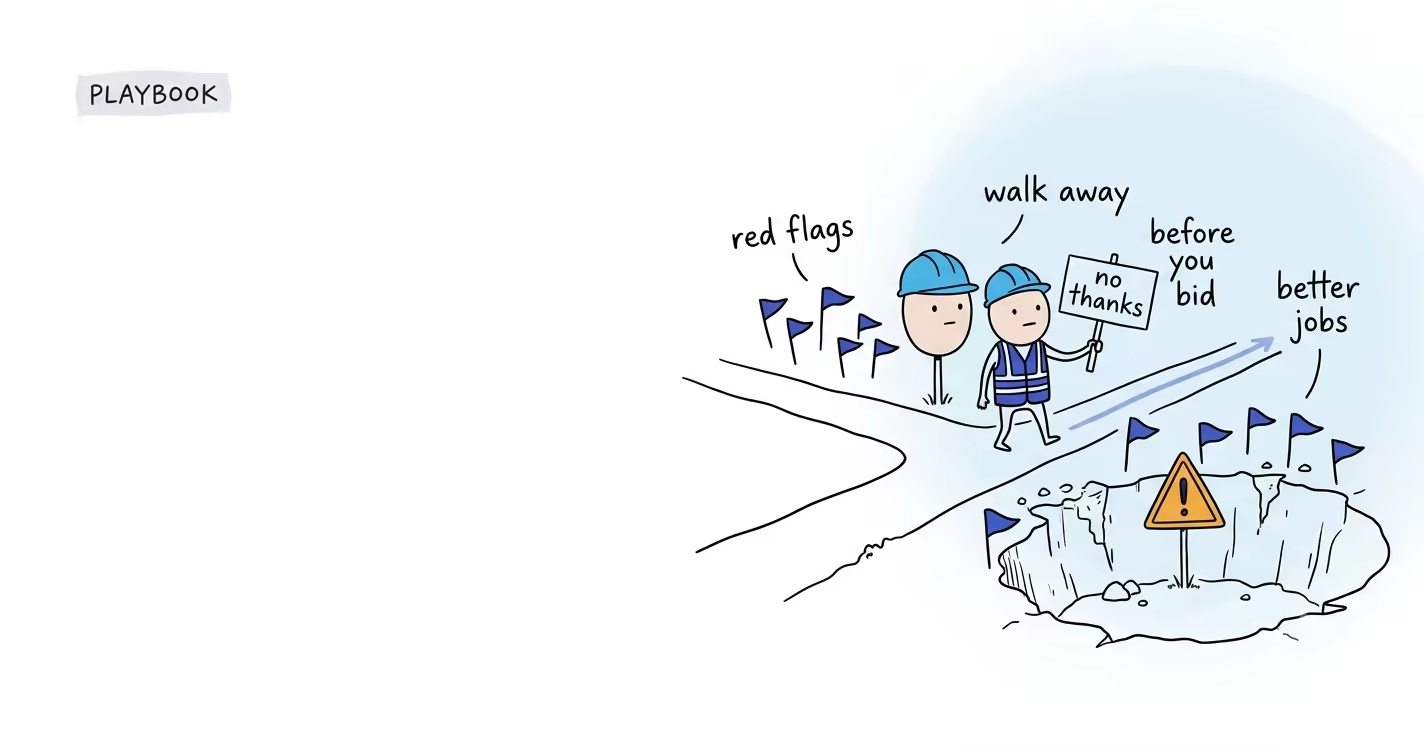
A homeowner who asks why you need a deposit is doing normal due diligence. One who asks you to hide the job from the permit office is giving you a reason to leave. Those two conversations do not belong on the same “difficult customer” list.
Before acceptance, legal, safety, ethical, capability, and payment problems can end the opportunity. Other concerns may be manageable with a tighter scope or better terms. Once the quote is accepted or a contract is signed, the rules change. A polite pre-sale decline script does not release you from work you’ve already promised.
Hard stops
Some conditions end the discussion. Decline the work when:
- The requested work is unlawful, unsafe, deceptive, or knowingly noncompliant.
- The project requires a license, permit, insurance, equipment, supervision, or skill the business does not have.
- The customer asks you to falsify an invoice, hide work, misrepresent a claim, evade a required permit, or accept an off-the-books arrangement.
- Site conditions present a material safety risk that the responsible party will not correct.
- Threats, harassment, discriminatory abuse, or violence make it unreasonable to send team members to the site.
- Identity, ownership, authority to approve the work, or a required payment source cannot be verified.
- The requested price is below the approved floor and no safe, compliant re-scope can solve it.
These conditions don’t need a high score or a repeated pattern. Record the factual reason and decline.
Score the risks you can manage
For everything else, use the same questions on every substantial opportunity. Score each category 0, 1, or 2:
0: clear or normal1: concern exists but a written safeguard can probably control it2: material concern remains unresolved
| Category | 0: clear | 1: controllable concern | 2: unresolved concern |
|---|---|---|---|
| Scope | Defined and inspectable | Some unknowns with a diagnostic path | Customer expects a fixed promise without defining the work |
| Decision authority | Approver identified | Another approver must join | Authority or property control cannot be verified |
| Budget and price | Range is compatible | Re-scope or phasing may work | Required price is rejected with no acceptable alternative |
| Payment | Standard terms accepted | Different terms need approval | Refuses required documentation or workable payment terms |
| Schedule | Capacity and deadline align | Dependencies need written assumptions | Deadline is impossible or relies on uncontrolled commitments |
| Site and access | Normal access and conditions | Protection, access, or coordination can be priced | Material access or safety issue remains unresolved |
| Change expectations | Written process accepted | Extra education or approval workflow needed | Customer expects additions without written price and time changes |
| Communication | Responsive and factual | Some confusion that can be clarified | Repeated abuse, material misrepresentation, or refusal to document decisions |
| Business fit | Core service and geography | Adjacent work with a clear plan | Outside capability, service area, or strategic capacity |
An illustrative internal rule might be:
0–4: proceed through the normal estimating process.5–8: manager review; proceed only after the scored items have written controls.9+: decline unless a specific change removes the material risk.
The numbers are not an industry standard and do not predict the future. Set thresholds for your business, review completed-job outcomes, and adjust the tool when it produces bad decisions. Any hard stop overrides the total.
Put safeguards around the concern
The point of the scorecard is not to collect reasons to reject people. It is to identify what needs to change before the job becomes acceptable.
| Concern | Possible safeguard |
|---|---|
| Scope cannot be known from a free visit | Paid diagnostic, investigation, or design step before a construction price |
| Concealed conditions | Written assumptions, allowances, unit prices, and change-order process |
| Several decision-makers | Require all named approvers to review and sign the defined scope |
| Customer-supplied material | Define selection, compatibility, delay, damage, return, and warranty responsibility |
| Tight deadline | Dependency schedule, decision deadlines, and written consequence of customer or third-party delay |
| Payment concern | Lawful deposit, milestone schedule, credit check, card authorization, or other approved security |
| Access or occupied site | Access hours, protection plan, pets, keys, shutdowns, cleanup, and site-contact responsibility |
| Scope-creep pattern | Detailed inclusions and exclusions plus signed change authorization before extra work |
If the customer accepts the safeguard, the concern may be manageable. If they reject the exact control needed to manage the risk, that refusal is more informative than the original awkward question.
Keep the math separate from personality
A pleasant customer does not make a below-floor job profitable, and a direct customer does not make a sound job unprofitable.
Calculate the full cost and required price using the five-job pricing audit. Include identifiable risk costs in the scope and estimate: difficult access, protection, testing, supervision, bonding, special equipment, expected coordination, or a realistic allowance for a known uncertainty.
An unexplained “difficult customer” surcharge isn’t a risk control. Either define the extra work and responsibility or decline. Use consistent business criteria rather than assumptions based on a person’s protected characteristics, neighborhood, accent, family status, disability, or other irrelevant traits. Applicable anti-discrimination and consumer laws vary, so get qualified advice on your policies and service obligations.
Four ways to decline the job
How to decline work outside your capabilities
“Thanks for calling us. This project needs [capability or scope], which isn’t work we take on, so I’m going to pass.”
How to decline a job outside the customer’s budget
“I’ve looked at the full scope and the smaller options we discussed. I can’t get a safe, complete version down to that budget, so it’s better for me to tell you now and close the quote.”
How to decline a job when you cannot meet the deadline
“The earliest start I can stand behind is [date]. Since you need it by [deadline], I’m going to pass so you have time to find someone with the room.”
How to decline a job after qualification
“I’ve reviewed the project and I’m going to pass on this one. Thanks for considering us, and I hope the job goes well.”
Keep the explanation factual and brief. The customer doesn’t need a list of every concern or a diagnosis of their personality. Don’t threaten a bad outcome or invent a false excuse. Refer another provider only when you know the work fits them and have permission to share their information.
Write down why you passed
Maintain a short internal decline record:
- Lead and project identifier
- Date and stage of the opportunity
- Hard stop or risk categories involved
- Safeguards offered and response
- Decision-maker who approved the decline
- Message sent and any referral provided
Consistent records help the business distinguish a real pattern from memory, train estimators, and review whether its criteria are commercially and legally appropriate.
Once you’ve accepted the work, the rules change
Stop and review the signed documents. Depending on the agreement and jurisdiction, relevant provisions may include notice, opportunity to cure, suspension, termination, payment, dispute resolution, site security, protection of completed work, stored materials, permits, and customer property.
If payment stops or conditions become unsafe:
- Document facts, dates, photos, approved changes, invoices, and communications.
- Follow any required notice and cure process.
- Protect people and the site without taking property or disabling work improperly.
- Preserve permits, inspections, material records, and subcontractor obligations.
- Get qualified local legal advice before suspension, termination, a demand letter, or a lien filing.
Mechanic’s-lien eligibility, preliminary notices, deadlines, licensing requirements, and filing procedures vary by jurisdiction. A lien is not a universal substitute for following the contract.
After acceptance, the pre-sale line “we are not the right fit” doesn’t end the obligation. Treating it as an exit may create a breach, abandonment allegation, licensing issue, or claim against the business.
Compare warning signs with outcomes
Track which risks actually caused loss:
- Unpaid balance or slow collection
- Margin miss and its cause
- Schedule overrun
- Unapproved extra work
- Callback or dispute
- Team safety or conduct incident
- Early termination
Compare those outcomes with the original scores. You’re building a better acceptance system, not the longest possible list of red flags.
Frequently asked questions
I need the money: can I really afford to turn down work?
Compare the price with full cost, capacity use, cash timing, payment risk, and the required return. A below-floor job can consume scarce capacity without supporting the business. If the calendar is thin, diagnose lead volume, seasonality, service area, offer, and pricing separately. Our free online presence audit checks the Google profile, reviews, listings, website, and nearby search competitors when visibility is part of the problem.
How do I turn down a job without hurting my reputation?
At the quote stage, keep the message short and factual: state that you will not submit or proceed with the proposal, and identify a capability, timing, or budget mismatch when useful. Do not accuse the customer or invent a reason. Once a contract exists, follow its notice, cure, suspension, and termination terms and get appropriate advice.
What if I can’t tell whether it’s a red flag or just a picky customer?
Score the project using the same scope, authority, budget, payment, schedule, site, change, communication, and business-fit criteria used for other leads. One detailed question is not a red flag. A concern becomes material when it remains unresolved or the customer rejects the written safeguard needed to manage it.
Sources
- pricing
- walking-away
- bad-customers
- declining-jobs
- red-flags



