Do I Need a Logo for My Contractor Business?
Do I need a logo for my contractor business? Learn when to use a wordmark, hire a designer, and test a contractor logo before ordering decals or shirts.
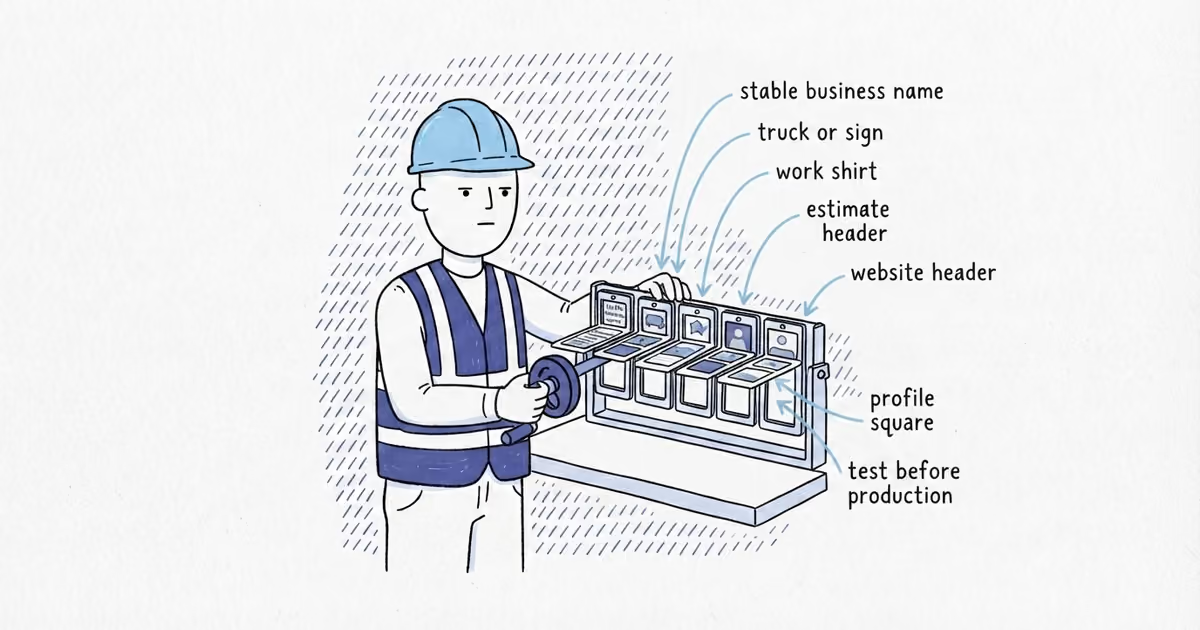
No. You do not need an expensive or elaborate logo before you start taking work. Use your exact business name in a clean, readable typeface until the name is stable; make the logo production-ready when the same identity needs to work on trucks, shirts, estimates, signs, your website, and profile images.
When should a contractor get a logo?
| Your situation | What to do now |
|---|---|
| You are still testing the business name, service mix, or market | Use a simple business-name treatment. Do not pay to reproduce a temporary design across permanent materials. |
| The name is stable, but you only need an estimate header and basic website | Use a clean wordmark with a restrained color set. A separate icon is optional. |
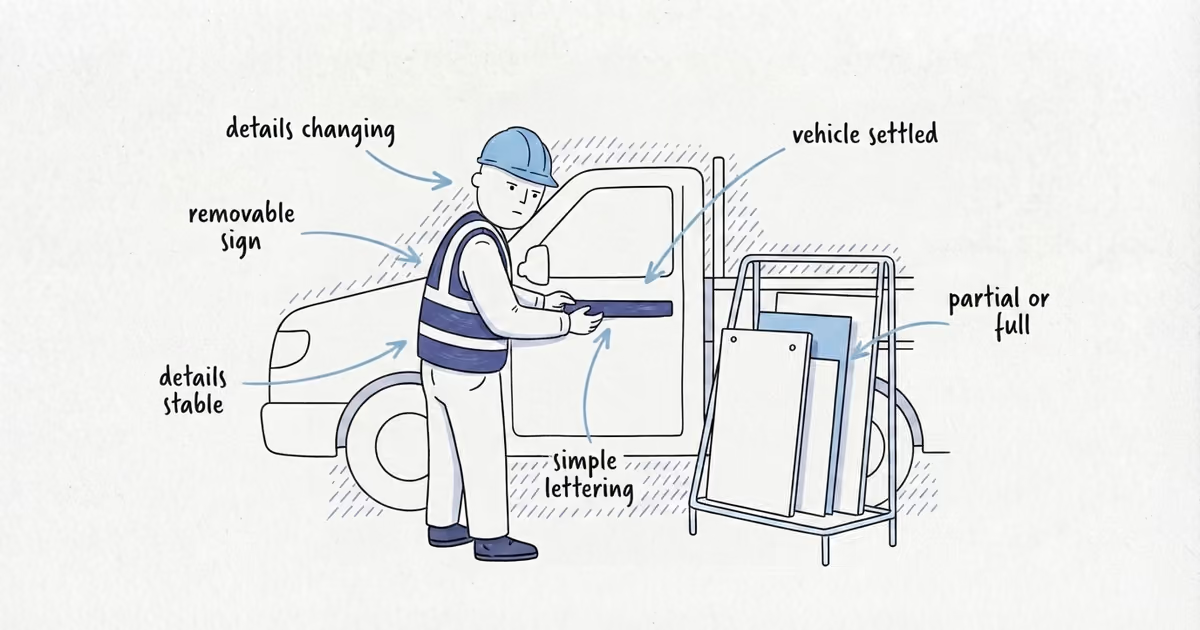
| You are about to order vehicle lettering, signs, or workwear | Finish and test the logo before production. Fixing it after several orders costs more and creates mismatched versions. |
| The same design already appears in several places but changes from one to another | Standardize the approved versions and files now. |
A logo has one narrow job: help people identify and recognize your business. It does not prove workmanship, licensing, insurance, reliability, or company size. Those claims need their own evidence.
What does a contractor logo need?
Keep the identity small and repeatable:
- One exact business-name treatment. Keep the spelling, capitalization, and word order the same everywhere.
- One readable type choice. The full name should still be clear when it is printed small or viewed from a distance.
- A restrained color set. Keep a color version and a one-color version for uses where multiple colors will not reproduce well.
- One simple mark, if it helps. Do not add an icon just because logos usually have one. The business name can carry the first version by itself.
- Approved layouts. A horizontal version may fit a website header or truck door; a stacked version may fit a sign or shirt. Use an icon alone only when it is already recognizable. Every version should look like the same business.
Do not let each vendor make a fresh variation. That is how one business ends up with different identities on the truck, estimate, and shirt.
How to test a contractor logo before using it
Test the real design at its intended size and production method. A logo that looks good on screen can fail on a truck door or embroidered shirt.
| Placement | Pass test | If it fails |
|---|---|---|
| Truck or jobsite sign | The business name is readable at a realistic viewing distance. Thin lines and small words do not disappear. | Simplify the design or use an approved horizontal or stacked version. Postpone the lettering order if the name is still hard to read. |
| Printed or embroidered shirt | The name and main shape remain clear at chest size and in one color. | Remove fine detail. Ask the producer to test the actual print or stitch method before the full order. |
| Estimate header | The name is clear at a compact size and the one-color version works on a plain document. | Use the business-name treatment without the icon. Do not make the header larger just to rescue an unreadable mark. |
| Website header | The logo fits on desktop and mobile without becoming too small or forcing an oversized header. | Use an approved horizontal version with fewer details. Keep the stacked version for a different space. |
| Small square profile image | The main mark remains recognizable when the image is reduced to a small square. | Use an approved simplified mark or initials if you have one. Do not cram the full horizontal logo into the square. |
The logo passes only if the name stays readable, small details survive, and the one-color version works where needed. Different layouts must keep the same identity.
What logo files does a contractor need?
Retain a scalable vector master, a transparent raster export for everyday digital use, and clearly labeled exports of every approved layout and color version.
Adobe’s guide explains that vector artwork can be enlarged without losing image quality, while pixel-based raster artwork can blur when enlarged. Give a truck or sign vendor the vector master, not a small image taken from your website.
A usable handoff might contain:
- A vector master such as an SVG or EPS file
- A transparent PNG for estimates, email, and common web use
- Full-color and one-color versions
- Horizontal and stacked versions, if both passed the five-place test
- Simple filenames that say which version is approved and where it is intended to be used
Do not rely on a screenshot, a social profile image, or a JPEG pulled from an old PDF as the only copy of the logo.
Should I make my own contractor logo or hire a designer?
A DIY wordmark or licensed template can be enough while the name is being tested and the design has few low-cost uses. Confirm that you may use the template and typeface commercially.
Professional help becomes useful before ordering vehicle lettering, workwear, or signs; when the design fails the five-place test; or when vendors need versions and files you do not have. The useful deliverable is a readable system in production-ready formats, not a more complicated picture.
If vehicle graphics are the next permanent use, follow the contractor truck branding guide to choose a marking format and verify the vehicle and contact details before production.
Before approving the work, confirm in writing:
- Which layouts, color versions, and file formats you will receive
- Whether the typeface, template, and other design elements are licensed for your intended uses
- Whether you own the finished work or have permission to use it on vehicles, clothing, documents, signs, websites, and profiles
- Whether the design has passed the five-place test before anything permanent is ordered
If the business name is stable, the files are usable, the rights are clear, and all five placements pass, the logo is ready for production. If any of those checks fail, keep using the clean business-name treatment and fix the problem before reproducing it widely.
Frequently Asked Questions
Should I put my phone number in my contractor logo?
Usually, no. Keep the phone number as separate text beside the logo on materials that need it. The logo then remains usable in small spaces, and you can update contact details without rebuilding the artwork.
Can I change my contractor logo later?
Yes. Change it before the next large production order, then replace active customer-facing versions in one planned pass. Keep the old files for your records, but stop using both marks on current estimates, shirts, signs, and profiles.
Sources
- local-seo-foundations
- do-contractors-need-a-logo
- do-i-need-a-logo-for-my-contractor-business
- contractor-logo
- contractor-logo-design
- diy-contractor-logo
- logo-files-for-contractors