How do I grow a pest control business?
Learn how to grow a pest control business by converting eligible initial work into recurring plans, improving retention, and protecting qualified capacity.
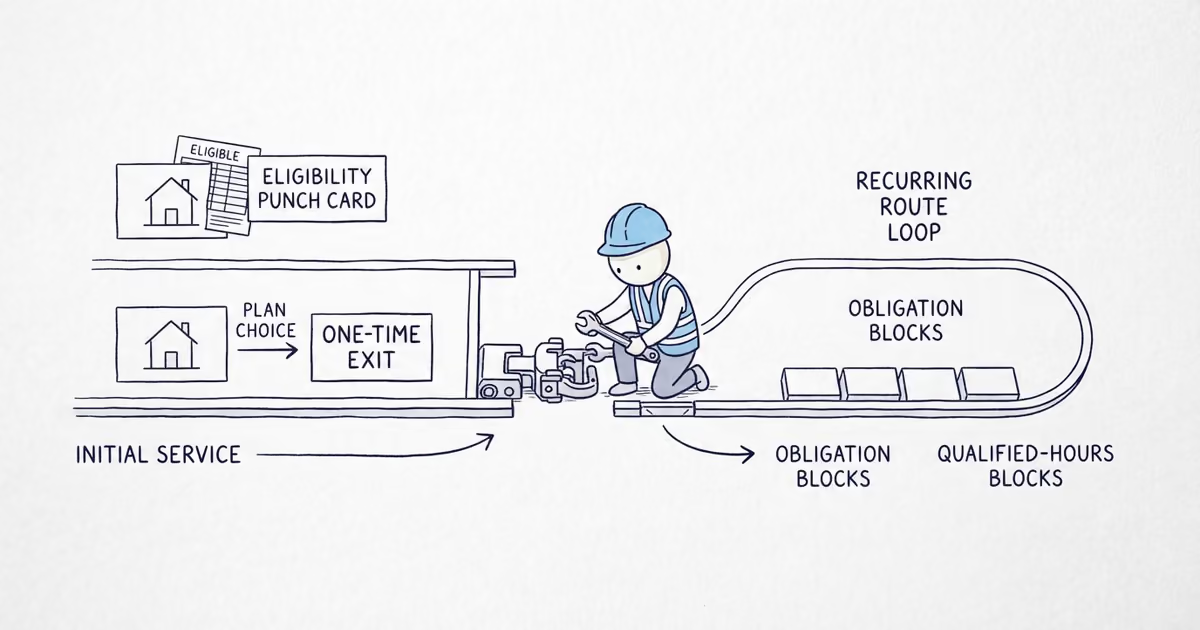
Grow a pest-control business by choosing a scope, property, customer, and area the company is qualified and equipped to serve. Move suitable demand through useful response, initial service, documented plan eligibility, scheduled route visits, recovery, retention, and renewal. Healthy growth stays inside truthful scope, credential coverage, qualified hours, vehicle and equipment readiness, customer commitments, and complaint-recovery capacity.
Last verified: August 28, 2026 (United States).
Separate initial pest control service from recurring plans
Before acquisition, record one target scope, residential or named commercial property type, customer, real area, current business and technician credential scope, accepted and excluded work, initial path, plan eligibility, local seasonal pattern, vehicle or equipment category, and stop conditions.
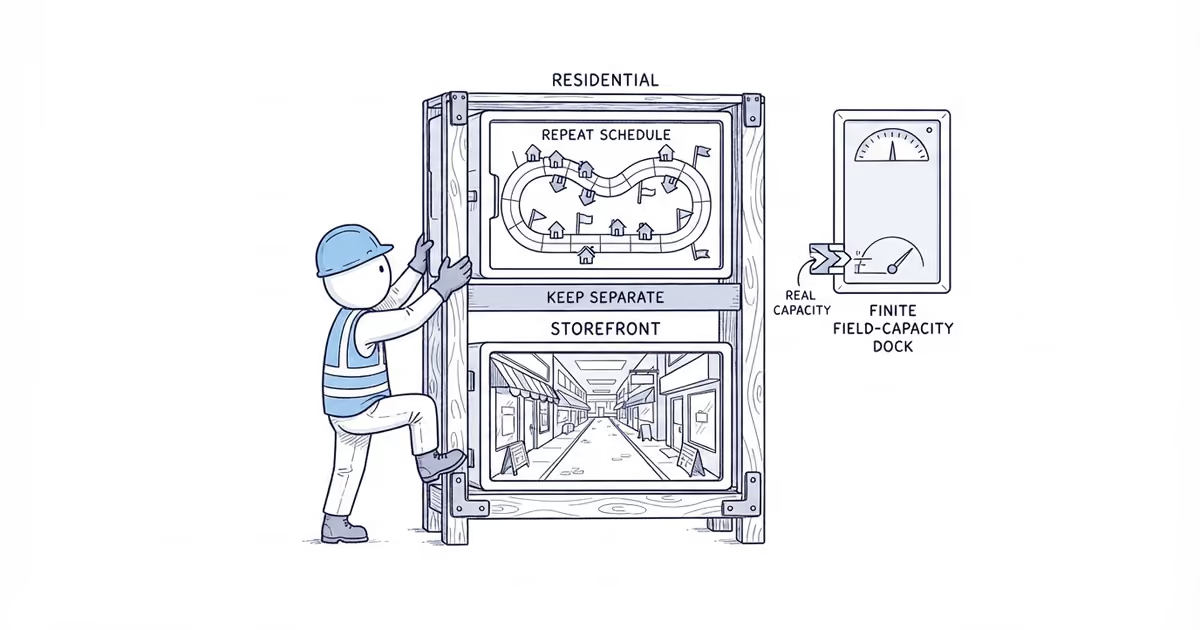
Run two connected lanes:
| Lane | States |
|---|---|
| Initial service | Inquiry, qualification, scheduled initial appointment under company process, completion, defined follow-up, plan eligibility, plan explanation, and outcome |
| Recurring protection | Scheduled obligation, route assignment, visit completion, documentation or customer communication, complaint or callback handling, cancellation or pause reason, and renewal state |
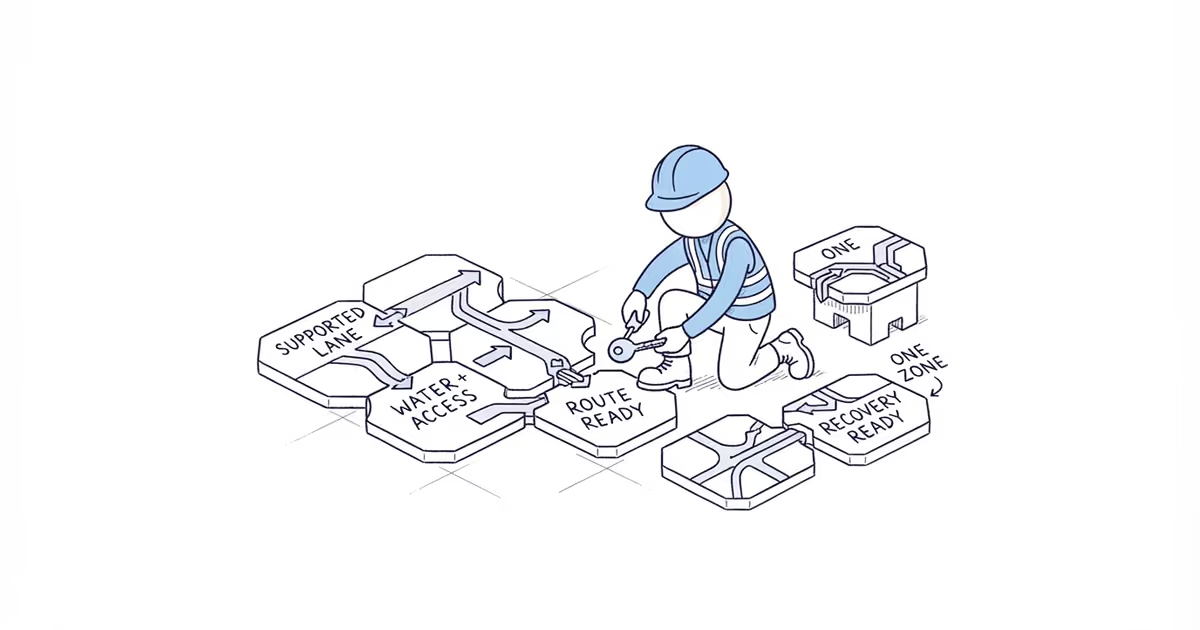
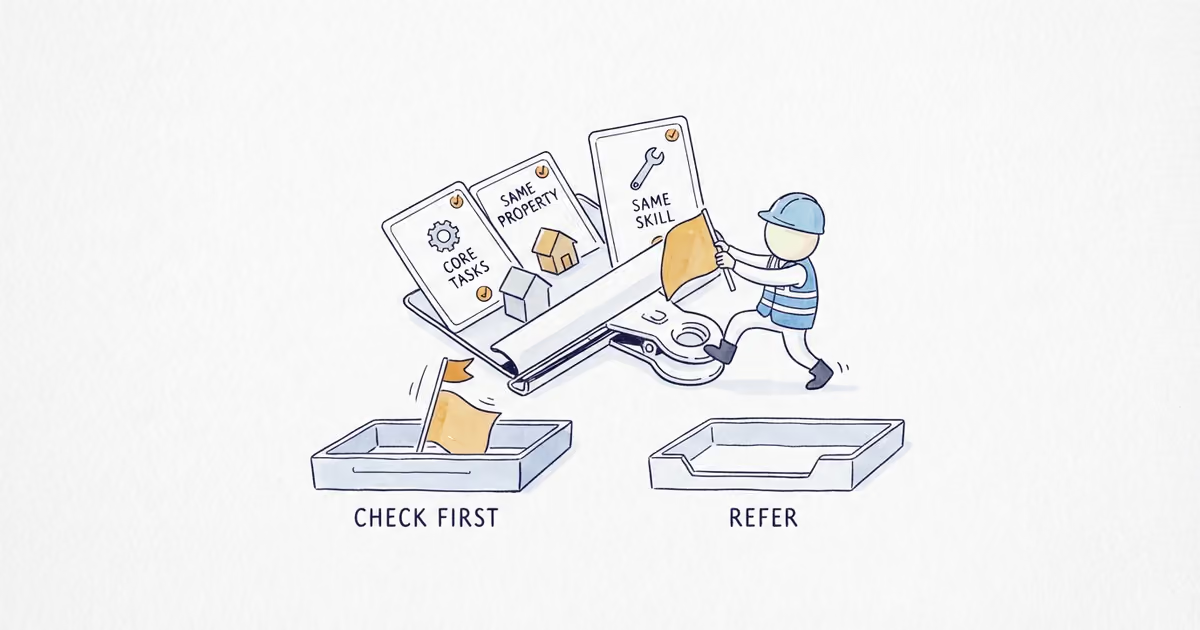
Connect them only at the documented eligibility and explanation state. Not every urgent or one-time job belongs in a plan. Eligibility depends on target scope, property fit, ongoing need under the real program, credentialed capability, inclusions, geography, technician coverage, and capacity. Record one-time-only and no-fit reasons instead of forcing a subscription.
Define one protection-plan card: eligible customer and property, covered scope, frequency or service window, inclusions, exclusions, initial-service relationship, customer access and communication duties, any included follow-up, documentation, payment timing, renewal, cancellation or pause, and next step. Promise only the written scope.
Audit pest control demand, routes, and capacity in Days 1-14
Audit a recent period and comparable prior local season when available. Separate inquiries, booked and completed initial work, follow-ups, eligibility, explanations, starts, recurring accounts, renewals, cancellations, complaints, callbacks, returns, credits, reviews, referrals, reactivations, technician and drive time, constraints, and reliable collected results. Mark missing data.
Group demand by target scope, property type, initial or recurring lane, month or local season, zone, source, and outcome. Put existing recurring obligations on the capacity board before planning a seasonal campaign. Do not assume a named pest follows the same season in every market.
Map active recurring accounts into zones and route blocks. Record assigned technician or qualification need, promised window, planned and actual field time, paid non-service time, missed or moved appointments, complaint or callback state, vehicle or equipment constraint, and next action. Name one weak route block before widening the area.
Use this diagnostic:
Recurring route service share = completed scheduled recurring field-service hours / total paid technician hours assigned to that route block
Include drive and other paid non-service time in the denominator. Compare only your own zones, technicians, and periods. Stops, service hours, drive minutes, route-block revenue, and consistently defined contribution stay separate. Stop count is not service quality, and partial contribution is not net profit.
Deliverable by Day 14: a target-scope card, populated two-lane board, local season view, named route gap, and reliable qualified-capacity baseline with unknowns marked.
Improve pest control intake, local SEO, proof, and plan clarity in Days 15-30
Capture contact, property and type, the customer’s stated problem, initial or current-plan status, timing, required access, scope and zone fit, owner, promised next step, and outcome. Do not diagnose, recommend treatment, give exposure or safety instructions, or improvise outside authorized procedure.
Use urgent and routine response standards the team can staff. Track received time, useful human response time, owner, next step, and booked, deferred, no-fit, lost, or no-response outcome. An acknowledgement is not useful response or promised dispatch.
Audit one eligible Google Business Profile. Check the real-world name, fewest accurate categories, phone path, website, staffed hours, address or service-area treatment, current services, and permission-cleared photos. Never claim open, emergency, same-day, or 24/7 availability unless intake, qualification, and field capacity can deliver it.
If category selection is the unresolved part of that profile audit, the pest-control GBP category guide helps match the profile to the qualified services the company actually provides.
Create one useful target-scope page and pages only for real areas. State property and customer fit, area, high-level appointment path, required starting information, accepted and excluded work, appropriate credential proof, plan availability, scheduling considerations, and next step. Do not clone city pages or publish technical advice.
Answer service-area, property-fit, accepted-scope, one-time-versus-recurring, high-level appointment, access, follow-up, cancellation, renewal, and contact questions directly. Product, exposure, occupant, child, pet, or safety questions should go to the company’s service-specific process, applicable label information, and a qualified professional, not a blanket assurance.
Verify every public credential: issuer, holder, category or scope, status, expiration where relevant, and display rule. Use real technicians, vehicles, process details, and permission-cleared customer evidence. Remove expired, borrowed, vague, or unsupported badges. Do not describe a company, product, or service as EPA approved, EPA certified, or EPA registered unless that exact statement is accurate and authorized for the specific subject.
If the website, profile, reviews, listings, and public proof still conflict after that check, ShiftFlow’s online presence audit can identify the customer-facing facts that need correction first.
The certification boundary is narrow. Federal law requires certification for people applying or supervising restricted-use pesticides. State, territorial, and tribal authorities certify applicators and may impose stricter requirements, including certification for additional commercial applicators. Verify the actual business, technician, supervision, record, and advertising requirements with the relevant authority for every service and jurisdiction.
EPA states that pesticide labels are legally enforceable and define conditions, directions, precautions, users, sites, and use. Marketing, plan language, credential proof, and customer communication must not contradict the applicable label or regulatory scope. This is a claim boundary, not application or compliance instruction.
Remove broad safety, environmental, health, disease-prevention, and permanent-result claims. Testimonials, plan names, direct answers, and photos cannot be used to imply unsupported outcomes.
Treat AI-search work as accurate local SEO, visible answers, and verified first-party proof. Test a fixed set of customer questions, record whether company facts and scope are accurate and which public sources appear, then correct owned facts. Google says no special AI markup is required; crawling, schema, reviews, credentials, and direct answers do not guarantee citation or recommendation.
Deliverable by Day 30: one accurate local-search-to-initial-booking path, one supportable plan card, and an owner assigned to every qualified inquiry and public claim.
Convert eligible initial service into recurring plans in Days 31-60
After the documented initial milestone, apply the written eligibility rule. Explain the ongoing scope, scheduled obligations, included and excluded follow-up, customer commitments, payment, renewal, cancellation, and next step. Record offered, accepted, declined, deferred, or no-fit. Assign accepted accounts only to route blocks with qualified capacity.
Based on the completed initial-service milestone and our eligibility check, this property qualifies for our current [plan name]. It covers [actual scope] on [real schedule or service window]. It includes [included follow-up] and excludes [exclusion]. Your responsibilities are [actual commitments]. Payment, renewal, and cancellation follow [written terms]. Would you like the written plan details, or should we record that you are declining or deferring it?
Track two separate measures:
Plan explanation coverage = eligible completed initial customers given the documented plan choice / eligible completed initial customers
Eligible initial-to-plan start rate = eligible completed initial customers starting a plan / eligible completed initial customers
Use the same written eligibility rule and retain declined, deferred, and no-fit reasons. Neither is an industry benchmark.
Fill one recurring route gap through accurate local discovery, permission-cleared local proof, relevant reactivation, and referrals after a resolved service experience. Every action must name the target scope, property, zone, route block, and available capacity.
Hi [name], our records show we provided [real prior service] at [property] in [period]. We currently support [actual scope] in [real area] and have [real next step] available for that zone. If you want us to check current fit, reply here. If not, we will close this follow-up.
Thanks for working with us and allowing the service issue to reach its documented resolution. If someone you know needs help within our current [scope and area], you may share our contact details. There is no pressure, and this is separate from any rating or review request.
Use a neutral review milestone unrelated to predicted sentiment. Ask for an honest review, provide a direct link, limit reminders, and never gate requests, request a positive rating, or tie incentives to sentiment. Do not ask for proof of a treatment result. Protect property, account, access, and customer details in replies. Google and FTC guidance require honest review handling.
For every complaint or callback, record the owner, next action, and reason: scheduling, communication, scope expectation, documentation, access, missed obligation, callback, unscheduled return, credit, or another consistent category. Feed repeated causes into plan language, intake, scheduling, handoff, and capacity decisions, not field instructions.
Recurring retention = active recurring accounts at period start still active at period end / active recurring accounts at period start
Use one transfer, pause, and seasonal rule. Track renewed, canceled, paused, changed, or unresolved for each plan due.
Deliverable by Day 60: a visible eligible initial-to-plan cohort and stronger target route block, with explanation, start, decline, no-fit, review, recovery, travel, and capacity outcomes recorded.
Improve pest control retention, routes, and capacity in Days 61-90
Compare planned with actual field time, drive time, missed obligations, callbacks, and technician coverage. Adjust route assignments and future promises only where customer agreements allow. Do not repeatedly break existing plan commitments to insert urgent work.
A commercial or multi-property account fits only when buyer, property, scope, access, service window, documentation, communication, geography, technician credentials, route shape, payment process, complaint ownership, and capacity all fit. It is not automatically better than residential work.
Before adding a technician, vehicle, equipment set, route, area, or service, require a practical block of sold work that current qualified technicians cannot absorb reliably. Credentials, supervision, cash, onboarding, documentation, quality review, vehicles, equipment, storage, inventory, scheduling, and complaint recovery must be ready.
Deliverable by Day 90: keep, fix, stop, or defer decisions for each scope, customer type, source, route block, plan, and capacity change, plus the next 90-day priority.
Use the weekly pest control growth scorecard
| Measure | Definition |
|---|---|
| Qualified initial leads | Fit target scope, property, zone, credential boundary, intake, and initial-service capacity; keep source and no-fit reasons. |
| Useful response and booking | Track received and useful-response time by staffed urgent or routine target, owner, next step, and outcome. |
| Initial completion and follow-up | Track completed, canceled, no-show, rescheduled, and defined follow-up status before any plan decision. |
| Plan explanation coverage | Use the formula above under one eligibility rule. |
| Eligible initial-to-plan start rate | Use the formula above; keep accepted, declined, deferred, and no-fit visible. |
| Retention and renewal | Use the retention formula and record every due plan as renewed, canceled, paused, changed, or unresolved. |
| Recurring route service share | Use the route formula above; compare only the owner’s route blocks and periods. |
| Schedule and quality leakage | Planned versus actual hours, missed or moved obligations, complaints, callbacks, unscheduled returns, credits, and cancellations by reason. |
| Reliable qualified-capacity coverage | Scheduled initial work, recurring obligations, and follow-up hours versus reliable credential-qualified hours after supervision, travel, service windows, vehicles, equipment, storage, inventory, documentation, onboarding, and recovery constraints. |
| Trust and relationship outcomes | Neutral review requests and resulting reviews, referrals, reactivations, and active property relationships, separate from treatment outcomes. |
Fix unowned intake before buying demand. Fix weak eligibility, scope language, handoff, or timing before increasing plan offers. Pause acquisition when plan starts rise with complaints, callbacks, missed obligations, or cancellations. Fill or reshape a high-drive route block before widening territory. Remove unsupported service, credential, speed, safety, environmental, or outcome claims before promotion. Defer commercial work, new scopes, or seasonal campaigns that consume capacity needed for existing plans. Add capacity only when sold work and every qualification, delivery, documentation, and recovery gate are ready.
Do not advertise unsupported scope, results, response, plans, areas, credentials, or availability; force every initial customer into a plan; launch a seasonal campaign without protecting obligations; hide complaints; buy reviews; chase AI shortcuts; add capacity for hoped-for leads; or send paid demand into unstaffed intake.
Frequently asked questions about growing a pest control business
Should a pest control business focus on residential or commercial customers?
Choose one target customer and property for the 90-day cycle using completed-work fit, buyer process, route shape, credential coverage, payment and complaint ownership, and qualified capacity. Commercial accounts are not automatically better; procurement, contracts, compliance, and account economics need a separate market-choice process.
When should I add a new pest control service?
Only after the board shows repeatable sold demand, verified business and technician credentials, applicable label and rule fit, capable technicians, vehicle and equipment readiness, documentation, quality control, and route capacity. Do not add a scope just because competitors list it.
Sources
- US Environmental Protection Agency: How to Get Certified as a Pesticide Applicator
- US Environmental Protection Agency: Introduction to Pesticide Labels
- Google Business Profile: Representation, local ranking, service areas, categories, and reviews guidance
- Federal Trade Commission: Soliciting and Paying for Online Reviews
- Google Search Central: AI features and your website
Make the Day-90 pest control growth decision
Keep what produces suitable completed work and retained accounts inside verified scope. Fix one named bottleneck. Stop repeated no-fit or unsupported work. Defer expansion without reliable qualified capacity.
- local-seo-foundations
- how-to-grow-a-pest-control-business
- how-do-i-grow-a-pest-control-business
- pest-control-recurring-plans
- pest-control-customer-retention
- pest-control-route-density
- pest-control-technician-capacity