How do I grow a window cleaning business?
Learn how to grow a window cleaning business with a 90-day plan for residential customers, storefront accounts, route density, reviews, and crew capacity.
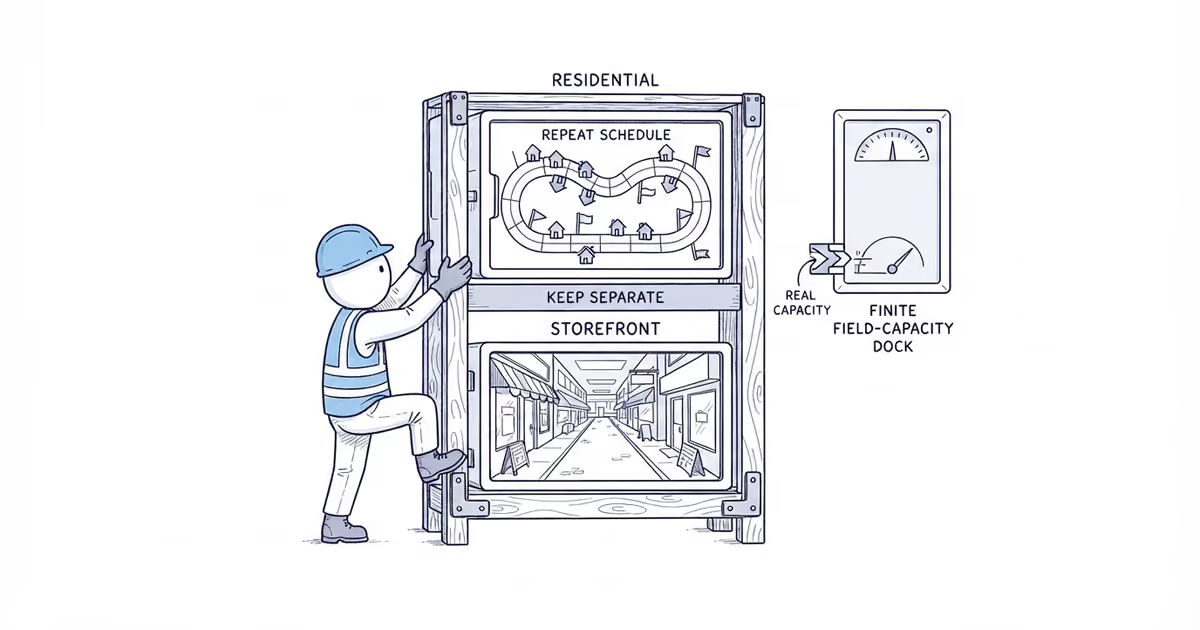
Grow a window cleaning business by choosing one primary route model, concentrating suitable local demand, converting completed work into a real repeat schedule, and protecting route and field capacity before adding territory. Growth means more repeatable, contribution-positive work the company can place and deliver reliably. More quotes, jobs, services, towns, trucks, employees, reviews, or revenue do not prove healthy growth.
Last verified: August 28, 2026 (United States)
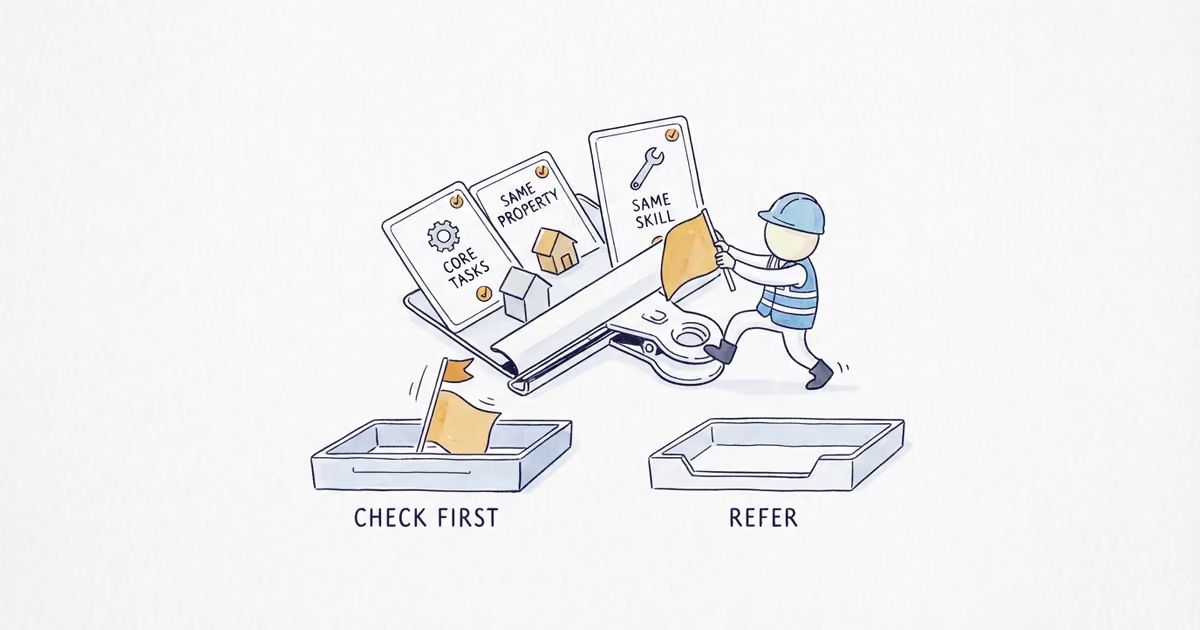
High-rise, rope-access, suspended-access, construction, restoration, and other specialist access or safety scopes are outside this plan unless the real business is genuinely qualified for them. Do not add one for marketing appeal. If a request crosses the company’s verified service, access, credential, insurance, or risk boundary, stop qualification and refer it to an appropriate specialist. This article gives no access, equipment, safety, licensing, or legal instruction.
Residential vs storefront window cleaning routes
Residential and storefront work are different operating models. Neither is universally more profitable, stable, easy, safe, or scalable.
| Track | Buyer, property, and territory | Intake and conversion | Recurrence and next action | Route, economics, and capacity view |
|---|---|---|---|---|
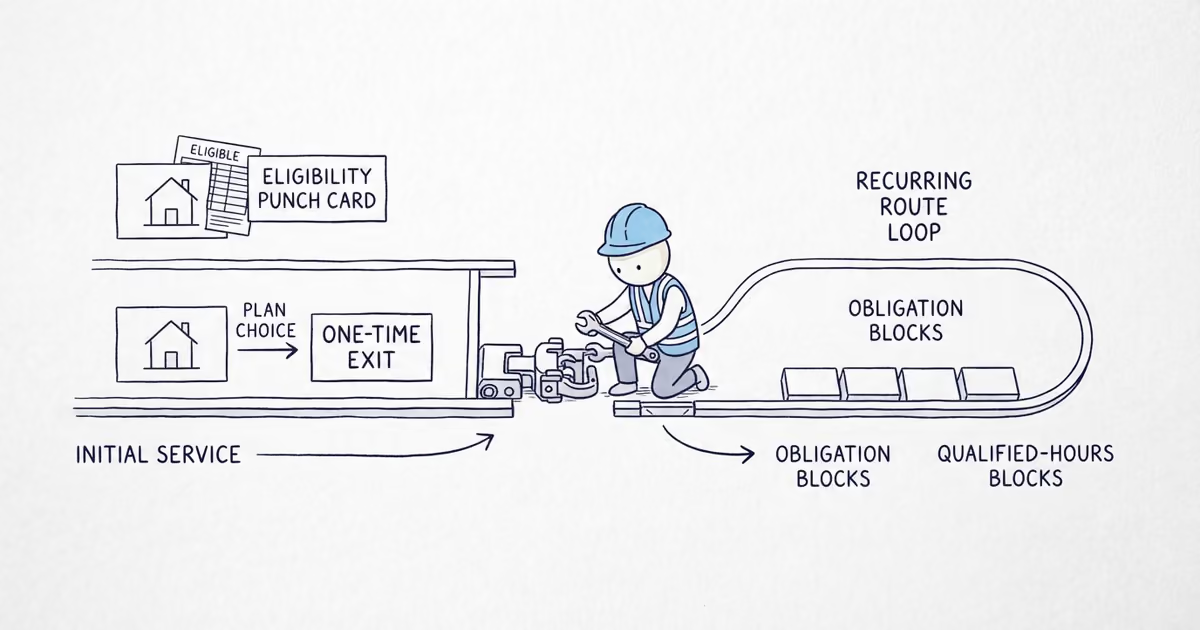
| Recurring residential | Homeowner or suitable residential property inside selected real neighborhoods or service areas | Local inquiry; property, area, access, estimate or booking, timing, proof, inclusions/exclusions, and route fit | Offer an appropriate recurring schedule after completion; record accepted, declined, or deferred reason; keep a seasonal reactivation, referral, or closed next action | View neighborhood, booking window, travel, access, frequency, field hours, crew skill, equipment need, issue burden, contribution, and reliable capacity |
| Storefront and small commercial | Storefront owner, manager, property manager, or other real decision-maker in selected blocks or corridors | Target or inquiry; decision-maker contact, account/property fit, access and service window, site review or estimate, proof, exclusions, and follow-up | Convert suitable completed work into a scheduled repeat account; keep adjacent-stop, account-relationship, or closed next action | View block/corridor, adjacent viable stops, access, service window, frequency, route/mobilization time, field hours, crew skill, equipment need, issue burden, contribution, and reliable capacity |
Choose one primary track for the next 90 days. A controlled secondary track is allowed only when the company keeps separate offers, website and intake paths, pipeline states, schedules, route views, economics, scorecard rows, and capacity assumptions. Never combine the numbers.
Before adding demand, document the property and window-cleaning scope actually performed, real areas or blocks, acceptable access conditions, scheduling constraints, inclusions/exclusions, estimate or site-review need, and issue process. Record claim support too. Do not publish streak-free, safe, insured, guaranteed, high-rise, 24/7, or specialist claims without current evidence.
Days 1-14 for window cleaning route and territory selection
Audit the previous 60 to 90 days of inquiries, completed visits, and lost work. Keep residential and storefront records separate. Capture:
- Customer or account type, property fit, neighborhood/area or block/corridor, source, inquiry or target-account state, and outcome.
- Booked or proposed frequency, scheduled/completed state, revenue, direct field labor, job-specific supplies/rentals, and field hours.
- Travel or mobilization, access or service-window constraints, crew/equipment requirement, callback or reclean, and available capacity.
- Review/referral outcome, proof permission, seasonal reactivation or adjacent-stop action, and missing data.
Mark missing fields rather than inventing them.
For residential, select neighborhoods from suitable property history, booking and repeat potential, actual travel, access, seasonality, issues, and capacity. For storefront, select blocks from real decision-makers, viable adjacent stops, service windows, access, visit frequency, route time, account ownership, issues, and capacity. A nearby ZIP code or map pin does not prove route fit.
Do not impose a universal radius, neighborhood size, block count, frequency, stop count, stops-per-hour figure, travel limit, or route-density target. Use the company’s delivered work and actual constraints.
Deliverable: a two-track baseline with every number separated, one primary-track decision, accepted property/access/scope boundaries, real territory, missing-data flags, and current capacity ceiling.
Days 15-30 for window cleaning local SEO and lead tracking
Audit one eligible, real Google Business Profile. Match the real-world name, category, services, hours, phone, website, photos, and address or service-area treatment to actual operations. If customers are not served at the address, follow Google’s service-area-business boundary. Do not invent a location, stuff keywords into fields, or add unsupported specialist claims.
If the profile is missing, unclaimed, or does not yet apply the service-area-business boundary correctly, ShiftFlow’s Google Business Profile setup can establish the accurate category, services, hours, service area, photos, and contact path.
Create a distinct owned path for each active track:
If the residential path needs a useful page for a place the company genuinely serves, the service-area page guide shows how to add local detail without cloning one page across every town.
- Residential pages answer property/service fit, real area, estimate or booking process, access, frequency, scheduling, proof, inclusions/exclusions, and service request.
- Storefront pages answer property/account fit, real corridor or area, service windows, site-review or estimate process, access, frequency, proof, exclusions, and how a decision-maker starts the conversation.
Publish only pages for places genuinely served. Do not clone city, neighborhood, block, or corridor pages.
Build a small proof set from completed work. Record permission for any identifiable property, customer, review, testimonial, or account evidence. Pair photos with truthful service and process context. Add an unsupported claim or credential review field so capability, insurance, guarantee, and specialist wording is checked before publication.
Give each residential inquiry and storefront target/account an owner, state, and next-action date:
New residential inquiry or storefront target/account -> Property/service/area or block/access/timing fit -> Residential booking contact or storefront decision-maker contact -> Estimate/site review needed, scheduled, completed, deferred, or missed -> Follow-up due with owner/date -> Scheduled with route/access/service window/crew/equipment -> Completed with issue and proof-permission state -> Recurring schedule offered/accepted/declined/deferred -> Neutral review eligible/sent/closed -> Residential referral/seasonal reactivation or storefront adjacent-stop/account action -> Neighborhood/block/corridor placement -> Declined, lost, deferred, or specialist referral with reason
Deliverable: one residential discovery-to-booking path and one storefront target-account-to-schedule path when both are active, with no mixed reporting or unowned opportunity.
Days 31-60 for recurring residential and storefront window cleaning
Publish direct buyer answers on the relevant pages. Residential answers should cover property fit, area, access, estimate/booking, scheduling, frequency choice, exclusions, and issue handling. Storefront answers should cover account fit, decision-maker, area/block, access, service window, site review/estimate, repeat scheduling, exclusions, and issue handling.
Test a fixed set of real homeowner and storefront questions in search-enabled AI tools. Record tool/date, answer, cited sources, wrong or missing facts, and the page/profile to correct. Google’s standard search requirements apply to AI features; no special AI file or schema is required. OAI-SearchBot access affects ChatGPT search eligibility, not guaranteed crawling, citation, mention, rank, or recommendation.
Use one neutral review routine after completed work and issue resolution. Apply the same eligibility rule regardless of expected sentiment, send the direct review link, stop reminders sensibly, and protect private details in replies. Do not buy reviews, review-gate, suppress criticism, or condition an incentive on positive sentiment.
For residential, offer an appropriate recurring schedule after completion. Record acceptance or reason for deferral, reactivate suitable seasonal customers from their real history, and ask for referrals without pressure. Do not prescribe one frequency or reminder cadence.
For storefront, keep the decision-maker, current account state, and next-action date visible. Convert suitable completed work into an actual repeat schedule and approach viable adjacent storefronts only within the selected real blocks and current capacity. Do not prescribe an outreach cadence or treat an unsigned possibility as a repeat account.
Deliverable: every completed visit has a recurrence, review, referral, reactivation, adjacent-stop, account-relationship, or closed next action. Every repeat commitment has an actual schedule state.
Days 61-90 for window cleaning route density and capacity
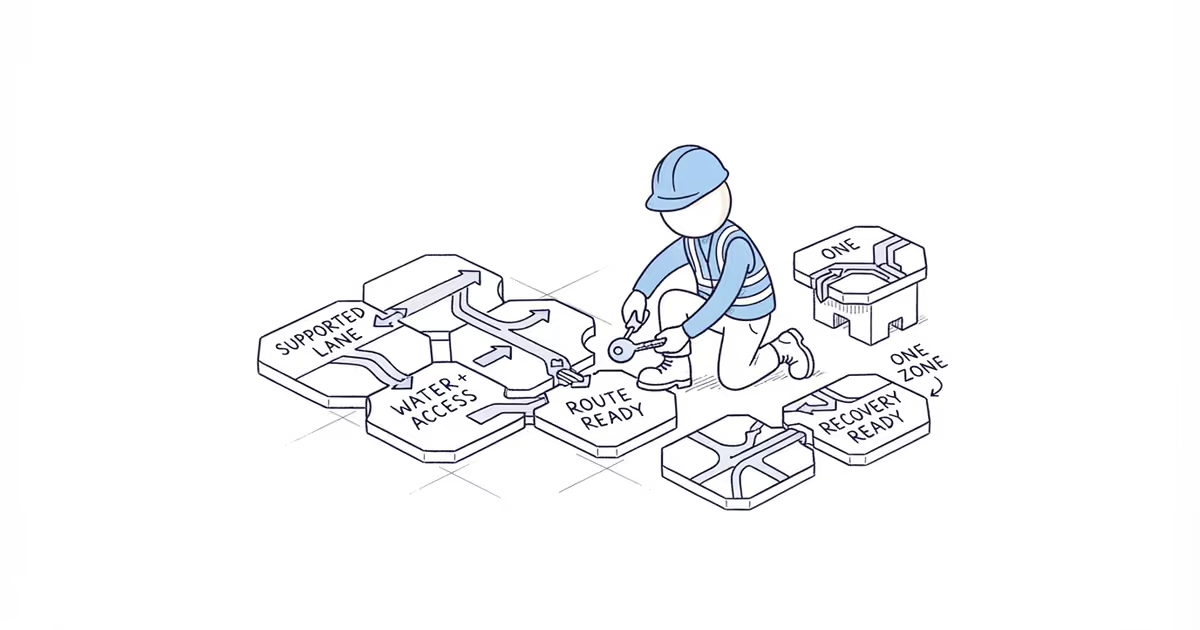
Review route placement separately. Residential rows need real neighborhood, booking window, travel, property access, recurrence, crew/skill, equipment, issue, and weather fields. Storefront rows need block/corridor, decision-maker, access/service window, visit schedule, adjacent viable stops, route/mobilization time, crew/skill, equipment, and issue fields.
Nearby properties can still require incompatible access, timing, equipment, or crew. Use real travel, mobilization, service-window, frequency, access, field-hour, and completion evidence instead of assuming map proximity creates density.
Compare sold work with reliable available field hours and actual travel, mobilization, access, service-window, equipment, weather, supervision, and callback burden. Add labor or equipment only after repeatable demand, sufficient completed-job contribution, a written service standard, a reliable handoff, and a named training or quality owner exist. This is a capacity gate, not employment, equipment-selection, financing, safety, or legal advice.
Deliverable: a next-90-day route/capacity plan with separate track data, one named bottleneck per active route, and unsupported territory, specialist scope, staffing, or equipment expansion rejected or deferred.
Window cleaning growth metrics by residential and storefront track
| Measure | Residential row | Storefront/small-commercial row |
|---|---|---|
| Qualified opportunities by source | Count only inquiries fitting property, service, real area, access, timing, and current capacity; retain no-fit reasons | Count only opportunities fitting decision-maker, property/account, block, access/window, timing, and current capacity; retain no-fit reasons |
| Booking or account conversion | Qualified inquiries becoming scheduled residential work | Qualified account opportunities becoming scheduled work or accepted repeat accounts; never combine the rates |
| Completed visits and recurrence | Track completed visits and schedules offered, accepted, retained, declined, or deferred by actual frequency | Track completed visits and repeat schedules accepted, retained, declined, or deferred; a verbal possibility is not recurring work |
| Route placement and burden | Neighborhood concentration, travel, access, booking windows, and recurrence | Block/corridor stop concentration, mobilization, access, service windows, and visit schedule; use no universal target |
| Completed-job contribution per field labor hour | (completed-job revenue - direct field labor - job-specific supplies and rentals) / field labor hours, calculated only for residential | Use the same bounded formula only for storefront work and never combine the result with residential |
| Quality and issue leakage | Callbacks, recleans, unresolved issues, credits, missed access, and avoidable return visits | Track the same issue states separately for storefront/account work |
| Relationship and reputation actions | Neutral review requests, genuine reviews, referrals, seasonal reactivations, and active residential-property relationships | Neutral review requests, genuine reviews, adjacent-stop opportunities, and active account/property relationships |
| Reliable delivery capacity | Sold versus reliable field hours with travel, access, skill, equipment, weather, supervision, and issue constraints | Sold versus reliable field hours with route time, service windows, access, skill, equipment, weather, supervision, and issue constraints |
Completed-job contribution compares delivered work; it is not net profit. Vehicles, travel, equipment ownership, insurance, safety programs, admin, marketing, taxes, owner pay, overhead, callbacks, and other costs may remain outside the formula. Use no universal contribution target and do not use the formula to set customer prices.
Window cleaning growth mistakes to avoid in the first 90 days
- Mix residential and storefront results, economics, frequency, routes, or capacity.
- Serve every town or treat nearby ZIP codes as route proof.
- Add high-rise, rope-access, suspended-access, or specialist work for marketing appeal.
- Publish cloned area pages or use unpermissioned proof, credentials, or guarantees.
- Buy or gate reviews, or scale ads before response and conversion are tracked.
- Call unsigned or unscheduled work recurring revenue, or force an arbitrary frequency.
- Add labor or equipment ahead of proven capacity need.
Frequently asked questions about growing a window cleaning business
How often should residential window cleaning customers rebook?
There is no universal frequency. Offer a schedule after completed work based on the property’s fit, the customer’s actual need, seasonality, access, booking windows, and reliable capacity; record accepted, declined, or deferred rather than assuming recurrence.
When does a storefront window cleaning lead count as a recurring account?
Only after a real decision-maker has accepted a repeat schedule and the visits are actually scheduled. An unsigned proposal, verbal possibility, or adjacent storefront target stays in its own pipeline state and is not recurring revenue.
Can a window cleaning business use Google Business Profile without a customer-facing storefront?
An eligible service-area business can use a Business Profile while hiding an address where customers are not served, subject to Google’s current eligibility and representation rules. Publish only the real service area and keep the business name, services, hours, phone, and website accurate.
Sources
- Google: Guidelines for representing your business
- Google: Tips to improve your local ranking
- Google: Ask for and manage reviews
- FTC: Consumer Reviews and Testimonials Rule questions and answers
- Google Search Central: AI features and your website
- OpenAI: Overview of crawlers
- Google Search Central: Spam policies and doorway abuse
How to make the Day-90 window cleaning growth decision
Keep a track, territory, source, route, frequency, or account method only when qualified opportunities convert, completed work produces defensible contribution and quality, recurrence holds, route burden is understood, customer or account relationships have real next actions, and reliable access, crew, and equipment capacity can deliver it. Fix one named bottleneck. Stop repeated failures. Defer specialist or unsupported expansion.
- local-seo-foundations
- how-to-grow-a-window-cleaning-business
- window-cleaning-route-density
- recurring-residential-window-cleaning-customers
- storefront-window-cleaning-accounts
- window-cleaning-local-seo