How do I grow a pressure washing business?
Learn how to grow a pressure washing business with a 90-day route plan for local demand, permissioned proof, route-ready jobs, capacity, and service quality.
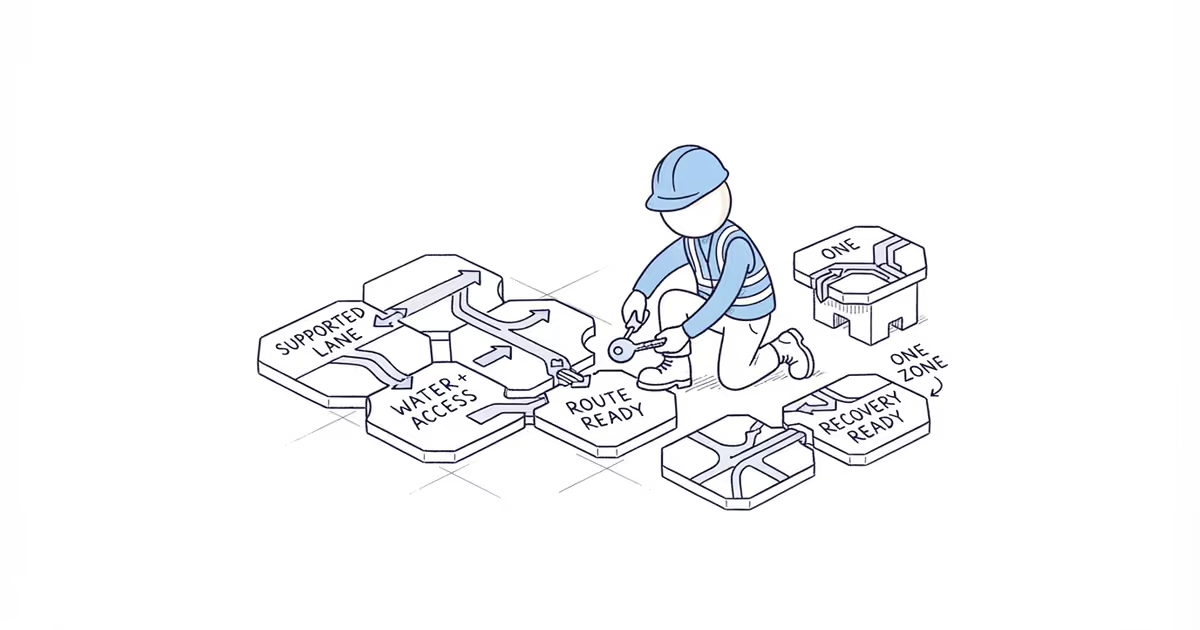
Grow a pressure washing business by narrowing the offer to surfaces, properties, and buyers you serve well, then moving local demand through response, estimate, route readiness, completion, permissioned proof, reviews, referrals, and record-based repeat work. Build neighborhood density around real work and openings only when crew/equipment, water access, schedule, and quality-recovery capacity support it.
Last verified: August 28, 2026 (United States).
Choose a supported pressure washing service lane
Define each offer by customer-described surface/asset, property, buyer, real geography, and work pattern: one-time, condition- or history-based repeat, or documented maintenance relationship. Pressure washing, power washing, soft washing, and broader exterior cleaning are not interchangeable. Surface and method decisions belong to the qualified field process.
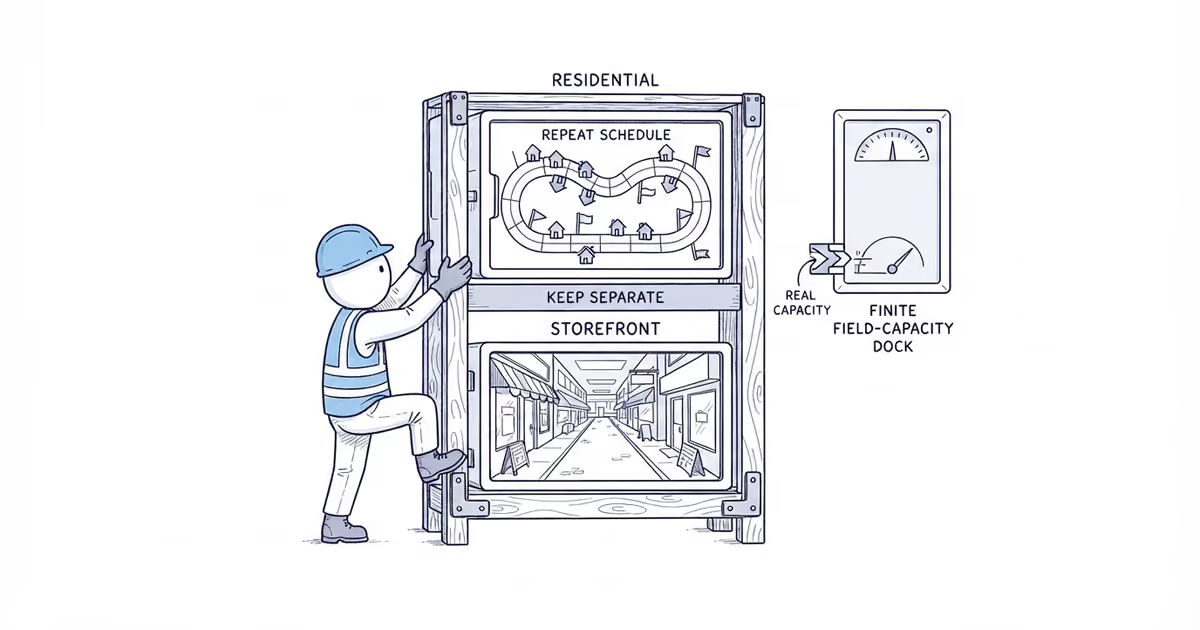
Use three separate operating lanes:
| Lane | Buyer path | Entry test |
|---|---|---|
| Homeowner project | One buyer, property, estimate, and completion path | Supported surface/property, real area, access/water plan, qualified configuration, completed proof, and quality history |
| Clustered residential | Several separate homeowner jobs inside one real route zone | Each job independently passes the same fit and route-ready gate; nearby location does not prove the same condition or need |
| Commercial or property relationship | An actually supported storefront, multifamily, HOA, managed property, or facilities lane | Defined buyer, property/service fit, intake owner, access/water expectations, estimate and update path, proof, schedule capacity, and outcome feedback |
Treat every adjacent service or add-on separately. Bundle it only when skill, process, equipment, evidence, capacity, and applicable local checks support it.
Use five pressure washing route definitions
| Term | Working definition |
|---|---|
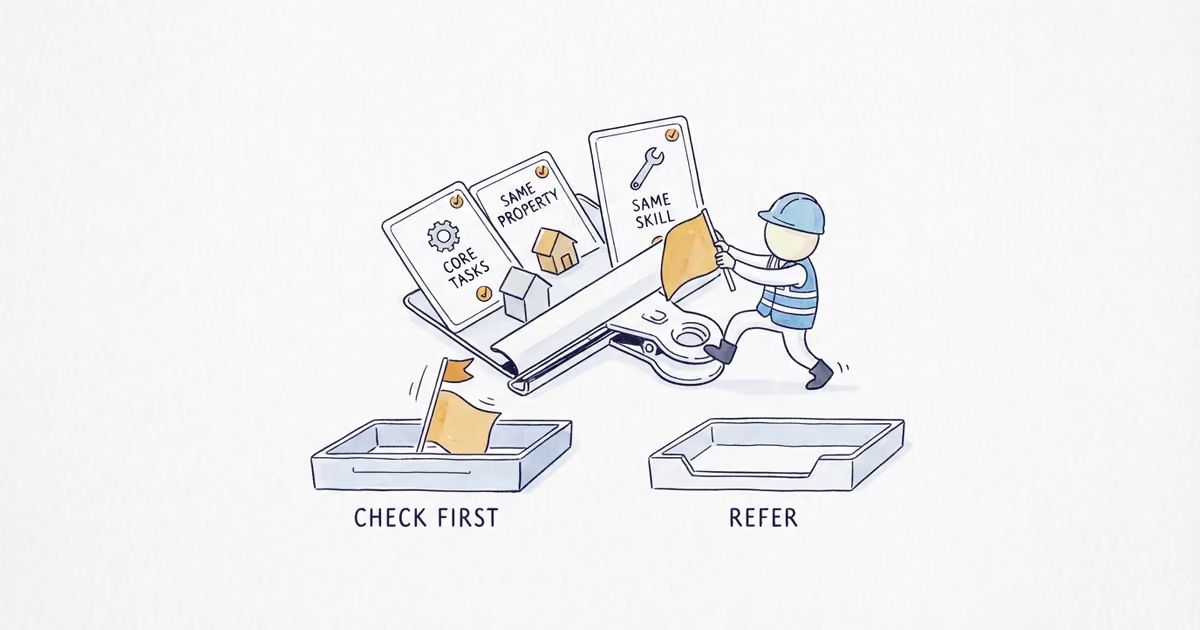
| Supported lane | A surface/property/customer combination the company can accurately describe, estimate, staff, equip, schedule, document, and recover if quality fails. |
| Route-ready | Accepted work that passes the documented scope, access, water-access, crew/equipment, local-check, weather, schedule, and customer-update gate. |
| Route zone | An owner-drawn area based on actual drive time, road access, service fit, and logistics. It is not a keyword or universal radius. |
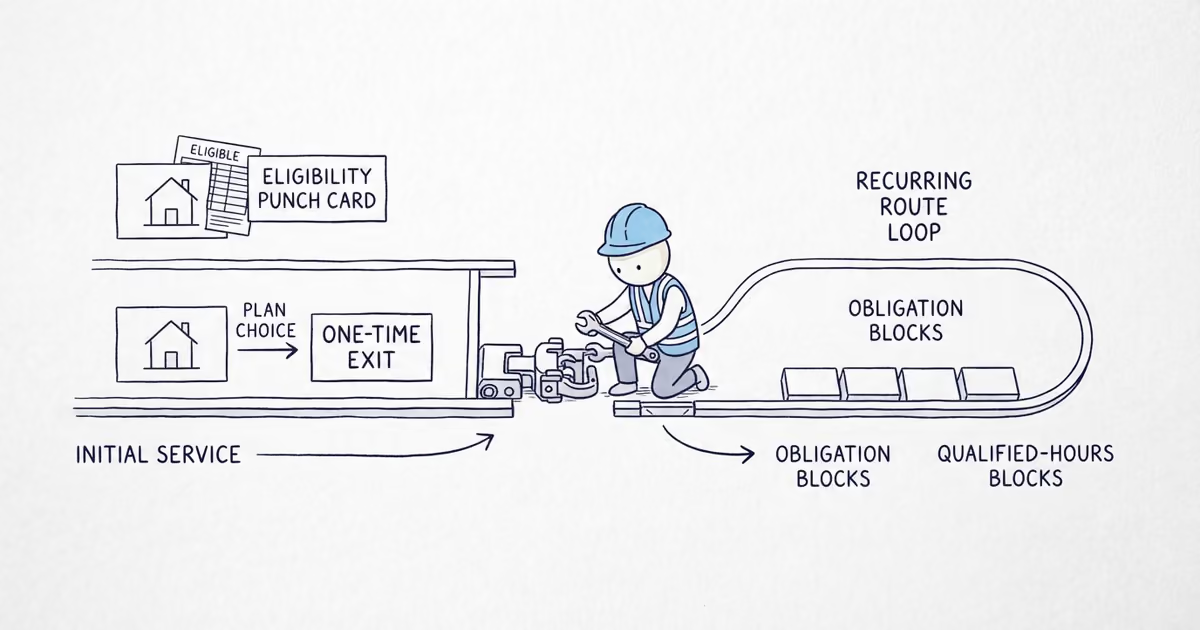
| Eligible service block | The consistent schedule unit for one qualified crew/equipment configuration and supported lane, derived from company records. Use crew-hours, half-days, or days consistently; never import a universal production rate. |
| Proof-ready | A completed job with publication permission, original files, factual scope, privacy review, and destination recorded. Completion alone is not consent. |
Move every opportunity through this sequence:
New inquiry -> useful response assigned -> fit checked -> estimate/site visit required -> estimate delivered -> follow-up due -> accepted/declined/pending -> route-ready/blocked -> zone and service block assigned -> scheduled -> completed -> concern/recovery -> collected -> proof/review/referral eligible -> reminder/repeat eligible
The board needs lead ID/time, source/direct spend, buyer, customer-described service/surface, property, zone, response owner/time, fit reason, access/water, visit status, next step, and owner. Add estimate owner, promised/actual dates, proof, receipt, follow-up, decision/reason, contact preference, and stop request. For accepted work, record date, route-ready status, blocker/owner, authorization/scope/exclusions, local/property check, configuration, blocks, weather/schedule, and customer update. Finish with zone/window, scheduled/actual travel and blocks, completion, collection, reliable gross profit, recovery/cause, proof permission/privacy/caption/destination, review/referral/relationship results, prior service, reminder, repeat, and opt-out.
Build pressure washing route zones and capacity in days 1-14
Mark supported and not-yet-supported lanes. Draw zones from completed jobs, travel, road access, service fit, and logistics. Place existing inquiries, estimates, accepted jobs, and blockers on the board. A desired town is not a route zone.
Use local records for a rolling 13-week view: eligible blocks by qualified configuration, route-ready demand, weather windows, buffer, crew availability, downtime, water constraints, blockers, past inquiry/completion patterns, and genuine reminder windows. Reject national seasons and jobs-per-day targets.
Audit images for permission, provenance, privacy, and destination. Audit profile identity, categories, services, area, hours, contact path, photos, pages, reviews, reminders, relationships, and prohibited claims against supported lanes.
Fix pressure washing estimates and route readiness in days 15-30
Set a staffed response target. Record received time, useful human response, owner, fit, estimate/visit step, and loss reason. Compare like sources and staffed windows, not universal minutes.
Record buyer/property, customer-described service/surface, real area, access, water status, timing, decision participant, visit need, and next step. Route diagnosis and method selection to the qualified field process.
The estimate handoff needs property, customer-described scope, access/water status, exclusions/questions, proof, owner, promised/actual dates, and follow-up. Confirm receipt, answer authorized scope/schedule questions, set a real next date, record accepted, declined, pending, not ready, unreachable, or not fit, and honor declines or opt-outs.
Hi [name], I am confirming you received the estimate for [actual property/project]. Is any part of the scope, proof, or schedule unclear? If you are still deciding, I can check back on [real date]. Tell me if another date is better or if you do not want further follow-up.
Route-ready requires authorization, scope/exclusions/expectations, resolved access/water, a supported lane and qualified configuration, local/property-check ownership, eligible weather/schedule, and truthful arrival/reschedule update. Access, water, method escalation, customer decision, equipment, crew, weather, approval, or local-review blockers stay visible with an owner and consume no usable capacity.
For concerns, record pre-existing or customer-reported facts through the qualified process and document completed scope. Assign acknowledgement, investigation, update, correction or other resolution, and closeout. This is quality ownership, not technique.
Build permissioned pressure washing proof and nearby demand in days 31-60
Keep the profile’s real identity, category, services, area, hours, contact path, and authorized photos current. Google says local results mainly depend on relevance, distance, and prominence. This guarantees neither Maps position nor leads. Avoid fake offices, stuffed names, and unsupported surfaces or towns.
Publish only real service/area combinations. Answer who fits, the customer-facing lane, estimate/visit path, access/water expectations, weather changes, scheduling, privacy, proof, closeout, exclusions/escalations, and next step. Use first-party records. Helpful content guarantees neither rank nor AI citation; avoid cloned city pages.
If those supported lanes, real areas, proof, and estimate steps do not yet have a clear online path, ShiftFlow’s free website setup can organize them into a useful local website and contact flow.
For before/after proof, keep job ID, lane, surface/property, date, originals, factual caption, permission, privacy edits, and destination. Remove unapproved addresses, faces, plates, belongings, access points, and property details. State inclusions/exclusions. Never manipulate contrast, color, crop, wetness, or framing, or imply every job gets the same outcome.
When the image record is complete and the owner needs to decide what belongs on the profile, the before-and-after photo guide explains the selection, caption, permission, and posting boundaries.
A proof pack needs one permissioned comparable sequence, a genuine attributable review, relevant verifiable business facts, a short access/communication/closeout process, and only applicable service/workmanship terms. Written terms control.
Build same-area demand only around real work and capacity after checking required permission and local communication rules. Use truthful availability, permitted leave-behinds/signs, referral asks, and permissioned proof without exposing a customer, address, access, endorsement, or supposed neighbor condition.
We have an actual opening in our [real zone] route on [date/window] for [supported lane]. If you want an assessment or estimate for your own property, reply through [path]. This message does not imply your property needs service or that a neighbor endorsed us. [Channel-appropriate opt-out.]
After completed, assessable scope, use one neutral review rule regardless of expected sentiment. Never gate reviews, request a rating, pay for sentiment, or suppress criticism. Route concerns to recovery and record the cause.
Hi [name], may we publish the attached before-and-after images with the factual caption shown? Image permission is separate from feedback. If you choose to review or refer us, please describe your genuine experience; no rating is requested. If anything needs attention, reply here so [owner] can handle it.
Treat referrals, real-estate contacts, property managers, HOAs, storefronts, and facilities as different handoffs. Define supported geography/lane, owner, access/water, estimate path, update boundary, proof, capacity, and outcome. Never promise volume or prescribe commissions, discounts, contracts, or procurement.
Remind past customers only when the record supports it: prior service, property/surface lane, completion date, permission or communication basis, observed or customer-requested future need when available, reminder window, response, outcome, and opt-out.
Hi [name], our record shows we completed [true prior service] at [property reference] on [date]. Would you like an assessment or estimate for related work now? This is not a claim that the property needs annual service. Reply
stopif you do not want reminders.
Never claim damage-free, roof-safe, surface-safe, chemical-free, non-toxic, eco-safe, guaranteed stain removal, or guaranteed results. FTC guidance requires truthful, substantiated advertising and bounds environmental claims. Site-specific runoff or washwater questions require current local/project review; the EPA framework is not a procedure here.
Improve pressure washing route density and quality in days 61-90
Compare like zones, lanes, and configurations. Reconcile required/available blocks with travel, weather, downtime, water, and buffer. Track sources through response, fit, estimate/visit, accepted/ready work, completion, collection, reliable gross profit, proof, reviews, referrals, repeats, travel, and recovery. Lead count cannot decide.
Frequently asked questions
How do I get more pressure washing jobs in the same area?
Start with a real scheduled or completed job and an actual opening in the same route zone. Check required permission and local communication rules, offer an assessment or estimate, and respect opt-outs. Do not identify a customer, imply an endorsement, diagnose a neighboring property, or manufacture route scarcity.
Can I use customer before-and-after photos in pressure washing marketing?
Use them only when the job record has explicit publication permission, original files, a factual scope caption, privacy edits, and the approved destination. Completion alone is not consent. Do not manipulate contrast, color, cropping, wetness, or framing to exaggerate the result.
When should I add another pressure washing crew?
Consider qualified capacity only when route-ready backlog repeatedly consumes eligible service blocks for the same supported lane and configuration, and equipment, supervision, schedule buffer, and recovery records support expansion. Jobs blocked by access, water, weather, approval, or customer decisions do not prove a crew shortage.
Sources
- Google: Tips to improve your local ranking
- Google: Manage your service areas
- Google: Guidelines for representing your business
- Google: Tips to get more reviews
- FTC: Soliciting and Paying for Online Reviews
- Google Search Central: Creating helpful, reliable, people-first content
- FTC: Advertising FAQs for small businesses
- FTC: Green Guides
- EPA: Stormwater discharges from municipal sources
- SBA: Plan your business - market research
Use a weekly pressure washing route and capacity scorecard
| Measure | Formula and decision use |
|---|---|
| Useful response completion rate | Inquiries receiving a useful human response and named next step / inquiries received in the staffed cohort. Preserve not-fit, spam, duplicate, and out-of-area reasons. |
| Estimate decision rate | Delivered estimates with accepted or declined decisions / delivered estimates in the cohort. Keep pending, not-ready, unreachable, and not-fit visible. |
| Route-ready rate | Accepted jobs passing the route-ready gate / accepted jobs in the cohort. Show blocker and owner. |
| Eligible capacity coverage | Service blocks required by route-ready jobs / usable eligible blocks for the same lane and configuration. No universal utilization target applies. |
| Same-zone route density | Completed jobs in one zone and comparable lane / route days with completed work in that zone and lane. Never turn it into a universal jobs-per-day goal. |
| Travel minutes per completed job | Recorded crew vehicle travel minutes for the route cohort / completed jobs in that cohort. Compare like lanes, roads, configurations, and access conditions. |
| Proof-ready completion rate | Eligible completions with permission, provenance, factual caption, and privacy review / completions meeting the neutral proof-eligibility rule. Photos alone are not consent. |
| Record-based reminder completion rate | Completed repeat jobs from eligible prior-service reminders / customers contacted in that documented cohort. Never infer annual need. |
| Source contribution after direct spend | Reliably attributed collected job gross profit - direct source spend. Use only reliable accounting data; separate source-ROI guidance owns deeper calculation. |
| Quality-recovery entry rate | Completed jobs entering the documented recovery workflow / completed jobs in the comparable cohort. Use it as an internal trend, not a damage-free claim. |
Apply these bottleneck rules:
- If local demand is weak and the profile, area, services, contact path, or pages are wrong, fix the offer and intake before paid demand.
- If inquiries are plentiful but fit is weak, narrow the lane, buyer/property, and real zone before widening the map.
- If inquiries lack useful responses or estimates lack owners/dates, fix those handoffs before adding a channel.
- If estimates lack a next date or decision reason, work scope/proof questions without fake scarcity, neighborhood pressure, or blanket discounts.
- If accepted work is blocked, resolve access, water, crew/equipment, local/property check, weather, schedule, or communication before routing it.
- If route-ready work is scattered and travel rises, tighten real zones and customer promises before expanding geography.
- If same-area outreach creates complaints, opt-outs, privacy problems, or capacity mismatch, stop and review permission, message, channel, local rules, and route truth.
- If proof-ready completion is weak, repair permission, capture, provenance, privacy, and caption ownership before adding content.
- If reminders create weak fit or pushback, review eligibility, permission, timing, and wording; never shorten the interval or invent condition.
- If relationship leads create unsupported lane, access, water, schedule, equipment, or update obligations, narrow or pause the promise.
- If route-ready backlog consumes usable service blocks, slow demand or add qualified capacity only after equipment, supervision, buffer, and recovery records support it.
- If recovery entries rise or one cause repeats, pause that lane/configuration and repair process, handoff, communication, or capacity.
- If a source produces cheap inquiries but few route-ready, completed, collected, repeat/referral, or reliable gross-profit outcomes, judge the lower funnel.
Write the current bottleneck as demand, fit, response, estimate, route readiness, zone/travel, capacity, proof, repeat/relationship, or quality, then assign one owner and next review date.
Not yet: No new surface/service specialty, distant area, claimed office, commercial relationship promise, fixed reminder cadence, paid source, crew/equipment configuration, or route expansion until existing records show fit, proof, capacity, route readiness, and controlled quality.
- local-seo-foundations
- how-to-grow-a-pressure-washing-business
- how-do-i-grow-a-pressure-washing-business
- pressure-washing-business-growth
- pressure-washing-marketing-strategy
- pressure-washing-route-density
- pressure-washing-before-and-after-photos