How Do Contractors Turn Social Media Followers Into Customers?
Turn social media followers into customers with a contractor handoff that captures, qualifies, books, and tracks local leads without guessing their source.
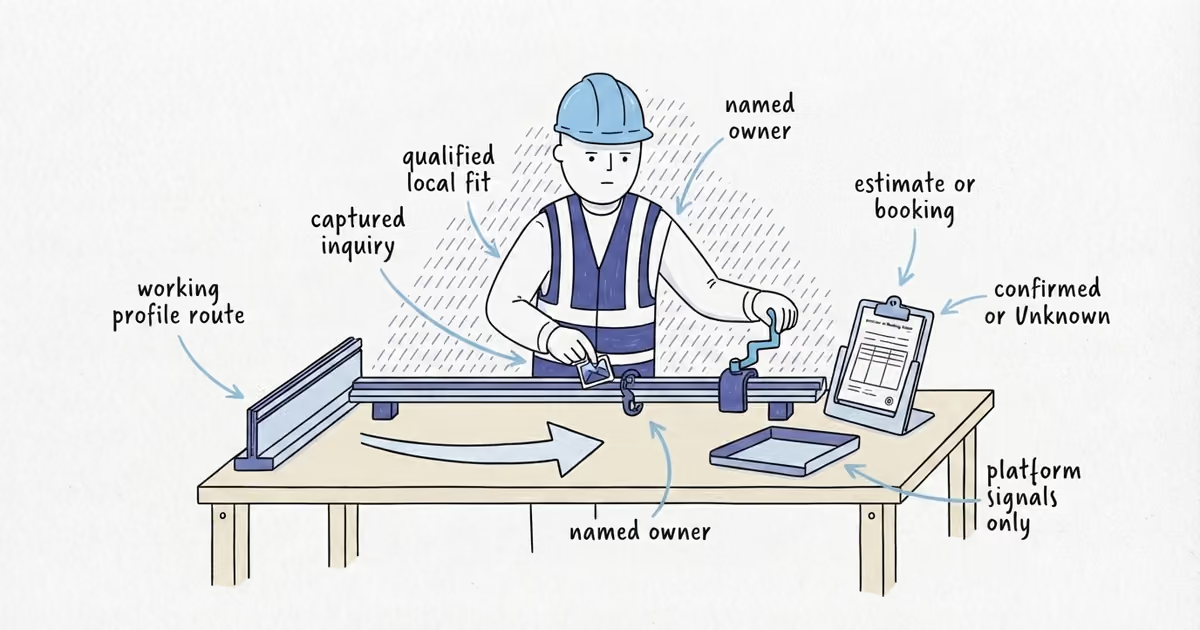
Contractors turn social media followers into customers by giving the right local prospect one clear next step, capturing the inquiry, checking service and area fit, assigning an owner, and moving the person into the normal estimate or booking process. Most followers will not become customers. The goal is a reliable handoff for the few who have a real job to discuss.
Last verified: August 27, 2026 (United States). Platform tools and interfaces can change.
What should a contractor social media profile show?
An interested person should be able to confirm four facts without digging:
- The service the business currently offers
- The broad service area
- Representative, customer-approved proof of the work
- One contact route that has been tested from the public side
Check the route while logged out. Submit a test form or follow the published contact path, then confirm that the inquiry reaches the person expected to handle it. A dead link or unmonitored inbox breaks the process before the post has a chance to work.
If the business has no reliable public place to show its services, area, approved proof, and working inquiry route, ShiftFlow’s free website setup can put those four essentials on one mobile-ready page.
The exact tools differ by account and platform. Facebook currently documents an action button for Pages. Instagram documents professional tools for business and creator accounts, while TikTok documents its Business Account scope. These are examples of current platform tools, not a promise that every account has the same fields or setup.
What social media call to action should contractors use?
A post does not need to push every viewer into a sales call. It needs one specific action for someone who already recognizes the service need.
“Ask about current availability for residential panel upgrades in our north-side service area” is clearer than “Contact us today.” It names the service and lets the customer decide whether the next step fits. Avoid artificial urgency, engagement bait, or a vague invitation with no service context.
This is the limit of the content advice here. Subjects, formats, posting frequency, and platform selection need their own decisions. More posts will not repair a broken contact route or an unowned inbox.
How to turn social media followers into contractor leads
Keep the job facts outside the comment or direct-message thread. A spreadsheet, lead board, or existing customer system is enough if the team actually uses it.
| Block | What to record | Complete when |
|---|---|---|
| 1. Profile promise | Current service, broad service area, approved proof, and tested contact route | A public visitor can identify the fit and reach the business |
| 2. Post-level next step | One specific, low-pressure action tied to the named service | A suitable prospect knows what to do next |
| 3. Inquiry capture | Name, usable contact detail, requested service, area or ZIP, rough scope, timing, and source | The job facts exist outside the social thread |
| 4. Response ownership | Named owner, backup, and a response standard that matches actual coverage and urgency | One person owns the next action and the backup trigger is clear |
| 5. Qualification | Service fit, area fit, rough scope, timing, and the appropriate next event | The inquiry is qualified or receives a courteous not-a-fit disposition |
| 6. Estimate or booking handoff | Responsible person, agreed contact channel, next event, and appointment or estimate status | The customer knows what happens next, who will make contact, and through which channel |
| 7. Attribution and outcome | Confirmed platform, another source, or Unknown; then qualified inquiry, estimate or appointment, and result | The record ends as won or lost with a reason, not as an abandoned message |
Do not collect private detail the job does not require. Do not diagnose a technical condition remotely just to move a lead forward. Qualification decides whether a call, site visit, estimate, or another documented step is appropriate.
Use a simple status path and adapt the labels to the way the business already works:
New inquiry -> Qualified or Not a fit -> Estimate or appointment scheduled
-> Estimate sent, when relevant -> Won or Lost + reason
How to track social media leads and customers
Followers, reach, reactions, saves, profile visits, link clicks, and direct messages show activity. None proves that the business gained a customer.
| Stage | Evidence required |
|---|---|
| Social signal | A follow, view, reaction, save, profile visit, click, or message |
| Captured inquiry | A lead record with usable contact and basic job facts |
| Qualified inquiry | Confirmed service, area, scope, and timing fit |
| Estimate or appointment | A recorded event, owner, status, and agreed contact channel |
| Won job | The customer accepts or books under the business’s normal process |
A direct message is not automatically a qualified inquiry. Move it into the record, collect the missing job facts, and then apply the same qualification check used for a call or web form.
Ask or confirm how the customer found the business. Record Confirmed Facebook, Confirmed Instagram, Confirmed TikTok, Another source, or Unknown only when the evidence supports it. Do not assign a platform because an inquiry happened soon after a post.
For website links, distinct UTM parameters can help identify campaign traffic in Google Analytics. They are an attribution aid, not a complete history. They will not establish the source of every call, direct message, offline mention, cross-device visit, or untracked journey. Keep the direct source question and the Unknown option.
Social media lead conversion example for a plumber
A residential plumber’s profile lists sewer camera inspections, a broad north Austin service area, approved job proof, and a tested estimate form. A post gives one next step: request inspection availability for a recurring drain backup.
Maria follows the page, uses its tracked website route, and submits her name, phone number, ZIP, rough problem, and preferred timing. The campaign record points to Facebook, and Maria confirms that source. That combination supports Confirmed Facebook; timing alone would not.
The office coordinator owns the inquiry and the owner is the backup. The coordinator checks that the ZIP and requested inspection fit the business, without diagnosing the drain remotely. She offers a site visit, records Friday from 9–11 a.m. as the next event, assigns the plumber, and confirms text as the agreed channel.
After the visit, the record moves to Estimate sent. Maria accepts, so the final status is Won, with Facebook retained as the confirmed source. The other people who followed, reacted, or viewed the post remain social signals. They did not automatically become inquiries or customers.
How to fix a broken social media lead handoff
Once a week, check where qualified inquiries stopped, whether the public route worked, whether each record had an owner, and which confirmed sources produced estimates or won jobs. Do not compare the results with a universal social conversion rate. The useful question is where this business’s handoff failed.
If the contact route or internal handoff breaks:
- Test the public route and identify the affected period.
- Recover affected inquiries where possible and acknowledge the delay.
- Assign each recovered inquiry an owner and next action.
- Correct the profile route or internal workflow, then test it again.
- Record Unknown when the original source or outcome cannot be reconstructed.
Never manufacture attribution to make the report look complete. A smaller set of confirmed outcomes is more useful than a full column of guesses.
Frequently asked questions about contractor social media leads
Do contractors need a large social media following to get customers?
No. Audience size is not a customer outcome. Judge the process by suitable local people who become captured inquiries, qualified leads, estimates or appointments, and won jobs.
How often should contractors post on social media?
Set the schedule from the business’s actual capacity in a separate cadence plan. More posts will not repair a dead contact route, missing response owner, or broken booking handoff.
Do leads from local Facebook Groups use the same handoff?
Yes, once a person starts an invited inquiry. Capture and qualify the job like any other lead, and record Confirmed Facebook only when the evidence supports it; Group participation and posting rules are separate decisions.
Sources
- local-platform-decisions
- how-contractors-turn-social-media-followers-into-customers
- how-do-contractors-turn-social-media-followers-into-customers
- turn-social-media-followers-into-customers
- contractor-social-media-leads
- social-media-lead-tracking
- social-media-call-to-action-for-contractors