How Do I Avoid Scope Creep in a Quote?
Prevent scope creep by making the original quote measurable, naming change triggers, and requiring written approval before extra work begins.
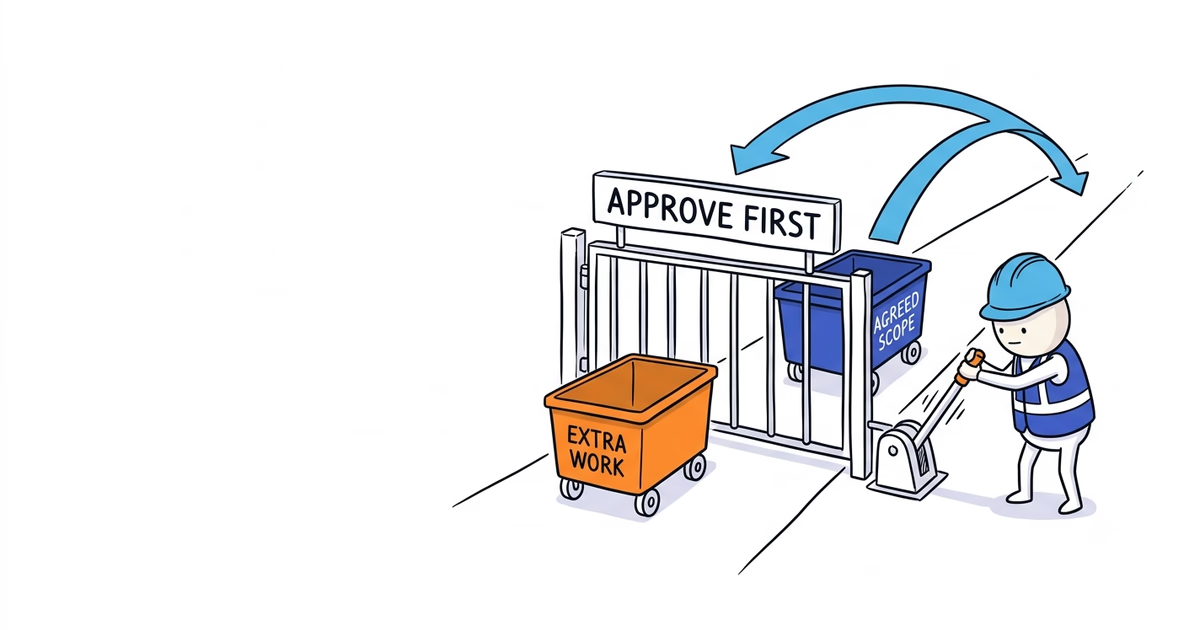
Make the original scope measurable, then require a written decision before anyone crosses it. Scope creep happens when work, cost, or time grows after approval without being recognized and controlled as a change.
A strong quote will not prevent every surprise. It gives the customer and crew a clear way to tell whether a surprise is inside the agreed work.
How to write a clear scope of work
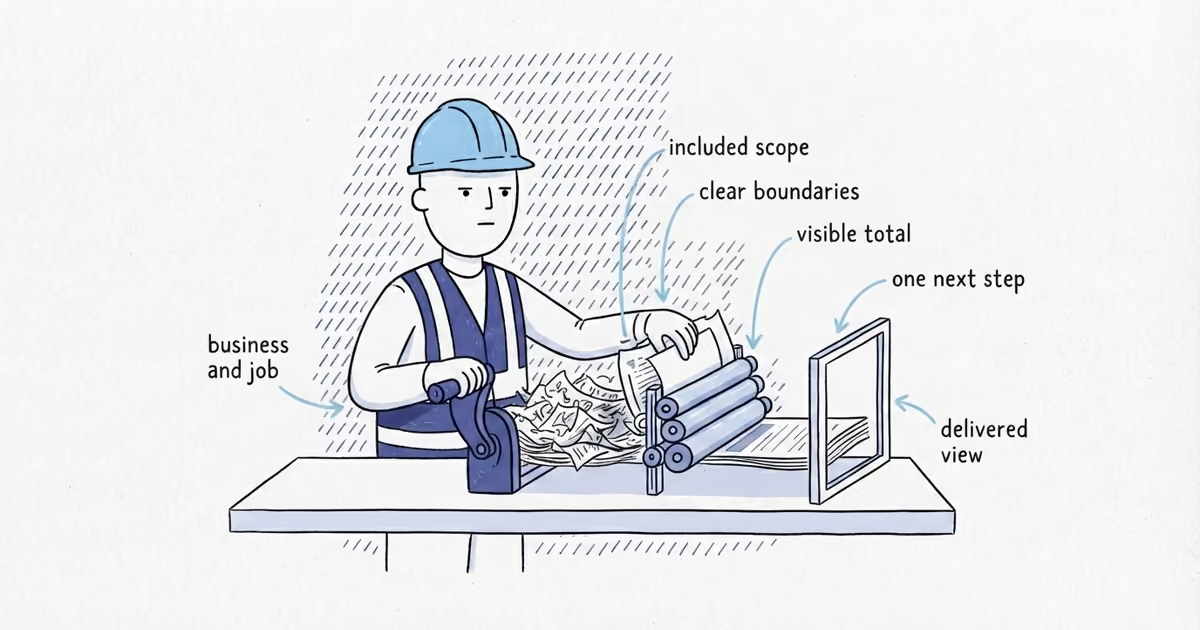
The crew should be able to stand at the job and answer, “Is this included?” without calling you to interpret a vague sentence.
Weak scope:
Paint kitchen cabinets.
Measurable scope:
Prepare and spray-paint 18 existing kitchen cabinet doors and 7 drawer fronts. Degrease, scuff-sand, spot-prime bare areas, apply one bonding primer coat and two finish coats to exterior faces and visible cabinet frames. Customer will select one color from the specified product line before work begins. Cabinet interiors, new hardware, carpentry repairs, and wall painting are excluded.
The second version names the location, quantity, preparation, material standard, coats, customer decision, and stopping point. Those details do more than protect the price. They tell the crew what to produce.
Use the fields that matter for your trade:
- Location or system being worked on
- Task and expected result
- Quantity, dimensions, or unit count
- Material, model, finish, or performance standard
- Preparation, protection, testing, and cleanup included
- Completion or acceptance point
Do not add detail for its own sake. Add the detail that changes labor, materials, schedule, or the customer’s expectation.
Add assumptions, allowances, responsibilities, and exclusions
Most scope creep enters through information that was never classified. Put each important boundary in the right place:
- Assumption: A condition used to build the price but not fully verified, such as accessible framing behind an opened wall.
- Allowance: A set amount reserved for an item that has not been finally selected or measured.
- Customer responsibility: Something the customer must provide or complete, such as clearing a room by the start date.
- Exclusion: Work or a condition the price does not cover.
Silence is not a good boundary. If moving furniture, hauling debris, permit fees, after-hours access, finish repair, or concealed damage could materially change the job, address it in the quote instead of assuming the customer sees it your way. Use specific estimate exclusions for work or conditions the price does not cover.
Check that these fields agree. Do not say “all required disposal included” in the scope and then exclude disposal in the fine print.
What causes scope creep on a quoted job
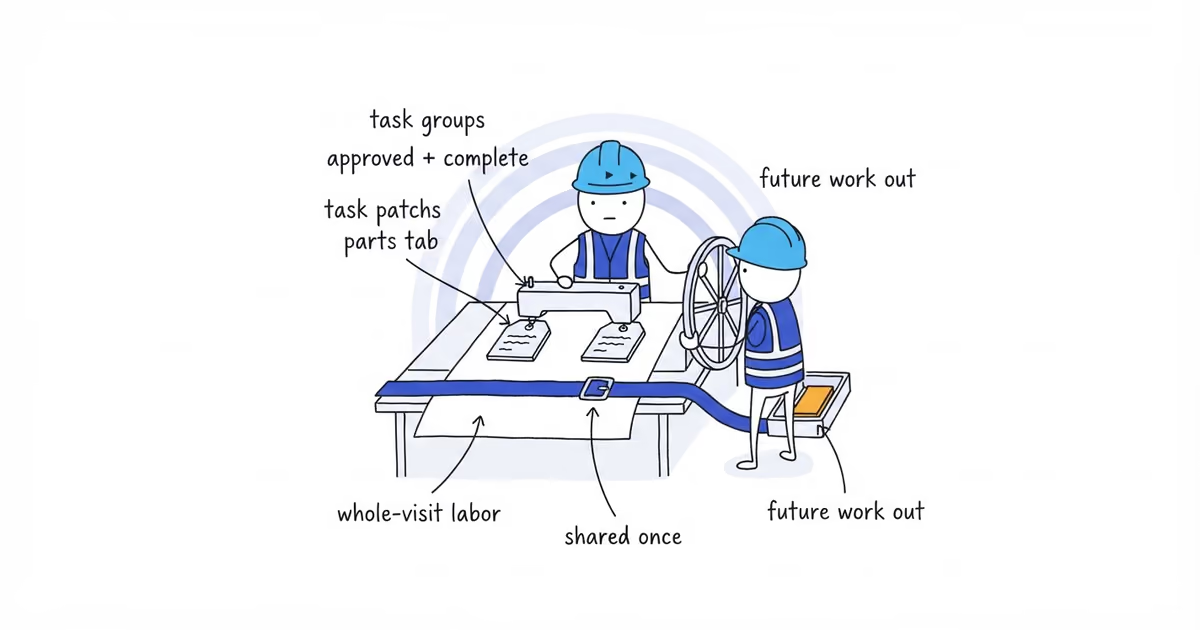
Tell the customer what will cause the scope, price, or schedule to be reviewed. Common triggers include:
- A customer request for added work, quantity, or a different finish
- Concealed damage or a site condition that differs from a stated assumption
- A substitution caused by a changed customer selection or unavailable item
- Delayed access, utilities, decisions, or other customer responsibilities
- Work by another contractor that changes your sequence or requires rework
- A request to accelerate, add a visit, or work outside the agreed service window
The trigger is not an automatic charge. It starts a decision. Your contract should state the notice and approval process that applies to the job, including how the business will calculate the change-order price.
Train your crew to stop out-of-scope work
Use the same rule on every quoted job:
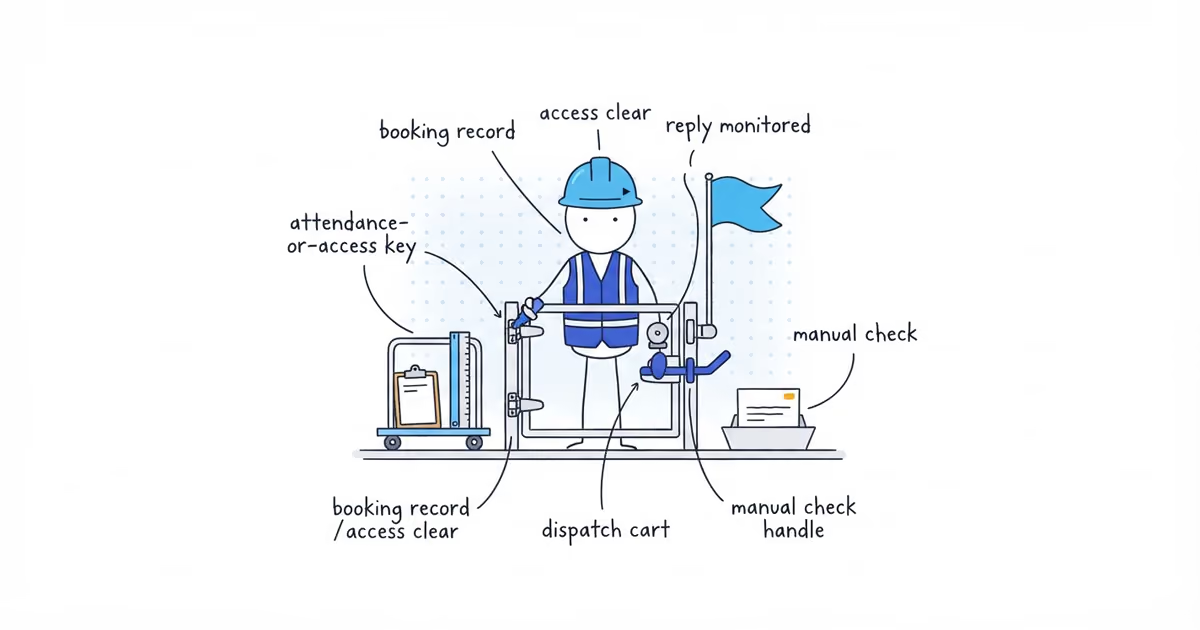
Stop the affected work. Document the condition or request. Notify the customer and the person authorized to price it. Get the required written approval. Then proceed.
Stopping the affected work does not always mean leaving the whole site. The crew may be able to continue unchanged work elsewhere. The important part is that they do not make an on-site promise, perform the extra, or tell the customer, “It should be fine.”
Give team members a short response they can use:
I can note that request, but it is not in the work order I have. I’ll send it to [name] so we can confirm the scope, price, and timing before we do it.
Also define who can approve a change for your business and for the customer. Approval from someone without authority may not solve the problem your process was meant to prevent.
Scope creep prevention checklist
Before work starts, confirm:
- The scope identifies locations, tasks, quantities, and completion points
- Materials, models, finishes, or allowances are stated where they affect price
- Unverified conditions are written as assumptions
- Customer responsibilities have owners and due dates
- Material exclusions are visible and job-specific
- Change triggers are named
- The contract states how notice, pricing, schedule impact, and approval are handled
- Both sides know who may authorize a change
- The crew has the approved scope and the stop/document/approve rule
- A place exists to track every request through approval or rejection
Review the high-risk items with the customer instead of relying on a signature beneath unread terms. Ask them to confirm quantities, selections, work they are handling, and anything they expect that is not shown.
How to track every change request
The log can be a spreadsheet, job record, or numbered notebook. It needs enough information to stop verbal requests from disappearing:
| Field | What to record |
|---|---|
| Request | What changed and who raised it |
| Date and evidence | Date, photos, measurements, or message |
| Original boundary | Scope, assumption, allowance, or exclusion affected |
| Impact | Added or deleted work, price, and schedule effect |
| Status | Pending, approved, rejected, or withdrawn |
| Approval | Name, date, and written record |
Log rejected and withdrawn requests too. They explain why the crew did not perform something a customer may remember discussing.
Contract requirements and state rules vary. Follow the written change process in your agreement and check the requirements that apply where you work. The operating principle remains simple: when the boundary moves, stop treating the work as part of the original price and explain the change to the customer before proceeding.
Scope control also protects the customer experience during the job. After completion, Google review management can build an honest review request into the way the team already closes work, without relying on someone to remember each time.
Frequently asked questions
Is scope creep the same as a change order?
No. Scope creep is work, cost, or time that grows without a clear approval. A change order documents an agreed adjustment to the original scope, price, or schedule.
Can a fixed-price quote still have change orders?
Yes. The fixed price applies to the defined original scope. A customer request, changed condition, or other contract-recognized trigger can still require a separately documented and approved change.
What should I do when a customer asks for extra work on site?
Have the crew pause the affected work, record the request, and send it to the person authorized to price it. Proceed only after the customer receives the scope, price, and schedule impact and gives the approval required by the contract and local rules.
- pricing
- scope-creep
- scope-of-work
- out-of-scope-work
- change-request
- scope-creep-prevention