

How Do I Invoice Multiple Plumbing Repairs From One Service Call?
Learn how to invoice multiple plumbing repairs from one service call, show shared charges once, group work by fixture, and keep unfinished work off the bill.
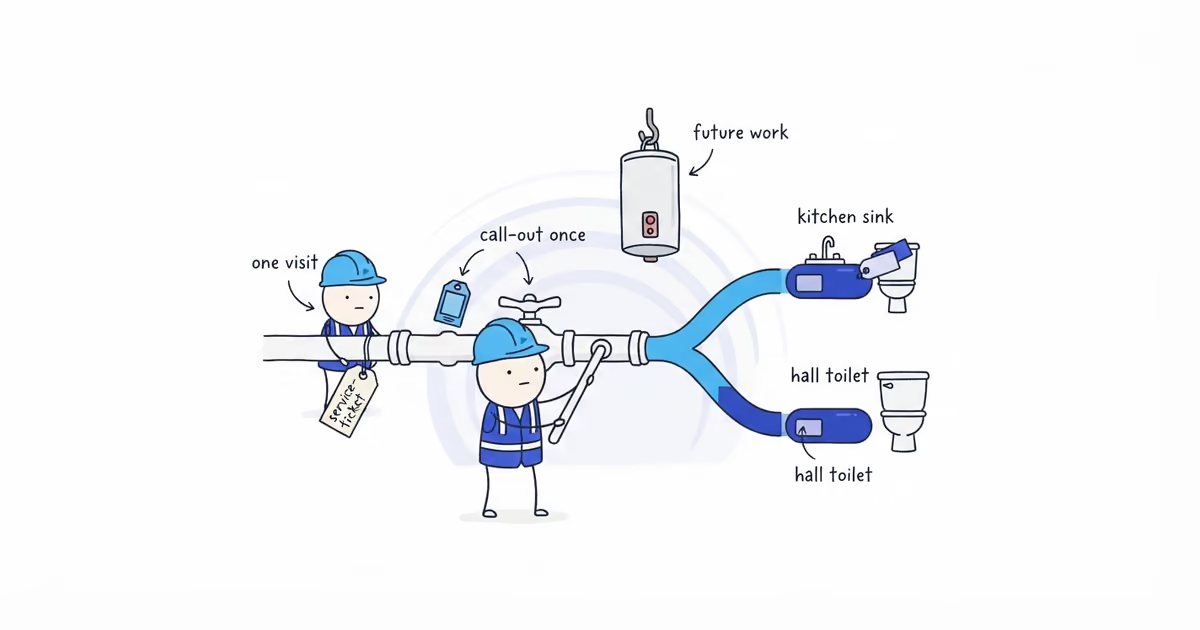
Use one invoice when the repairs belong to the same customer, property, service visit, and billing event. Show the visit details and shared call-out charge once, then group the completed work by fixture or affected area.
The invoice should read like one visit with several recognizable repairs, not several unrelated bills squeezed into one table.
Put the shared visit details at the top
Use one header for the information every repair has in common:
- Customer and billing contact.
- Service address and date.
- Work-order or service-ticket reference.
- Technician when that helps trace the visit.
- The billing basis the customer already approved.
If the customer approved flat-rate repairs, carry those tasks to the invoice. If the work was sold hourly, use the supported hours and agreed rate. The invoice should reproduce the sale, not choose a different pricing model afterward.
Group each repair by fixture or area
Use one shared section for the visit, then one short block for each affected fixture or area.
| Invoice section | What belongs there |
|---|---|
| Shared visit | One call-out or diagnostic charge, one approved after-hours charge, and any genuinely visit-wide disposal charge. |
| Each fixture or area | The location, issue found, approval reference, completed repair, and the labor or flat-rate task plus parts that belong to it. |
| Future work | Recommendations, declined options, backordered parts, and incomplete work, kept outside Amount due. |
A useful repair block lets the customer answer four questions: Where was the problem? What was approved? What did the plumber complete? Which charges belong to that repair?
Write kitchen sink, upstairs hall toilet, or mechanical-room water heater, not only plumbing labor.
Show shared charges once
A call-out belongs to the visit. Listing it under the kitchen sink, toilet, and water heater makes one truck roll look like three.
Use one line such as:
Call-out and diagnosis - one service visit
Then place repair-specific parts and labor with the relevant fixture. If disposal covered the whole visit and was approved that way, show it once. The same rule applies to an emergency or after-hours charge.
Do not split a shared fee merely to make each repair block look symmetrical.
Example: one call-out and two repairs
These are fictional, already-approved invoice inputs, not suggested plumbing prices.
Shared visit
- Work order
PL-2087, one residential visit on August 22. - Call-out and diagnostic charge:
$95. - Visit-wide disposal from completed work:
$20.
Kitchen sink
- Finding: leaking hot-water supply connector.
- Completed work: replaced the connector and performed the recorded leak check.
- Approved flat-rate charge:
$210.
Upstairs hall toilet
- Finding: fill valve not shutting off.
- Completed work: replaced the fill valve and performed the recorded function check.
- Approved flat-rate charge:
$165.
The invoice total is $490: one call-out, two completed repairs, and one disposal charge.
The ticket also notes that the water heater is aging and the customer asked for replacement options. No replacement was approved or completed, so it stays outside Amount due. Prepare a separate estimate if the customer wants to proceed.
This layout lets the customer question one repair without losing the identity of the other. It also prevents parts and labor from disappearing into one vague service line.
When to use separate invoices
Separate the work when it belongs to different customers or payers, different properties, or billing events that must remain independent. Also separate completed work from a repair that will be finished and billed later if combining them would make pending work look complete.
Several fixtures at the same property do not automatically require several invoices. Follow who owes the money, where the work occurred, and what is ready to bill.
Once the visit details, shared charges, and repair blocks are clear, use ShiftFlow’s plumbing invoice generator to format the fixture or area, call-out, labor, parts, disposal, totals, and customer PDF.
Before sending, make sure the customer can point to each completed repair, trace its charge, see the call-out exactly once, and distinguish billed work from recommendations that still need a decision.
Frequently asked questions
Does each repaired fixture need a separate invoice number?
No. Repairs from the same customer, property, visit, and billing event can share one invoice number while each fixture keeps its own repair block. Use separate invoice numbers when the payer, property, or billing event must remain independent.
Can one plumbing invoice include completed work from two service visits?
It can when the same payer, property, agreement, and billing process allow a consolidated invoice. Identify each service date and completed task clearly, and do not include pending work merely because another visit is already complete.
Can plumbing repairs be grouped by room instead of fixture?
Yes. Use an affected area such as upstairs bathroom when it is clearer than a fixture name, provided the block still traces the finding, approval, completed action, and repair-specific charges without mixing unrelated work.
Sources
- ShiftFlow Plumbing Invoice Generator, current tool page and implementation.
- ShiftFlow Playbook, How to Price a Plumbing Job, used only to preserve the pricing boundary.
- pricing
- how-to-invoice-multiple-plumbing-repairs-from-one-service-call
- how-to-invoice-multiple-plumbing-repairs
- plumbing-service-call-invoice
- plumbing-invoice-multiple-repairs
- plumbing-call-out-fee-invoice
- plumbing-invoice-by-fixture



