

How Do I Invoice a Roofing Job?
Invoice a roofing job by reconciling approved work, itemized roofing charges, payments received, warranty details, and the final customer balance due.
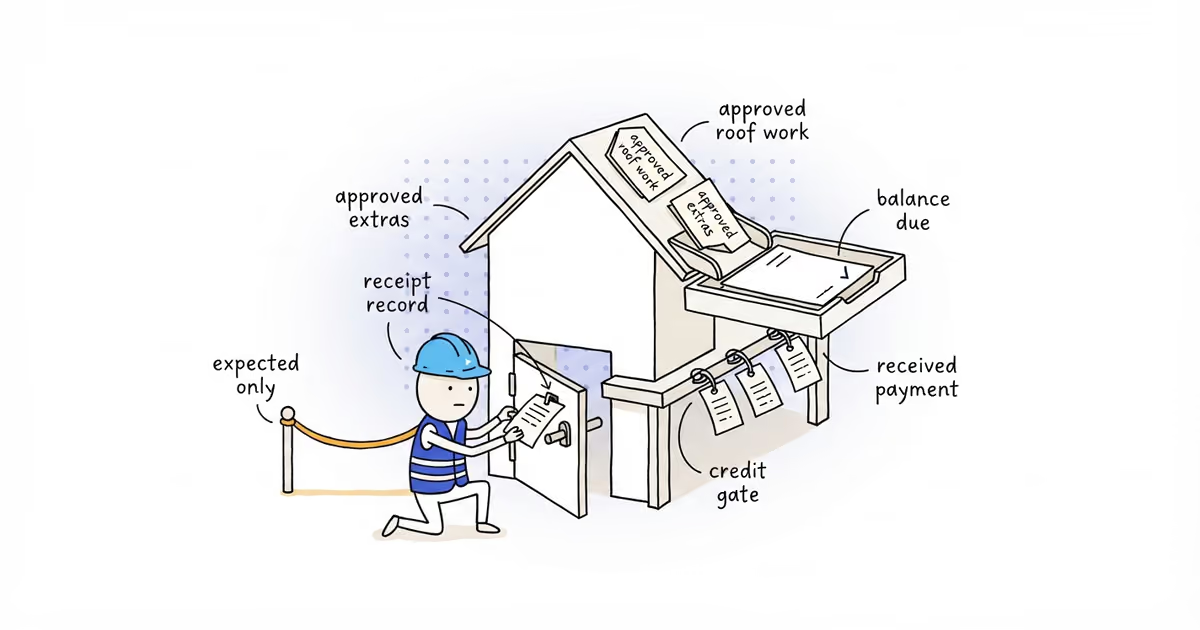
Start with the approved estimate or contract and every approved extra. Match them to the work completed at the property, then subtract only deposits, customer payments, or insurance payments the roofing business has actually received.
The invoice should identify the property, dates, roof area, completed work, remaining balance, due date, payment route, and the warranty details already documented for that job. It should not introduce an unapproved extra or act as a substitute for the contract, insurance paperwork, or warranty document.
Reconcile the job before creating the invoice
Check three things:
- Approved work: the base amount and every extra match the estimate, contract, or change reference.
- Completed work: production records support the customer-facing descriptions, service dates, roof area, materials, equipment, tear-off, and disposal being billed.
- Payments received: every credit has a date, amount, type, and receipt or transaction reference.
Use this balance rule:
Approved base work + approved extras - deposits received - prior payments received - insurance payments received = balance due
The word received matters. An expected insurance check, claim allowance, requested supplement, or promised customer payment is not a credit. Even if a check has been issued, do not subtract it until the business has the money and can match it to a payment record.
Include the roofing details that explain the bill
Along with the normal business, customer, invoice, due-date, and payment information, show:
- The job address, service date or range, and completion date when useful.
- The estimate, contract, work-order, and approved-extra references.
- Roof area with the unit stated, such as
24 squaresor2,400 square feet. - Completed labor and roofing materials in customer-facing language.
- Equipment or delivery, tear-off and disposal, and an approved permit or inspection charge when applicable.
- Each completed extra as a separate line with its approval reference.
- Each payment actually received and the remaining balance.
Describe what the crew completed, not how the business calculated its margin. Supplier cost, payroll rate, overhead, and markup stay in the internal job-cost record.
For a repair, name the affected slope or area and the repair performed. For a replacement, state the roof area, installed material or system, and whether approved tear-off and disposal are included.
If decking replacement was approved as CO-02, show it separately and tie it to that reference. If approval is missing, resolve the job record before billing it.
Carry forward the existing warranty
The invoice should help the customer find the warranty that already governs the job. It should not write a new one.
Keep contractor workmanship and manufacturer material coverage separate. Use the provider, covered work or product, documented term and start trigger, and the warranty-document or registration reference already in the file. If a detail is not documented, do not infer it for the invoice.
Roofing invoice example
These fictional figures demonstrate the balance, not roofing prices.
| Entry | Reference | Amount |
|---|---|---|
| Approved base work | EST-184 | $18,400 |
| Approved decking extra | CO-02 | $1,200 |
| Invoice total | $19,600 | |
| Deposit received | DEP-14 | -$2,500 |
| Prior customer payment received | PAY-31 | -$4,000 |
| Insurance payment received | INS-08 | -$8,000 |
| Expected but unreceived amount | No receipt | $0 credit |
| Balance due | $5,100 |
The check is:
$18,400 + $1,200 - $2,500 - $4,000 - $8,000 = $5,100
The insurance payment reduces the balance only because the business received it. Tax is omitted because its treatment depends on the job.
Send a bill the customer can check
Use the payment timing already agreed for the job or confirmed for this invoice. Give the customer a calendar due date, an accepted payment method with usable instructions, the invoice number to include, and a contact for questions.
After the work, extras, and received payments agree, the ShiftFlow Roofing Invoice Generator can format the job address, service dates, roof area, warranty note, roofing line items, amount paid, payment instructions, and PDF.
Before sending, make sure the customer can identify the property and completed work, match each extra to an approval, see every payment actually received, reproduce the balance, and distinguish workmanship coverage from manufacturer material coverage.
Frequently asked questions
Should I attach completion photos to a roofing invoice?
Attach them when they help the customer match finished work to the approved scope. Keep the originals in the job file either way; the invoice still needs clear work descriptions and approval references that make sense without the images.
Can one roofing invoice include both repair and replacement work?
Yes, when both belong to the same approved job and billing stage. Keep the repair and replacement in separate customer-facing lines with the relevant approval reference for each; use separate invoices when they are separate jobs or balances.
Can I combine a deposit and insurance payment under amount paid?
Yes, but only after both payments have reached the roofing business. Keep each receipt separate in the payment ledger, and show the credits separately on the invoice when the customer needs them to trace the balance.
Sources
- ShiftFlow Roofing Invoice Generator, current tool page and implementation.
- pricing
- how-to-invoice-roofing-job
- how-to-invoice-a-roofing-job
- what-to-include-on-a-roofing-invoice
- roofing-invoice-example
- roofing-invoice-checklist



