

How do I protect my quote from material price increases?
Protect a contractor quote from material price increases with supplier checks, clear allowances, price adjustment wording, and customer approval steps.
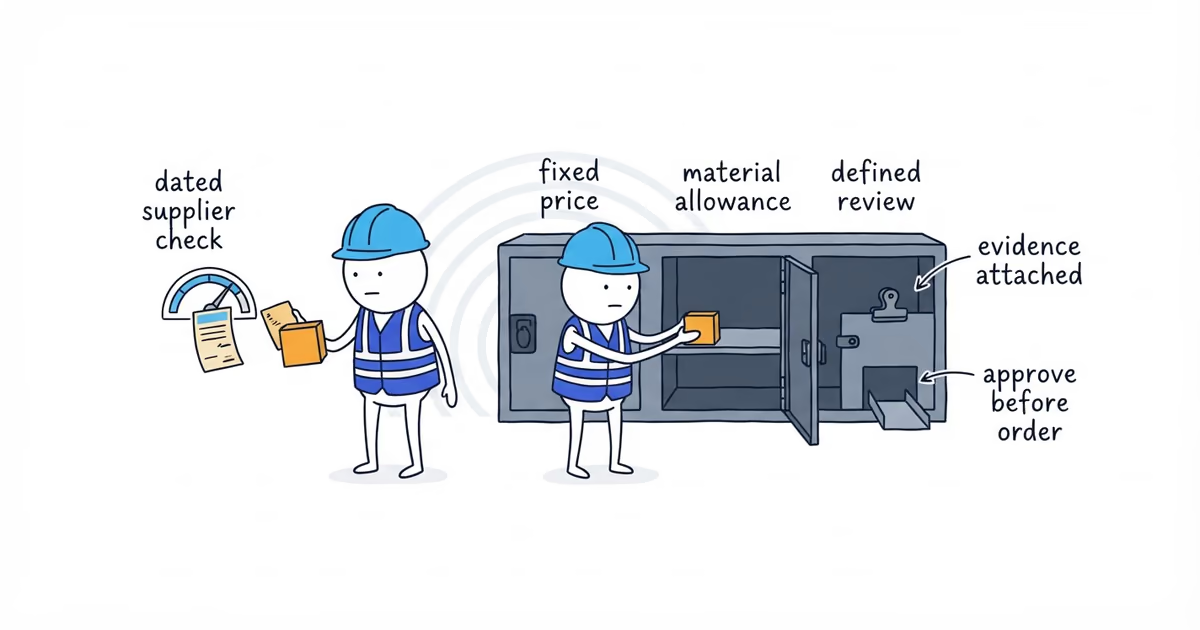
Your quote should say which material prices you are holding and which may need to be reviewed before the customer accepts. Do not price a job from a supplier screenshot, send one total, and hope the cost stays put.
For any material that could seriously hurt the job’s profit, check the current supplier price, record what it includes, choose how you will handle a change, and explain that rule before either side commits.
Last verified: August 17, 2026 (United States).
How to check material prices before quoting
Start with evidence you can find later. For each high-cost or volatile item, keep a dated supplier quote or price record and note:
- Product name, model, grade, size, or other specification
- Quantity used in your quote
- Unit price
- Freight, sales tax, fuel charges, and other surcharges included or excluded
- Availability and expected lead time
- How long the supplier will hold its price, if it will hold it at all
“Roofing materials: $8,400” is not enough. If the price changes, you will not know whether the difference came from the shingles, underlayment, delivery, tax, or a different quantity.
Fixed price vs material allowance vs price adjustment
| Price treatment | Use it when | What the quote should make clear |
|---|---|---|
| Fixed material price | You can buy at a known price or are willing to absorb movement | The named material and price are included; your business carries the agreed risk |
| Material allowance | The customer’s selection or the final quantity is not known | The allowance amount, what it covers, and how the final cost will be reconciled |
| Defined price adjustment | A named material has a documented price risk you will not hold | The baseline, review trigger, evidence, and approval step before ordering |
An allowance is not a hidden cushion. If you include a $4,000 tile allowance, say what it covers and how a lower or higher purchase cost changes the final job price. Otherwise the customer may read $4,000 as a guaranteed material price.
A price-adjustment method also needs boundaries. “Prices subject to change at any time” tells the customer nothing. Name the material and the review trigger. Decide which increases your business will absorb and which documented increase requires a revised price.
ConsensusDocs identifies bid-validity limits, allowances, early purchasing, contingency, and agreed price-adjustment clauses as different tools. Choose your tool before signing the job instead of guessing at future costs.
Use quote validity as one layer of protection
A validity period limits how long the current assumptions stand. Show the expiration date and say that you will reconfirm price and availability after it. The right length depends on the job, supplier commitment, and buying timeline; there is no universal number. If purchasing happens well after acceptance, also state who carries the identified risk and what process applies.
Material price increase wording for a quote
This is a communication framework, not a universal contract clause:
Material price basis: The quoted price for [material and specification] is based on [supplier quote, price list, or allowance] dated [date], at [$ amount], including [freight, tax, and named charges]. We will hold [state what is fixed or the amount the business will absorb]. If [specific review trigger] occurs before the material is ordered, we will provide [supplier quote, invoice, or other evidence] showing the change. We will not order the affected material or proceed with that part of the work until you approve any revised price in writing.
Adapt the wording to your job, contract, and local requirements. If a material increase could create a major price change or dispute, have the final contract language reviewed by a qualified professional in your jurisdiction.
Material price increase example for a contractor quote
Your quote lists 120 sheets of a specified panel at $24.50 each, based on a dated supplier quote. The $2,940 baseline includes delivery but not sales tax. Your written price method says you will absorb the first $100 of an increase and review any amount above that before ordering.
Before purchase, the same supplier quotes the same 120 sheets at $27 each. The documented increase is $300:
120 x ($27.00 - $24.50) = $300
You send the new supplier evidence, apply the $100 your business agreed to absorb, and ask the customer to approve the remaining $200 before you place the order. There is no surprise invoice and no claim that you can change the price on your own.
This example assumes the material, quantity, and job stayed the same. If the customer chooses a different panel or adds work, that is a scope change, not a supplier-driven increase, and it belongs in a separate change process.
When a selection or added item changes the work, use the change-order pricing guide to calculate the net labor, material, equipment, schedule, overhead, profit, tax, and credit effect before asking for approval.
Material price protection checklist
Before sending the quote, confirm all seven items:
- You have a dated supplier price and availability check for each material that could materially affect profit.
- The quote names the product or specification and the quantity assumption.
- Your price basis says whether freight, tax, delivery, and surcharges are included.
- Each exposed item is clearly fixed, covered by an allowance, or subject to a defined review method.
- The quote states important exclusions and shows its validity date.
- The customer can see what evidence you will provide and how they approve a revision before ordering.
- You have written down which increases the business will absorb.
If you cannot check an item, fix the quote before sending it. The goal is clarity while both sides can still decide what they are agreeing to, not pushing every risk onto the customer.
Frequently asked questions
Does a quote expiration date let me raise the price after acceptance?
Do not assume it does. An expiration date controls how long an unaccepted quote stays open. Once the customer accepts, follow the written agreement and local requirements, and get professional advice before relying on new contract wording.
What proof should I show when a material price increases?
Show the dated supplier quote or price list that set the baseline and the newer document for the same specification, quantity, and included charges. Point out the difference and redact unrelated supplier or customer details.
What if the material price drops before I order it?
Apply the same written method you promised. If the quote says the price can move up or down, show the revised evidence and calculate the reduction from the same baseline. If you quoted a fixed material price, follow that fixed-price treatment.
Sources
- pricing
- how-to-protect-quote-from-material-price-increases
- how-to-protect-a-quote-from-material-price-increases
- material-price-increase-wording
- material-price-escalation-clause
- material-allowance-in-a-quote
- quote-validity-period



