How do contractors reactivate past customers?
Learn how contractors reactivate past customers with a clean reactivation list, a small reviewed batch, three practical messages, and clear outcome tracking.
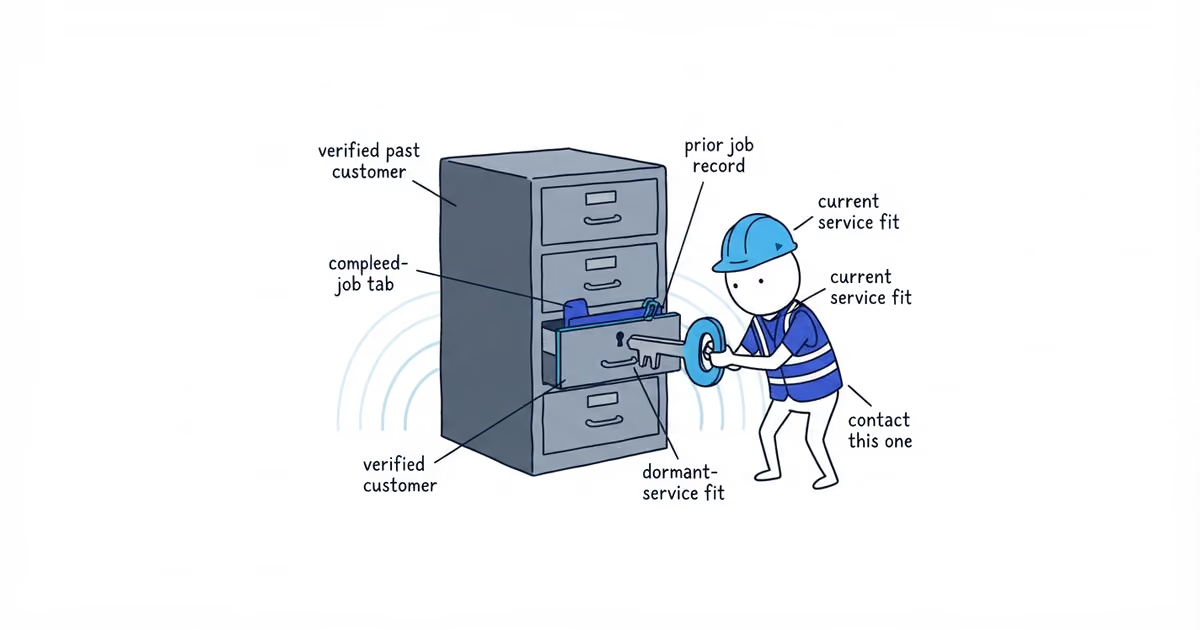
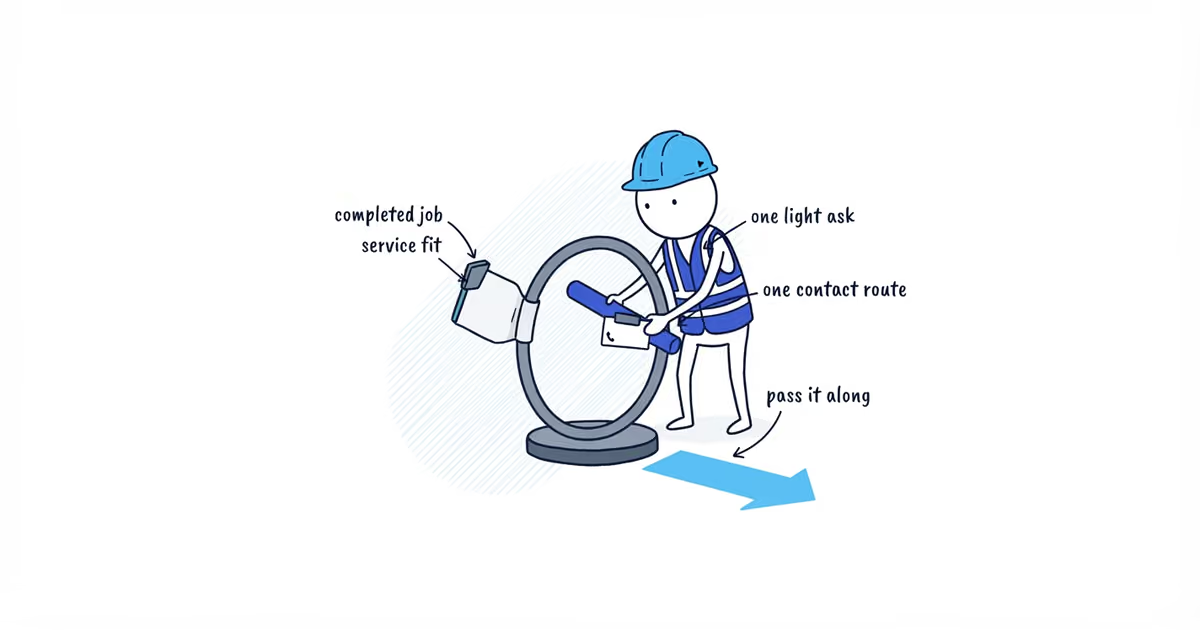
Start with a genuine service reason and a route the past customer agreed the business may use for this type of message. Choose a batch small enough to review each record, personalize the campaign, answer replies, and record outcomes.
Reactivation is for a dormant customer whose job was completed and who has a real service reason to hear from the business now. An open estimate, old lead, missed call, ordinary completion follow-up, or unresolved complaint belongs in a different workflow.
If the record is an unaccepted estimate, keep it out of this list. It needs estimate follow-up while it remains open, not past-customer reactivation.
How to build a past-customer reactivation list
Use the job record, not memory. Each row needs enough context to judge the contact and handle a reply.
| Customer | Prior service | Job date | Relevant property or service detail | Reason to contact now | Approved route for this message | Last contact | Eligible? | Next action | Outcome |
|---|---|---|---|---|---|---|---|---|---|
| [Name] | [Completed work] | [Date] | [Recorded detail] | [Customer-specific reason] | [Agreed route] | [Date or none] | [Include or exclude] | [Review, contact, or stop] | [Pending] |
A valid reason comes from the customer’s history: recurring work may be due, a seasonal service may be relevant, the customer asked to revisit a project, or the record supports a related service. These are possibilities, not universal intervals. Do not invent what the record does not support.
Run an exclusion check before prioritizing anyone:
- The customer or contact details appear wrong or stale.
- There is no record that the customer agreed to receive this type of message through the selected route.
- The record contains a do-not-contact preference.
- A complaint, warranty issue, refund request, or payment dispute is unresolved.
- There is no genuine service reason to get in touch.
- The work is outside the current service area or crew capacity.
- The relationship needs service recovery, not marketing.
Mark excluded records with a reason. Possessing a phone number or email address does not make the route eligible for this campaign.
How to choose past customers to contact first
Prioritize the strongest customer-specific reason, current service fit, complete records, and a clear next step.
A request to revisit work is stronger than a name with only an old invoice. Exclude services the crew no longer offers.
There is no universal batch size. Stop adding names when the owner can no longer check every record, personalize the context, or respond promptly.
How to run a three-touch past-customer reactivation campaign
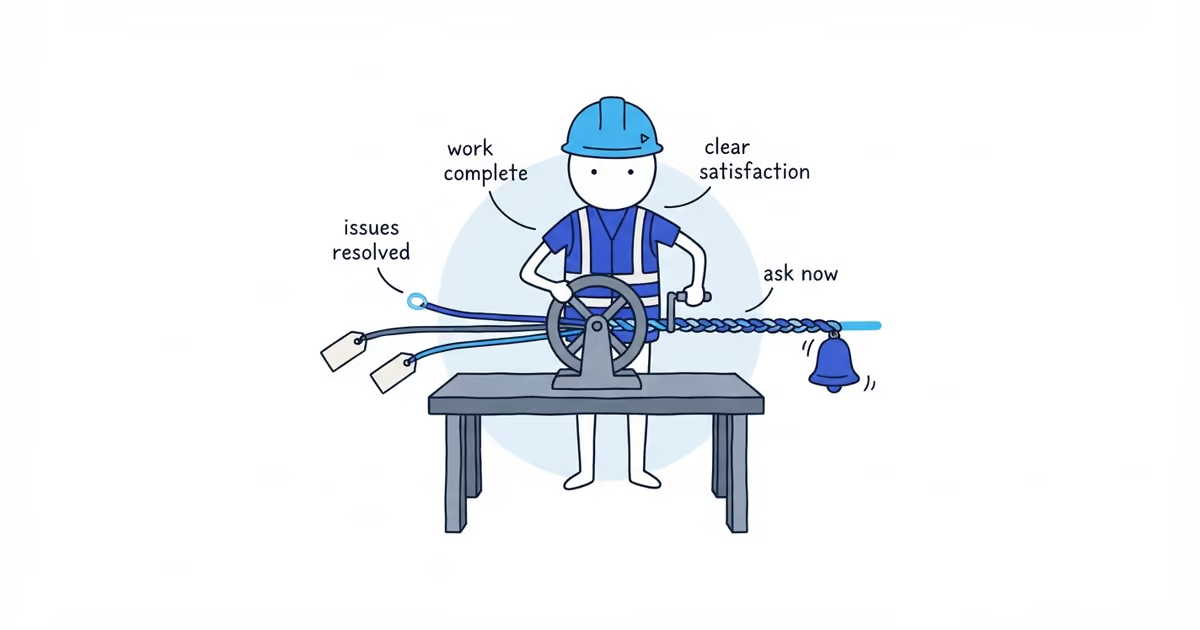
Three touches are a boundary, not a requirement. Use only the approved route, continue only while the reason remains relevant, and stop on any reply, decline, or request for no further contact.
Each message should identify the business and prior service, explain why it is relevant now, and offer one reply path.
First reactivation message
Hi [Name], this is [Sender] from [Business]. We completed [prior service] for you at [relevant property or service detail]. Our notes show [documented reason this may be relevant now]. Would you like to discuss [clear next step]? You can reply here either way.
“We have space this week” explains the contractor’s situation, not why the customer should hear from them.
Follow-up message for a past customer
Hi [Name], [Sender] from [Business] following up about [prior service or documented next need]. If [customer-relevant condition] still applies, I can [specific next step the business can deliver]. If it does not, no action is needed.
This clarifies the next step. Do not add a different service merely to create another reason to send.
Final close-the-loop message
Hi [Name], this is [Sender] from [Business]. I am closing the loop on [documented service reason], so I will not keep following up about it. If you would like [clear next step], reply here and we can pick the conversation back up.
The final message ends the campaign. No response after it is an outcome, not permission to keep chasing.
How to handle replies from past customers
Keep replies, bookings, and completed work as separate stages.
| Response | What to do | What to record |
|---|---|---|
| Interested | Start a scoped booking conversation. Confirm the current need, service fit, and appropriate next step. | Qualified conversation and next action |
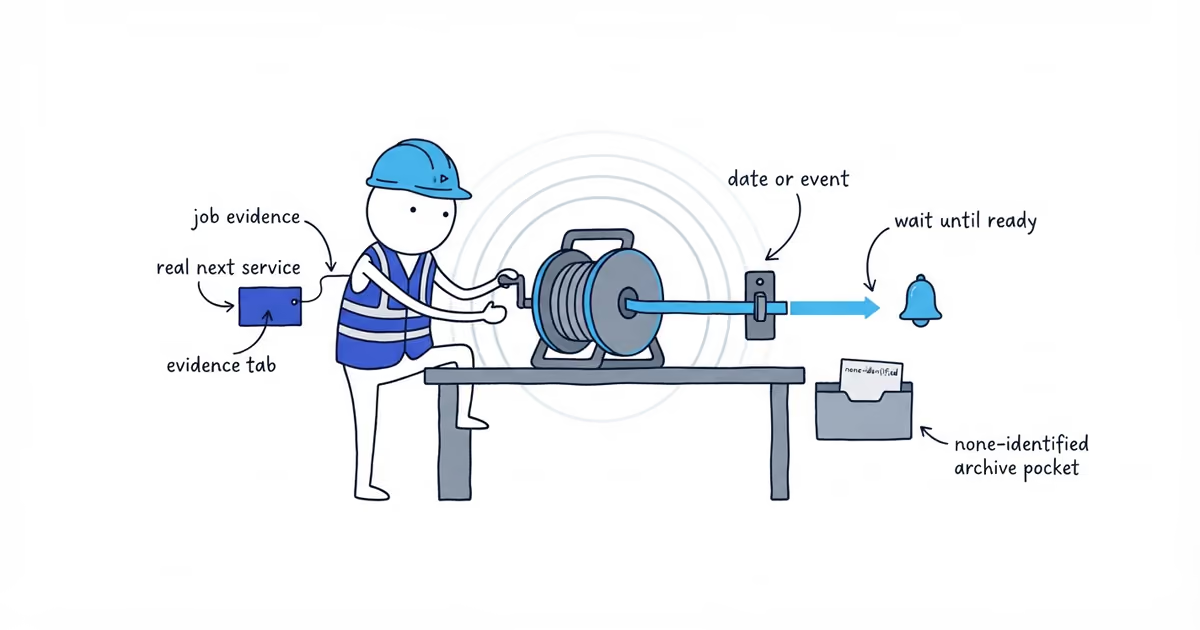
| Not now | Use only the future action or date the customer states. Do not invent a reminder schedule for them. | Customer-stated next action |
| Declines | Thank them, close the campaign, and stop. A request for no further contact also stops any other planned touch. | Declined and closed |
| No response | After the final touch, close the campaign without another message. | No response and closed |
Track replies, qualified conversations, bookings, completed work, and the next action. Sends and opens show activity, not reactivated revenue.
When not to contact past customers
A discount cannot rescue a message with no legitimate reason. Exclude contacts justified only by a coupon, empty week, or generic seasonal slogan.
Keep reactivation separate from sales follow-up, normal job closeout, service recovery, review requests, and referral requests. Each needs its own customer context.
For every name, record the result, stop, or schedule only the next step the customer stated. Start another batch only after every current row has an outcome.
Frequently Asked Questions
Should contractors contact every customer from last year?
No. Include a customer only when the job record shows a relevant service reason, the business can still do the work, and there is a clear next step to offer. The year of the prior job does not make the customer eligible by itself.
What if a past customer asks to be contacted later?
Record only the date or event the customer gives you, then close the current campaign. Contact them again only if that customer-stated trigger arrives and the service, route, and eligibility checks still hold.
- google-reviews
- how-to-reactivate-past-customers
- how-contractors-reactivate-past-customers
- past-customer-reactivation-list
- customer-reactivation-campaign
- how-to-rebook-customers-from-last-year
- past-customer-text-template