When should contractors ask customers for referrals?
Learn when contractors should ask customers for referrals using three timing gates: completed work, no open issues, and a clear customer satisfaction signal.
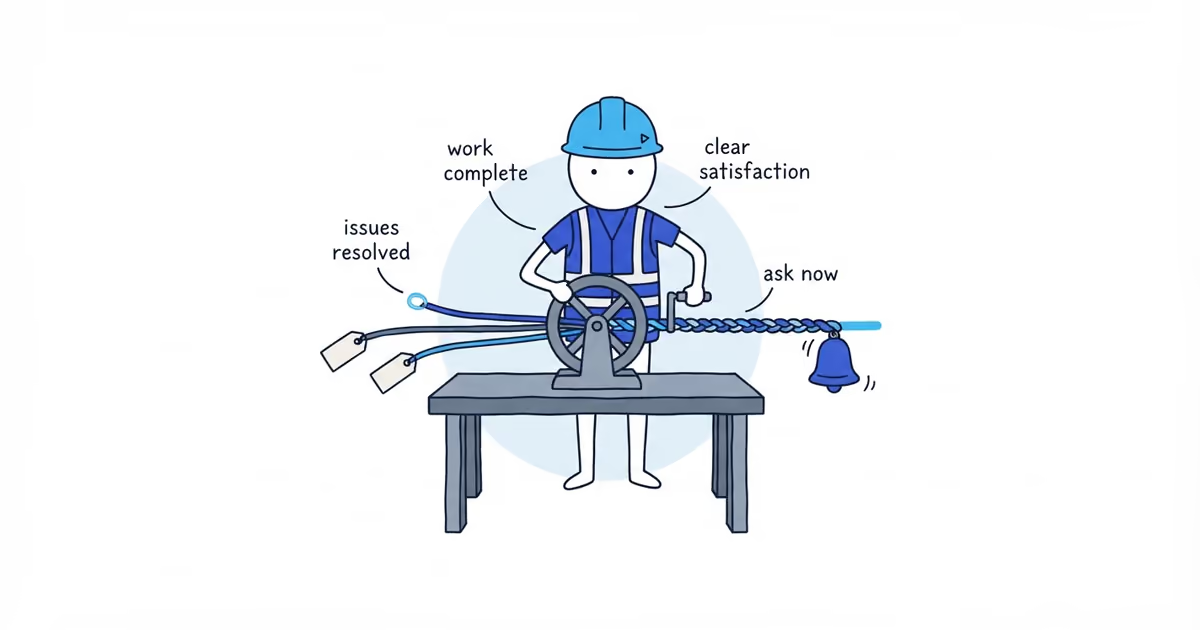
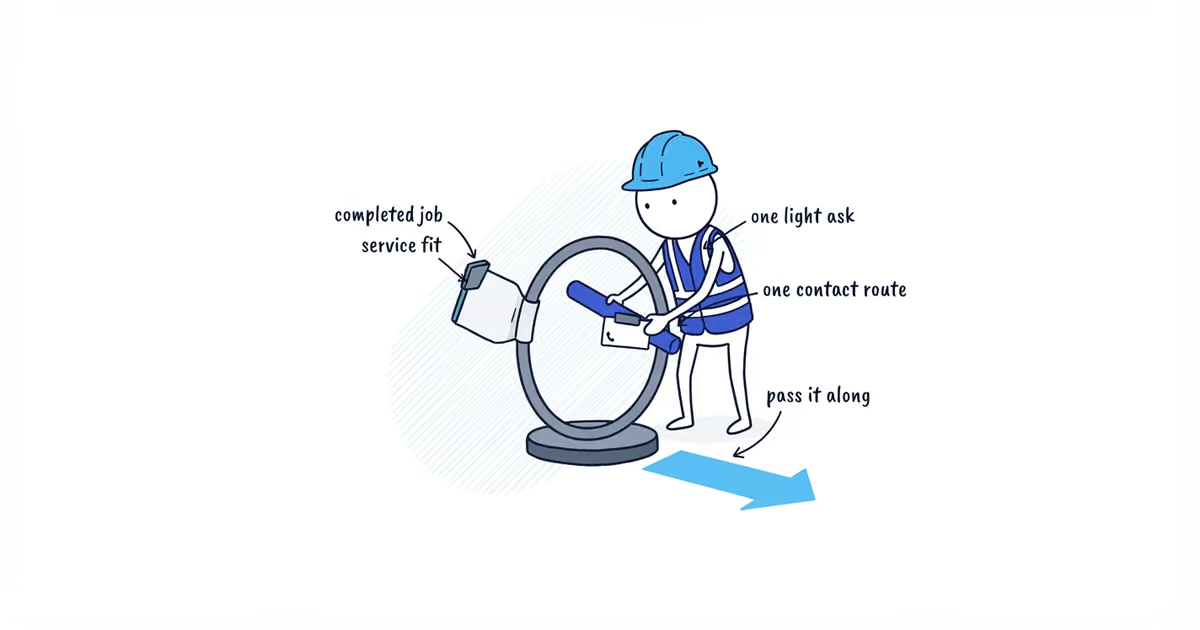
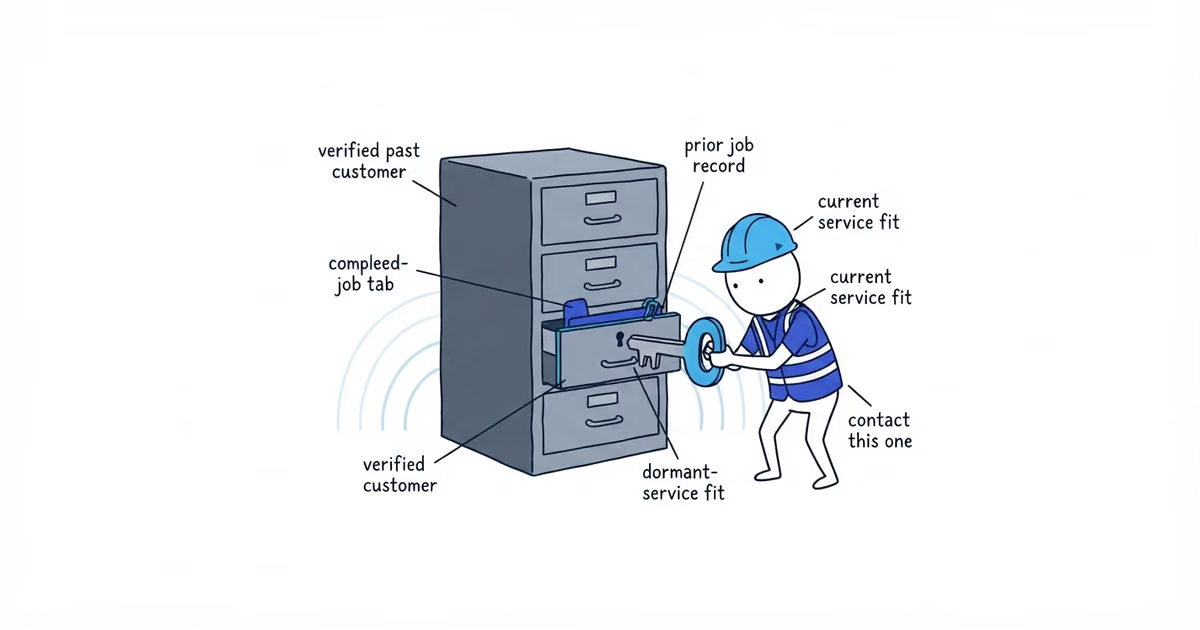
Contractors should ask customers for referrals only when three things are true: the job or a meaningful service milestone is complete, every open issue has been resolved, and the customer has clearly shown that they are satisfied. If one of those gates fails, the referral request is early.
Do not replace those gates with a fixed wait of a day, a week, or a month. Completion alone does not prove satisfaction. Neither does payment or silence. The right moment comes from the state of the job and the customer’s response, not the calendar.
Referral timing decision tree for contractors
Run every customer through the same short check:
Is the job or meaningful service milestone complete?
|-- No -> Wait. Do not ask during unfinished work.
`-- Yes -> Is any issue still open?
    |-- Yes -> Resolve first, then reconfirm the customer's experience.
    `-- No -> Has the customer clearly shown satisfaction?
        |-- No -> Wait for a clear satisfaction signal.
        |         Use the normal service check-in; do not fish for praise.
        `-- Yes -> Ask now, while the completed result is still specific.

After a serious complaint or loss of trust:
`-- Do not ask, even if the administrative item is later marked closed.
The tree gives four operating decisions: Ask now, Resolve first, Wait for a clear satisfaction signal, or Do not ask. It also prevents a common mistake: treating the end of the crew’s work as the end of the customer’s experience.
When to ask for referrals after different types of work
The three gates stay the same, but completion looks different across jobs.
| Work pattern | The eligible moment | What is not enough |
|---|---|---|
| Single-visit job | The customer has checked the result or confirmed that the problem is solved, and nothing remains open. | The technician has packed up, sent the invoice, or left the property. |
| Multi-day project | The final walkthrough is complete, the punch list is closed, and the customer has approved the finished result. | The major work is done but a correction, cleanup item, document, or billing question remains. |
| Recurring service | A meaningful first cycle or service milestone has succeeded, and the customer has explicitly confirmed that the service is working for them. | A preset number of visits, an automatic payment, or continued silence. |
For recurring work, avoid rules such as asking after the third visit. Three uneventful appointments may show consistency, but they do not tell you whether the customer values the result. Use a milestone that matters to the customer, then look for a clear response.
Customer satisfaction signals before asking for referrals
A useful signal says something about the result. It may be specific praise about the finished work, clear approval during a walkthrough, or confirmation that the original problem has been solved. An ongoing customer may renew, add work, or book again, but pair that behavior with an explicit statement before asking for a referral.
Unsolicited praise is the cleanest signal because the customer offered it without being led. If the work is complete and there are no open issues, that closeout conversation can be the right moment to ask. The result is fresh enough that the customer knows exactly what they would be recommending.
Do not manufacture a signal by asking leading questions until the customer agrees. A polite thank-you, final payment, lack of complaint, or signed completion record may close an operational step. None of them tells you that the customer is ready to put their name behind your business.
When not to ask a customer for a referral
An open punch-list item, callback, complaint, cleanup problem, missing document, or billing dispute changes the job immediately. Resolve first. Do not attach a referral request to an apology, a correction visit, or a disputed invoice.
Once the issue is fixed, reconfirm the customer’s experience instead of assuming the relationship reset automatically. Then run the three gates again. A small correction handled well may still end with a clearly satisfied customer. A serious complaint may close on paper while trust remains damaged. That is Do not ask, not a reason to wait a few more days and try anyway.
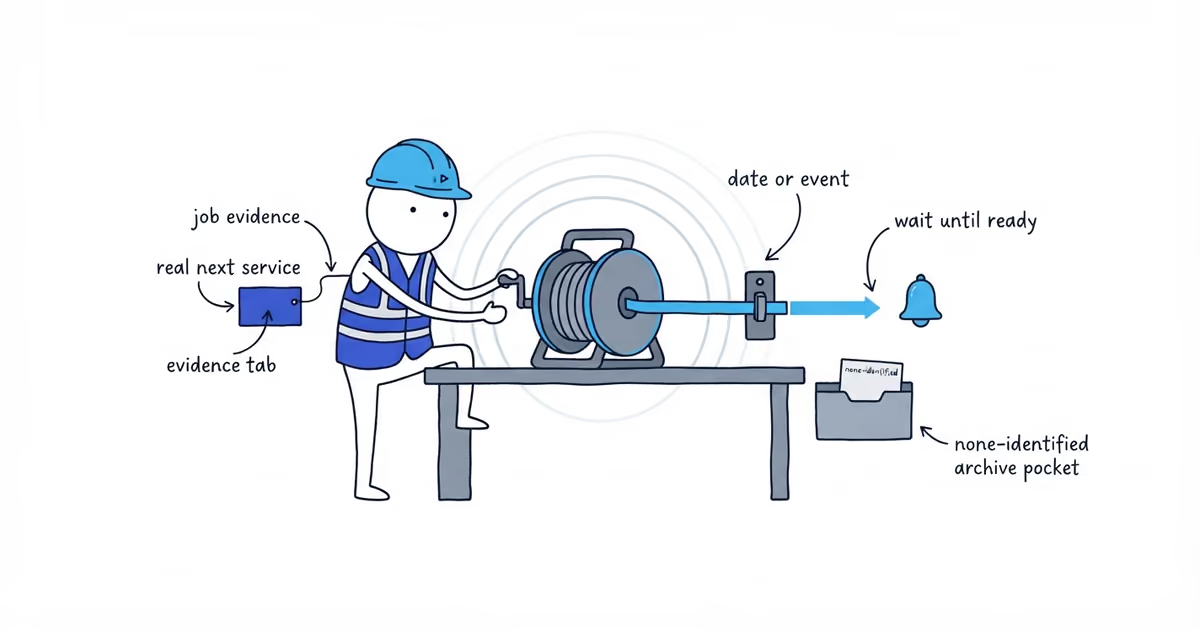
If the work is finished and clean but the customer has given no clear response, Wait for a clear satisfaction signal. Use the service check-in you would normally make to confirm the result and catch problems. The check-in is customer care, not a hidden referral pitch.
Referral timing and customer reviews
A positive review is not a prerequisite for a referral request. Requiring one first turns customer feedback into a gate and mixes two different actions. A customer can be ready to recommend the contractor privately without wanting to post publicly, and a posted review does not erase an unresolved service issue.
Use the decision tree on the customer in front of you. If all three gates pass, Ask now while the job is still easy to remember. If work remains, wait. If an issue is open, Resolve first. If satisfaction is unclear, Wait for a clear satisfaction signal. If trust has broken down, Do not ask.
Frequently Asked Questions
Can contractors ask for a referral after resolving a callback?
Sometimes. Finish the callback, confirm that no issue remains, and let the customer show that the relationship has recovered. If trust is still damaged, do not ask just because the work order is closed.
How should a contractor ask once the timing is right?
Keep the request brief and tied to the completed job. Ask for one clear action and leave the customer room to decline; do not combine the referral request with a review or another favor.
- google-reviews
- when-should-contractors-ask-for-referrals
- when-should-contractors-ask-customers-for-referrals
- when-to-ask-for-referrals
- contractor-referral-timing
- when-not-to-ask-for-a-referral