

Should a Contractor Use Due on Receipt, Net 7, Net 15, or Net 30?
Compare contractor payment terms including Due on Receipt, Net 7, Net 15, and Net 30, then choose a due date that fits the customer and your cash flow.
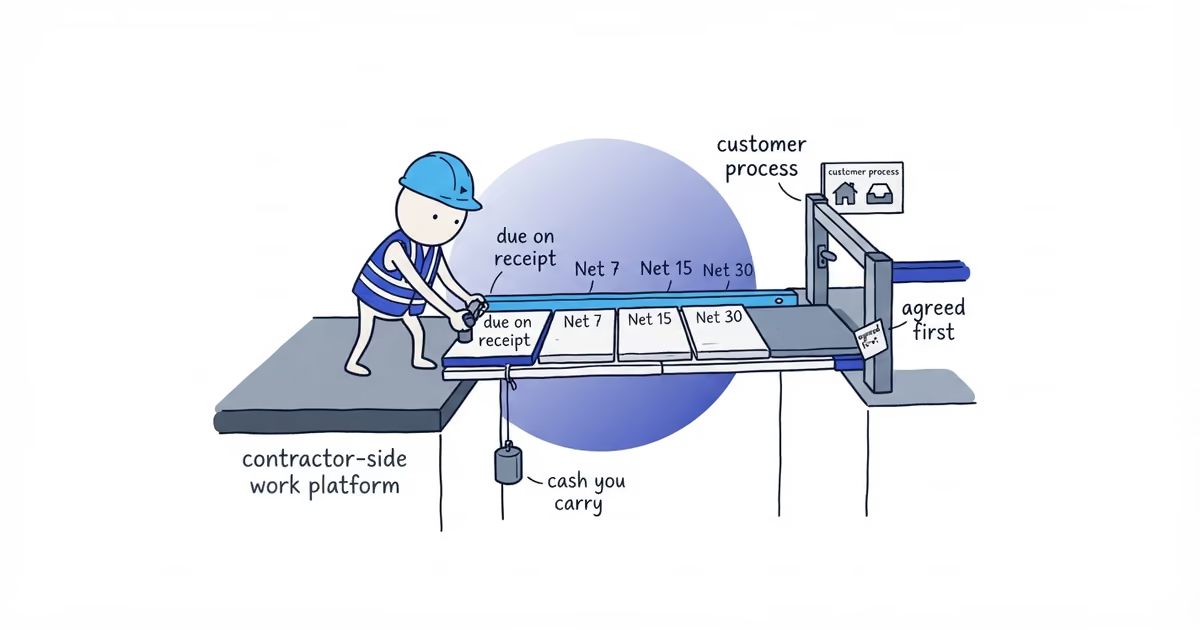
Use Due on Receipt when the customer is expected to pay at completion or before you leave the site. If you are sending an ordinary residential invoice that needs a short processing window, use Net 7; save Net 15 or Net 30 for an established customer or a documented accounts-payable process that truly requires it.
No single term fits every invoice. Choose the shortest window the customer can meet and your business can carry without delaying materials, payroll, or the next job.
Due on Receipt vs. Net 7, Net 15, and Net 30
Due on Receipt means payment is expected when the customer receives the invoice. Net 7, Net 15, and Net 30 ordinarily give the customer that many calendar days after the invoice date, unless your agreement defines a different starting point or counting rule.
Print the exact due date as well. If an invoice is dated June 3 and uses Net 7, show Net 7 - due June 10. The customer should not have to count the days.
| Term | Practical fit | Contractor example | Main caution |
|---|---|---|---|
| Due on Receipt | A direct payer can pay at completion | Residential repair after sign-off | Agree it before completion and have a payment method ready |
| Net 7 | A direct payer needs a few days | Residential final balance by bank transfer | May not fit formal AP |
| Net 15 | An established customer’s approval cycle is known | Recurring property work on a weekly payment run | You carry the cost for two more weeks |
| Net 30 | A genuine monthly AP cycle requires it | Vendor invoice with the required purchase order | A missed cutoff can extend the wait |
These are starting points, not industry rules. A term works only when it matches the billing event, the payer’s actual process, and the amount of unpaid work your business can tolerate.
How to choose contractor payment terms
Start with who can approve the bill. A homeowner or small-business owner may be able to pay immediately. A property manager, general contractor, or larger company may need a purchase order, vendor setup, named approver, portal submission, or scheduled payment run.
When a customer asks for Net 15 or Net 30, find out where the invoice goes, who approves it, which reference it needs, and when the AP cutoff occurs. Confirm whether their clock starts on the invoice date or another event in the purchasing terms. “Accounting handles it” is not a payment process.
Relationship history matters. An established customer who pays as agreed gives you evidence that a longer term may work; a new customer asking for Net 30 does not. If one unpaid balance would affect payroll or the next material order, you are being asked to finance the customer for a month.
Do not choose from the invoice amount alone. A larger residential balance can still be due at completion when the customer controls payment. A smaller commercial invoice may need Net 30 because it must pass through AP.
The billing event can also change the answer. A same-day service balance, progress invoice, final balance, and monthly recurring-service invoice can carry different agreed terms. On a larger project, a deposit or progress-payment structure may need to cover materials, subcontractors, and payroll; extending the final invoice is not a substitute for planning that structure before work starts.
Contractor payment terms examples
These amounts are fictional invoice inputs, not suggested prices.
Same-day residential repair: A homeowner approves a $340 repair, and the service terms say payment is due when the work is complete. The technician sends the invoice and payment link after sign-off. Due on Receipt fits because the payer is present and immediate payment is not a surprise.
Residential final balance: A crew finishes an approved exterior repair with a $4,200 balance. The homeowner needs a few days to arrange a bank transfer, and the estimate says Net 7. Use Net 7. The amount does not automatically call for Net 15.
Recurring commercial work: A property manager requires a work-order number, portal submission, and weekly approval, so Net 15 may fit. Another established account may require Net 30 because it pays approved vendors monthly. The longer term earns its place through a documented process and an affordable balance, not because it sounds more professional.
Match contractor invoice terms to the agreement
The invoice should match the estimate, contract, work order, or customer purchasing terms. Do not shorten the window after completion or casually grant Net 30 when the customer agreed to pay at completion. A preferred AP policy does not override the signed agreement or rules governing the job.
Once the billing event, approved amount, payment term, and exact due date are settled, use our contractor invoice generator to enter the job details, review the customer document, and download or print the PDF.
The practical rule is simple: collect at completion when that is how the job was sold, use Net 7 when a direct-paying customer needs a short window, and accept Net 15 or Net 30 only when there is a real operating reason and your business can afford the wait.
Frequently asked questions
When should a contractor send an invoice with Net terms?
Send it when the agreed billing event is verifiably complete, then count the Net window from the invoice date unless the agreement says otherwise. Net terms set the payment window; they do not make unfinished work ready to bill.
Should a contractor use Net 30 for a deposit?
Do not copy the final invoice term automatically. If the deposit must clear before scheduling or ordering materials, state that due event in the agreement; the permitted amount and legal treatment are separate questions.
Sources
- pricing
- should-contractor-use-due-on-receipt-net-7-net-15-or-net-30
- contractor-payment-terms
- due-on-receipt-vs-net-7
- net-7-payment-terms
- net-15-payment-terms
- net-30-payment-terms



