Should I Include Before and After Photos in a Quote?
Learn when to include before-and-after photos in a quote, which job to show, where to place the pair, and how to protect customer privacy and photo rights.
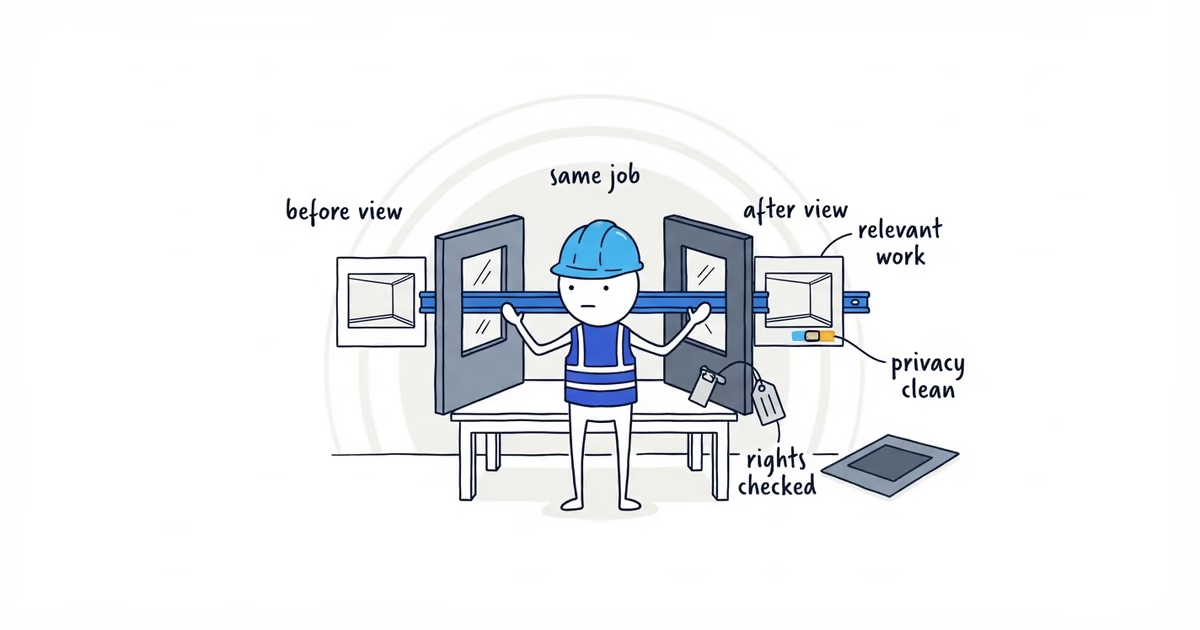
Yes, when one honest, relevant before-and-after pair helps the customer judge the work you are proposing. Leave it out when the photos are unrelated, misleading, unauthorized, privacy-sensitive, or unreadable in the delivered quote.
Run the pair through five gates:
| Gate | The photo pair passes when… |
|---|---|
| Relevant | It shows the same service and a similar material, condition, or finish. |
| Authentic | Both images came from the same completed job and accurately show your work. |
| Authorized | You have permission to share what is pictured and the right to use the image files. |
| Privacy-clean | Customer and property details that do not prove the work have been removed. |
| Readable | The pair, labels, and caption remain clear in the quote your customer receives. |
If any answer is no, use no pair. A weak photo does not become useful because the quote has an empty space.
Last verified: August 18, 2026 (United States).
Current-Condition Photos vs Before-and-After Photos
A photo of the current customer’s property documents what you saw. Put it beside the written scope it supports, such as damaged siding or a cracked walkway.
A past before-and-after pair does something else. It shows that you have completed comparable work. Give it a separate Relevant past work block.
Do not use the current customer’s damage as the Before image and another property’s finished surface as the After image. That is not a pair. It can make two different jobs look like one promised transformation.
The written scope still controls. Materials, preparation, exclusions, price, and warranty terms cannot live only in a photo.
Which Before-and-After Photos Belong in a Quote?
Start with the work in front of you. If the quote is for repainting peeling wood siding, use a past wood-siding repaint with a similar starting failure. A glossy kitchen renovation or a clean stucco repaint may look impressive, but it does not prove the same work.
Use one strong pair by default. Add a second only when the quote covers a materially different service, surface, or risk and the second pair proves that difference. Do not turn the quote into a portfolio.
Both photos should come from the same job. Label them Before and After, keep the angle and scale reasonably consistent, and avoid filters or edits that change the apparent result. The caption should name the service, starting condition, work performed, and finished condition.
The FTC says it evaluates advertising in context, including the message conveyed by pictures and implied claims. It also says material claims need support. Treat a quote photo the same way: use your real work, describe only what it shows, and do not present a past result as a guarantee that another property will finish identically.
How to Get Permission to Use Job Photos
Permission to perform work at a customer’s property is not automatically permission to reuse job photos in another prospect’s quote. Use a written photo policy. Record who approved the use, the project, approval date, allowed uses, and restrictions.
That is a conservative operating rule, not a universal legal answer. Privacy, publicity, contract, copyright, and property questions vary by facts and location.
Permission for what the photo depicts is only half of the check. You also need the right to use the file. The U.S. Copyright Office says the person who takes a photograph is generally its initial copyright owner, with limited work-made-for-hire exceptions. Confirm rights before using a photo supplied by a customer, subcontractor, freelance photographer, or former team member.
Create a shareable copy. Crop or blur faces, children, house numbers, license plates, mail, documents, screens, personal photographs, access codes, security details, and other identifiers that do not prove the work. Remove unnecessary location information. Keep the restricted original separate and limit who can access it.
FTC data guidance says to know what you hold, keep only what the business needs, protect it, and dispose of unnecessary copies. Apply that discipline without claiming every property photo has the same legal status.
Where to Put Before-and-After Photos in a Quote
Use this order:
- Customer and job details
- Current condition and written scope
- Relevant past work
- Price and terms
- Acceptance
The customer sees their own job first, then comparable proof in context. The quote does not open like a sales brochure or separate price from scope.
Use this proof-card template:
RELEVANT PAST WORK

[ BEFORE IMAGE ]    [ AFTER IMAGE ]

Service: [service performed]
Starting condition: [relevant condition]
Work shown: [preparation and work completed]
Finished condition: [visible result, stated factually]
Alt text: [meaning of the comparison]

INTERNAL - DO NOT SHOW IN QUOTE
Permission: [name/role, date, approved uses, restrictions]
Photo rights: [owner or authorization record]
Privacy check: [shareable copy reviewed by/date]
Delivery check: [phone preview and final document reviewed by/date]
For digital quotes, add alt text where the system supports it. W3C says an informative image’s alternative should communicate its meaning, not merely list what the pixels show. Keep a visible caption so the proof does not rely on the image alone.
Before-and-After Photo Example for a Painting Quote
RELEVANT PAST WORK

[ BEFORE: peeling wood siding ]    [ AFTER: finished wood siding ]

Service: Exterior wood-siding repaint
Starting condition: Peeling coating and exposed edges on painted wood siding
Work shown: Scraping, spot priming, caulking, and two finish coats
Finished condition: Even, fully coated siding after the specified preparation
Alt text: Before and after of peeling wood siding prepared, primed, and repainted
The caption proves preparation and finish on a comparable past job. It does not name the former customer, reveal the address, or promise that the new house will produce an identical result.
Preview the actual file before sending it. Check a phone-sized screen and the final delivered document. The images should be equal in size; Before and After labels, caption, scope, and price should remain legible without overlap or constant zooming.
If the pair is not comparable, permission or rights are unclear, private details cannot be removed, or the export makes the page hard to read, leave it out. Reviews and multiple price options are separate quote decisions. Neither fixes an irrelevant photo.
If you also plan to publish the pair on Google, use the Google Business Profile photo guide to check platform-specific framing, privacy, and honest-comparison rules before uploading it.
Frequently Asked Questions
Do I Need Written Permission to Reuse Job Photos in a Quote?
Use written permission as the operating standard and record the approved uses and restrictions. Permission requirements vary by facts and location, and permission to perform the work is not the same as permission to reuse the photos.
Can I Use a Job Photo Taken by Someone Else?
Only after you confirm the right to use the file and permission to share what it depicts. A photo sent by a customer, subcontractor, freelancer, or former team member does not become yours simply because it is in your folder.
What If I Only Have an After Photo?
Use it as a clearly labeled past-project image only when it passes the relevance, rights, privacy, and readability checks. Do not pair it with an unrelated before photo or call it a before-and-after result.
Sources
- pricing
- should-i-include-before-and-after-photos-in-quote
- should-i-include-before-and-after-photos-in-a-quote
- before-and-after-photos-in-a-quote
- job-photos-in-estimates
- how-to-use-job-photos-in-quotes
- permission-to-use-job-photos