What customer responsibilities should a contractor proposal state?
Learn which customer responsibilities to state in a contractor proposal, assign each deadline and counterpart, and handle late inputs with notice and review.
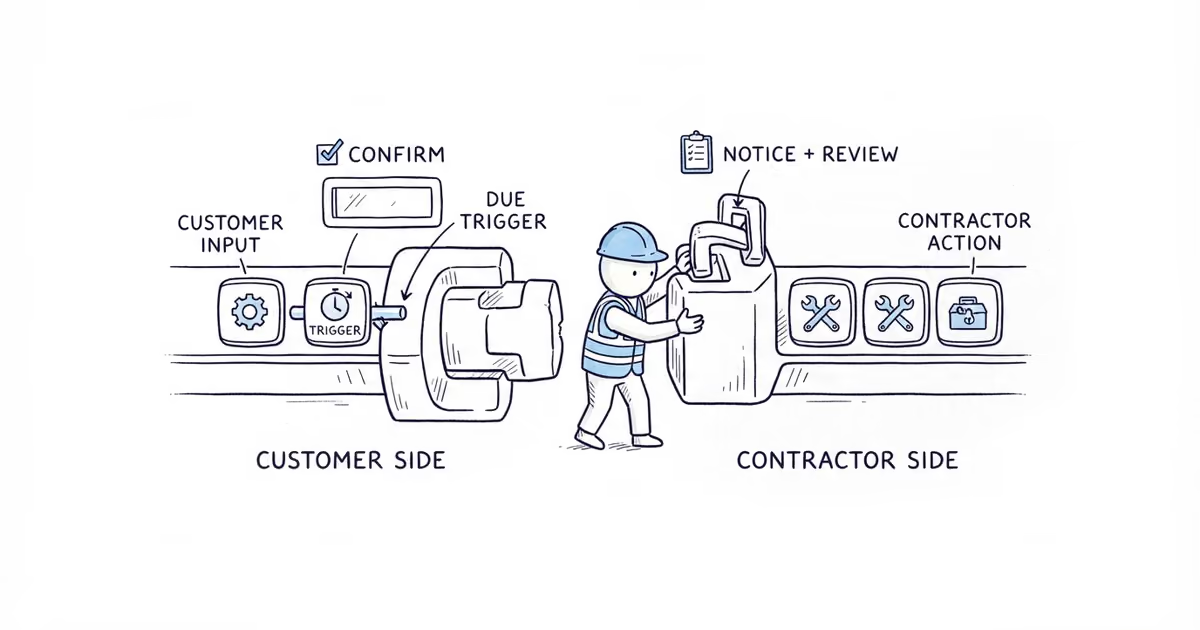
A proposal should state only the customer-controlled inputs the job needs: access, selections, supplied information or materials, site readiness, utilities, logistics, pets or occupants, assigned approvals, payment triggers, and notice of delays or changes. Omit irrelevant categories.
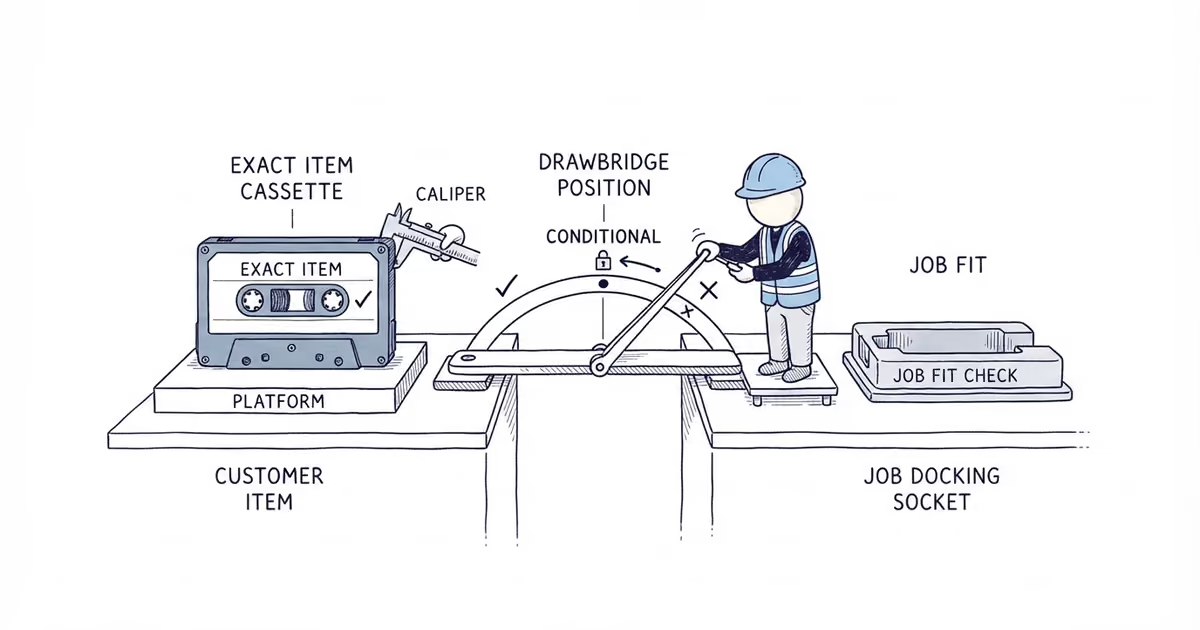
Include a responsibility only when the customer controls it, the work requires it, and you can name the result and timing. Contractor-controlled work belongs in contractor scope or responsibilities, not a customer-risk transfer sentence.
Last verified: August 31, 2026 (United States).
Customer responsibilities vs. assumptions, exclusions, and waivers
A responsibility assigns a customer action. An assumption records a planning or pricing input. An exclusion identifies work outside the offer. A waiver attempts to release responsibility. Do not disguise the last three as customer tasks.
Each row needs a customer action, contractor counterpart, deadline, confirmation, and notice-and-review step. Complete it for the job or omit it.
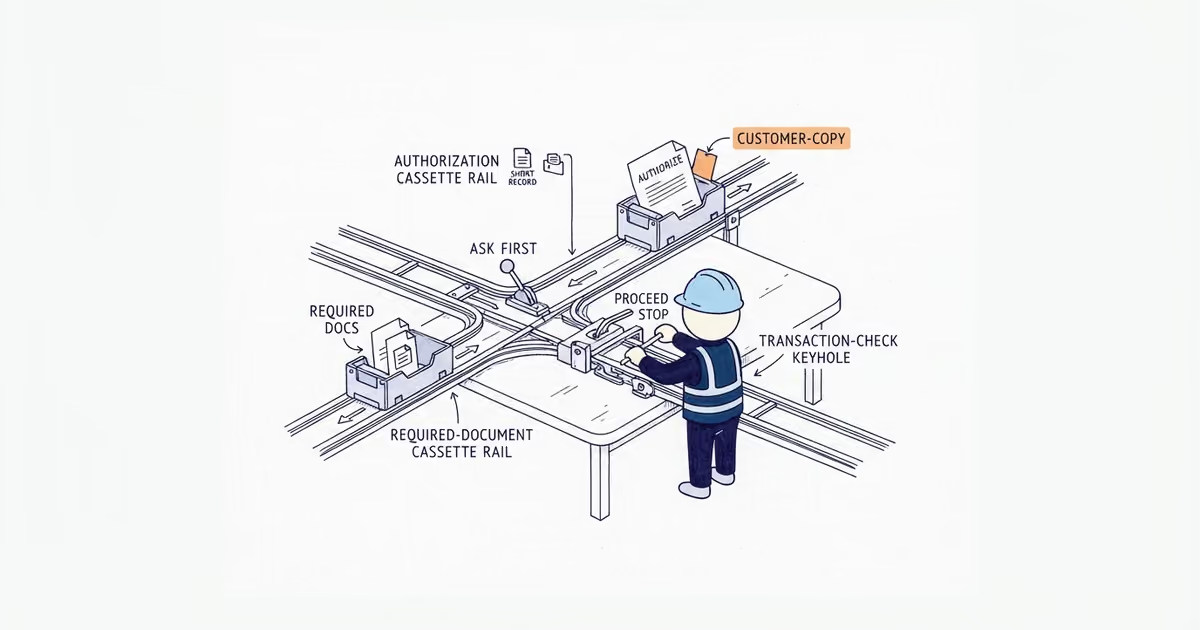
Customer-responsibility matrix for a contractor proposal
| Category | Customer-controlled action or input | Contractor counterpart | Due date or trigger | Proof or confirmation | If it is not ready |
|---|---|---|---|---|---|
| Access | Grant [zone] entry; name contact and key, code, gate, lift, or loading access | Send arrival window; limit crew to granted access | Before visit or delivery | Written access record | Notify; continue unblocked work; review timing |
| Selections | Authorized person confirms [product, finish, layout, or option] | State choices, lead-time effect, and deadline | Before order or scheduling | Dated selection | Notify; review only the actual price or time effect |
| Supplied information | Provide [drawing, record, property rule, utility location, or contact] | State format; check visible conflicts before relying on it | Before dependent pricing or work | File or acknowledgment | Request it; pause affected work; record impact |
| Supplied item | Deliver [item, specification, quantity, condition] to [place] | State compatibility needs; inspect it; install promised work correctly | Before scheduled task | Delivery record | Report mismatch; review replacement and timing |
| Site readiness | Clear [items/area] or finish separate owner work | Handle promised protection, setup, sequencing, and cleanup | Before dependent task | Walkthrough or photo | Name blocked area and work that can continue |
| Utilities | Keep [named service] available; report planned interruption | State need; handle contractor testing, temporary service, and safe work | During stated window | Confirmation or outage notice | Make safe; record outage; review affected work |
| Logistics | Reserve only parking, delivery, or storage access the customer controls | State vehicle, hours, size, staging, and protection needs | Before delivery or mobilization | Reservation or approval | Confirm lawful alternative before use |
| Pets/occupants | Keep [named people or pets] outside [zone/hours] | Provide promised barriers, notices, cleanup, and crew conduct | During stated work | Pre-start acknowledgment | Stop affected access; notify; resume when clear |
| Permits/approvals | Obtain only [named approval] actually assigned to the customer | Verify allocation; supply support; obtain contractor-assigned items | Before dependent work | Issued approval | Check status; record dependency; review start |
| Payment | Pay the referenced amount after the agreed event | Complete event; issue invoice, evidence, and receipt | Agreed milestone and date | Invoice and receipt | Use agreed notice; invent no milestone or penalty |
Name actual zones, hours, services, dimensions, and authority. A customer cannot authorize public or third-party space by contract language alone. Split permits, inspections, HOA, landlord, and utility approvals, then verify who can and must obtain each. Payment references an existing schedule; this matrix does not create one.
What to do when a customer responsibility is late
Use the same process for lost access, late selections, damaged supplied items, occupant conflicts, or changed approvals:
- The customer promptly reports the changed input.
- The contractor records the effect and says which work can continue.
- Both sides use the agreed review or change process before changing price or schedule.
If a late input becomes a request for different work, use our scope-change guide to pause the affected work, document the request, reprice the difference, and get approval before continuing.
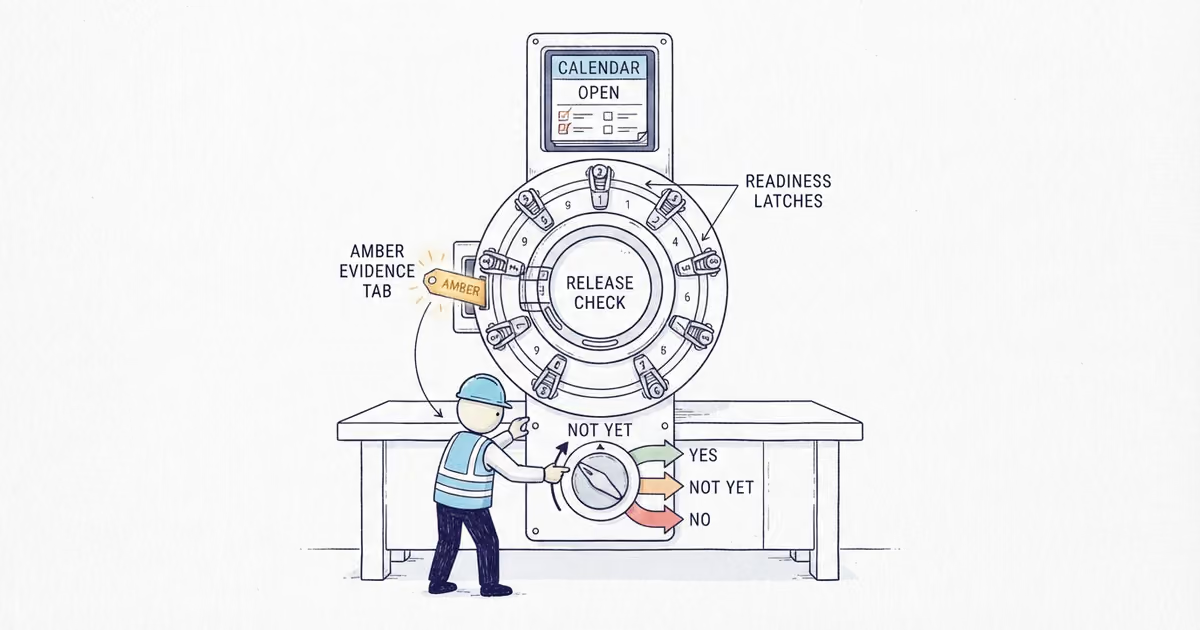
A missed input is not automatically a fee, breach, or unlimited extension. Document the actual effect first.
Contractor proposal customer-responsibility examples
These are drafting prompts, not universal clauses. Adapt them to the actual agreement and applicable requirements.
- Access: Customer grants [zone] access [hours/date]. Contractor confirms [arrival window] and limits crew to that zone.
- Selection: [Authorized person] confirms [item] from [stated set] by [date]. Contractor records it and reports any verified effect.
- Supplied input: Customer delivers [record/item and specification] to [place] by [date]. Contractor checks stated requirements and reports visible conflicts.
- Pets/occupants: Customer keeps [pet/person] outside [zone/hours]. Contractor provides promised barriers and zone notices.
- Approval: [Party] obtains [named approval] by [date]; [other party] supplies [support]. Dependent work follows confirmed approval.
- Payment: Customer pays [referenced amount] after [event] by [date]. Contractor provides [invoice/evidence] and records receipt.
Customer responsibilities for an occupied-home job
For occupied-home painting, the customer confirms the paint, clears named fragile items, provides bedroom access, keeps a dog outside the work zone, and reports a planned outage. The contractor confirms arrival, protects fixed items, controls dust and equipment, maintains barriers, performs the work, and records interruptions.
Omit permits, parking, storage, and customer-supplied materials when they do not apply. Deliberate omission shows the matrix was completed for this job.
What contractors should not assign to customers
Customer responsibilities do not transfer workmanship, supervision, crew conduct, code compliance, contractor-assigned inspections, protection, cleanup, or contractor-caused damage. Where federal OSHA construction rules apply, 29 CFR 1926.20 places accident-prevention, inspection, and competent-person duties on the employer; a customer line does not replace them.
California Business and Professions Code Section 7159 is a state-specific example of detailed contract requirements and prime-contractor responsibility. Do not copy it nationwide. Check the rules for the actual location, trade, site, and job.
Contractor proposal responsibility checklist
- Every retained item is customer-controlled and necessary for this job.
- Every row shows the contractor’s corresponding action.
- Names, locations, items, authority, dates, and triggers are specific.
- Third-party limits and issued approvals are clear.
- Late inputs lead to notice, documented impact, and review rather than an invented penalty.
- The matrix agrees with the scope, schedule, price, payment, and accepted version.
- Applicable legal, permit, safety, property, and site requirements have been checked.
Frequently Asked Questions
Who should obtain permits and inspections for a contractor job?
Assign each permit or inspection to the party that can and must obtain it under the applicable rules and actual agreement. Do not default every item to the customer; name the applicant, supporting information, fee, access, and deadline separately.
What happens if a customer responsibility is late?
The customer should give prompt notice, and the contractor should document the actual effect and identify work that can continue. Use the agreed review or change process before changing price or schedule; a late input is not an automatic fee or unlimited extension.
Sources
- pricing
- what-customer-responsibilities-should-a-contractor-proposal-state
- contractor-proposal-customer-responsibilities
- customer-responsibility-matrix
- contractor-proposal-responsibilities
- customer-delay-notice-contractor