

What should I do if the customer changes the scope?
When a customer changes the scope, follow this five-step contractor process to pause work, reprice the difference, get written approval, and proceed clearly.
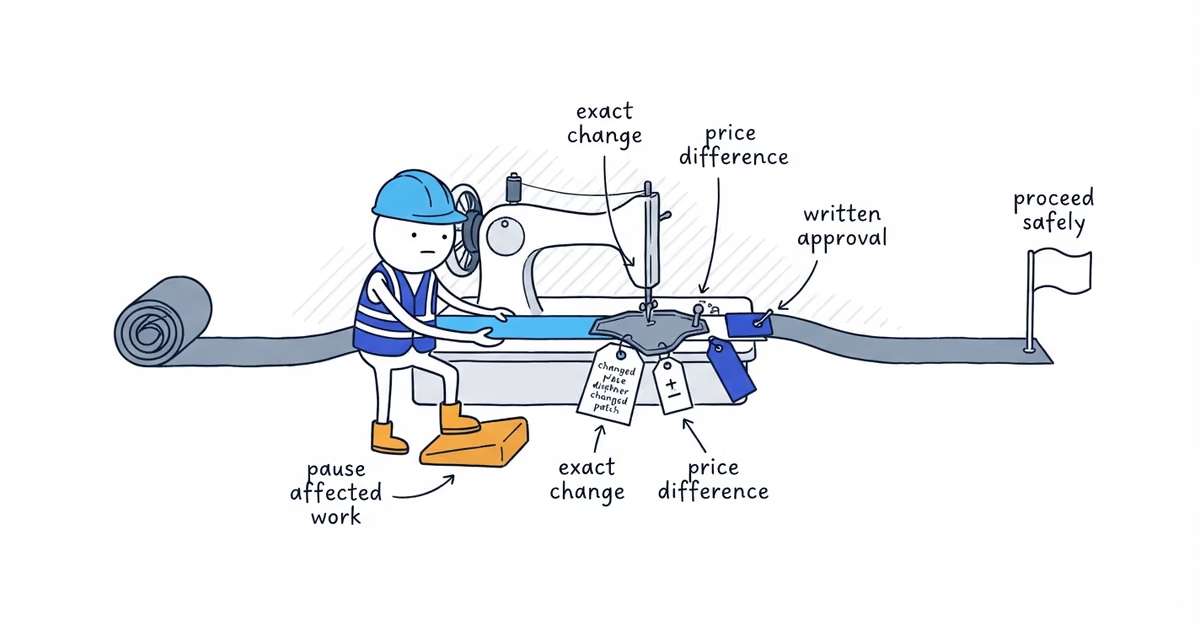
When a customer changes the scope, follow this order: pause, document, reprice, approve, proceed.
Do not agree to “take care of it” and work out the price later. Pause the affected part of the job long enough to define the change and get a clear decision. Keep the site safe, and keep unrelated agreed work moving when practical.
How to tell if the customer changed the scope
Compare the request with the accepted quote, estimate, proposal, or work description. A question about an included item may only need clarification. An added item, different finish, or removal of agreed work changes the scope. Use the written job description, not memory.
When the request first comes up, say:
I can look at that. It changes what we originally agreed, so I am going to pause this part, work out the price and timing difference, and send it to you before we continue with the change.
That is firm without turning a normal job conversation into a dispute.
Five-step contractor scope-change process
1. Pause the affected work
Stop before the change creates extra labor, uses different materials, or makes the original work hard to undo. Secure the work area and continue with unaffected tasks when practical.
The common mistake is starting “just this small part” while the customer decides. Once the work is done, the price conversation becomes much harder.
2. Document the request
Write down what was agreed originally and what the customer now wants. Name the actual deliverable, not “upgrade bathroom” or “extra painting.” Record:
- The original agreed item
- What the customer wants added, removed, or changed
- The revised result, including quantities, locations, finishes, or exclusions that matter
If the customer removes work, document that too. Scope changes can reduce the total as well as increase it.
3. Reprice the difference
Price the change itself, not the whole job again. Check the added or removed labor, materials, equipment, and outside work. Note any effect on the sequence or completion date.
Use the change-order pricing guide to calculate the net cost, credit, overhead, profit, tax, and revised total before you present the change.
Show the price difference clearly as either an addition or a reduction:
- Added scope:
+$760 - Removed scope:
-$280
Then show the revised job total. A customer should not have to combine the original amount with three messages to understand what the job now costs.
4. Get clear written approval
Send one change summary before starting the changed portion. It should contain:
- Original agreed item
- Requested addition, deletion, or substitution
- Revised deliverable
- Price change
- Revised job total
- Effect on the schedule or completion date
- The action the customer should take to approve or decline
Use the approval process in your existing agreement. If you are unsure what your contract or local requirements call for, ask a qualified local adviser. This is job-control guidance, not legal advice; no approval method works the same way in every situation.
5. Proceed only after approval
Once the customer approves, save the record with the job, update the crew’s instructions, and change the schedule or material order as needed. Keep the revised scope, total, and timing consistent.
Then continue. Until that point, the changed work is still a request, not a field instruction.
What to say when a customer requests extra work
Hi [Name], here is the change we discussed for [job]. The original scope includes [original item]. You asked us to [addition, deletion, or change]. The price will [increase/decrease] by [$ amount], making the revised job total [$ total]. This will [add/remove/no change to] [time] from the schedule, with the expected completion date now [date]. Please [approval action from your existing process] if you want us to make this change. Until then, we will keep the original scope in place.
Keep the wording neutral. You are confirming a business decision, not scolding the customer for asking.
Contractor scope-change example
A painting contractor has an accepted price of $4,800 for walls and ceilings. The customer then asks the crew to paint six doors and their frames.
The contractor checks the original scope and confirms that doors and frames were excluded. The added work needs surface preparation, finish paint, and another day on site.
He sends this change summary:
Original scope: Walls and ceilings only; doors and frames excluded.
Requested change: Prepare and paint six doors and frames.
Price change: +$760.
Revised job total: $5,560.
Schedule change: One additional workday; revised completion Friday.
Next step: Please approve this change through the method in our agreement before we begin the doors and frames.
The crew starts the doors after approval. If the customer instead removed an unstarted $280 utility-room item, the summary would show -$280 and the lower revised total.
What if the customer does not approve the scope change?
Do not perform the changed work. Confirm the decision in writing and return to the original agreement:
No problem. We will not make the requested change. We will continue with the original scope of [short description] at the original total of [$ amount], with [original timing].
If the customer simply has not replied, leave the affected work paused. Do not treat silence as approval.
This process starts after the work has been agreed and the customer requests a different result. Deciding how long a contractor quote should be valid before acceptance is a separate issue. So is protecting a quote from general material price increases.
If informal extras keep reaching the crew without this pause-and-approval step, use the scope creep guide to tighten the original quote and crew stop-work rule before the next project.
Before proceeding, make sure the record answers six questions: What changed? What is now included? What is excluded? Is the price going up or down? What is the revised total and timing? How did the customer approve it?
If your crew and customer can answer those questions from the same written record, the changed work is ready to begin.
Frequently Asked Questions
What is a change order in contracting?
A change order is a written record of an agreed change to a job’s scope, price, timing, or a combination of those items. It gives the customer and contractor one current description to work from. Use the name and approval method required by your existing agreement.
What should a team member do when a customer asks for extra work?
The team member should record the request without promising a price or starting the added work. The Owner or Manager can then compare it with the original scope, price the difference, and get the customer’s approval before sending the updated instruction back to the team.
- pricing
- what-to-do-when-customer-changes-scope
- contractor-scope-change
- contractor-change-order-process
- customer-requests-extra-work
- scope-change-approval



