What should a contractor job-completion text say?
Use these contractor job-completion text templates to confirm finished work, share documented next steps, and give customers a clear route to report problems.
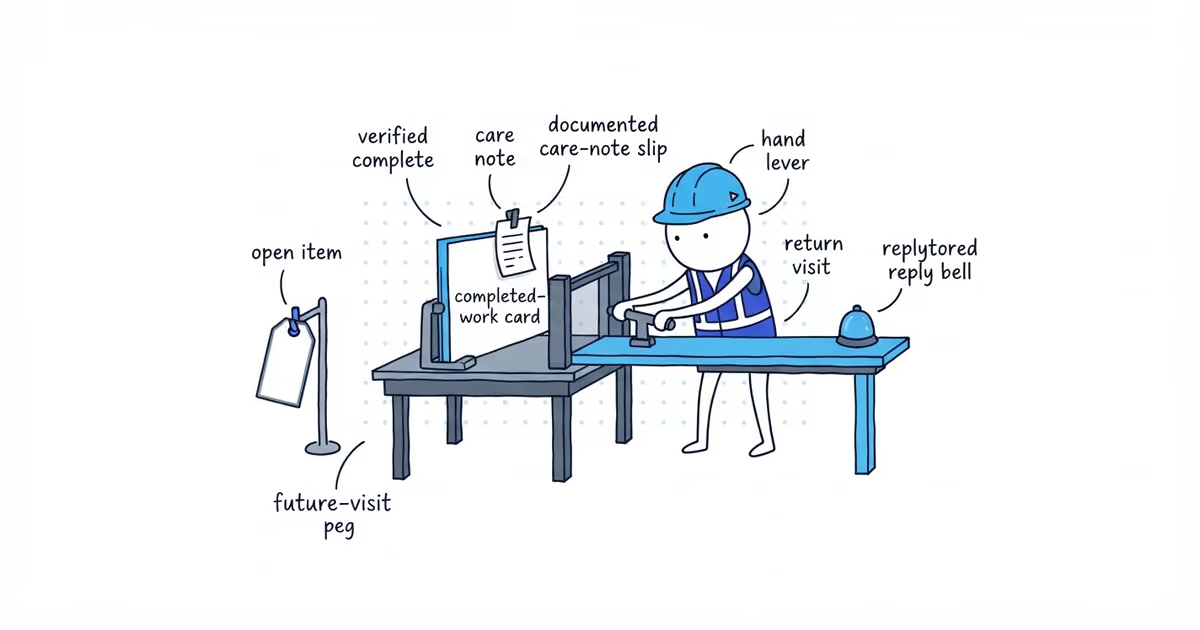
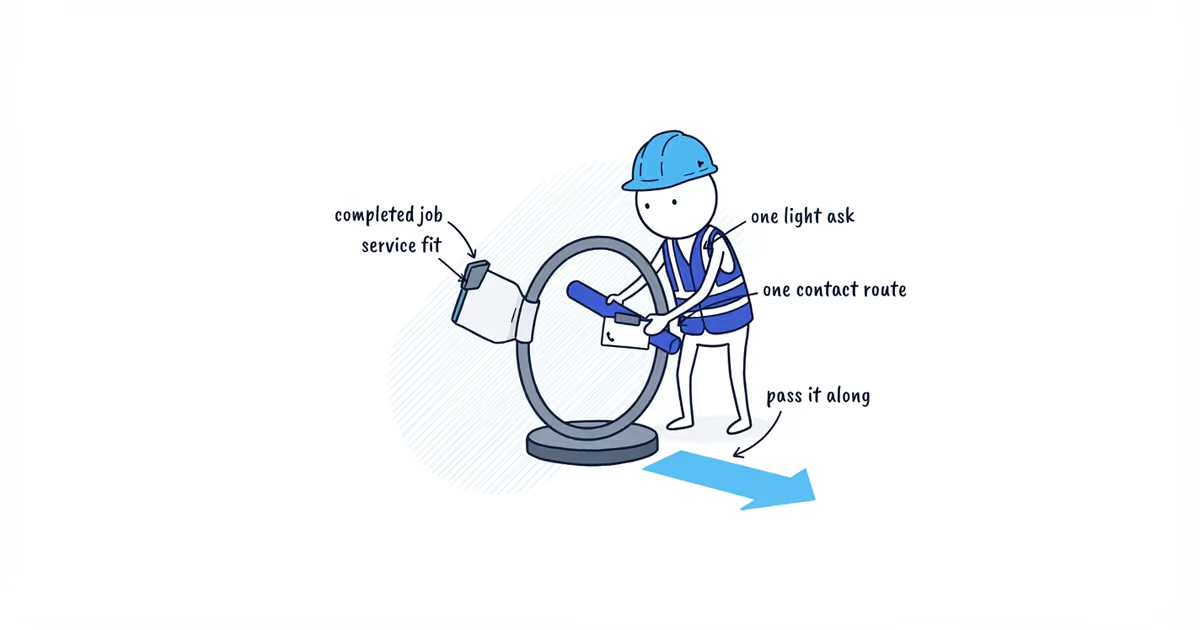
Hi [customer name], this is [name] from [business]. We’ve completed [specific work] at [property or job reference]. If you have a question or notice a problem with today’s work, reply to this number and we’ll follow up.
Send the job-completion text after you have verified what the crew actually finished. Its job is simple: tell the customer what is complete, pass along any documented instructions or next step, and give them one monitored way to reach you.
It is not customer signoff. It does not prove approval, confirm payment, create a warranty, or close an unresolved item. Keep those conversations separate.
What to include in a contractor job-completion text
- Who is contacting the customer. Use a person’s name and the business name. A customer may not recognize an unsaved number.
- What was completed. Name the work precisely enough that the customer knows which job you mean. Match the wording to the job record, not the whole estimate if part of the scope remains open.
- Any care or use instruction. Include this only when it applies to the actual job and comes from the job record or the relevant manufacturer guidance. Do not improvise a curing time, operating direction, or safety instruction.
- Any documented next step. State a return visit, remaining item, or handoff that is already recorded. Separate it from the work that is finished.
- How to report a problem. Give the customer one route that somebody checks. “Reply to this number” is better than a vague “let us know” when nobody monitors every channel.
Contractor job-completion text templates
Use the standard text at the top when the agreed work is complete and no special handoff is needed. The versions below cover the situations where vague wording causes trouble.
Customer was not onsite
Hi [customer name], this is [name] from [business]. We’ve completed [specific work] at [property or job reference]. Because you were not onsite, we sent the documented handoff notes to [recorded route]. Please reply here if you have a question when you review the work.
Name only handoff materials that were actually delivered and their recorded destination.
The job has a care or use instruction
Hi [customer name], this is [name] from [business]. We’ve completed [specific work]. The instruction recorded for this job is: [documented care or use instruction]. If that instruction is unclear or you notice a problem, reply here and we’ll follow up.
Copy only a recorded job or applicable manufacturer instruction. Otherwise, leave it out.
A return visit or item remains open
Hi [customer name], this is [name] from [business]. We’ve completed [finished part of the work]. [Remaining item] is still open, and our recorded next step is [return date, agreed window, or other documented action]. Reply here if you have a question about either part.
When only today’s portion is complete, name the finished work and open item separately.
A recurring service visit is complete
Hi [customer name], this is [name] from [business]. We’ve completed today’s [service] visit at [property]. This visit covered [recorded work]. [Next visit or handoff, if already documented.] Reply here if you have a question about today’s service.
This confirms one visit. Mention the next one only when it is already recorded.
The customer reports a possible issue after completion
Thanks for letting us know about [reported issue]. I’ve added it to the record for [job or property]. We need to review it before saying what caused it. [Business or named person] will [documented next contact step]. Please reply here if the situation changes before then.
Acknowledge the report without diagnosing it or promising an outcome before review.
What not to include in a job-completion text
Keep the handoff to one purpose. Send invoices and warranty information through their normal routes. Make any later review, referral, maintenance, discount, or rebooking request separately, with its own timing and context.
Never say that no reply means the customer accepts the work. The text records the handoff; it does not manufacture approval.
Job-completion text checklist before sending
- The crew or job record confirms the work named in the text is finished.
- The wording does not hide a remaining item or documented return visit.
- Every care or use instruction comes from the actual job record or applicable manufacturer guidance.
- Any promised next step matches what the business can see in its records.
- The reply route is monitored by someone who can act on the response.
If those checks pass, send the shortest version that tells the customer what was completed, what happens next, and where to report a problem.
Frequently Asked Questions
How should I follow up with customers after a job?
First, respond to any question or problem raised through the completion text. Use a separate follow-up later only when it has a clear purpose, such as checking a documented open item. Do not turn the completion notice into a generic message sequence.
What should I send after a job is complete besides a text?
Send only the documents the actual job requires, such as recorded care instructions or other agreed handoff material, through the business’s normal delivery route. Keep the text short and state where the customer can find them.
- google-reviews
- what-should-a-contractor-job-completion-text-say
- contractor-job-completion-text
- job-completion-text-message
- job-completion-text-template
- contractor-completion-message