

What Should I Check Before Sending a Final Electrical Invoice?
Use a final electrical invoice checklist to reconcile approved scope, completed work, inspection status, closeout records, deposits, and prior payments.
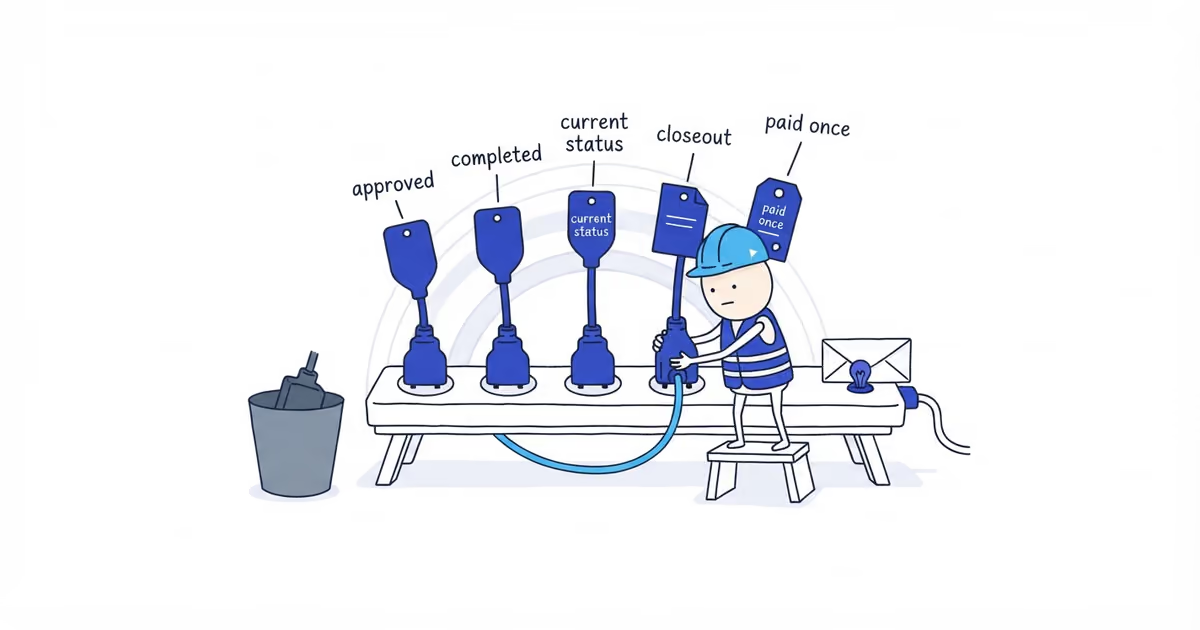
Compare the final invoice with five records before sending it: the approved scope, field completion record, any applicable permit or inspection record, promised closeout documents, and the payment ledger.
A document can have an invoice number, due date, and polished total while still billing unfinished work, overstating an inspection status, or deducting the same deposit twice.
Check these five things
- Approved scope: Every billed task appears in the original scope or a separate customer approval.
- Completed work: The field record supports completion and identifies the circuit, area, equipment, or installation involved.
- Permit or inspection status: Any status shown on the invoice matches the current record exactly.
- Closeout documents: Promised test sheets, photos, certificates, panel schedules, or other documents are stored and delivered as required for this job.
- Payments and credits: Each deposit, progress payment, prior payment, or credit appears once and can be traced to the payment ledger.
These are accuracy checks, not a universal legal checklist. Jobs and locations differ. The invoice should say no more than the current records support.
Describe completed work so the customer can identify it
Weak:
Electrical repair
Useful:
Replaced kitchen countertop GFCI receptacle identified in approved scope
EST-441.
Weak:
Panel work
Useful:
Updated main-panel circuit directory for the approved labeling scope.
The better descriptions tell the customer what was completed and where. They do not claim code compliance, test results, or inspection approval unless a separate record supports that statement.
Use one completed task per line when several locations are involved.
Detailed readings, test sheets, photos, panel schedules, certificates, and inspection documents belong in the closeout file. The invoice can name a reference or note that a document was provided; it should not try to replace the technical record.
State permit or inspection status exactly
When a permit or inspection reference matters to the job, use the current status from the record. For example:
Inspection reference E-1842 - scheduled August 28Inspection reference E-1842 - correction pendingInspection reference E-1842 - passed August 28, but only when the record says it passed
Not every job follows the same process or needs the same reference. The practical test is whether the office can support the exact wording on the invoice.
The agreed billing trigger also matters. If a passed inspection is required before final billing, a scheduled inspection means the invoice is not ready. If inspection is not the billing trigger and the work is otherwise billable, the invoice may state the accurate scheduled status.
Example: correct a final invoice before sending
A fictional estimate includes a kitchen GFCI replacement and one exterior receptacle. The field record shows that the GFCI was completed, the exterior receptacle was not installed because access was not ready, and a panel-label update was separately approved and completed.
The inspection record says scheduled August 28. The payment ledger shows one deposit.
The draft invoice is wrong in four places: it bills both original tasks as complete, leaves out the approved panel-label update, says the inspection passed, and deducts the deposit twice.
The corrected invoice should:
- Keep the completed kitchen GFCI replacement.
- Add the completed panel-label update with its approval reference.
- Remove the unfinished exterior receptacle from completed charges.
- State that the inspection is scheduled, or wait to send when a passed inspection is the agreed billing trigger.
- Apply the deposit once.
The problem is disagreement among the records, not difficult arithmetic.
Keep the invoice readable
The customer invoice needs plain-language completed tasks, useful locations, applicable references, approved charges, and payments applied once. Technical readings, original permits or certificates, photos, internal costs, and allocation history stay in their proper records.
That separation makes the invoice easier for the customer to understand without weakening the job file.
Once the five checks are complete, use ShiftFlow’s electrical invoice generator to format the service address, service date, relevant references, labor, materials, other approved charges, prior payment, totals, and customer PDF.
Send the invoice only when the approved scope and completed work agree, every status is supported, promised closeout records are accounted for, and each payment appears once.
Frequently asked questions
Should a final electrical invoice reference the estimate or work-order number?
Give the invoice its own unique number and reference the estimate, work order, and approved change record that support the billed scope. Do not reuse an estimate number as though it were the final invoice identifier.
What date should a final electrical invoice use if the inspection happens later?
Use the actual invoice issue date and preserve the supported service or completion date. List a later inspection date and its current status separately; do not use a scheduled inspection date to imply that work or inspection has passed.
Do approved electrical extras need separate invoice lines?
Yes, when separate lines help the customer match each extra to its approval and completed task. Do not fold an approved change into the original scope with a vague description, and keep an extra off the invoice until both approval and completion are supported.
Sources
- ShiftFlow Electrical Invoice Generator, current tool page and implementation.
- pricing
- what-to-check-before-sending-final-electrical-invoice
- what-should-i-check-before-sending-a-final-electrical-invoice
- final-electrical-invoice-checklist
- electrical-contractor-final-invoice
- electrical-invoice-inspection-status
- electrical-invoice-payment-reconciliation



