

What Should I Do If a Customer Does Not Pay?
Learn what to do when a customer does not pay: verify the invoice, classify the cause, stop bad reminders, document the account, and escalate carefully.
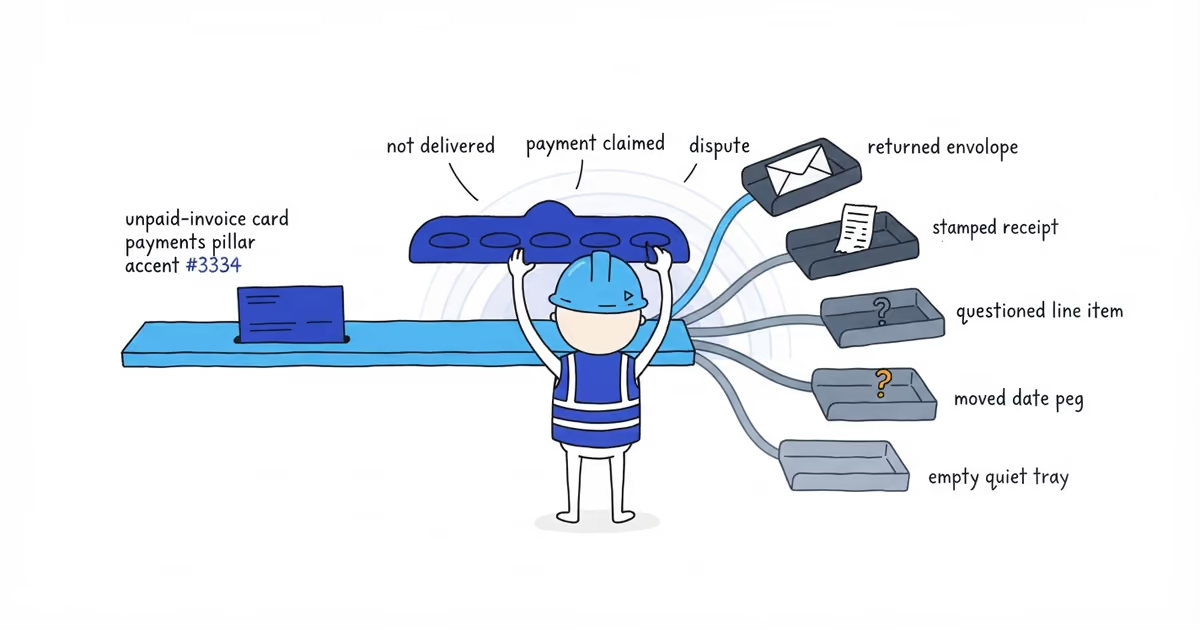
If a customer does not pay, first verify the work, invoice, prior payments, due date, and delivery. Ask for one clear status response. Then correct an error, resolve a dispute, decide whether to allow more time, or consider formal action based on the actual reason the balance is still open.
Do not treat every unpaid invoice as refusal. A wrong email address, a missing purchase-order reference, a payment posted to another job, disputed work, temporary cash trouble, and deliberate silence need different responses.
Last verified: August 24, 2026 (United States; federal debt-collection boundary).
Check the account before contacting the customer again
Pull together the agreement or work order, approved changes, completion evidence, invoice, payment record, and delivery details. Confirm that:
- The billed work or milestone was approved and completed.
- Quantities, rates, tax where applicable, credits, deposit, and prior payments are correct.
- The due date agrees with the applicable terms.
- The invoice reached the right billing contact.
- A check, card, ACH, cash, financing payment, credit, refund, or chargeback was not missed or applied to another job.
- The customer has not already raised a scope, quality, amount, warranty, or completion issue.
If the business cannot support the balance, fix the account before sending another collection message. The customer should not have to reconcile records the business has not checked itself.
Ask for one specific status
After the ordinary reminder sequence, send a neutral status request:
Hi [customer name], [business name] still shows [$amount] due on invoice [number], originally due [date]. By [response date], please reply with one of the following: payment sent and the date/method, invoice copy needed, the specific item you dispute, or the date you are requesting to pay. Contact [name/number] if you need to discuss the account.
The purpose is not to pressure the customer into a long explanation. It is to find out which problem the business actually needs to solve.
Take the next step that matches the reason
| What is happening | What to do next |
|---|---|
| The invoice did not reach the customer | Verify the billing contact, resend the same supported invoice, and confirm the new delivery route. |
| The customer or amount is wrong | Correct the record, label the revised invoice, explain what changed, and resend it. |
| The customer says payment was made | Ask for the date, method, and reference, then check the processor and bank record before asking again. |
| The customer disputes the work, amount, or completion | Pause routine reminders, identify the exact disputed item, assign one person to review it, and give a response date. |
| The customer asks for more time | Record the requested date and amount, then decide whether to accept, change, or decline the request. |
| The customer remains silent or explicitly refuses | Preserve the account history, check deadlines and local options, and get qualified advice before choosing a formal remedy. |
The status can change. Silence may become a specific dispute when the customer finally responds. A claimed payment may uncover an internal posting error. Follow the new facts instead of defending the first assumption.
Keep disputes out of the reminder loop
Ask the customer to identify the line, change, milestone, condition, or amount they dispute. Compare that item with the approved scope and job evidence. Give the customer one contact and a date for the business’s response.
If the issue began with extra work or a concealed condition, the change-order communication guide can help organize the original scope, evidence, price or schedule impact, and customer choices. It does not turn unapproved work into approved work.
Continuing to send the same pay-now message while the business reviews a quality or completion issue creates noise without resolving the reason for nonpayment.
Treat a request for more time as a business decision
A customer asking for more time is different from a customer disputing the bill. Record the date and amount they are requesting. Then consider the agreement, current balance, prior promises, cash exposure, and the customer’s proposed plan.
Do not create an installment arrangement through scattered texts. If the business agrees to different dates or amounts, put the balance and schedule in one reviewed written record.
Prepare the facts before formal action
Before considering a late fee, stop-work step, demand letter, collections, lien, bond claim, credit reporting, small claim, or other court action, assemble the essential account file:
- Customer, job, agreement, and approved-change references.
- Invoice number, revision, billed work, balance, and due event.
- Delivery, completion, and payment evidence.
- The customer’s stated issue or status.
- Contact history, promised dates, and the next deadline.
Those remedies can depend on the contract, license status, property and project type, notices, amount, customer type, deadlines, and jurisdiction. A generic article cannot choose one for a particular job.
The Consumer Financial Protection Bureau explains that the federal Fair Debt Collection Practices Act restricts covered debt collectors and generally does not cover collection by the original creditor. State laws may still cover original creditors. That is why a contractor should not assume one federal rule either governs or exempts its own collection activity.
Keep every communication factual and private. Do not harass, deceive, shame, inflate the balance, or contact unrelated neighbors, employers, or family members to create pressure.
If work is still underway, review the agreement and site conditions before pausing anything. Do not leave an unsafe condition, enter property without permission, or remove installed materials because an invoice is unpaid.
The account is ready for qualified review when the balance and delivery are supported, any dispute is defined, routine reminders have stopped or have a clear next action, and the relevant deadline has been identified.
Frequently asked questions
Can a contractor stop work if a customer does not pay?
Do not stop automatically. Check the signed agreement, payment event, applicable notice and licensing rules, current site conditions, and any safety obligation. Get qualified local advice when the right to stop or required process is unclear.
Can a contractor charge a late fee on an unpaid invoice?
Only use a fee after confirming that the agreement and applicable law allow it and that the amount, trigger, and notice are correct. Do not add one after the fact simply because the invoice is overdue.
When should a contractor send an unpaid invoice to collections?
Consider formal collection only after verifying the balance and delivery, resolving or defining any dispute, documenting ordinary follow-up, and checking local rules, deadlines, and economics with a qualified adviser.
Sources
- What laws limit what debt collectors can say or do?, Consumer Financial Protection Bureau.
- pricing
- what-to-do-when-customer-does-not-pay
- what-to-do-if-a-customer-does-not-pay-contractor
- unpaid-contractor-invoice
- customer-refuses-to-pay-contractor
- contractor-nonpayment
- collect-unpaid-invoice



