

When Should a Contractor Send an Invoice?
Learn when a contractor should send an invoice for deposits, progress billing, final work, recurring service, and separate return visits without delay.
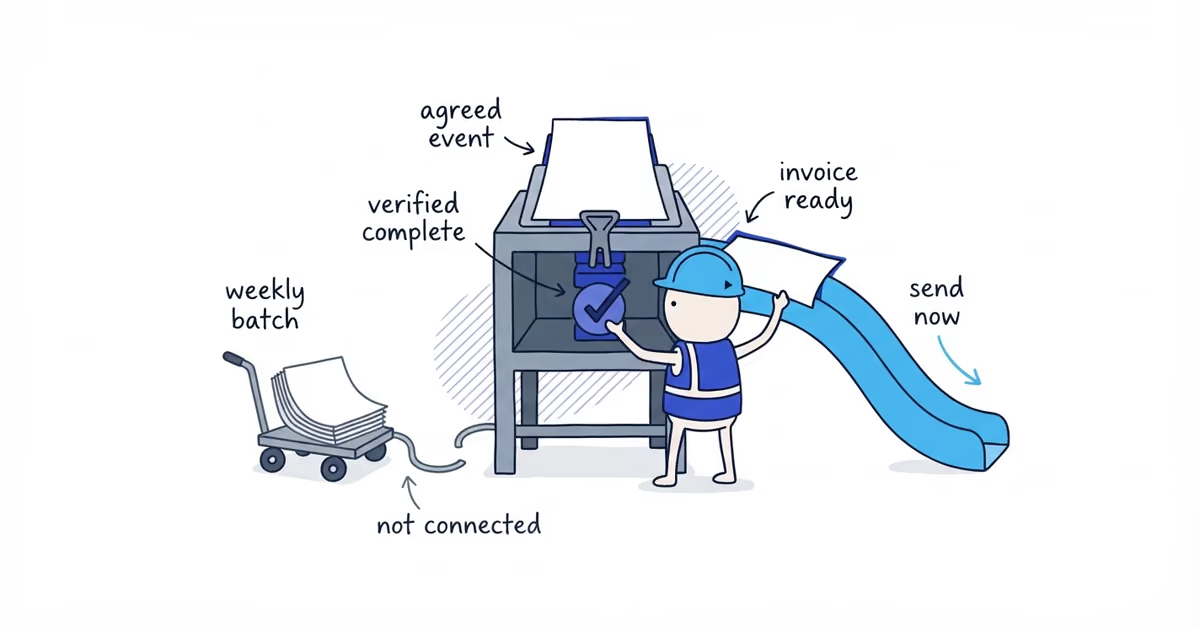
A contractor should send an invoice as soon as the agreed billing event is verifiably complete. Do not wait for Friday, the end of the month, or the next quiet afternoon just because that is when paperwork usually gets done.
The billing event is the agreed fact that makes the invoice ready. It might be approval of a deposit request, completion of a milestone or the whole job, or arrival of a recurring billing date. It can happen before, during, or after the fieldwork.
When to send each type of contractor invoice
The right sending time depends on what the customer agreed to pay for and what had to happen first.
| Billing event | Send when | Confirm first | Example |
|---|---|---|---|
| Deposit | The agreed pre-start or pre-order trigger arrives | Customer, job, amount, and trigger | An accepted installation calls for a deposit before materials are ordered |
| Progress | The milestone, measured progress, or billing period is reached | Work record, required evidence, amount, and customer reference | A remodel milestone is recorded complete and its supporting record is ready |
| Final | The sold scope and approved changes are complete | Completion, required signoff, prior payments, credits, and balance | A service call is finished, its notes are closed, and the balance agrees |
| Recurring service period | The agreed period start, billing date, or period end arrives | Covered dates and required visits, skips, or credits | A monthly landscaping bill shows the covered month and a weather-skipped visit correctly |
| Separately completed return work | The separately approved return scope reaches its own event | New approval, completed work, and separation from the original scope | A later approved fixture addition is invoiced after that visit is complete |
This is why “invoice after the job” is too vague. A deposit can be ready before anyone arrives. A progress invoice can be ready while the project continues. A recurring invoice may go out at the start or end of the service period, depending on the agreement.
Construction invoicing guidance from Procore and Autodesk likewise ties project billing to the agreement’s milestones or periods. The office calendar does not replace them.
When to send a final contractor invoice
“The crew left” does not always mean “the final invoice is ready.” The question is whether the work that was sold, including approved changes, has actually reached the agreed finish point.
The customer and property must be correct. The completed scope or covered period must match the bill, extras need approval, and the records supporting the amount must be present. Any agreed purchase-order reference, signoff, photo, or other required document needs to be ready too. Deposits, prior payments, and credits must produce the same balance in the job record and invoice. The due information and payment route should match what was agreed, without reopening which terms to choose.
That should be quick on a clean service call; the technician may send the invoice before leaving. A larger job may need the office to reconcile field notes, an approved change, and a prior payment first. The goal is not an on-site or fixed-hour rule. It is to remove delay once the facts are ready.
A genuine punch-list item changes the answer. If the contractor still owes part of the original scope, or final billing requires a signoff not yet received, the final event may not have happened.
When return work needs a separate invoice
Owners often hold an invoice because the customer mentioned another visit. That only makes sense when the return is needed to finish the work already being billed.
Suppose a painter completes every approved room, then the customer asks for a separate price to paint the garage next month. The original job is complete. Send its final invoice when the records and balance agree; the garage gets its own approval and later billing event.
If the painter must return because an approved room was left unfinished, that is not unrelated future work. The contractor should not call the original scope complete to invoice sooner.
A separately sold repair or addition can stand on its own. A callback needed to complete or correct the original scope may leave the final event open. What the contractor still owes matters more than the label in the schedule.
When to hold or send a contractor invoice
An unsent invoice cannot enter the customer’s payment process. A homeowner cannot review it, and an accounts-payable team cannot approve or schedule it. Miss a customer cutoff and the bill may wait for another payment cycle.
Delay also makes the bill harder to explain. The technician forgets which material belonged to which visit, the customer forgets the approved extra, and someone must reopen the job file. Meanwhile, the contractor keeps carrying the labor and material cost.
A short hold is justified when the milestone is incomplete, an extra lacks approval, the amount or prior-payment record does not reconcile, or a required reference, document, or signoff is missing. Resolve that specific problem, then send the invoice.
A weekly billing habit, an unrelated future visit, or a busy afternoon is not the same kind of reason. Let the agreed billing event set the timing, take only the time needed to make the bill accurate, and send it once the work record and numbers agree.
Frequently Asked Questions
Does sending an invoice mean payment is due immediately?
No. Invoice timing determines when the bill is ready to send; payment terms determine when the customer must pay. Use the due date and terms already agreed for the job rather than changing them after the billing event.
What should a contractor do if a customer says the invoice is already paid?
Pause payment reminders while checking the claim. Ask for the payment date, method, amount, and reference, then compare those details with the processor, bank, and job payment records before confirming the outcome in writing.
Sources
- pricing
- when-should-contractor-send-invoice
- when-should-a-contractor-send-an-invoice
- when-to-invoice-a-customer-after-a-job
- contractor-invoice-timing
- progress-invoice-timing
- final-invoice-timing



