

Who Should Receive a Property Maintenance Invoice When the Work Was Done in a Tenant's Unit?
Learn who should receive a property maintenance invoice for work in a tenant's unit, then route the bill using the payer, property, unit, and work order.
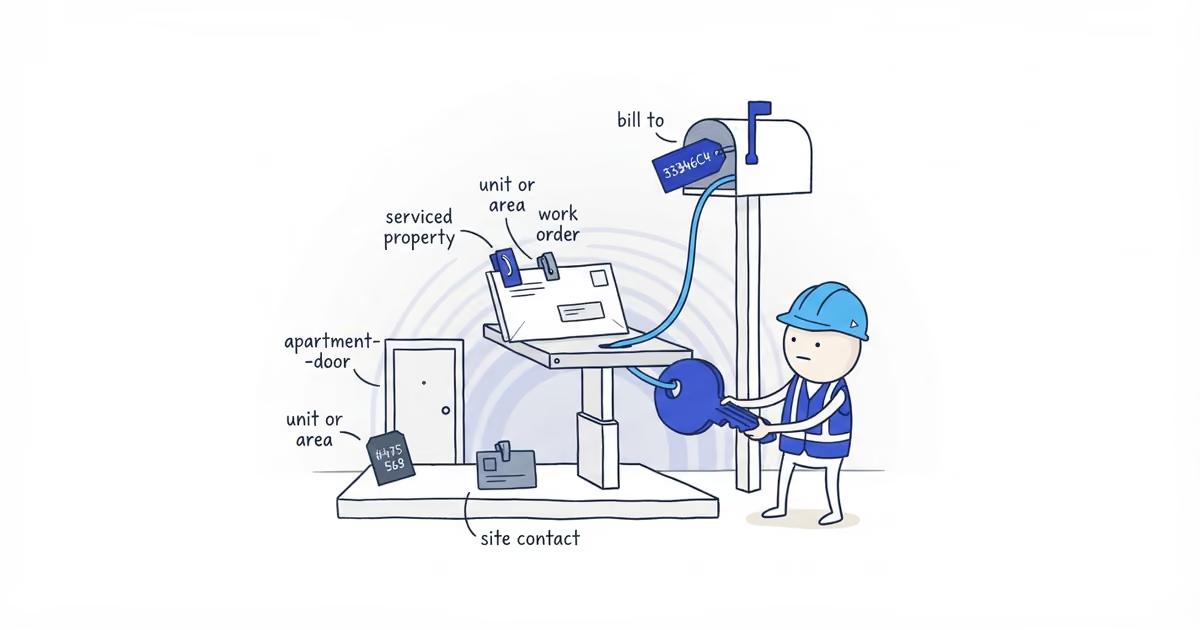
Send the property maintenance invoice to the party identified to receive and pay it in the work order, service agreement, purchase order, or verified billing instruction. The tenant who reported the problem or opened the door is not automatically the payer.
Keep the billing recipient separate from the place where the technician worked. A valid invoice can be addressed to a management company in one city while showing a serviced property and unit at a different address.
Identify the payer before sending a property maintenance invoice
Property work often has several people attached to one ticket:
- a tenant reports the problem;
- a site manager arranges access;
- a property manager approves the repair;
- an owner or management company is named as payer; and
- an accounts-payable contact receives the invoice.
One person or company may fill several roles, but do not assume it. The name in the technician’s site contact field is not enough to populate Bill to.
Before invoicing, find the record that authorized the work and states how the bill should be routed. If the work order names a management company, billing email, and PO reference, use those details. If the records conflict, ask the issuing contact to correct the billing instruction. Do not decide from the property title, tenant name, or technician’s memory.
This is an invoice-routing check, not a decision about who is legally responsible under a lease or management agreement.
Separate payer, property, unit, and work-order references
Use four separate identity levels. Each answers a different question.
| Reference level | Question it answers | Example |
|---|---|---|
| Bill to | Who is identified to receive and process the invoice? | Northline Property Management, Accounts Payable |
| Serviced property | At which property did the work occur? | Oak Court, 18 Pine Street |
| Unit or area | Where inside the property was the completed task? | Unit 4B, kitchen |
| Work reference | Which authorization lets the payer match the bill? | WO-318; tenant or site reference if needed |
Do not compress the stack into one customer line. Oak Court Unit 4B identifies a work location, not necessarily a legal billing name. Northline Property Management identifies the recipient, but it does not tell its accounts-payable team which property or unit created the charge.
The tenant name belongs only where it helps reconcile access or the work order and where sharing it is appropriate. Many invoices need only a unit number or site reference. Do not add private tenant details merely because they appear on the technician’s ticket.
Route a tenant-reported property maintenance invoice
Consider this fictional work order:
- A tenant in Oak Court, Unit 4B reports water under the kitchen sink.
- Northline Property Management issues
WO-318to the maintenance business. - The work order names Northline as the payer and gives an accounts-payable email.
- The technician replaces the failed trap seal and records the completed task at Unit 4B.
- The tenant provides access but does not approve the price or receive the bill.
The invoice routing is:
| Invoice position | Entry |
|---|---|
| Bill to | Northline Property Management, Accounts Payable |
| Billing address or route | The address or AP email from WO-318 |
| Serviced property | Oak Court, 18 Pine Street |
| Unit or area | Unit 4B, kitchen |
| Approval reference | WO-318 |
| Completed work | Replace failed kitchen trap seal and check the completed connection as recorded |
| Site reference | Tenant access reference only if Northline requires it |
Do not send the invoice to the tenant merely because that is the only email on the field ticket. Do not address it to Oak Court if Northline requires its registered billing name. And do not omit WO-318; the work may be valid, but an AP team can still reject a bill it cannot match.
Decide when several units can share one maintenance invoice
Several units can share one invoice only when the billing records support one combined bill. Check four conditions:
- The payer and invoice recipient are the same.
- The work belongs to the same permitted billing period.
- The payer accepts the work-order or PO references together.
- Each unit and completed task remains separately identifiable.
If Northline requests one monthly invoice for three Oak Court work orders, keep each unit and work-order reference in its own line or section. The shared payer does not justify a vague entry such as Oak Court maintenance.
Split the invoices when different owners or payers are responsible, when work orders require separate submission, or when combining them would break the payer’s approval route. Work performed at one physical property can still belong to separate billing accounts.
Send the invoice through the payer’s required route
Before delivery, check the destination as carefully as the total:
- Does
Bill tomatch the approved payer name? - Is the invoice going to the required AP email, portal, or postal address?
- Are the property, unit, service period, and completed task visible?
- Is every required PO, work-order, approval, tenant, or site reference present?
- Does the payment instruction tell the payer which invoice number to reference?
After the stack and delivery route agree, use ShiftFlow’s property maintenance invoice generator to keep the payer, serviced property, unit, work order, service period, service classification, completed labor, parts, contractor expense, call-out, and disposal in one customer-facing document. It can calculate the balance, show a preview, and produce a printable or downloadable PDF. It cannot determine who owes the bill when the source records disagree.
The invoice is ready when the recipient can answer three questions without forwarding it around: Is this ours? Which property and unit was serviced? Which authorization does it match? Keep the sent invoice with the work order and delivery record. The IRS identifies invoices as supporting business documents.
Frequently Asked Questions
What should I do when the work order does not name a payer?
Hold the invoice and verify the billing instruction with the party that issued or approved the work. A tenant, site contact, property name, or service address does not by itself identify who should receive and process the bill.
Can an owner and property manager both receive the same maintenance invoice?
They can both receive a copy when the billing instruction requires it, but the invoice should still identify one supported Bill to recipient and one balance. Do not create duplicate invoices that make the same work look payable twice.
Should each unit keep its own work-order number on a combined invoice?
Yes, when each unit was authorized under a separate work order. Keep every unit, completed task, and required reference visible so accounts payable can reconcile each entry without treating the property as one vague maintenance charge.
Sources
- ShiftFlow Property Maintenance Invoice Generator, current tool page and implementation.
- What kind of records should I keep, Internal Revenue Service.
- pricing
- who-should-receive-property-maintenance-invoice-for-tenant-unit
- who-should-receive-a-property-maintenance-invoice
- property-maintenance-invoice-tenant-unit
- property-maintenance-invoice-payer
- property-maintenance-work-order-invoice
- property-maintenance-billing-recipient



