Best Time Tracking App for Philippine Retail and F&B Businesses
Best time tracking apps for Philippine retail and F&B in 2026. 6 tools compared on kiosk mode, multi-location pricing, shift scheduling, and DOLE compliance.
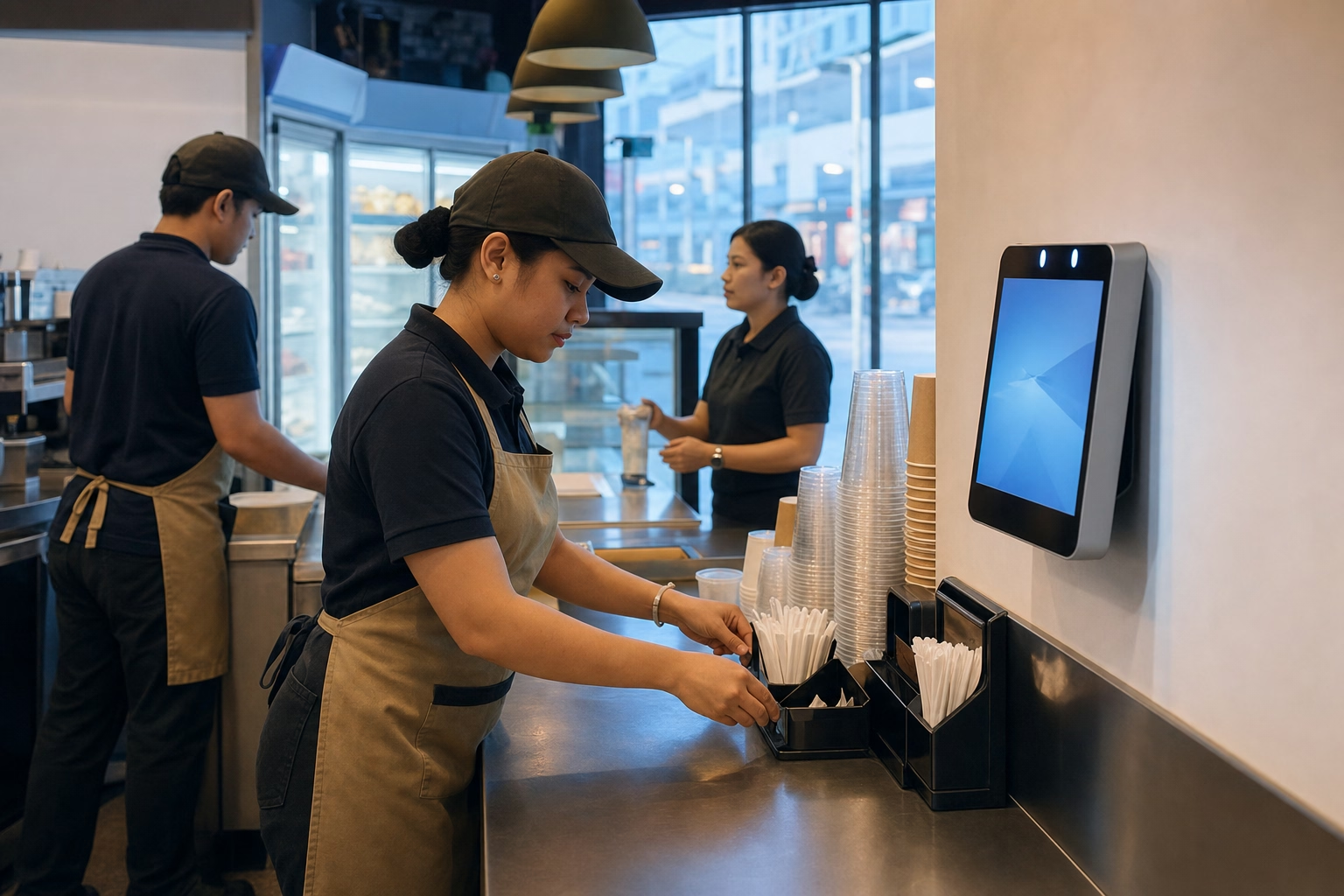
Philippine retail and F&B businesses run on shifts. 6am to 2pm, 2pm to 10pm, and an 11pm closing crew that handles the deposit and lock-up. Wholesale and retail trade alone accounts for 48.74% of all MSMEs in the Philippines (DTI/PSA, 2024 MSME Statistics in Brief). And the per-shift labor cost stretches every peso at ₱695 NCR daily minimum wage after the July 2025 wage order. The wrong time tracking app for retail and F&B charges per location, breaks at peak rush, or makes you train every part-time hire on a personal-phone app. Below: the six tools that actually work for Philippine retail and F&B owners running 1 to 10 outlets.
What the right app looks like for retail and F&B
Five things matter more in retail and F&B than in office work.
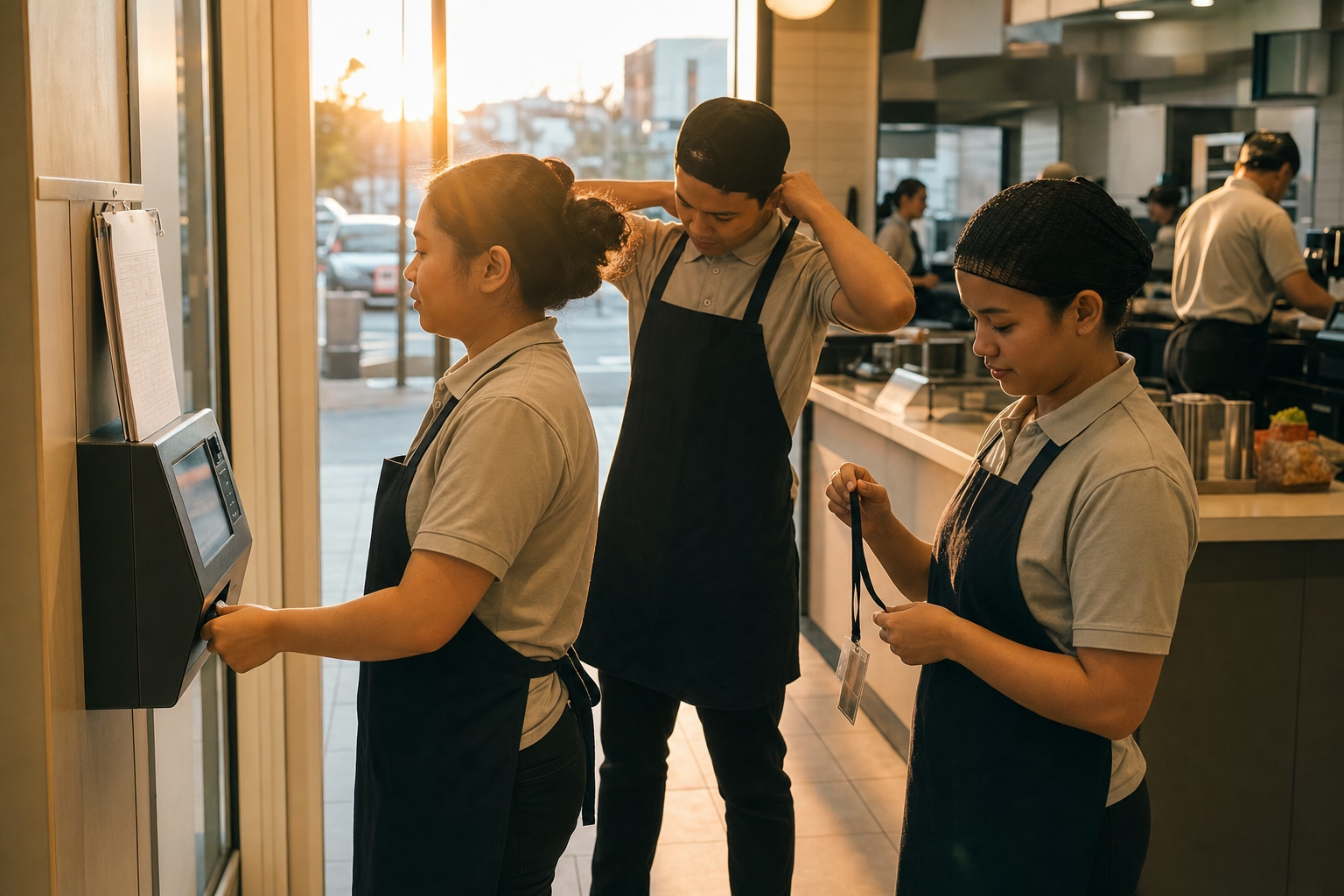
- Kiosk mode on a shared tablet at the counter. Part-time staff rotate through every quarter. Forcing each one to install an app on their personal phone, log in, and verify a face on day one is friction your manager will skip. A shared tablet with a four-digit PIN or face scan at the counter is the lower-friction default.
- Per-seat (not per-location) pricing. A boba shop with three outlets in BGC pays three times as much on per-location apps as on per-seat apps for the same total staff. With 100,000+ retail and F&B establishments operating in the Philippines, this is the bill-splitting decision most owners get wrong on first signup.
- Shift scheduling tied to clock-in. The app should know which staff member is on which shift, so a 7am clock-in attempt from someone scheduled at 3pm gets flagged rather than silently approved.
- DOLE-compliant overtime, rest day, and night differential calculation. Retail and F&B often run rest days on weekdays (because Saturday is the busy day) and night shifts that cross 10pm into the +10% night differential window.
- Offline mode that does not break the queue. A mall with shaky WiFi at the back-of-house is normal in the Philippines. The app needs to queue clock-ins locally and sync when signal returns, not fail at peak rush.
The rest of this guide compares the six tools that get most of this right.
1. ShiftFlow
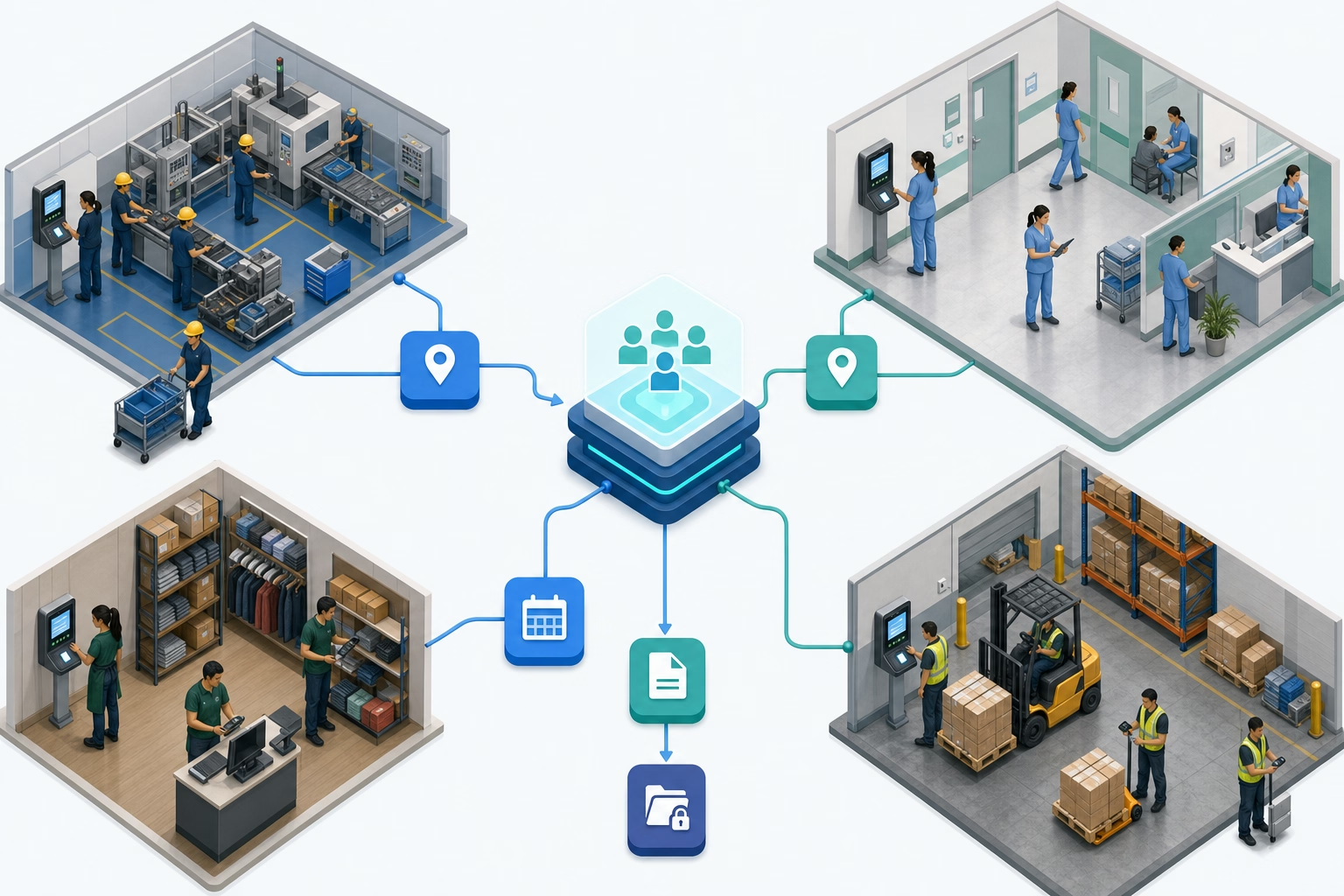
ShiftFlow charges ₱99 per seat per month on a single plan. No base fee. No per-location charge. A 12-person F&B chain operating three outlets in BGC, Makati, and Ortigas pays ₱1,188 a month total, whether one outlet has all 12 staff or each has 4. GPS clock-in, kiosk mode for the shared counter tablet, shift scheduling, overtime rules, rest day premium calculation, and CSV payroll export to Sprout or Salarium all sit in the same plan. ShiftFlow does not auto-file with BIR, SSS, PhilHealth, or Pag-IBIG. For chains that have already outsourced payroll filings, that is not the gap they care about. For independent owners doing filings themselves, pair ShiftFlow with PayrollHero or a bookkeeper.
Pricing: ₱99 / seat / mo (monthly), ₱1,000 / seat / year (annual, saves ≈16%). 14-day free trial.
2. Jibble
Free forever for unlimited users with facial recognition, GPS, kiosk mode, and automated timesheets all on the free tier. For a single-outlet milk tea shop with six part-timers, Jibble Free covers attendance end-to-end at zero cost. Premium at ≈₱228 per seat unlocks geofencing beyond two locations, advanced scheduling, and detailed reports. Where it gets awkward for multi-outlet operators is the two-geofence limit on free. Three or more locations means Premium fast. Jibble pairs with PayrollPanda (same parent company), which is also free, so the cost-zero stack for a single outlet is genuinely zero.
Pricing: Free unlimited users (free plan), ≈₱228 / user / mo (Premium).
3. Sprout Solutions
Sprout is the PH-native HR and payroll platform around 2,000 local companies use to handle BIR, SSS, PhilHealth, and Pag-IBIG filings inside one product. For a 30-staff F&B chain tired of moving CSVs between three systems every cut-off, Sprout consolidates attendance, payroll, and statutory on one rail. Pricing opacity is the catch. There is no public per-seat number. Sprout’s outsourced Payroll Starter (for teams of 10 or fewer) starts from ≈₱5,000/mo; the standard software starter for larger teams begins at ≈₱10,000/mo (custom quote). Setup takes two to four weeks. For a 5-staff boba shop, Sprout’s software tier is overbuilt. For a chain doing serious volume, the consolidation often pays back inside a quarter.
Pricing: Outsourced Payroll Starter from ≈₱5,000 / mo (≤10 staff); standard software starter from ≈₱10,000 / mo (custom). Demo on request.

4. Connecteam
Connecteam bundles time clock, scheduling, GPS, geofencing, chat, tasks, and basic HR onto a single mobile-first app, free for the first 10 users on the Small Business plan. Above 10, Basic is $29 (≈₱1,650) flat per month for up to 30 users. The strongest fit is franchises and multi-outlet chains where the owner wants to broadcast price changes, new menu items, or a closing-checklist update to every staff member at once. The thing nobody tells you for PH operators: zero BIR/SSS/PhilHealth/Pag-IBIG filing, USD-only billing, and customer support hours that do not line up with Asia/Manila. Pair with Sprout, PayrollHero, or a bookkeeper for statutory.
Pricing: Free for up to 10 users; from $29 / mo (≈₱1,650) for the Basic plan above 10 users.
5. Skip Homebase
Homebase is the global retail and F&B time clock most often surfaced in international “best time clock for restaurants” searches. The reason it does not sit higher on this list for PH operators is the pricing model. Homebase prices by location, not by headcount. Essentials at $24.95 (≈₱1,420) per location per month works fine for one outlet. Three outlets is $74.85 (≈₱4,260). Ten outlets is ₱14,200. And the staff count was never in the equation. A PH F&B chain that grew from one to four outlets last year will pay 4x the monthly cost on Homebase for tracking the same staff. The free tier covers one location only and is geared to North America.
Pricing: Free for one location only; Essentials at $24.95 / mo (≈₱1,420) per location.
6. ZipHR / KAMI Workforce
ZipHR (rebranding as KAMI Workforce) is the homegrown counterweight to Sprout. Mobile-first and priced transparently at $30 monthly base plus $1 per user, with attendance, time, leave, and payroll as add-on modules at around $1 per user each. A 20-person retail or F&B operation running attendance plus payroll lands around $70 (≈₱4,000) a month total. Facial recognition, biometric/fingerprint scanner support, real-time attendance, and shift scheduling all sit in the time module. Ecosystem maturity is where it falls short. Customer list and review base are smaller than Sprout’s. For PH retail/F&B SMEs of 10-50 that want native compliance without Sprout’s setup weight, ZipHR is the lighter option worth a demo.
Pricing: $30 / mo base + $1 / user / mo (Core HR), +$1 per add-on module.
How to pick the right tool for your shop
Three questions narrow this down fast.
How many outlets do you actually have, or plan to have? One outlet, under 10 staff, single location: Jibble Free. One outlet, growing: ShiftFlow’s flat per-seat. Multi-outlet from day one: ShiftFlow (lowest-friction at multi-outlet math), ZipHR (PH-native), or Sprout (full HRIS). Never Homebase if you are multi-outlet, because the per-location pricing will outpace your revenue growth.
Are statutory filings done in-house or outsourced? If a bookkeeper or accounting firm already handles BIR/SSS/PhilHealth/Pag-IBIG, a focused time tracker (ShiftFlow, Jibble, Connecteam) keeps the scope tight and the bill predictable. If you are doing filings in-house, Sprout or ZipHR consolidates the workflow but takes longer to set up. How Philippine SMEs track employee attendance without manual timesheets covers both setups.
How transient is your staff? Retail and F&B turn over part-time staff faster than offices. The friction of installing a personal-phone app on every new hire compounds. Kiosk mode on a shared counter tablet (ShiftFlow, Jibble, Homebase, ZipHR all support this) cuts that friction to a four-digit PIN at sign-on. For franchises adding new staff weekly, kiosk is the default that ages best. Best shift management app for Philippine small businesses covers the scheduling layer.
What a 12-staff, 3-outlet F&B chain actually pays per month
| Tool | Plan | Monthly bill (PHP) |
|---|---|---|
| Jibble | Premium (multi-geofence) | ≈₱2,736 |
| ShiftFlow | Single plan | ₱1,188 |
| Connecteam | Basic (flat, ≤30 users) | ≈₱1,650 |
| ZipHR | Core + Time + Payroll | ≈₱2,850 |
| Homebase | Essentials, 3 locations | ≈₱4,260 |
| Sprout | Payroll Starter (custom) | ≈₱10,000 |
ShiftFlow is the cheapest paid option here because the per-seat math beats per-location billing and beats Jibble’s Premium tier on a 12-staff team. Jibble Free becomes the cheapest pick again only if you stay at one outlet, since the two-geofence free limit caps your multi-outlet growth.
Grab the ShiftFlow app, no card needed
Time tracking software pricing explained for Philippine small businesses has the full pricing breakdown by team size.
What spec sheets miss about retail and F&B reality
The vendor pages will tell you about features. They will not tell you about the three operational realities that decide whether the tool survives a month in retail or F&B.
Closing shifts cross into 10pm night differential. A mall F&B closing crew finishing service at 9:30pm and lock-up by 10:30 is working into the +10% night differential window for the last 30 to 60 minutes. The time tracker has to detect this automatically, mark the relevant minutes as night-diff hours, and feed them to payroll with the right multiplier. ShiftFlow, Sprout, and ZipHR handle this natively. Foreign tools (Homebase, Connecteam) need manual configuration that frequently gets missed at setup.
Part-time staff churn breaks personal-phone-app rollouts. A boba shop or quick-service F&B outlet onboards two or three new part-timers a month and offboards about the same number. Forcing each new hire to install an app on their personal phone, log in, and verify a face on day one is friction the manager will eventually skip. Kiosk mode on a shared counter tablet with a four-digit PIN is the lower-friction default. It works on day one with no install. ShiftFlow, Jibble, Homebase, and ZipHR all support kiosk mode.
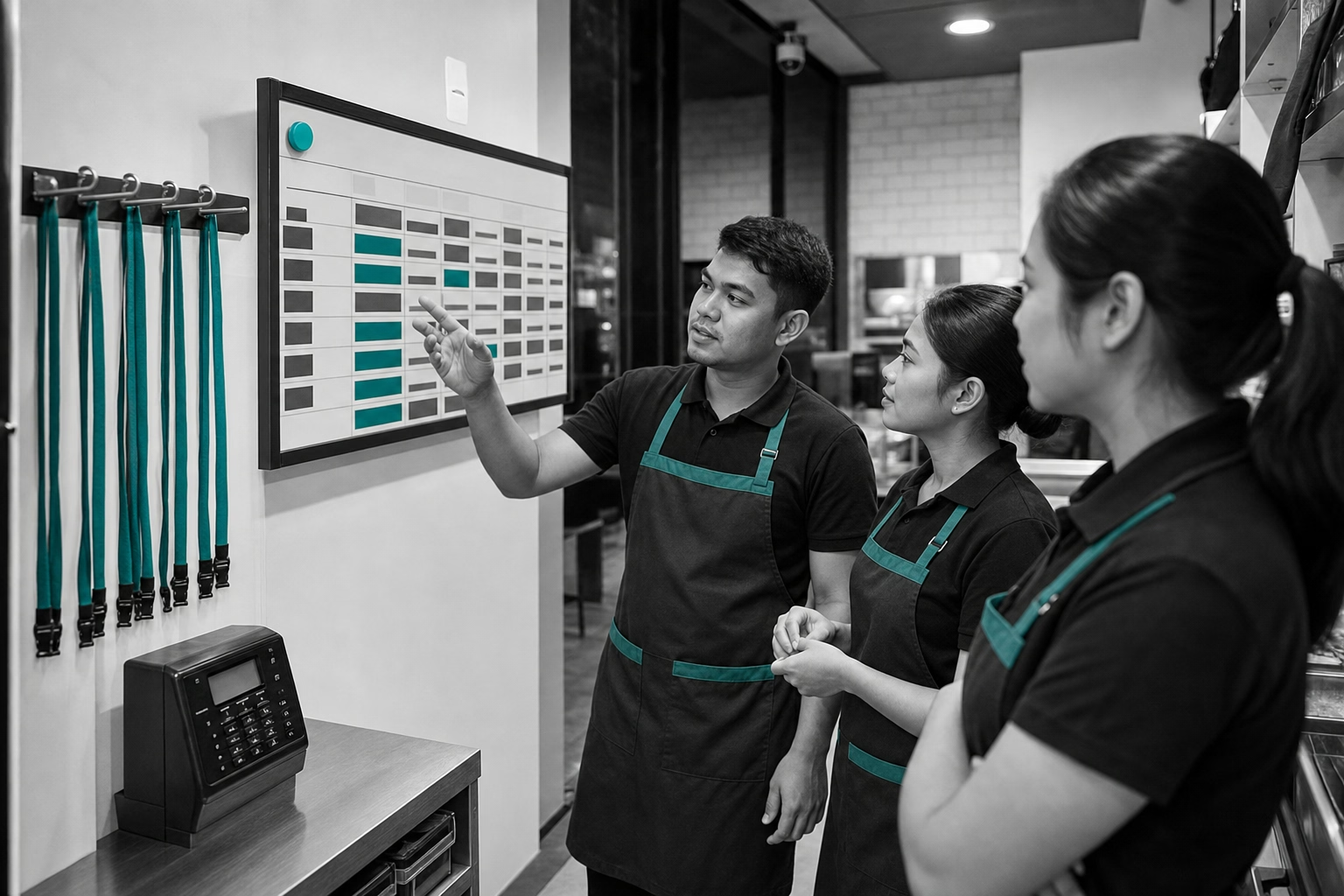
Holiday-season scheduling needs longer rosters than 1-week views. PH retail and F&B see December peaks where rosters need to be published two to four weeks ahead so part-timers can plan around school holidays and family obligations. A tool that only displays the current week in the scheduler is a hard limit at year-end. ShiftFlow, ZipHR, and Connecteam allow multi-week roster horizons. Jibble Premium adds it. Homebase free is capped at the current week.
When ShiftFlow is not the right pick
Three retail/F&B scenarios where ShiftFlow is the wrong call:
- Single-outlet shop under 10 staff with no growth plan. Jibble Free covers GPS, kiosk, facial recognition, and timesheets at ₱0. Paying ₱990 a month for ShiftFlow when Jibble’s free tier covers the scope is the wrong call unless you need multi-week scheduling or geofence beyond two sites.
- 30+ staff F&B chain that wants BIR/SSS/PhilHealth/Pag-IBIG filing inside one product. Sprout or ZipHR consolidates attendance plus statutory filings. ShiftFlow stops at CSV export and assumes statutory lives in a different system.
- Franchise where team chat and broadcast are the primary value. Connecteam’s chat plus shift app fits franchises that need to push price changes, menu updates, or closing checklists to staff. ShiftFlow handles scheduling and time clock but does not match Connecteam’s chat depth.
What to pick at each setup size
For Philippine retail and F&B businesses running 1 to 10 outlets and 5 to 50 staff, ShiftFlow’s flat ₱99 per seat is the simplest pick to budget against. Per-seat (not per-location) pricing. Kiosk mode for shared counter tablets. Shift scheduling, GPS, and CSV payroll export, all in one plan. For a single-outlet operation under 10 staff that wants zero monthly cost, Jibble Free is the better start. For chains that want BIR/SSS/PhilHealth filing inside the same app, Sprout or ZipHR is the path. Avoid Homebase if you have more than one outlet, regardless of how aggressively the per-location pricing is marketed.
Sources
- DTI MSME Statistics 2024 (DTI/PSA) for wholesale and retail trade share of MSMEs
- DOLE National Wages and Productivity Commission for the NCR ₱695 minimum wage
- Philippine Labor Code Book III (PD 442) for overtime, rest day, and night differential rules
- ShiftFlow pricing, Jibble pricing, Homebase pricing, Connecteam pricing, Sprout Solutions, ZipHR pricing
- philippines
- time-tracking
- retail
- food-and-beverage
- kiosk-mode
- shift-scheduling
- dole-compliance
- bofu