Is Shift-Handoff Time Paid for Nurses
The outgoing nurse stays 15 minutes past the end of shift to give report. It happens every shift change, on every unit — and if your clock rounds it away or the schedule leaves no room for it, you are not paying for work that is plainly work. Here is how handoff time should be treated.

The 15 Minutes at the End of Every Shift
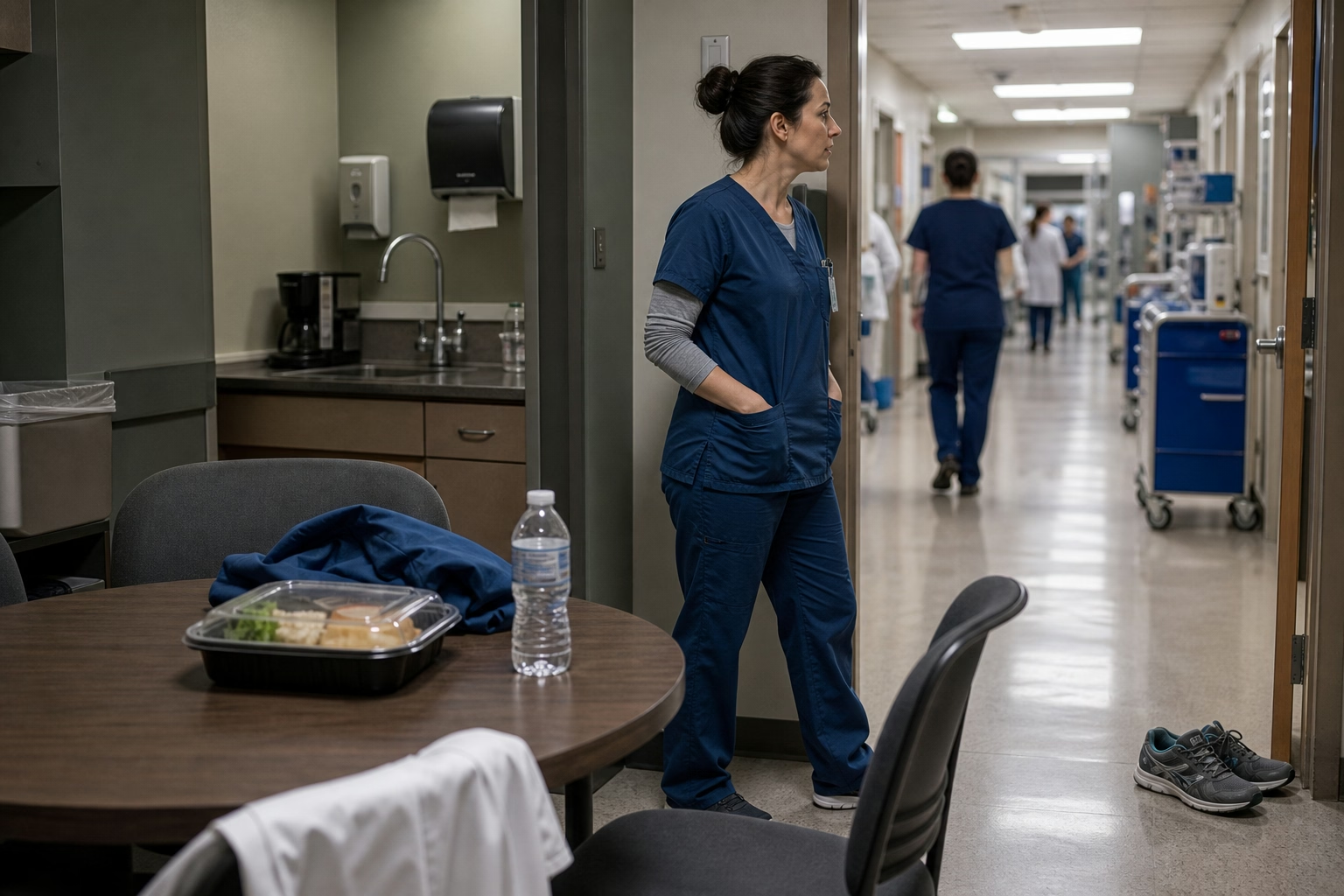
The 7pm shift change is supposed to be clean: days walk out, nights walk in. It never is. The outgoing nurse can’t just leave — she has to give report, hand off patients, flag the things that don’t fit in the chart. That takes ten, fifteen, twenty minutes, and it happens after her shift was scheduled to end. She clocks out late, or she doesn’t clock out at all and the system pays her to the scheduled time.
Either way the question is the same, and most facilities answer it wrong by default. Is that handoff time paid?
It is. And the ways it quietly goes unpaid — back-to-back scheduling with no overlap, time rounding that snaps to the scheduled end — are exactly the patterns that turn into off-the-clock wage claims.
Handoff Is Work, and Work Is Paid
Start from the principle. Under the FLSA, hours worked include all time an employee is suffered or permitted to work, whether or not it was scheduled or authorized. The test for whether something counts is roughly: is it required, is it for the employer’s benefit, is it integral to the job?
Shift handoff is all three. It’s required — you can’t leave patients without giving report. It benefits the employer, since continuity of care is the employer’s obligation. And it’s integral, because it isn’t a personal errand, it’s the job continuing across two people. That makes it compensable working time. It doesn’t matter that it falls after the scheduled clock-out, and it doesn’t matter that nobody explicitly said “stay late.” If the employer knows it happens — and every unit knows handoff happens — it has to be paid.
The Two Ways It Goes Unpaid
Almost nobody decides to stiff nurses on handoff. It happens structurally, through two mechanisms that look administrative.
Back-to-back scheduling with no overlap. Shifts are built as 7a-7p and 7p-7a, perfectly abutting, with no paid minutes for the report that has to happen between them. The schedule pretends the handoff takes zero time. So the outgoing nurse either stays past 7 unpaid, or report gets rushed and care suffers. The schedule created the unpaid work.
Rounding to the scheduled end. Many clocks round punches to the nearest increment, and many payroll rules quietly snap a late clock-out back to the scheduled shift end. Rounding is legal only if it’s neutral over time — it has to round up about as often as it rounds down. A rule that always erases the post-shift handoff isn’t neutral. It systematically favors the employer. Across a staff and a year, that’s not rounding. It’s a wage deduction with a friendly name. This is the same trap that catches employers on missed and shaved punches generally — the record stops matching what happened.
What About De Minimis
Employers sometimes reach for the de minimis doctrine — the idea that trivial, hard-to-record bits of time can be ignored. It’s the wrong tool for handoff.
De minimis is meant for tiny, irregular, administratively impractical increments — a few seconds, sporadically, that you genuinely can’t capture. Shift handoff is the opposite on every axis. It isn’t tiny (10 to 20 minutes), it isn’t irregular (it happens at every single shift change), and it isn’t impractical to record (a punch captures it perfectly). Courts have grown increasingly skeptical of de minimis defenses exactly when the time is regular and measurable. Betting your compliance on it for something as predictable as report is a bad bet.

How to Handle It Without Bleeding Labor Cost
The fear behind unpaid handoff is usually cost — pay for every overlap minute across a big nursing staff and it adds up. But the uncontrolled version is more expensive, and the fix is mostly structural.
Build a paid overlap into the schedule. Instead of pretending report takes no time, schedule a short, deliberate overlap — say 10 to 15 minutes — where the outgoing and incoming nurses are both on the clock. Now handoff has a place to happen, it’s paid, and it’s planned rather than spilling into uncontrolled overtime. A predictable overlap is far cheaper than unpredictable, litigated off-the-clock time. Good nurse scheduling treats the overlap as part of the shift, not an afterthought.
Capture actual punches, not scheduled times. Pay from when the nurse actually clocked out, not from when the shift was supposed to end. If report ran long, the record shows it and the pay reflects it. If it didn’t, you pay the real, smaller number. Either way the record is true.
Fix your rounding, or drop it. If you round, prove it’s neutral — that it isn’t quietly shaving the same handoff minutes every shift. The simplest defensible answer is often to stop rounding and pay actual time to the minute, which modern clocks make trivial.
Watch where overlap turns into overtime. Capturing real handoff time can nudge people past 40 hours, so you want visibility into where the overtime is accumulating — and whether the schedule, not the handoff, is the real driver.
Pay the Report, Keep the Records
Handoff time isn’t a gray area. It’s plainly work, it recurs every shift, and it’s easy to capture — which is exactly why ignoring it is hard to defend. It’s the same record-keeping discipline behind keeping meal-break deductions defensible: the punch reflects what happened, not what the schedule assumed. And those captured minutes feed the overtime base — the same place a mishandled shift differential trips employers up.
If your shifts abut with no room for report and your clock rounds the difference away, see how a time clock built for healthcare teams captures actual punches and supports paid handoff overlaps, or put ShiftFlow on your next schedule and pay the report time you’re already getting.
Frequently Asked Questions
Is shift-handoff report time compensable?
Yes. Giving and receiving report at shift change is work — it’s required, it benefits the employer, and it’s integral to patient care. Under the FLSA, time spent on it is hours worked and must be paid, whether it happens before the scheduled start or after the scheduled end.
Can an employer round shift-handoff time down to zero?
Rounding is only permissible if, over time, it’s neutral — it can’t systematically favor the employer. A rule that consistently snaps the clock-out back to the scheduled shift end and erases the handoff every shift isn’t neutral. Done repeatedly across a staff, that’s unpaid work, not rounding.
Does the de minimis rule cover handoff time?
Rarely. The de minimis doctrine covers tiny, irregular, hard-to-measure increments. Shift handoff is none of those — it’s predictable, it recurs every single shift, and a punch captures it easily. Courts are skeptical of de minimis arguments exactly when the time is regular and measurable, which handoff is.
How do you pay for handoff without doubling labor cost?
Build a short paid overlap into the schedule so report has a place to happen, and capture actual clock-out times so the real minutes are paid. A planned 10-to-15-minute overlap is small and predictable; unplanned, unpaid, and litigated handoff time is neither.
Sources
- healthcare
- shift-handoff
- flsa
- nurses
- rounding
- off-the-clock
- time-clock
- payroll