Why Auto-Deducting Meal Breaks Gets Healthcare Employers Sued
Most hospitals and care facilities subtract 30 minutes a shift for a meal break the staff often never gets. When a nurse works through it and the deduction stands, that is unpaid work — and one of the most-litigated wage claims in healthcare. Here is how to keep auto-deduction legal.
The 30 Minutes Nobody Clocked
Almost every hospital runs the same rule on autopilot: knock 30 minutes off every shift for a meal break.
Nobody clocks out for it. Nobody clocks back in. The system just assumes the break happened, and pays the nurse for 30 minutes less than she actually spent on the floor.
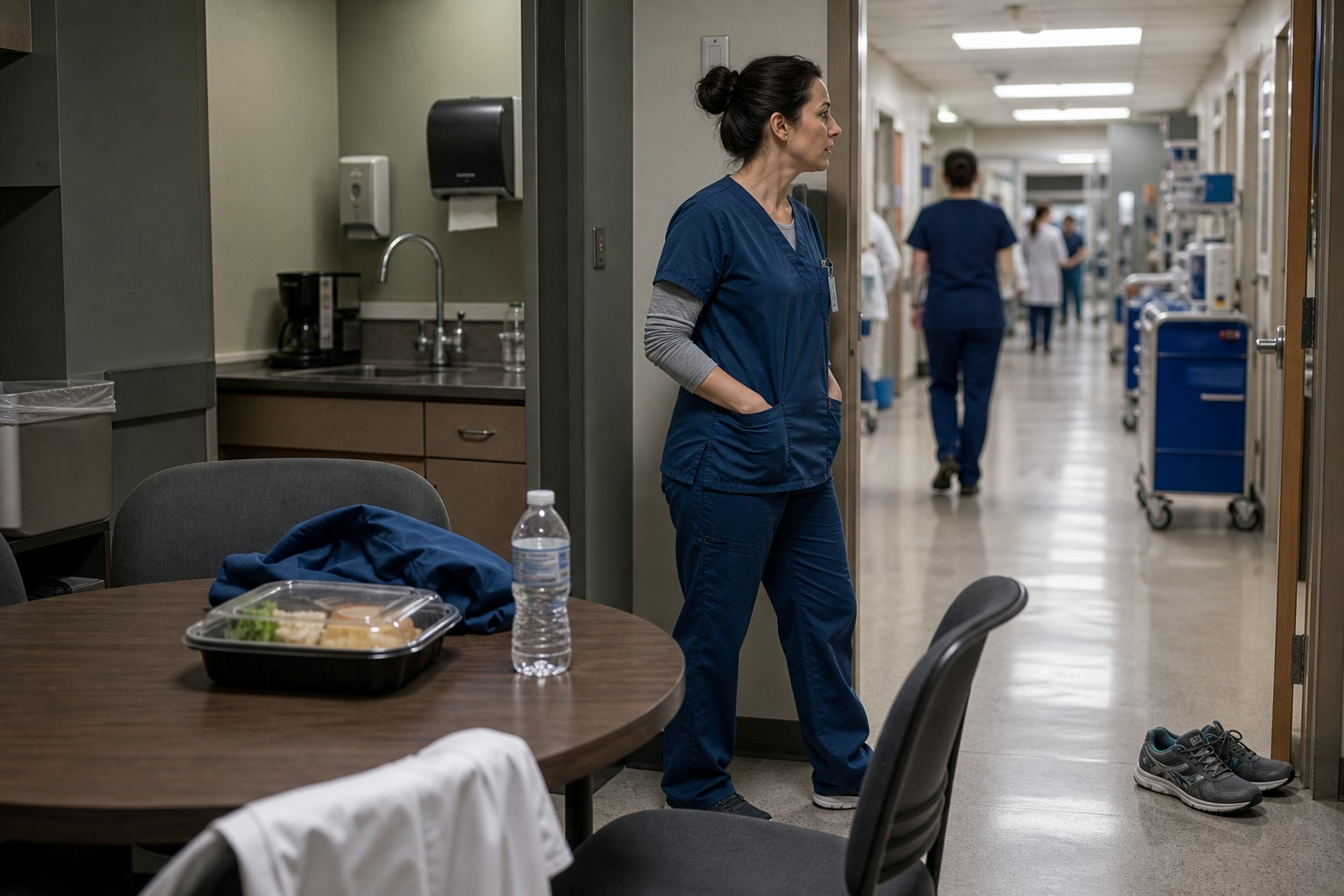
On a quiet unit, fine. On a busy one, it’s a wage claim forming in slow motion. She sits down to eat, and — call light. Or a patient destabilizes. Or a doctor needs a verbal. The 30 minutes turns back into work, and the deduction doesn’t care, because it already ran. The system never knew the break didn’t happen.
Now multiply those unpaid minutes across your whole nursing staff, every shift, going back the two years a federal wage claim can reach — three, if the violation was willful. That’s the bill.
Why Auto-Deduction Itself Isn’t the Problem
People assume the fix is “stop auto-deducting.” It isn’t.
Auto-deduction is perfectly legal. Under the FLSA, a bona fide meal period — one where the employee is completely relieved of duty — isn’t working time, so not paying for it is fine. Deducting it automatically is just a payroll shortcut built on that rule. It’s the same shortcut that’s cost restaurant chains millions in break settlements, and healthcare is the worst possible place to lean on it, because clinical care interrupts a break in ways a slow dining room never does.
The real problem is the gap between what the deduction assumes and what happens on the floor. It only holds up when two things are actually true:
- The nurse is genuinely off the hook for the whole break.
- There’s a real, actually-used way for her to flag and get paid for a break she missed or got pulled out of.
Short-staffed unit, breaks eaten by patient care? The first one fails. The only way to fix the deduction is a paper exception form the charge nurse has to hunt down before payroll closes? The second one fails too. Now you’re docking pay for time that was worked, with nothing on file to say otherwise.
What Counts as a Real Break Versus Working Time
The test isn’t whether the nurse ate. It’s whether she was actually relieved of duty.
Short rest breaks — the 5-to-20-minute kind — are paid working time under federal rules, so you never deduct those. A meal period only goes unpaid when she’s free of work long enough to use the time as her own.
Interruptions are where hospitals get caught. Say a nurse is “on break” but still carrying the unit phone, still monitoring, still expected to drop the sandwich the second something happens. That break is arguably for your benefit, not hers. Courts have said it over and over: a meal period dominated by work duties is compensable. And on a lot of units, let’s be honest, the break is never really “off.” A deduction that pretends otherwise is the part that doesn’t survive scrutiny.

What Doesn’t Fix It
Some things look like a fix and aren’t. Three worth calling out.
A policy that says breaks are mandatory. Putting “all staff must take an uninterrupted 30-minute break” in the handbook does nothing if there’s nobody to cover the floor. A policy your own staffing contradicts isn’t protection — it’s exhibit A.
An exception form at the end of the shift. If fixing the deduction means paperwork, a supervisor’s signature, and beating the payroll deadline, almost nobody bothers. And the friction is the point — it quietly guarantees the deduction sticks even when the break didn’t happen. That’s exactly the pattern plaintiffs’ lawyers go looking for.
Telling nurses to “just let someone know.” A verbal heads-up leaves no record. Two years later it’s “I told my charge nurse” versus “no you didn’t” — and you lose that one, because keeping accurate time records is your job, not hers.
What Actually Keeps It Clean
Simple idea: stop assuming the break, start recording it. That’s the whole move — a guess becomes a fact you can defend.
Punch the break instead of deducting it. Best record there is: the nurse clocks out for the meal and back in when it’s over. Real start, real stop. Short or interrupted breaks show up as short or interrupted instead of a tidy 30 minutes. And when the break genuinely happens? The math is identical to auto-deduction — you’ve just swapped an assumption for a timestamp.
Make the correction one tap, not one form. Mid-emergency, a full punch isn’t always realistic. So the next best thing is a prompt at clock-out: did you get your full, uninterrupted break? One tap on “no” adds the time back and flags a manager. The friction that stopped people from reporting is gone, and the deduction is now opt-out, with a dated trail behind it.
Log every break by person and shift. Taken, missed, cut short — all of it, against the individual and the shift. So when a regulator or an attorney asks what you paid and why, you have an answer. It’s the same discipline that keeps manual timesheets from quietly creating payroll errors: the record matches what happened, not what was supposed to.
Watch the patterns. If the same unit misses breaks every single shift, that’s not a paperwork problem — it’s a staffing problem wearing a compliance costume. Seeing where breaks vanish lets you fix the cause before it turns into a class action.
A Note on State Rules
Federal law is the floor, not the ceiling. Plenty of states stack their own meal-and-rest rules on top, and a few are strict. California is the obvious one: a 30-minute meal before the end of the fifth hour, a penalty hour of pay when a compliant break isn’t provided, and its own narrow waiver rules for healthcare shifts. Other states write their own timing and documentation standards.
The takeaway doesn’t change: the more your state regulates breaks, the more a precise, per-shift record is worth — because the premium and penalty math all hangs on knowing exactly when each break happened. Check your state’s rules, and treat the timekeeping record as your proof you met them.
The Cheapest Insurance You’ll Buy
Capturing breaks accurately costs a few seconds a shift. Getting it wrong costs back pay, liquidated damages, and attorneys’ fees — across your whole staff, going back years.
If meal-break deductions are running on autopilot across your team, take a look at how a time clock built for shift-based healthcare teams captures breaks as real punches with a one-tap missed-break flag — or drop ShiftFlow on your next schedule and turn that deduction into something you can actually defend. The same unpaid-time gap opens up at change of shift — here’s whether nurse handoff time is paid.
Frequently Asked Questions
Is it legal to automatically deduct a meal break in healthcare?
Yes, automatic meal-break deduction is legal under federal law — but only if two things hold. Your employee has to be completely relieved of duty during the break, and you need a reliable, actually-used way for staff to report and get paid for breaks they miss or work through. Auto-deducting without a working cancellation mechanism is where you get into trouble, because you end up not paying for time that was worked.
Does a nurse have to be paid for an interrupted meal break?
If the break is interrupted enough that the nurse isn’t completely relieved of duty — answering a call light, monitoring a patient, responding to an emergency — that time is compensable under the FLSA. Courts often treat a meal period that’s predominantly for your benefit as paid working time, even when the interruption took only part of the 30 minutes.
Why are hospitals sued so often over meal breaks?
Auto-deduction plus interrupt-heavy clinical work is a bad combination. A 30-minute deduction runs on every shift whether or not the break happened, and on a busy unit breaks get cut short constantly. With no easy, used way to cancel the deduction, small amounts of unpaid time pile up across an entire nursing staff over years — exactly the shape of an FLSA collective action.
What records prove a meal break was actually taken?
The strongest record is a punch for the break itself, so the actual start and end are captured instead of assumed. Where a full punch is impractical, a per-shift attestation that asks whether the break was taken — with a one-tap way to flag a missed or interrupted one — gives you a dated, auditable record that the deduction was correct.
Sources
- healthcare
- meal-break-compliance
- flsa
- nurses
- auto-deduction
- wage-and-hour
- time-clock
- payroll