How Malaysian Companies Manage Hybrid Work Attendance
How Malaysian companies actually configure hybrid work attendance in 2026. Role-based GPS rules, home geofences, trust tradeoffs, and the patterns that hold up.

The Malaysian Employers Federation reports that more than 70% of Malaysian companies have increased adoption of flexible work routines post-pandemic (The Star citing MEF, 2025), with global industry trackers showing hybrid job postings continuing to expand share through 2024. Compliance has not loosened to match. EA 1955 still caps work at 45 hours per week. The 30-minute break rule after 5 consecutive hours still applies. EPF, SOCSO, EIS, and PCB contributions still depend on accurate hours. What follows is the hybrid attendance patterns Malaysian companies actually run, the role-based configurations that work, and the mistakes that show up in the first quarter.
Four hybrid patterns Malaysian companies actually run
Hybrid is not one model. Most Malaysian companies fit one of four.
Pattern A. Fixed days in office. Staff work in office Monday-Wednesday, from home Thursday-Friday (or similar). The pattern is predictable. The system only needs to know which days are which.
Pattern B. Floating hybrid. Staff choose 2-3 office days per week, declared in advance. Different staff have different patterns. The system needs per-worker scheduling visibility.
Pattern C. Remote-first with optional office. Most work happens from home. Office days are voluntary for collaboration. Attendance verification matters more than location verification, because the assumption is remote.
Pattern D. Multi-site hybrid. Sales engineers, consultants, field service technicians rotating between office, client sites, and home in the same week. The most complex case operationally.
Picking the pattern explicitly matters because the wrong attendance system for your pattern produces wrong data. A Pattern D consultant clocking in under Pattern A office-only rules either gets flagged for legitimate client visits or learns to falsify the location. Both outcomes are operational failures.
Configuring GPS rules by role
The single most important configuration decision in hybrid attendance is which roles require GPS and which do not. A blanket “everyone gets GPS-required” policy treats your finance director the same as your sales engineer. At least one of those two will resent the intrusion enough to push back.
Three role categories, three different rules.
High-trust roles (finance, legal, senior management). GPS optional. Selfie at clock-in for identity verification. The audit trail captures who clocked in when, not where. Acceptance is high because the policy treats these roles as the professionals they are.
Standard hybrid roles (marketing, ops, product, engineering, customer support). GPS captured but not enforced. Clock-in works from any location. The system logs coordinates for audit but does not block off-location punches. Reviewed only on exception patterns.
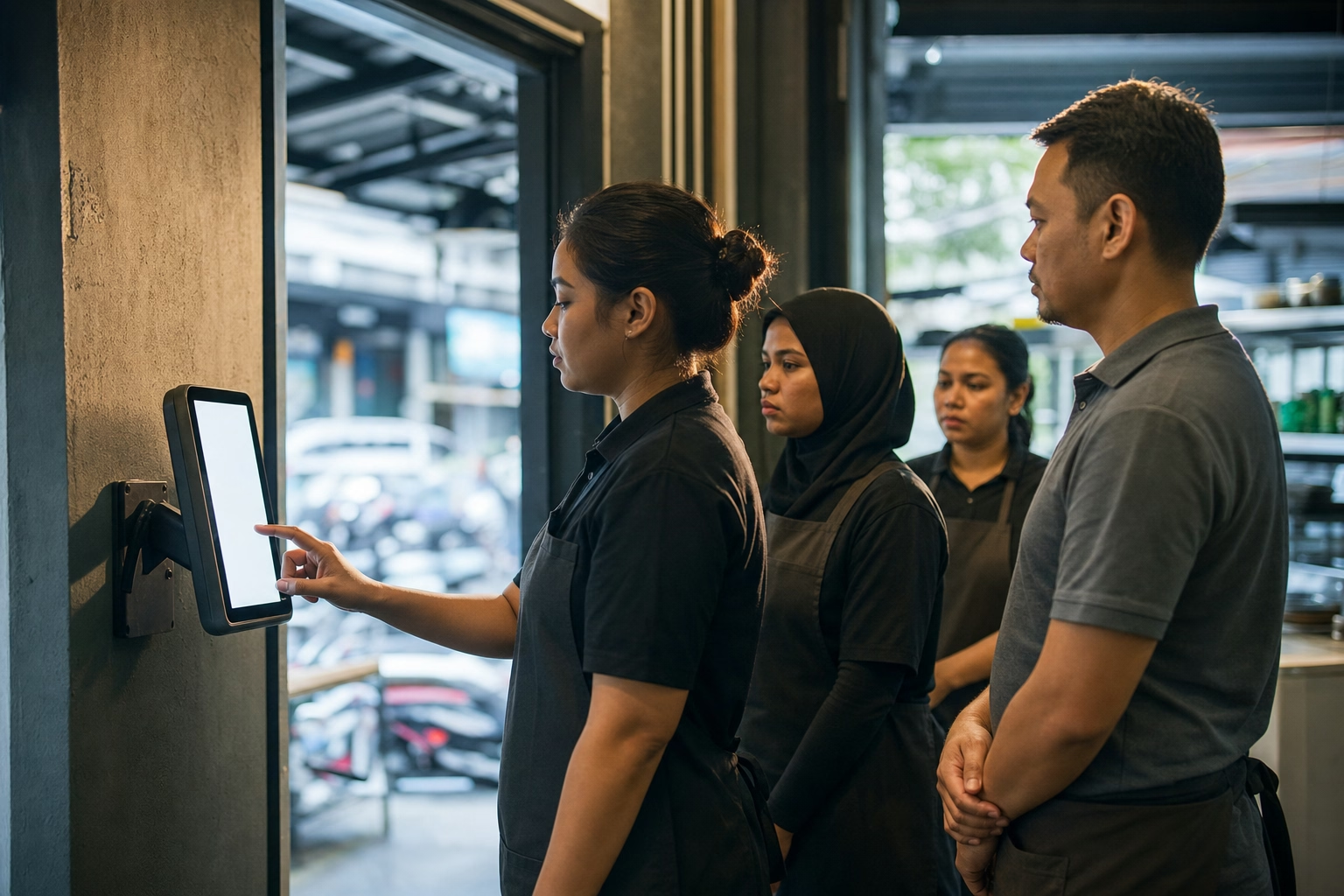
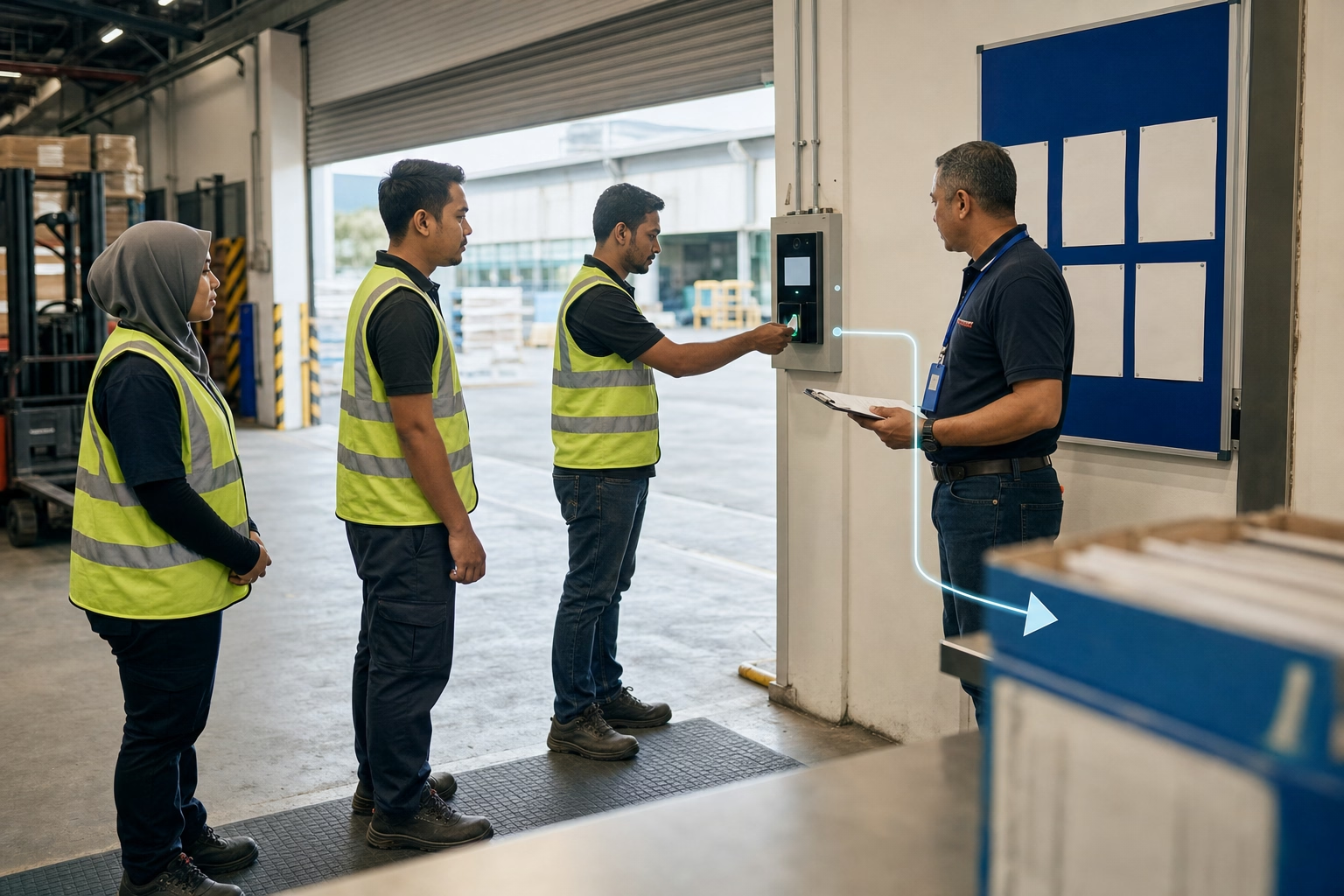
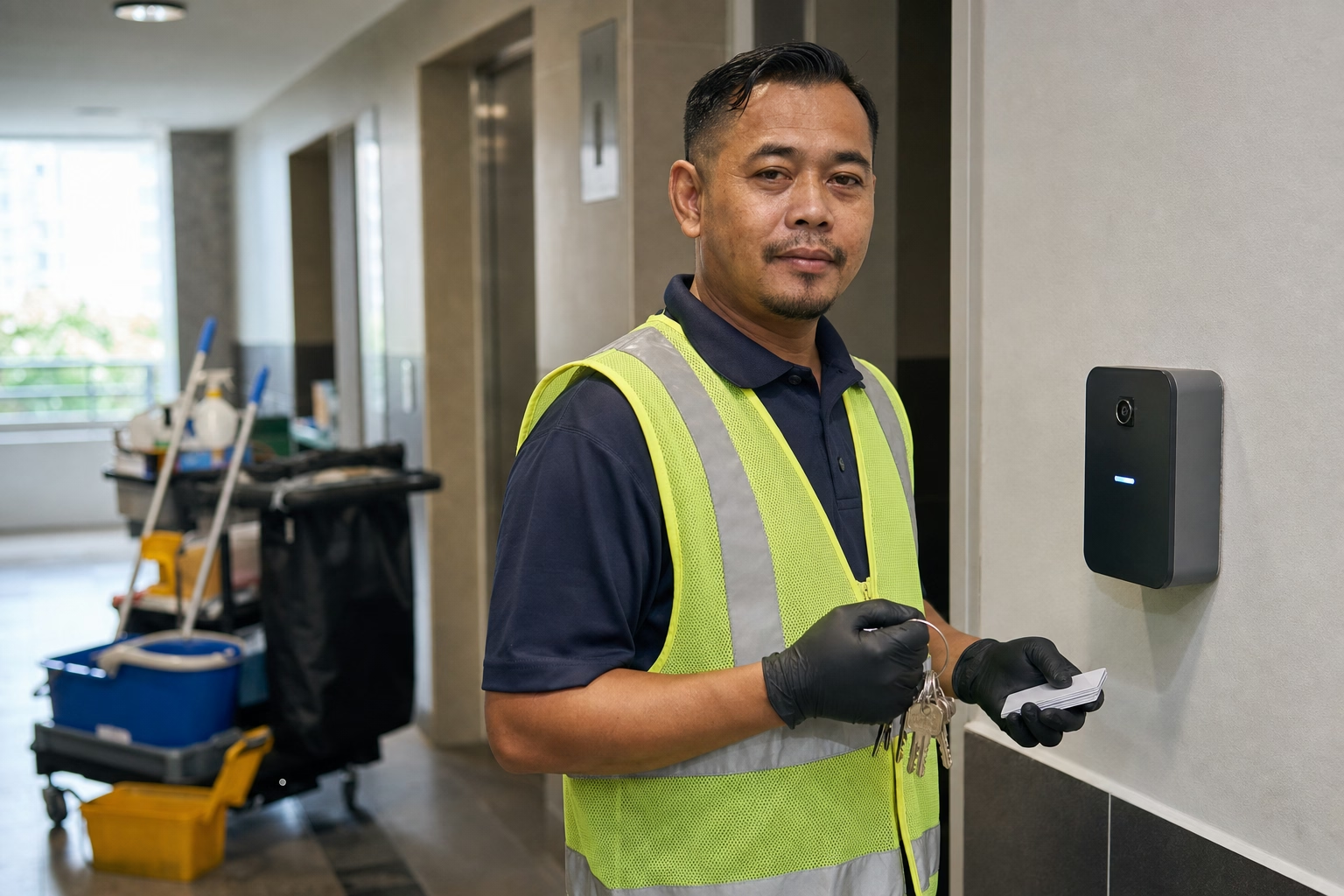
Location-sensitive roles (sales reps, field service, security-cleared work). GPS enforced with geofences at approved sites (office, client sites, registered home address). Clock-in blocked outside approved zones. Higher friction. Justified by the operational need.
For a 40-person KL company, the split typically lands around 5-10% high-trust, 70-80% standard, 15-25% location-sensitive. Configure each group separately. How to choose an attendance system for Malaysian SMEs covers the role-by-role decision framework.
When to geofence a worker’s home address
For staff who genuinely work from home, the question is whether the attendance system should verify they are actually at home, or just verify they are not somewhere conspicuous.
Three approaches Malaysian companies use.
Strict. GPS-required at registered home address. Worker provides their home address. The system draws a 50-100m geofence. Clock-in is blocked outside it. Pros: real accountability for security-sensitive roles. Cons: legitimate trips (medical, family emergency, working from a parent’s house for a week) require supervisor approval. That adds friction.
Permissive. GPS captured somewhere, not at a specific place. The system captures GPS at clock-in but does not enforce a specific location. The worker can clock in from home, a co-working space, or a relative’s house. The system just records where. Useful for compliance roles where “the worker was at a known place” matters more than “the worker was at home.”
Trust-based. GPS off for remote roles. Clock-in captures timestamp and IP address only. The system records the work session without location data. Pros: lowest friction, respects worker autonomy. Cons: weaker audit trail if a dispute or compliance question arises.
For most non-regulated Malaysian companies, the permissive middle option is what holds up in practice. Workers do not feel surveilled. The company has a record beyond a self-report. The compliance bar for EA 1955 hours is met without per-location enforcement.
EA 1955 applies regardless of location
A hybrid worker is still a worker. The 45-hour weekly cap, 104-hour monthly OT ceiling, and 30-minute break after 5 consecutive hours all apply to remote work the same way they apply to office work. The compliance gotcha that catches Malaysian companies in the first quarter of hybrid rollout is this. Workers self-managing their schedules tend to skip breaks, work later, and accumulate overtime that the company is legally obligated to pay.
Two configuration steps prevent it.
- Enforce the 5-hour-break rule at the timesheet level. The system flags any shift longer than 5 consecutive hours without a logged break. Supervisor reviews weekly. Pattern violations trigger a conversation, not just a payroll line.
- Cap voluntary overtime. A worker who routinely logs 50-hour weeks while working from home is creating the company’s EA 1955 liability whether the company asked for the hours or not. The attendance system should alert the supervisor when a worker approaches the 45-hour weekly cap, before the cap is crossed.
Get ShiftFlow on iOS or Android
How to track attendance for compliance with Malaysian labour law covers the full configuration. Attendance management for SMEs in Malaysia covers the day-to-day operational rhythm.

Tools that handle hybrid well
Four tools clear the hybrid configuration bar for Malaysian companies.
- ShiftFlow at RM 14.9 per seat. Per-worker GPS rule configuration, home address geofencing, EA 1955 OT rules, CSV export to PH/MY payroll. Single plan with no base fee. 14-day trial.
- Jibble Free / Premium. Malaysian-built. Free tier covers most hybrid setups for under 30 staff with at most 2 sites. Premium (≈RM 18 per user) adds multi-geofence and advanced scheduling.
- altHR. CelcomDigi-owned, multi-language HR super-app with time tracking and rostering on Lite (RM 8 / user / mo on the 10-user package) and Pro (RM 20 / user / mo) plans. 30-day free trial, no permanent free tier. Best fit for hybrid teams that want a telco-backed staff app.
- Kakitangan / BrioHR / Swingvy. Malaysian HR suites with native attendance. Best fit when hybrid attendance is one part of a broader HR-consolidation decision.
Best time tracking software in Malaysia for SMEs runs the full vendor comparison.
What goes wrong in the first quarter
Three patterns derail hybrid attendance rollouts in Malaysian companies.
Blanket GPS-required policy across all roles. Treats finance directors and field sales engineers the same. The finance director resents it. The field engineer needs even more configuration. Split by role on day one.
No home address geofence boundary policy. Workers register their home address, then occasionally work from a parent’s house or a co-working space. Without a written rule on what is acceptable, the supervisor ends up adjudicating one-off exceptions every week. Publish a short policy (1 page) before rolling out.
Missing the EA 1955 implications. Hybrid workers often work later because there is no commute and no office cut-off. The company is liable for the OT regardless of whether it was explicitly asked for. Configure cap alerts on day one.
How I would roll out hybrid attendance for a 35-person KL agency
Four things in order. First, segment the team into the three role categories above and write a one-paragraph policy for each. Second, deploy Jibble Free or ShiftFlow with the permissive GPS pattern (capture, not enforce) across the standard hybrid majority. Third, set up the 45-hour cap alert and the 5-hour-break flag for everyone, then watch the exception dashboard weekly for the first month. Fourth, sit down with anyone whose pattern looks off after week three and have an actual conversation before adjusting the policy. The mistake is letting the system make HR decisions for you, instead of using the system to surface what HR should decide.
Sources
- The Star on MEF hybrid work data for the 70%+ flexible-work adoption figure
- Employment Act 1955 (Akta Kerja, PDF from MoHR) for the 45-hour weekly cap, 104-hour OT ceiling, and break rules
- DOSM MSMEs Performance 2024 for SME employment baseline
- Jibble pricing and altHR pricing for the hybrid-capable vendor reference
- malaysia
- hybrid-work
- attendance
- time-tracking
- gps-rules
- ea-1955
- mofu